1. Tchaka
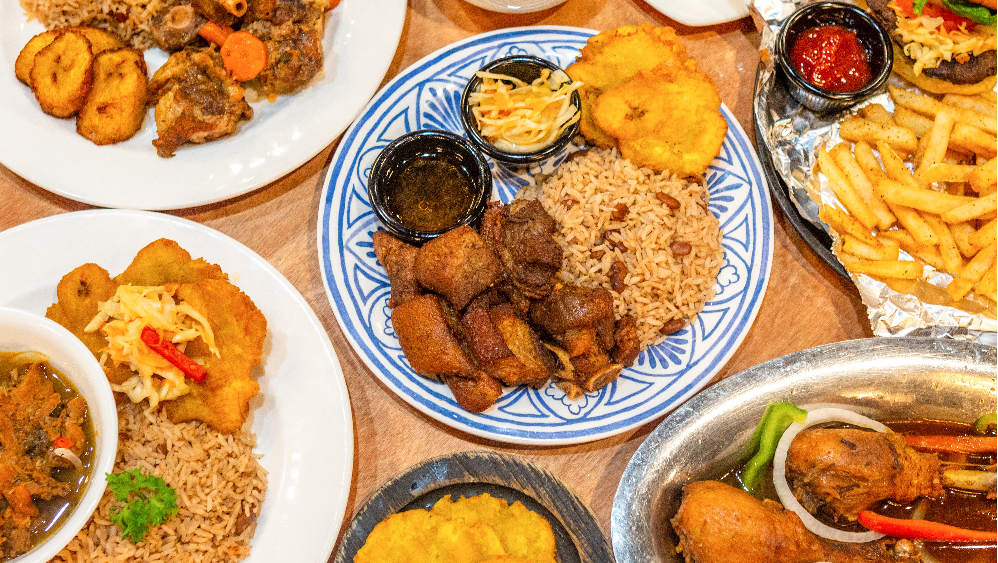
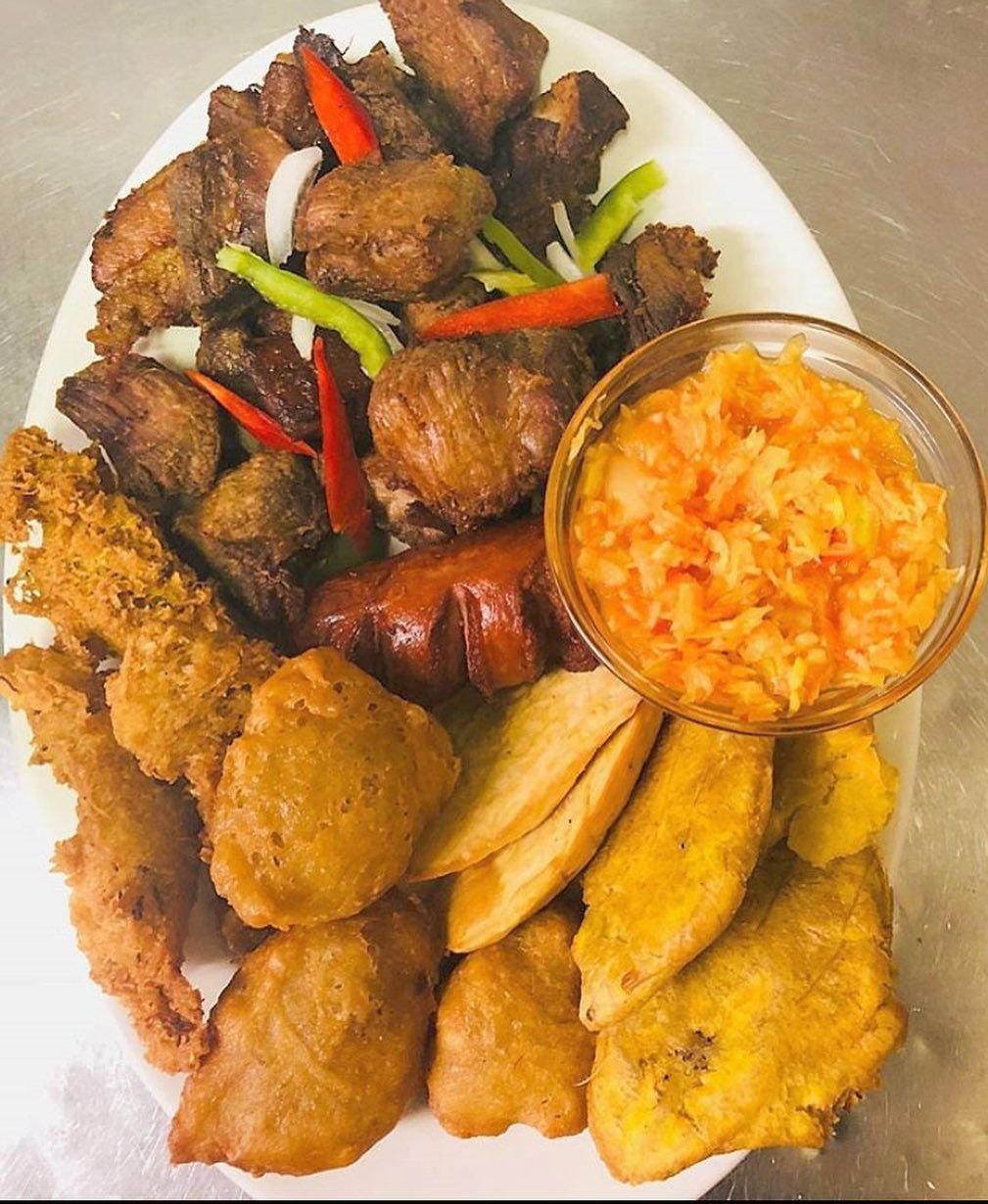
Tchaka is a hearty and comforting dish made with corn, red peas, smoked pork, and spices. It is often prepared during family gatherings and cultural celebrations, representing a moment of sharing and conviviality.
Black History Month is the perfect opportunity to celebrate the culture and heritage of Afro-descendant communities through cuisine. Haitian gastronomy, rich in history and flavors, is a reflection of the resilience and identity of the Haitian people. Here are two iconic dishes to discover to honor this celebration.
Read the article in :
Tchaka is a hearty and comforting dish made with corn, red peas, smoked pork, and spices. It is often prepared during family gatherings and cultural celebrations, representing a moment of sharing and conviviality.
Inspired by African traditions, tchaka illustrates the fusion of cultural influences in Haitian cuisine.

Haitian broth is a comforting dish, often consumed to invigorate the body and mind. It can be made with meat (beef, chicken, goat) and vegetables.
Bouillon is a nourishing dish, often prepared for special occasions or to revitalize after a period of fatigue. It reflects the authenticity and warmth of Haitian cuisine.
Haïti Wonderland would like to celebrate Black History Month with its readers. Tell us in the comments with which Haitian dish do you celebrate this month?
The editorial staff of Jeunes INFLUENCERS

Facebook : https://www.facebook.com/haitiwonderland
Youtube : https://www.youtube.com/@haitiwonderland
Instagram : https://www.instagram.com/haitiwonderland/
Twitter : https://twitter.com/haitiwonderland
Linkedin : https://www.linkedin.com/in/haitiwonderland/
Tourism is a vital sector for the economic and cultural development of a country, and Haïti is no exception. With a rich historical heritage, breathtaking landscapes, and a vibrant culture, Haïti has a unique tourism potential that can play a crucial role in its development. Let’s find out why tourism is so important to Haïti and how it can transform the country.
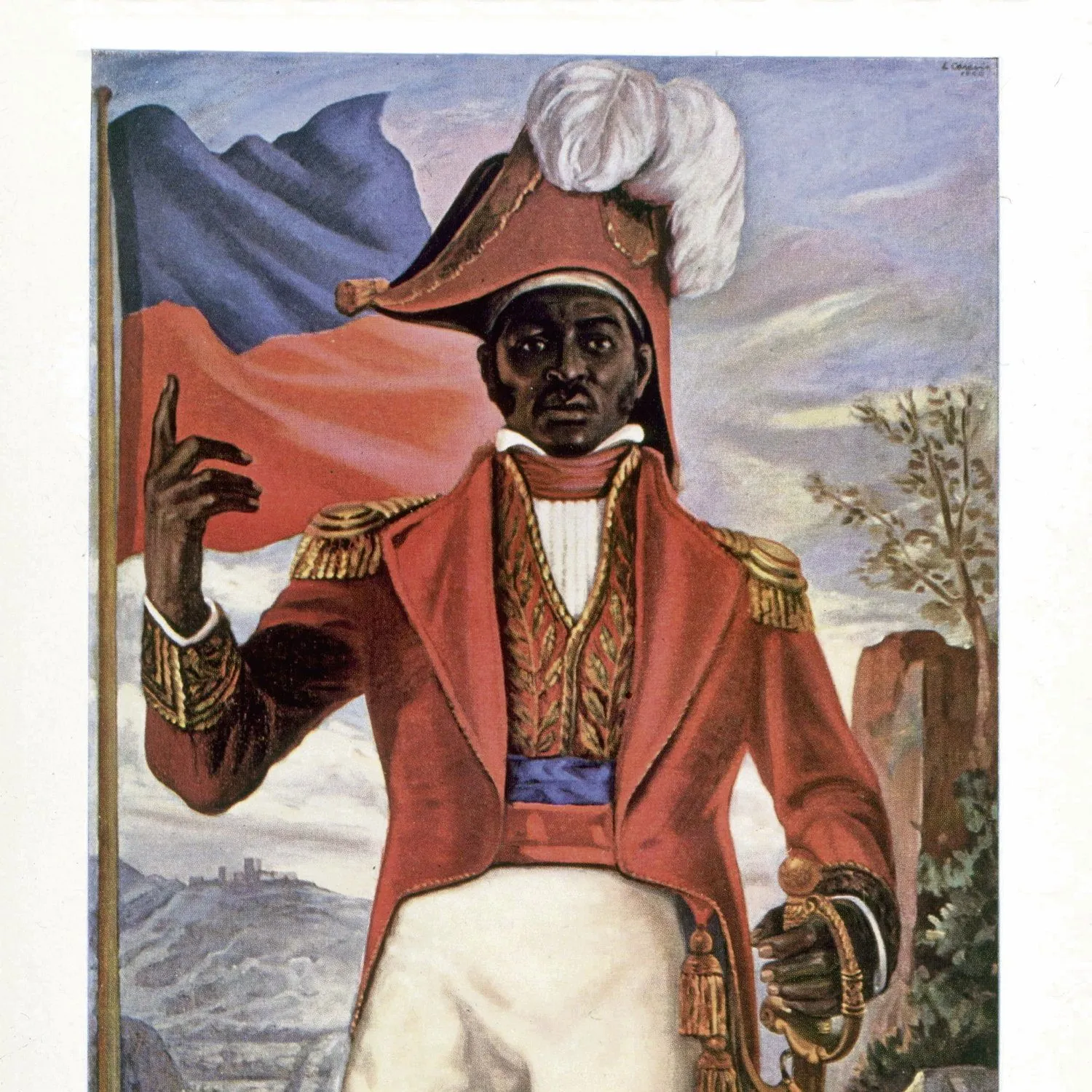
Jean-Jacques Dessalines is an emblematic figure in modern world history for his fruitful involvement in the fight against the slave system. Through his dedication and courage, he embodied the indomitable spirit of an entire black people forcibly deported from the African continent, implanted by this same violent mechanism, in America to suffer, but determined to free themselves from oppression by forging their own destiny despite all the risks and difficulties. Dessalines’ entire life, his entire journey bears the mark of a life inscribed in the fight to free his loved ones. His unfailing determination and passion for freedom made him a living symbol of resistance for all the oppressed nations of the earth, more than two centuries after his death. We wrongly associate the image of Jean-Jacques Dessalines with chaos. The sole aim is to discredit his immense legacy before the eyes of history. “Koupe tèt, boule Kay” is the preferred expression to use for such purposes against his character, along the way, expressly forgetting the historical context hidden in the back of the “koupe tèt boule Kay” in question, also refusing to register this approach historical in the logic of a just and courageous stand, in the face of a barbaric, slavery system, devoid of morality and humanity.
Subscribe to our newsletter to stay informed of all our activities and news on Haiti.
Originally from Bainet and raised in Petit-Goâve, Haiti, Emmanuel Joseph embodies one of the rising figures of the Haitian intelligentsia. A jurist, ethicist, and Ph.D. candidate in philosophy at the University of Sherbrooke (Canada), his journey reflects a rigorous commitment to justice, human rights, and critical thinking. Local Roots, Global Outlook Educated in Haiti’s public and religious schools, Emmanuel Joseph began his intellectual path at the Apostolic School of Petit-Goâve, then excelled at the Lycée Faustin Soulouque. His grades, consistently between 8 and 9 out of 10, demonstrated remarkable discipline and rigor from an early age. His university education began at the Faculty of Ethnology (FE) and the Faculty of Law and Economics (FDSE) of the State University of Haiti, where he earned his bachelor’s degree in November 2013. His academic profile sharpened in Canada, especially at the University of Quebec in Rimouski (UQAR), where he completed a master’s degree in philosophy/ethics in 2020, before pursuing a Ph.D. at the University of Sherbrooke, focusing on a broad yet fundamental theme: humanitarian action as experience.
Haiti, a country rich in history, culture and natural beauty, is one of the most fascinating and underrated destinations in the Caribbean. For years, this country was perceived through a negative prism, but today, Haïti deserves to be rediscovered. If you are wondering why travel to Haïti now, this article will convince you that now is the perfect time to discover this unique island, full of surprises and hidden treasures.
Time management in Haïti follows a practice shared by several countries: daylight saving time. Adopted for several decades, daylight saving time consists of moving the clocks forward by one hour for part of the year in order to maximize the use of daylight. This article explores how and why this measure is applied in Haiti, as well as its impact on the daily lives of Haitians.

First black nation to free itself from slavery and gain independence from France in 1804 and influenced other liberation movements around the world, inspiring struggles for freedom and equality.

Haïti is blessed with spectacular natural landscapes, including white sand beaches, mountains and rich biodiversity.

Haïti has a rich historical heritage, including sites like the Citadelle Laferrière and the Sans-Souci Palace, listed as UNESCO World Heritage Sites.

Haïti has a rich and diverse culture, influenced by African, European and indigenous elements. Haitian music, dance, art and cuisine are celebrated around the world.