1. Tchaka
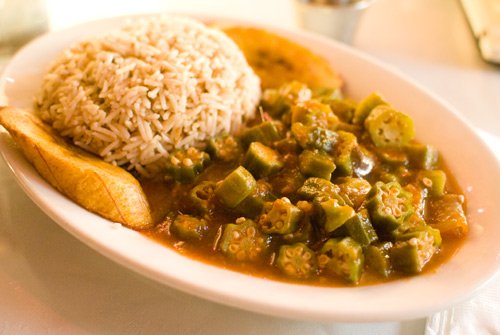
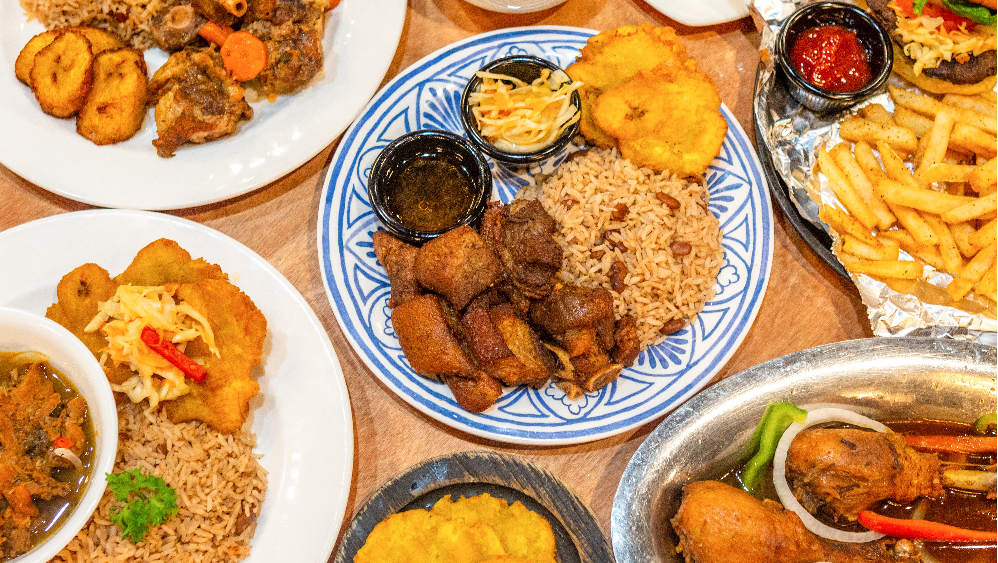
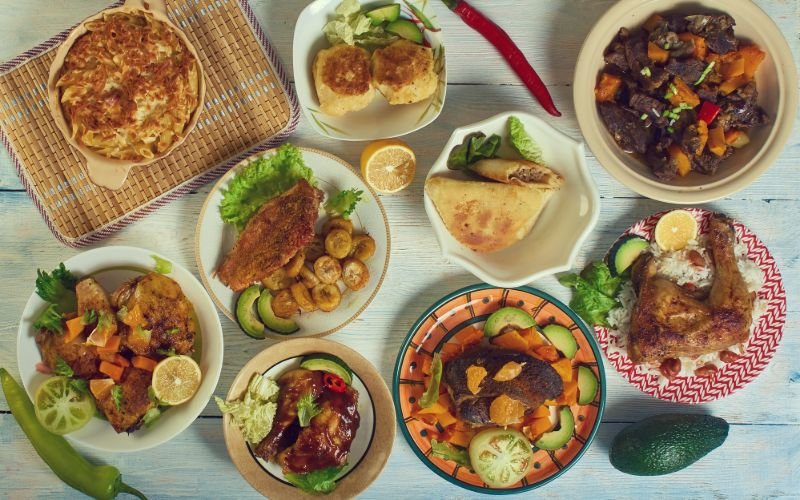
Tchaka is a hearty and comforting dish made with corn, red peas, smoked pork, and spices. It is often prepared during family gatherings and cultural celebrations, representing a moment of sharing and conviviality.
Black History Month is the perfect opportunity to celebrate the culture and heritage of Afro-descendant communities through cuisine. Haitian gastronomy, rich in history and flavors, is a reflection of the resilience and identity of the Haitian people. Here are two iconic dishes to discover to honor this celebration.
Read the article in :
Tchaka is a hearty and comforting dish made with corn, red peas, smoked pork, and spices. It is often prepared during family gatherings and cultural celebrations, representing a moment of sharing and conviviality.
Inspired by African traditions, tchaka illustrates the fusion of cultural influences in Haitian cuisine.

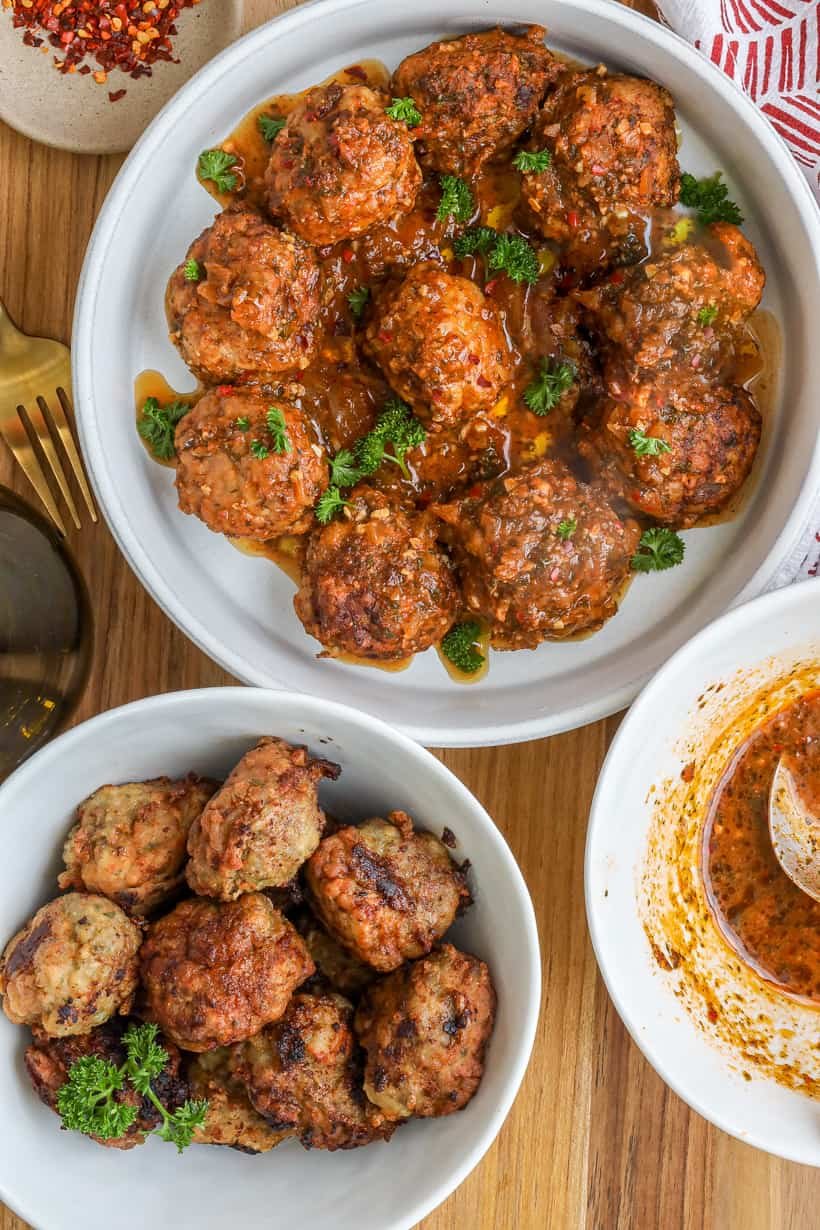
Haitian broth is a comforting dish, often consumed to invigorate the body and mind. It can be made with meat (beef, chicken, goat) and vegetables.
Bouillon is a nourishing dish, often prepared for special occasions or to revitalize after a period of fatigue. It reflects the authenticity and warmth of Haitian cuisine.
Haïti Wonderland would like to celebrate Black History Month with its readers. Tell us in the comments with which Haitian dish do you celebrate this month?
The editorial staff of Jeunes INFLUENCERS

Facebook : https://www.facebook.com/haitiwonderland
Youtube : https://www.youtube.com/@haitiwonderland
Instagram : https://www.instagram.com/haitiwonderland/
Twitter : https://twitter.com/haitiwonderland
Linkedin : https://www.linkedin.com/in/haitiwonderland/
Schneider Léon Hilaire is a young Haitian painter endowed with exceptional talent, trained at the prestigious Centre d’Art in Port-au-Prince. From the very beginning, he captured the hearts of art lovers throughout the Haitian capital, quickly making a positive impression on the local art scene. His talent, nourished by the rich and diverse Haitian culture, has not been confined to the borders of Haiti. Indeed, after a successful exhibition in Paris last year, Schneider Léon Hilaire’s work has found a new place to spread its wings, continuing to captivate beyond the oceans.
Religious diversity in Haïti is a key aspect of its cultural identity, but Christianity, and more specifically Catholicism, is the most popular religion in the country. With its roots deep in colonial history, Haitian spirituality is also enriched by unique cultural practices, such as Vodou, that coexist with Christian beliefs. In this article, we explore the history, practices, and key figures surrounding religion in Haiti.
Subscribe to our newsletter to stay informed of all our activities and news on Haiti.
In an atmosphere of madness, at the Auditorium Saint Jean Marie Vianney de Galette-Chambon, where the laughs broke out, the music resounded, and the talents were dismented, started the second edition of the reading competition, around the theme "Ann Li pou n chanje peyi n ». This initiative, organized by the literary and philosophical club of Galette Chambon (CLPGACH) on Friday 06 October 2024, was marked by an overflowing passion within the public. The spectators came for several reasons: to support the applicants and live their presentations. The works, as "thus spoke of the uncle", "the vocation of the elite" of Jean Price Mars, "the ten black men" of Etzer vilary and "the courage to live in Haïti in the 21st century" of Hérold Toussaint, present innovative arguments linked to the societal context. They intertwine with folklore, Haitian culture, sociology and anthropology. These books are given to the applicants for a period of 15 days. Back, they come with their summaries and, after each presentation, in turn, reveal new perspectives on burning questions and delicate themes from works, while taking into account the concepts learned in public speaking. In this arena where the verve and the verb clash as well as logic, conviction, precision and clarity, it is a question of "saying all in a few words". The judgments are based on three criteria: the methodology concerning the substance and the form of the work; The eloquence which concerns verbal and non -verbal discourse (micro management, good pronunciation, etc.); And finally, an essential criterion: understanding. This is to assess whether the applicant has controlled the work. Questions can be asked without ignoring the context in which he lives. In addition, assistants have the opportunity to vote for the applicant who charmed them the most. This vote is precious at a higher level. Note that this vote can be made not only face -to -face but also online on our Facebook page CLPGACH. In addition, the public has always changed well through this trip to the universe of regional authors. The latter weave the frame and make vital the very repertoire of the competition vital, made up of impactful works such as "the price of irresponsibility" of Montuma Murat, "the return to citizen responsibility" written by Jean Jacquesson Thelucier and "Courage to live in Haïti in the 21st century "Professor Hérold Toussaint, to name a few. Although they died, some writers still live at the heart of our situation through their inheritance. Among them, it is necessary to quote: "the vocation of the elite" of Doctor Jean Price Mars, "the ten black men" of Etzer Villaire and "the Governor of the dew" by Jacques Roumain, as well as so many others . For this literary event to be moving and meets expectations for this second edition, many sacrifices are necessary on the part of the staff as well as the public which never leaves us alone. In this sense, we would like to thank them and call all those wishing to support this event. Indeed, if this competition is a solution found to advance together towards a common goal, its success depends on everyone’s commitment. About two years ago, the security climate in the area was not conducive to the completion of the competition. Although it is not yet ideal today, it is time to triumph over obscurantism and fight the dictatorship of ambient ignorance.
Before the arrival of Christopher Columbus in 1492, Haïti was already inhabited by a people who had a deep relationship with the land and nature: the Tainos. These first inhabitants left a cultural and spiritual legacy that continues to influence Haitian identity. Let’s discover who the Tainos were, their way of life, and what they brought to the history of Haiti.
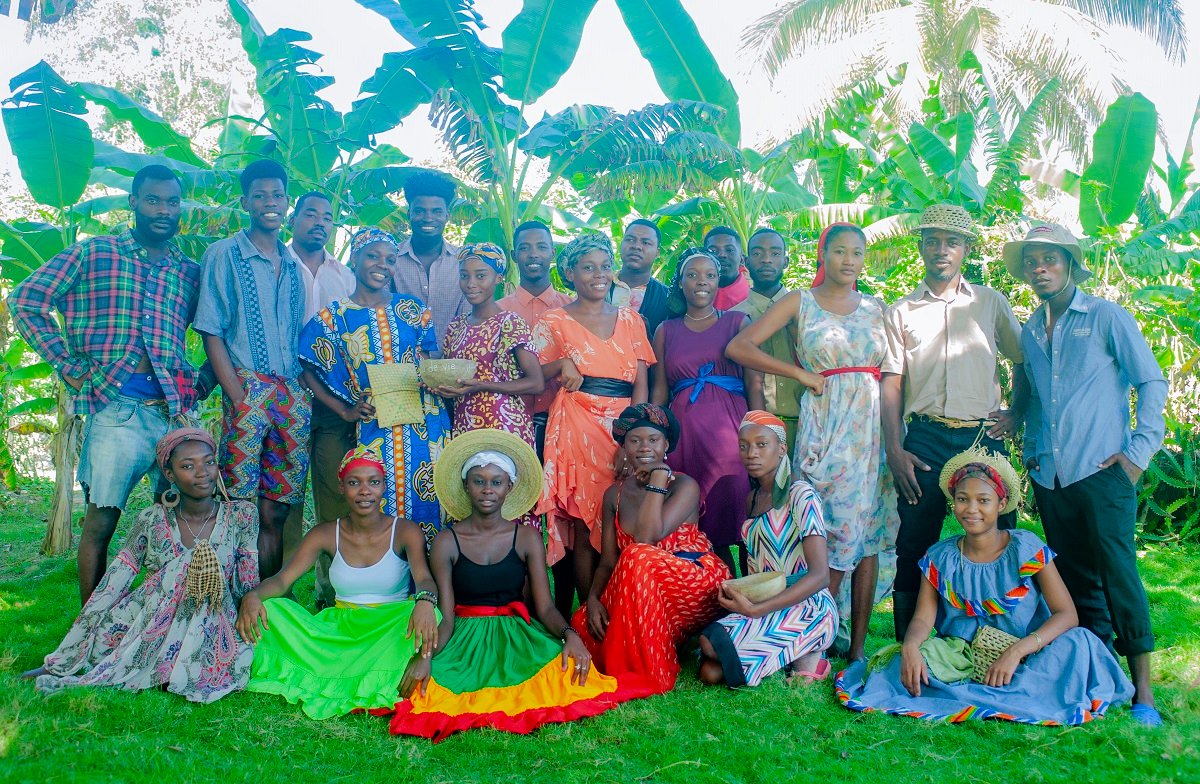
In Jacmel, a group of young people called Eau de Vie, founded in June 2021, is dedicated to the rediscovery of Haitian culture. Among the founding members are César Rocher, Déborah Vil, Max Jean Julien, Lansley Lemaire, Jacky Edwing Laguerre, Francesca Faustin, Sthélianie Dominique, Mackenson Gilot and Gédeon Riché. Their mission is to introduce young people to unknown sites in their own city, and soon, throughout the country. Through events like the "Jounen Dantan", Eau de Vie highlights local traditions and promotes cultural exchanges. Mainly based in Jacmel, the group organizes its activities in emblematic places such as the blue basin. Eau de vie aspires to strengthen the feeling of belonging of young people towards their heritage and to promote a spirit of community and sharing within Haitian youth.

First black nation to free itself from slavery and gain independence from France in 1804 and influenced other liberation movements around the world, inspiring struggles for freedom and equality.

Haïti is blessed with spectacular natural landscapes, including white sand beaches, mountains and rich biodiversity.

Haïti has a rich historical heritage, including sites like the Citadelle Laferrière and the Sans-Souci Palace, listed as UNESCO World Heritage Sites.

Haïti has a rich and diverse culture, influenced by African, European and indigenous elements. Haitian music, dance, art and cuisine are celebrated around the world.