contact@haitiwonderland.com+509 36184317

Discover

Shopping Cart

Cap-Haïtien: 70 Schoolchildren Learn Programming Thanks to Coding Club Haiti
  • News
  • September 18, 2025

Cap-Haïtien: 70 Schoolchildren Learn Programming Thanks to Coding Club Haiti

From Python to JavaScript: How 70 young people from Cap-Haïtien are becoming Haiti's future developers with the NUMECO program.

Friday, August 29, 2025, will remain a memorable date in Cap-Haïtien: The closing of the first edition of NUMECO, a pioneering program that introduced more than 70 schoolchildren to the exciting world of computer programming.

A Springboard for Digital Youth

The NUMECO program, organized by Coding Club Haiti, marked a turning point in Haitian digital education. More than just training, this initiative represents a real investment in the country’s technological future.

Thanks to this initiative, more than 80 students from 11 schools completed an intensive 6-month training program, during which they learned:

Python
The solid foundations of the world’s most sought-after programming language

Web Development
Mastery of HTML, CSS, and JavaScript technologies with Appolon Guy Alain as expert trainer

Digital Entrepreneurship
Business vision and innovation with Toutpuissant Jefferson as trainer

See as well

The 11 schools involved in this adventure

The NUMECO program brought together students from NS1 to NS4 from the following schools:

- Institution Saint-Joseph
- Institut Sacré-Cœur du Cap-Haïtien
- Collège Adventiste du Cap-Haïtien
- Collège Bell Angelot Cap-Haïtien
- Collège Simone de Beauvoir
- Lycée National Philippe Guerrier Cap-Haïtien
- Lycée Dutty Boukman
- Collège Pratique du Nord
- Collège Le Christophien
- Collège Alexandre Dumas Fils
- Collège Le Lighthouse

The goal of Coding Club Haïti is to create a community of excellent, collaborative, and innovative developers capable of bringing local and international projects to fruition while remaining at the forefront of global technologies.

A moment of emotion, satisfaction, and hope

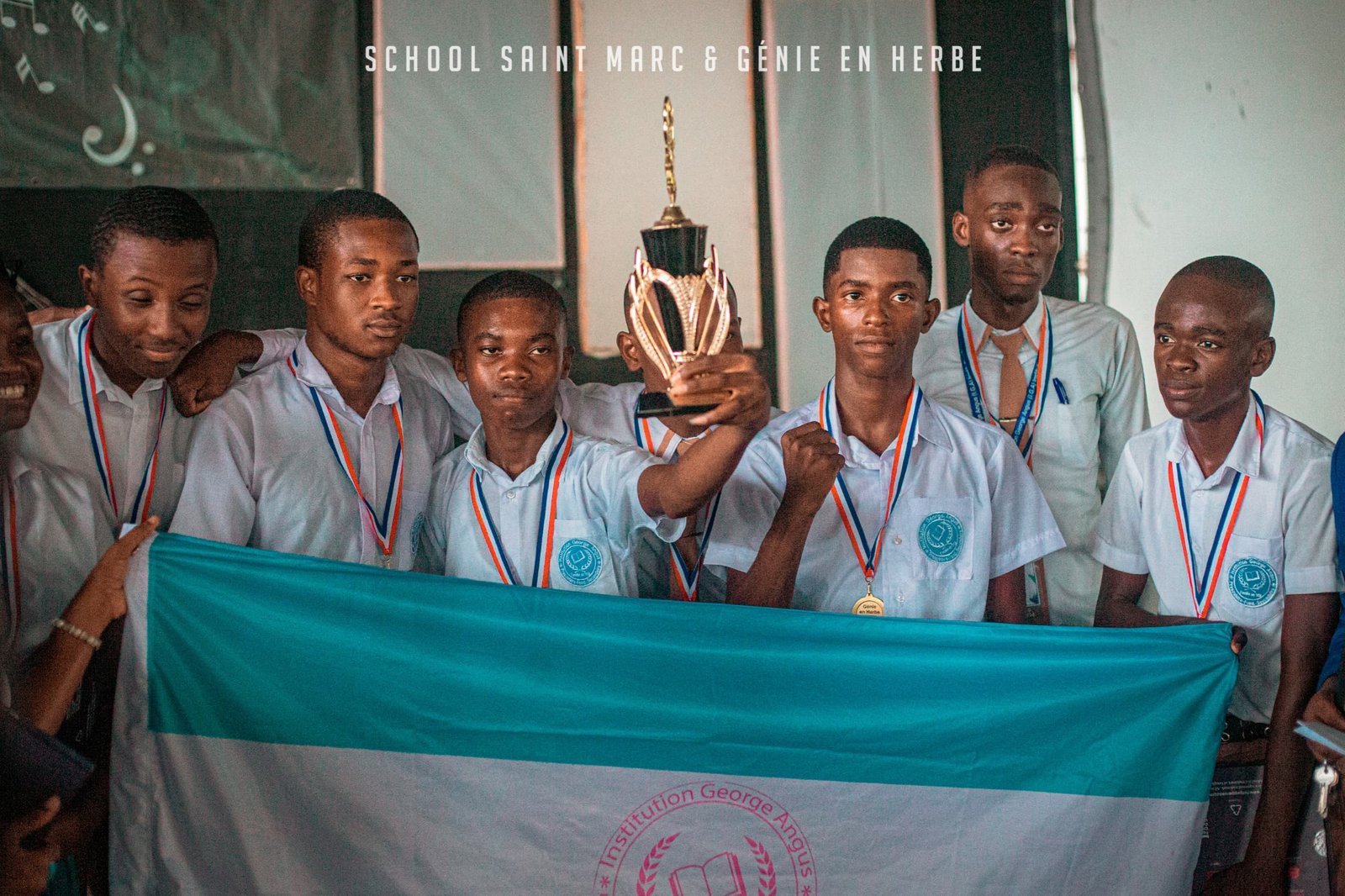
The closing ceremony was an intensely emotional moment. The event culminated with the "Best Website" challenge, a stimulating competition where each team had to create a website for their school. Creativity and innovation were on full display!

The grand winner? The Adventist College of Cap-Haïtien, which brilliantly integrated a virtual reality tour directly into their website. This technical feat impressed the jury and demonstrated the exceptional potential of our young talents.

The Monferrier Dorval Chair of Constitutional Law, a gesture from the State University of Haiti, for the preservation of the memory of Professor Dorval

The Monferrier Dorval Chair of Constitutional Law, a gesture from the State University of Haiti, for the preservation of the memory of Professor Dorval

The Monferrier Dorval Chair of Constitutional Law is a high-intellectual-intensity initiative, taken by the State University of Haïti (UEH), through the leadership of its rectorate, in agreement with the leaders of the Faculty of Law and Economics (FDSE). The initiative’s primary goal is to honor and perpetuate the memory of the valiant and brilliant Professor Monferrier Dorval, assassinated in unclear circumstances, about three years ago. And in order to make a scientific contribution to the great debate that has been going on in Haitian society for about ten years about the need to change or not, the constitution of March 29, 1987, amended on May 11, 2011. Shouldn’t we try to apply it preferably? If it needs to be changed, should this change be radical, otherwise what should it have in terms of change within a new mother law for a better institutional organization of Haiti. The chair is scientifically chaired by Professor Henri Marge. Dorléans, (current head of AFPEC), and is vice-chaired by the dean of the faculty of law and economics, Me Eugène Pierre Louis. The Chair is materialized by a set of conferences and debates (15 in total), which take place in the premises of the Office of the Protection of the Citizen OPC, under the name of Wednesday of the Monferrier Dorval Chair. It is in this sense that for the fifth edition of the Wednesday of the chair (which took place this Wednesday, October 9, 2024 at the OPC, in the presence of the protector of the citizen, Me Renan Hédouville), attention was placed on education within the debate surrounding the possible development of a new constitution for Haiti. This 5th meeting took place under the theme of: "Education, Teaching, Research, Science and Technologies". The conference was hosted by three greats of the Haitian intellectual community, including two eminent professors of the UEH, namely, Professor Odonel Pierre Louis, academic director of the École normale supérieure (ENS); the vice rector of the UEH, Professor Jacques Blaise. Their interventions were followed by that of the director of the national institute of vocational training (INFP) Mr. Dikel Delvariste.

Coding Club Haiti: Catalyst for Digital Transformation

Founded by Appolon Guy Alain, Coding Club Haïti is a dynamic community of passionate developers committed to creating innovative projects with economic and social impact.

This community works to democratize digital learning and create a sustainable technology ecosystem.

I believe technology can be an economic lever in Haiti. I dream of seeing Haitian platforms emerge internationally and bring enormous economic benefits to the country.

,Appolon Guy Alain, Co-founder and President

71 Certificates Awarded: A New Generation of Budding Developers

71 schoolchildren received their certificates, rewarding their remarkable commitment and determination. Parents, friends, and school officials witnessed exceptional achievements that portend a promising digital future for Haiti.

Future Vision: Expansion and National Impact

Coding Club Haiti’s ambition doesn’t stop there. For the coming years, the organization plans to:

- Integrate more schools into the program
- Expand the program to various other cities across the country
- Provide personalized support for young talent to bring their projects to fruition

A Tangible Socioeconomic Impact

These budding young developers aren’t just learning: they’re already innovating! Several projects with strong social and economic potential are currently being developed, with the continued support of Coding Club Haiti.

August 29, 2025, will be remembered as the day Cap-Haïtien laid the foundations for a truly Haitian digital revolution. NUMECO is not simply a training program: it is the first chapter in a transformation that will place technology at the heart of Haiti’s socioeconomic development.

Towards a digital future for Haiti

With NUMECO, Coding Club Haïti is laying the foundations for a sustainable technology ecosystem, training the next generation of Haitian developers and opening new perspectives for the future.

August 29 marks the end of NUMECO, but also the beginning of a future where technology will be at the heart of Haiti’s socio-economic transformation, not through grand speeches, but through concrete projects,

, concludes Toutpuissant Jefferson.

Are you an educational institution interested in NUMECO? A company interested in supporting this initiative? Join the movement shaping Haiti’s digital future!

Share
About the Author
Haïti Wonderland
Haïti Wonderland
Leave a comment

Recently Posted

Newsletter

Subscribe to our newsletter to stay informed of all our activities and news on Haiti.

Caractéristique d’un lapin

Les lapins sont des mammifères appartenant à la famille des Leporidae. Voici quelques-unes de leurs caractéristiques principales : 1. **Physique** : Les lapins ont un corps couvert de fourrure douce, des oreilles longues et droites, de grands yeux sur les côtés de leur tête, et une queue courte et duveteuse. Ils possèdent de puissantes pattes arrière adaptées au saut. 2. **Taille et poids** : La taille et le poids peuvent varier considérablement selon la race, allant d’environ 500 grammes pour les plus petits à plus de 5 kilogrammes pour les plus grands. 3. **Comportement** : Les lapins sont connus pour être sociaux et peuvent vivre en groupes dans la nature. Ils communiquent entre eux par différents moyens, y compris par des sons et des mouvements corporels. Les lapins creusent des terriers pour y vivre et se protéger des prédateurs. 4. **Alimentation** : Ils sont herbivores, se nourrissant principalement de foin, d’herbes, de feuilles, de fleurs, et de certains légumes. Leur système digestif est adapté pour traiter une grande quantité de fibres. 5. **Reproduction** : Les lapins sont réputés pour leur capacité à se reproduire rapidement, avec des gestations courtes d’environ 28 à 31 jours. Une portée peut compter de un à douze lapereaux, selon la race. 6. **Sens** : Ils ont une excellente vision périphérique pour détecter les mouvements tout autour d’eux, mais ont une zone aveugle juste devant leur nez. Leur ouïe est également très développée, leur permettant de capter des sons à de grandes distances. 7. **Espérance de vie** : En captivité, les lapins peuvent vivre de 7 à 10 ans, selon la race et les soins prodigués, tandis que dans la nature, leur espérance de vie est généralement plus courte en raison des prédateurs et des maladies. Ces animaux nécessitent des soins appropriés, notamment un régime alimentaire équilibré, de l’exercice, et une attention particulière à leur bien-être émotionnel et physique pour vivre une vie saine et heureuse en captivité.

Recently Posted

History

History

First black nation to free itself from slavery and gain independence from France in 1804 and influenced other liberation movements around the world, inspiring struggles for freedom and equality.

Natural beauty

Natural beauty

Haïti is blessed with spectacular natural landscapes, including white sand beaches, mountains and rich biodiversity.

Heritage

Heritage

Haïti has a rich historical heritage, including sites like the Citadelle Laferrière and the Sans-Souci Palace, listed as UNESCO World Heritage Sites.

Culture

Culture

Haïti has a rich and diverse culture, influenced by African, European and indigenous elements. Haitian music, dance, art and cuisine are celebrated around the world.

  • +
    • Post