John Wesley Désir Represents Haitian Youth at the 24th University for Youth and Development 2025
Haiti in the spotlight in Spain! John Wesley Désir represents Haitian youth at UYD 2025 to defend democracy and digital security.

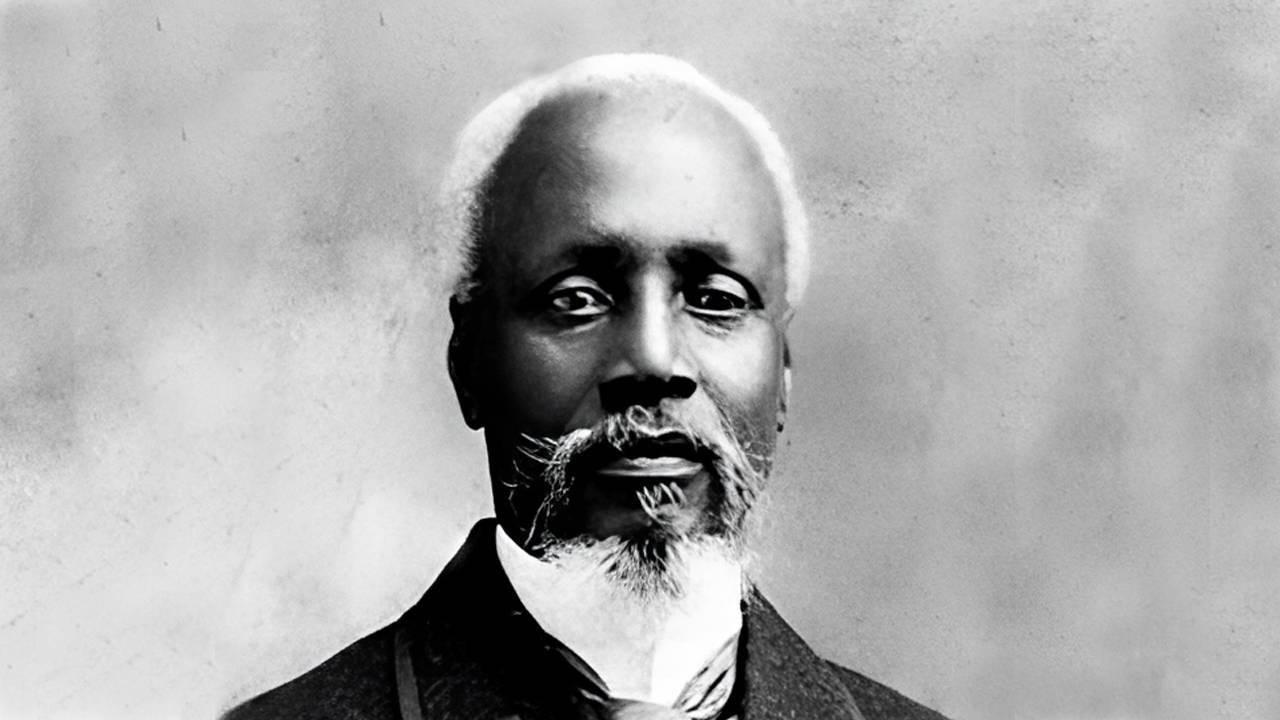
Joseph-Auguste Anténor Firmin was born on October 28, 1850 in Cap-Haïtien, in a Haïti recently emancipated from the colonial yoke, he died on September 19, 1911 at the age of 60 in exile. He is undoubtedly one of the most emblematic intellectual figures of his time. His life, marked by an exceptional career in the political, literary and diplomatic fields, illustrates the genius of a Haitian intellectual whose contributions have left an indelible mark on history.
After "No to violence", the theme of the previous edition, "I read, I grow" is the theme around which the 18th edition of Week-end Poétique will take place, scheduled for January 31, 2025 at Carrefour. As a special guest, this edition will welcome Jean-Rony Charles, author of Pitié, a short story that, in its depth, focuses on the human condition, in particular the precarious life situations that many people face on a daily basis. Exhibitions, workshops, performances and book signings are among the various activities on the program for this 18th edition. The Week-end Poétique is not only a relaxing activity, but a real space for engagement, offering activities that have a direct impact on the Carrefour community. Events of a social, cultural, artistic, literary, etc. nature constitute its heart and contribute to enriching local life.
The word crisis carries an infinite number of meanings. No intention of revealing them all this afternoon. However, a few clarifications are necessary. A kid whose parents do not have enough money at Christmas to buy her a Little Black Mermaid doll has a fit and locks herself in her room without touching her meals for the day. A boy whose dog was suddenly poisoned by a neighbor in revenge or shot after contracting rabies, losing a faithful friend overnight, enters into crisis. Finally, a society in the grip of all sorts of mutations and whose leaders are weak, perhaps prolonged in a deep crisis. In the first case, the young girl sulks to attract the attention of her parents in order to feel appreciated by children her age at school or in the neighborhood. Today, thirty minutes of negotiations can be enough to find a lasting solution. In my day, a few well-aimed belt blows would have overcome this whim. But, humanity evolves, they say. In the second case, this boy can find his smile again after a few weeks. He needs a little attention and, probably, another dog. As Stendhal would say, only passion triumphs over passion. In the last case, this society led by inepts is shaken to its deep foundations. Its institutions can disintegrate one by one. The vital forces dissolve in no time. This situation creates a societal tsunami that destroys all life within this community. It is indeed a crisis. The crisis from this point of view constitutes an alarming, desperate situation in the existence of a community where nothing is going well. Chaos reigns supreme. The very essence of life disappears. The individual can take precedence over the community. Everyone tries to solve their problems without worrying about others. The closest neighbor is relegated light years away from you. How can we turn to creation? How can we continue to conceive of otherness? How can the artist absorb this great collective disarray as a source of motivation? These are the questions I must answer. An artist sees and feels what ordinary mortals cannot even imagine in a thousand-year life. He creates to denounce, when his conscience as a human being is revolted. He exalts heroes or the homeland according to his feelings. He sings the beauty of an irresistible, captivating or ugly resplendent woman. He can also use the ambient desolation to give meaning to life. Creating in literature as in the arts in general does not depend on the situation. The act of creation depends on the creator’s disposition. Events paralyze some and galvanize others. Creating is enjoyable. Everyone therefore enjoys according to their own whim. Writing opens the way to change. The writer takes a different look at the world. By embedding himself in reality, he embellishes it, makes it better or hideous depending on the message he intends to share. All things considered, with him, life is never fixed. Writing is putting the world in a jar to travel the universe. The artist broods over his work in all weathers. Oswald Durand was delighted to see Choucoune’s beautiful body from his secret observatory. Musset, on the other hand, was in pain writing his October night. As for Dany Laferrière, in exile, he described the horrors of the Duvalier dictatorship and the carefree attitude of the young girls in his neighborhood in this violent and dangerous world. Ultimately, the writer lives in a society with values that he shares or not. They condition his existence or have no hold on him. In many ways, the surrounding world serves as his laboratory. He carries out his experiments there. He casts a new, worn, disillusioned, melancholic, violent, bitter look at the world depending on his mood. Pitié is the work of an old soul crushed under the weight of an existence that tastes of absinthe. Young Mike Bernard Michel lives by expedients and lies. The hands of life fall on him with indescribable violence. Misfortune embraces him day and night. Should we give up? Musset liked to say: "Man is an apprentice, pain is his master. And no one knows himself until he has suffered." The artist must produce under all skies. Such is his vocation. Incompetents in power, legal or highway bandits, the high cost of living, unemployment, heartaches are all subjects of concern for him. If it is true that a hungry belly has no ears, the fact remains that it keeps the brain awake. What am I saying, it stimulates it to the point of creating timeless works. Mr. Pitié, you have a bright future ahead of you. Work of Jean Rony Charles, the book is available from Éditions Repérage.
In a country where daily difficulties can often seem insurmountable, Haitian youth need sources of inspiration to move forward. The LESPWA writing contest, initiated by Oriol ANTOINE, photographer and cultural activist, offers young people a unique opportunity to express themselves through words and share a message of encouragement and resilience.

Haïti is a true powerhouse in today’s literary world. For centuries, the country has been endowed with remarkable intellectual wealth that has led to exceptional achievements. Today, with more than 20 major active writers, whose works resonate far beyond Haitian borders, Haïti is one of the countries with the highest number of writers per capita. Among these writers, we can mention Edwige Danticat, Pulitzer Prize winner; Louis-Philippe d’Alambert, Goncourt Prize for Poetry in 2024; René Depestre, Goncourt Prize for Novels in 1982; Dany Laferrière, Renaudot Prize winner and member of the French Academy; Lyonel Trouillot and Frankétienne, globally known for their works; not to forget the current star of Haitian literature, finalist of the 2022 Goncourt Prize with his masterpiece Une somme humaine, referring to Makenzy Orcel. These names stand alongside legendary figures such as Jacques Roumain, Anténor Firmin, Jacques Stéphen Alexis, and Oswald Durant, forming significant marks on world culture through their writings. Today, this literary tradition continues to nourish new talents, but one problem persists: the absence of serious and well-structured Haitian publishing houses in sufficient quantity to support these young authors.
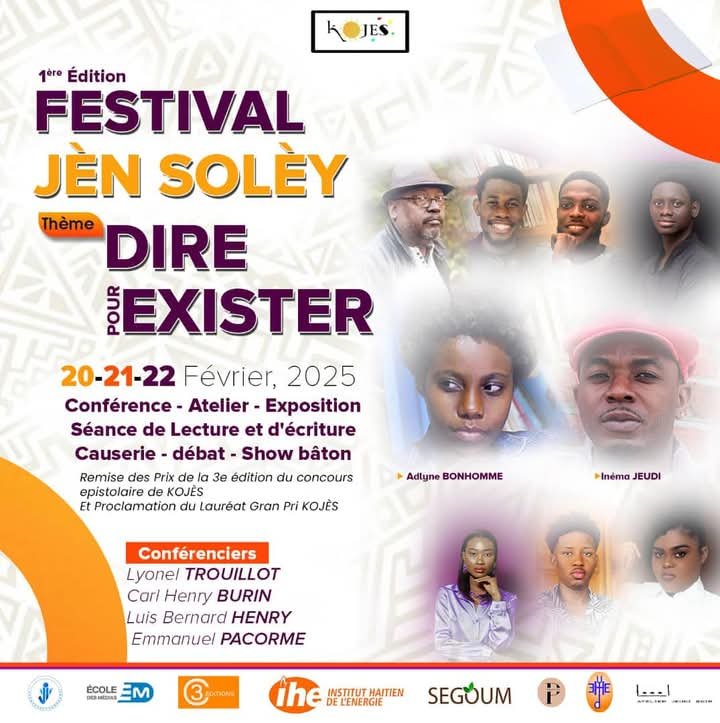
KOJES is a non-profit youth association founded in November 2020 in Cité Soleil, the largest slum in Haïti and the Caribbean. From its inception, KOJES has been committed to promoting education, culture, and training through various initiatives. One of its flagship projects is a space for social and cultural debate that has allowed many young people to meet and discuss social issues. Although the clashes that resumed in Cité Soleil in September 2022 temporarily halted this section, KOJES was able to recover by launching the KOJES letter-writing competition, aimed at reestablishing this precious connection between young people through literature. Today, the association is embarking on a new challenge with the Jèn Soley Festival, which will take place from September 20 to 22, 2025, under the evocative theme: "Saying to Exist." Among the guests participating in this festival are the renowned Lyonel Trouillot, the talented poet Carl Henry Burrin, the young slam poet Pacôme Emmanuel, the novelist Louis Bernard Henry, the poet Inima Jeudi, and the young poet Adlyne Bonhomme.
In Arabic, the family of words Amin, Iman or imam, imana designate faith, trust, security. This word is also present in the Swahili language (Kenya, Tanzania, East Congo Kinshasa) in the form imani: trust. "The term Imana is not the equivalent of God-Goddess which is a Western vision of divinity. Indeed,: "the term "imana" does not designate above all a personal being that should be honored and implored, but a diffuse fluid that should be captured." In other words, Imana is a neutral vital force that manifests itself in the inner cosmos of each living being." ¹ Imana, by Michel Darlin Johancy is a musical, symphonic and spiritual journey through three geographies: an inner geography of meditation, a cultural identity journey and an artistic musical stroll. These three itineraries unfold in Haitian spaces. This symphonic and spiritual journey takes place in 10 stages or 10 movements.
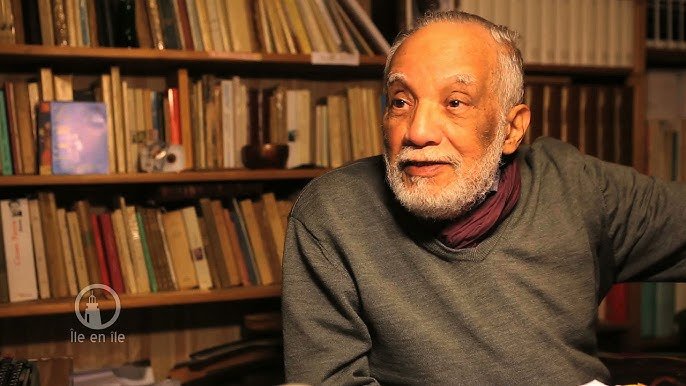
Frankétienne is the stage name of the man who officially bore the name Jean-Pierre Basilic Dantor. He was born in the Artibonite department of Haïti on April 12, 1936. His father, who did not recognize him at birth, was, according to his own account, an American industrialist who had come to do business in Haiti, and his mother was an Artibonite farmer. This makes Frank a similar case to the great Jamaican artist Bob Marley, who had a typical story, in addition to the fact that both men made their country known abroad and left their mark on their land from within through their art. Frank died on Thursday, February 20, 2025, in Delmas, his home town for decades. He was about to celebrate his 89th birthday.
Following the assault, and the hubs of the displaced on the night of July 21, 2024 in Ganthier; This Sunday, October 06, 2024, it was a gigantic crowd that swept through Saint Jean Marie Vianney, with cries, chant "Ann li pou n Chanje Gantye". They crisscrossed several corners of the establishment and danced the Jolivettes, at the height of the rooms in order to demonstrate their contents. Well planted decor, wooded walls, in the presence of many professionals and notaries; The initiative organized by the literary and philosophical club of Galette-Chambon (CLPGACH) brought together several hundred people who had come to encourage young warriors and overheated them at battle. We did not expect that in the midst of a chronic crisis, multifaceted that such a struggle would have triggered. This is the second time, reading was right in Ganthier. Thanks to the CLPGACH, the new warriors- readers won the great victory, at the right time, where the Gantiens.Ses hoped at all costs a liberation from the town.
The Mupanah Museum, a true jewel of Haitian culture and architecture, is an essential stop for anyone wishing to explore the rich history of this country. Through its magnificent exhibitions, the Mupanah offers a journey through the centuries, from the times of the indigenous Tainos to the present day, passing through the era of slavery, independence and the different governmental periods of the Republic from Haiti.
Les lapins sont des mammifères appartenant à la famille des Leporidae. Voici quelques-unes de leurs caractéristiques principales : 1. **Physique** : Les lapins ont un corps couvert de fourrure douce, des oreilles longues et droites, de grands yeux sur les côtés de leur tête, et une queue courte et duveteuse. Ils possèdent de puissantes pattes arrière adaptées au saut. 2. **Taille et poids** : La taille et le poids peuvent varier considérablement selon la race, allant d’environ 500 grammes pour les plus petits à plus de 5 kilogrammes pour les plus grands. 3. **Comportement** : Les lapins sont connus pour être sociaux et peuvent vivre en groupes dans la nature. Ils communiquent entre eux par différents moyens, y compris par des sons et des mouvements corporels. Les lapins creusent des terriers pour y vivre et se protéger des prédateurs. 4. **Alimentation** : Ils sont herbivores, se nourrissant principalement de foin, d’herbes, de feuilles, de fleurs, et de certains légumes. Leur système digestif est adapté pour traiter une grande quantité de fibres. 5. **Reproduction** : Les lapins sont réputés pour leur capacité à se reproduire rapidement, avec des gestations courtes d’environ 28 à 31 jours. Une portée peut compter de un à douze lapereaux, selon la race. 6. **Sens** : Ils ont une excellente vision périphérique pour détecter les mouvements tout autour d’eux, mais ont une zone aveugle juste devant leur nez. Leur ouïe est également très développée, leur permettant de capter des sons à de grandes distances. 7. **Espérance de vie** : En captivité, les lapins peuvent vivre de 7 à 10 ans, selon la race et les soins prodigués, tandis que dans la nature, leur espérance de vie est généralement plus courte en raison des prédateurs et des maladies. Ces animaux nécessitent des soins appropriés, notamment un régime alimentaire équilibré, de l’exercice, et une attention particulière à leur bien-être émotionnel et physique pour vivre une vie saine et heureuse en captivité.
Haïti is a true powerhouse in today’s literary world. For centuries, the country has been endowed with remarkable intellectual wealth that has led to exceptional achievements. Today, with more than 20 major active writers, whose works resonate far beyond Haitian borders, Haïti is one of the countries with the highest number of writers per capita. Among these writers, we can mention Edwige Danticat, Pulitzer Prize winner; Louis-Philippe d’Alambert, Goncourt Prize for Poetry in 2024; René Depestre, Goncourt Prize for Novels in 1982; Dany Laferrière, Renaudot Prize winner and member of the French Academy; Lyonel Trouillot and Frankétienne, globally known for their works; not to forget the current star of Haitian literature, finalist of the 2022 Goncourt Prize with his masterpiece Une somme humaine, referring to Makenzy Orcel. These names stand alongside legendary figures such as Jacques Roumain, Anténor Firmin, Jacques Stéphen Alexis, and Oswald Durant, forming significant marks on world culture through their writings. Today, this literary tradition continues to nourish new talents, but one problem persists: the absence of serious and well-structured Haitian publishing houses in sufficient quantity to support these young authors.
Haiti, the pearl of the Caribbean, offers a unique experience for travelers in search of authenticity, natural beauty and cultural discoveries. Contrary to popular belief, this country is full of unsuspected treasures that promise lasting memories. Here’s why a trip to Haïti is much more than a simple getaway: it’s an immersion in an incomparable cultural and natural wealth.
Imagine a world where every backpack you carry contributes to cleaning up the planet. That’s the bold vision behind Hill Plast to address a critical environmental challenge: plastic pollution. Founded on October 6, 2019 by Jhamily Hill Pompilus, certified in circular economy and business creation, Hill Plast is a Haitian company that transforms plastic waste into stylish and sustainable backpacks. Located in Haiti, the company aims to offer products that not only meet everyday needs, but also contribute to a cleaner world.

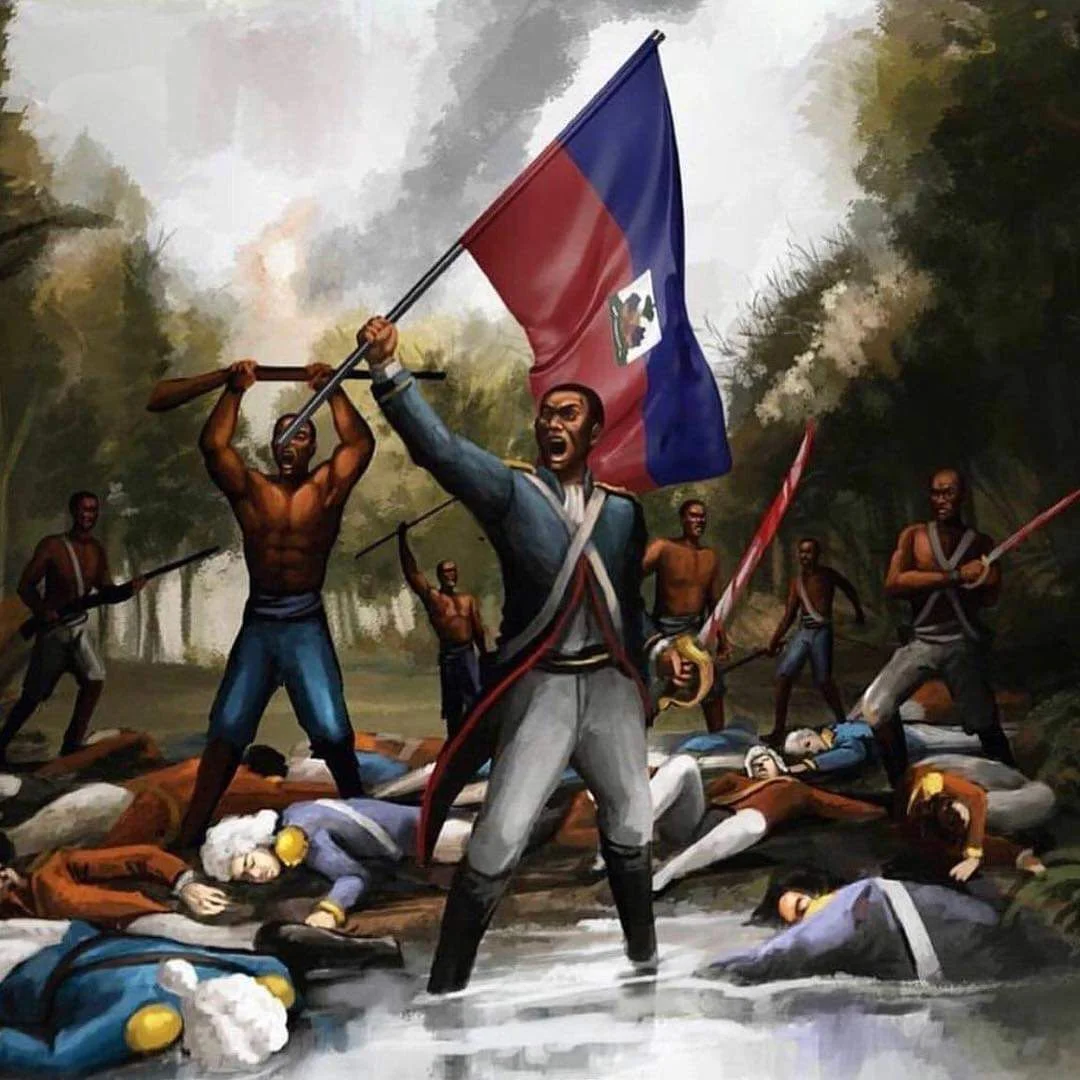
First black nation to free itself from slavery and gain independence from France in 1804 and influenced other liberation movements around the world, inspiring struggles for freedom and equality.

Haïti is blessed with spectacular natural landscapes, including white sand beaches, mountains and rich biodiversity.

Haïti has a rich historical heritage, including sites like the Citadelle Laferrière and the Sans-Souci Palace, listed as UNESCO World Heritage Sites.

Haïti has a rich and diverse culture, influenced by African, European and indigenous elements. Haitian music, dance, art and cuisine are celebrated around the world.