contact@haitiwonderland.com+509 36184317

Discover

Shopping Cart

Haiti’s Mottos Explained: "Unity Makes Strength" and "Liberty - Equality - Fraternity" Demystified
Haiti’s Mottos Explained:  Unity Makes Strength  and  Liberty - Equality - Fraternity  Demystified
Haiti’s Mottos Explained: Unity Makes Strength and Liberty - Equality - Fraternity Demystified

Haiti’s Mottos Explained: "Unity Makes Strength" and "Liberty - Equality - Fraternity" Demystified

Discover the profound meaning of Haiti's mottoes: "Unity is Strength" and "Liberty-Equality-Fraternity." History, symbols, and legacy of the first free Black republic.

Haiti, the world’s first independent Black nation, carries within it two powerful mottos that tell the extraordinary story of its struggle for freedom. These phrases, engraved in the heart of every Haitian, are not mere words: they embody the fundamental values ​​of a nation born from the most audacious revolution in modern history.

"Unity Makes Strength": The Motto Inscribed on the Coat of Arms of the Republic

"Unity Makes Strength" appears on the Coat of Arms of the Republic of Haiti, at the center of the national flag. This motto appears on a trophy of arms shaded by the fronds of a palm tree, itself surmounted by the cap of liberty, a universal symbol of emancipation.

This maxim was not chosen by chance. It recalls a crucial moment in Haitian history: the union of different revolutionary forces that defeated the Napoleonic army in 1804. Former slaves, freedmen, mulattoes, and blacks gathered under a single banner to win their independence.

Why this motto still resonates today

In the post-revolutionary context, "Unity is Strength" represented a vital call for national cohesion. The new country had to overcome the internal divisions inherited from the colonial system: divisions of color, class, and region. This motto reminded us that only unity could guarantee the survival of the young nation in the face of external threats.

Even today, this phrase remains relevant. It invites Haitians to transcend their differences to build a better future together. In a country facing considerable economic, political, and social challenges, the call for national unity remains critically relevant.

The Symbolism of the Trophy of Arms

The trophy of arms on which the motto appears includes cannons, cannonballs, flags, and drums. These military elements recall the armed victory over oppression, but also the vigilance necessary to preserve hard-won freedom. The palm kernel that shades these arms symbolizes the Haitian land itself, generous and protective.

"Liberty - Equality - Fraternity": The Constitutional National Motto

According to Article 4 of the 1987 Constitution of the Republic of Haiti, the national motto is "Liberty - Equality - Fraternity." This formulation, famous worldwide as that of the French Republic, takes on a particular significance in the Haitian context.

Haiti: The First Nation to Truly Embody These Values

While this motto was born with the French Revolution of 1789, it was Haïti that truly embodied it for the first time in world history. While revolutionary France maintained slavery in its colonies, Haitian revolutionaries definitively abolished this abominable institution and proclaimed universal equality among all citizens.

Liberty: Haïti won its freedom by force of arms, becoming the first independent Black republic in 1804. This freedom was not a gift, but a conquest won at the price of blood.

Equality: The Haitian Constitution of 1805 proclaimed that all Haitians, regardless of their color, would henceforth be called "black," thus symbolically abolishing the racial distinctions that had divided colonial society.

Fraternity: The Haitian Revolution created a nation where former slaves and freedmen had to learn to live together as brothers, transcending the hierarchies imposed by the colonial system.

A Universal Inspiration

The Haitian Revolution and its motto have inspired numerous emancipation movements around the world. From slave revolts in the Caribbean to abolitionist movements in North America, the Haitian example demonstrated that freedom was possible and that equality was not just an abstract philosophical concept.

Two Complementary Mottos: A Coherent Message

Although Haïti has two distinct mottos, they are not contradictory but complementary. "Unity Makes Strength" inscribed on the coat of arms of the Republic represents the means to achieve the ideals expressed by "Liberty - Equality - Fraternity."

National unity is the path; the three republican values ​​are the destination. Together, these mottos form a political and moral program for the Haitian nation.

A heritage to preserve and pass on

These mottoes are not mere symbolic ornaments. They constitute the moral and philosophical foundation of the Haitian nation. Each generation has the responsibility to understand them, bring them to life, and pass them on to future generations.

In a world where the values ​​of liberty, equality, and fraternity are still far from universally respected, Haïti carries a message of hope and resistance that transcends its borders.

The Haitian Flag: Living Symbol of National Mottoes

Official Description

The emblem of the Haitian Nation follows a precise description established by the Constitution:
- Two strips of fabric of equal dimensions: one blue at the top, one red at the bottom, placed horizontally.
- In the center, on a square of white fabric, are the Arms of the Republic.
- These arms include the palm tree topped with the cap of liberty, shading with its palms a trophy of arms with the legend "Unity is Strength"

The Symbolism of the Colors

The blue and red come from the French tricolor flag, from which Jean-Jacques Dessalines is said to have torn off the white stripe during the Congress of Arcahaie in 1803, thus symbolically rejecting white colonial domination. The blue represents Black people and the red represents Mulatto people, two groups that were to unite to defeat the oppressor.

The white square in the center bears the coat of arms of the Republic and creates a visual contrast that highlights the motto "Unity is Strength," constantly reminding Haitians of the importance of their national cohesion.

Living Mottos for Haiti’s Future

Haiti’s mottoes are not relics of the past, but guides for the future. "Unity is Strength" and "Liberty - Equality - Fraternity" remind Haitians of the values ​​that enabled their ancestors to accomplish the impossible: defeat the largest army in the world and found the first free Black republic.

These mottoes invite every citizen to contribute to building a united, free, egalitarian, and fraternal Haiti. They constitute a precious heritage that each generation must embrace and bring to life in its own time.

Understanding these mottoes is understanding the soul of Haiti. It means connecting with a unique history, with universal values ​​won through courage and sacrifice. It also means taking responsibility for passing this legacy on to future generations, so that the flame of freedom lit by the heroes of 1804 never goes out.

Share
About the Author
Appolon Guy Alain
Appolon Guy Alain
Appolon Guy Alain

Full Stack Developer, Créatif, expérimenté, passionné des nouvelles technologies et de l’art.

See other articles from Appolon Guy Alain
Leave a comment

Recently Posted

Haïti : Boukanye

In the picturesque landscape of Cap Haïtien, stands a place that embodies the very essence of Haitian art and cuisine: Boukanye. This pirate house, founded in July 2016, has quickly become a must-see gem among area restaurants, attracting visitors from around the world for its rustic atmosphere and innovative menu. Located on the boulevard, Boukanye is much more than just a restaurant; it’s an experience in its own right. As soon as you walk through its doors, you are greeted by decor that celebrates local craftsmanship and the history of the pirates who once sailed these waters. Walls adorned with vibrant paintings and sculptures demonstrate the venue’s commitment to Haitian art, creating a warm and authentic ambiance. But Boukanye is not content to seduce with its aesthetic; its cuisine is just as captivating. Inspired by local flavors, the restaurant offers an inventive fusion of traditional Haitian dishes and contemporary culinary techniques. Whether for breakfast, lunch or dinner, Boukanye’s menu offers a tantalizing variety of seasonal dishes, accompanied by exquisite cocktails that celebrate local ingredients. What also sets Boukanye apart is his commitment to innovation. By launching a virtual tour accessible via smartphone or virtual reality headset, the restaurant has pushed the boundaries of the culinary experience. Thanks to this immersive technology, visitors from around the world can now explore the charms of Boukanye from home, immersing themselves in its captivating atmosphere and discovering its unique culinary delights. https://haitiwonderland.com/haiti-virtual-reality-ht/bar--restaurant/haiti--boukanye--visite-virtuelle/7 Whether you are a resident of Cap Haïtien or a traveler eager for authentic experiences, Boukanye offers an unforgettable getaway into the very heart of Haitian culture. By combining art, cuisine and innovation, this restaurant perfectly embodies the vibrant and dynamic spirit of Haiti, inviting everyone to embark on an unparalleled sensory journey.

Newsletter

Subscribe to our newsletter to stay informed of all our activities and news on Haiti.

Pity or the work of an old soul crushed under the weight of an absinthe-flavored existence

The word crisis carries an infinite number of meanings. No intention of revealing them all this afternoon. However, a few clarifications are necessary. A kid whose parents do not have enough money at Christmas to buy her a Little Black Mermaid doll has a fit and locks herself in her room without touching her meals for the day. A boy whose dog was suddenly poisoned by a neighbor in revenge or shot after contracting rabies, losing a faithful friend overnight, enters into crisis. Finally, a society in the grip of all sorts of mutations and whose leaders are weak, perhaps prolonged in a deep crisis. In the first case, the young girl sulks to attract the attention of her parents in order to feel appreciated by children her age at school or in the neighborhood. Today, thirty minutes of negotiations can be enough to find a lasting solution. In my day, a few well-aimed belt blows would have overcome this whim. But, humanity evolves, they say. In the second case, this boy can find his smile again after a few weeks. He needs a little attention and, probably, another dog. As Stendhal would say, only passion triumphs over passion. In the last case, this society led by inepts is shaken to its deep foundations. Its institutions can disintegrate one by one. The vital forces dissolve in no time. This situation creates a societal tsunami that destroys all life within this community. It is indeed a crisis. The crisis from this point of view constitutes an alarming, desperate situation in the existence of a community where nothing is going well. Chaos reigns supreme. The very essence of life disappears. The individual can take precedence over the community. Everyone tries to solve their problems without worrying about others. The closest neighbor is relegated light years away from you. How can we turn to creation? How can we continue to conceive of otherness? How can the artist absorb this great collective disarray as a source of motivation? These are the questions I must answer. An artist sees and feels what ordinary mortals cannot even imagine in a thousand-year life. He creates to denounce, when his conscience as a human being is revolted. He exalts heroes or the homeland according to his feelings. He sings the beauty of an irresistible, captivating or ugly resplendent woman. He can also use the ambient desolation to give meaning to life. Creating in literature as in the arts in general does not depend on the situation. The act of creation depends on the creator’s disposition. Events paralyze some and galvanize others. Creating is enjoyable. Everyone therefore enjoys according to their own whim. Writing opens the way to change. The writer takes a different look at the world. By embedding himself in reality, he embellishes it, makes it better or hideous depending on the message he intends to share. All things considered, with him, life is never fixed. Writing is putting the world in a jar to travel the universe. The artist broods over his work in all weathers. Oswald Durand was delighted to see Choucoune’s beautiful body from his secret observatory. Musset, on the other hand, was in pain writing his October night. As for Dany Laferrière, in exile, he described the horrors of the Duvalier dictatorship and the carefree attitude of the young girls in his neighborhood in this violent and dangerous world. Ultimately, the writer lives in a society with values ​​that he shares or not. They condition his existence or have no hold on him. In many ways, the surrounding world serves as his laboratory. He carries out his experiments there. He casts a new, worn, disillusioned, melancholic, violent, bitter look at the world depending on his mood. Pitié is the work of an old soul crushed under the weight of an existence that tastes of absinthe. Young Mike Bernard Michel lives by expedients and lies. The hands of life fall on him with indescribable violence. Misfortune embraces him day and night. Should we give up? Musset liked to say: "Man is an apprentice, pain is his master. And no one knows himself until he has suffered." The artist must produce under all skies. Such is his vocation. Incompetents in power, legal or highway bandits, the high cost of living, unemployment, heartaches are all subjects of concern for him. If it is true that a hungry belly has no ears, the fact remains that it keeps the brain awake. What am I saying, it stimulates it to the point of creating timeless works. Mr. Pitié, you have a bright future ahead of you. Work of Jean Rony Charles, the book is available from Éditions Repérage.

Meet Edison Juste: An Outstanding Singer

Beyond the chaos, in the heart of the desolation, there are voices that resonate. They shatter the silence, depicting the macabre reality of everyday life in a thousand shards, thus defying evil to give meaning to life and make each day a place where hope flows like a stream of honey. Edison Juste’s voice is one of them: it sings of hope, of love, while praising God. It was in Carrefour, 27 years ago, that the young singer’s sun rose within a family of four children. Edison Juste is the youngest. Between the diplomat, the lawyer, and the entrepreneur that he is, singing remains his greatest passion for this young married man. Like many Haitian singers, Edison Juste took his first steps at a very early age in a choir—Yahvé Shama—alongside children his own age. He would later become the lead singer. This was in 2010. Asked about his first real encounter with music, he replied: q~It was in 2013 that I really started singing. It was during a competition organized by Styl Doz at the Évangélique de la Grâce church,~q, says the active member of the group YES (Yon Enstriman Sen), who also expresses his gratitude to singer Joseph Rhousteau, who inspired and coached him for several years. Edison Juste stands out not only for his style, but also for his versatility. His ability to make the notes vibrate with a moving candor seems limitless. Yet, he has his preferences: q~There isn’t a single style that characterizes me. I see myself as a liquid: I take the shape of the container. Even if I remain haunted by Worship, Compass, and Jazz, he confides. Today, the Carrefour native boasts a rich and varied musical repertoire. From 2010 to 2025, he has grown both in maturity and in renown: five competition wins, his first song recorded in 2018, joining the band YES, his participation in the second album, Se pou m beni, a collaboration with Amos César in a musical, and his contribution to the album Anprent by maestro Berwin Sydney. For him, this journey is already a great source of inspiration. Edison Juste never does without the presence of God, whether in the creative process or during his stage performances: "What influences and motivates me the most is always the presence of Elohim, and the audience’s desire to savor and appreciate my work," he says.

Recently Posted

History

History

First black nation to free itself from slavery and gain independence from France in 1804 and influenced other liberation movements around the world, inspiring struggles for freedom and equality.

Natural beauty

Natural beauty

Haïti is blessed with spectacular natural landscapes, including white sand beaches, mountains and rich biodiversity.

Heritage

Heritage

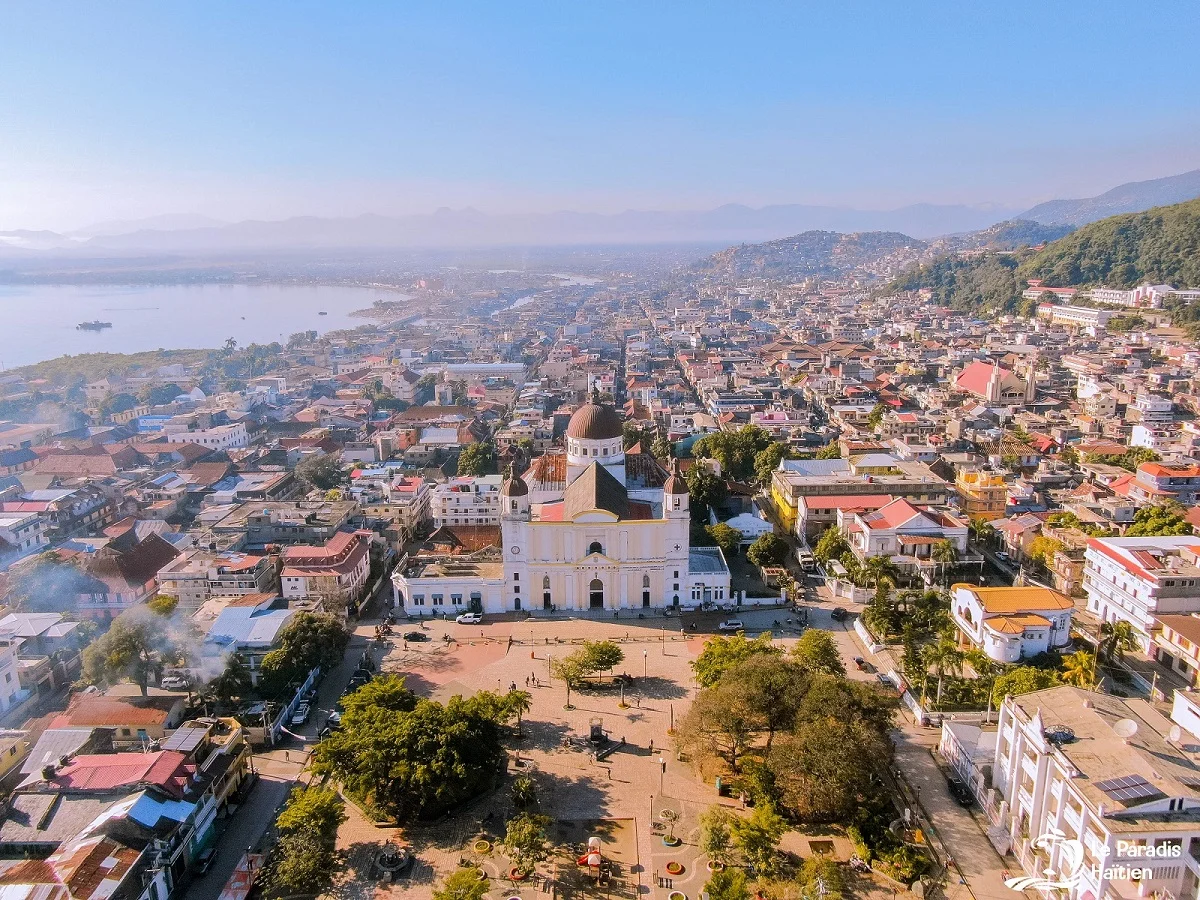
Haïti has a rich historical heritage, including sites like the Citadelle Laferrière and the Sans-Souci Palace, listed as UNESCO World Heritage Sites.

Culture

Culture

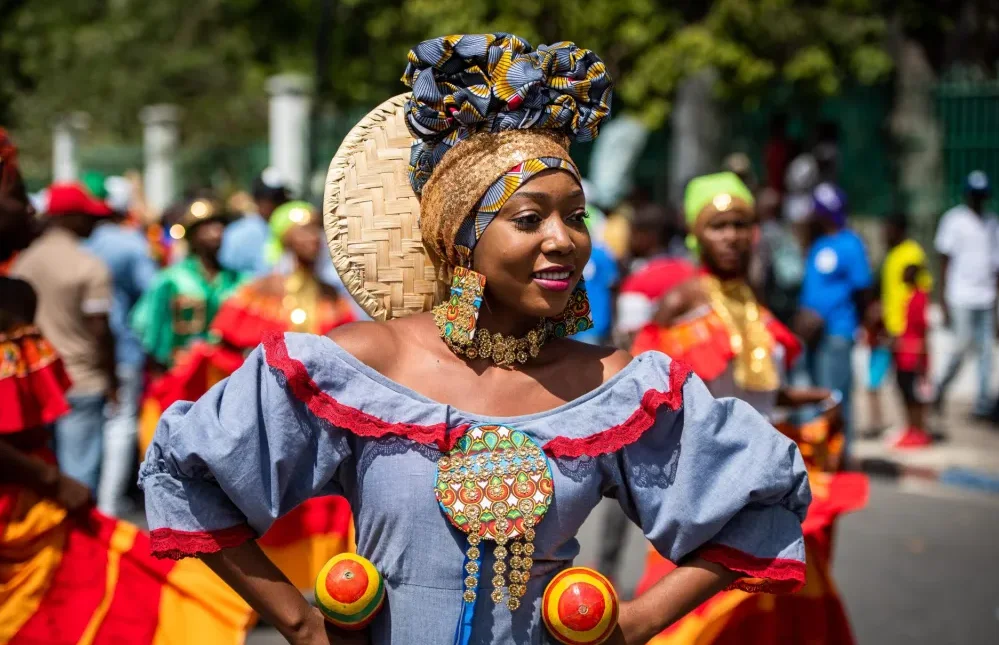
Haïti has a rich and diverse culture, influenced by African, European and indigenous elements. Haitian music, dance, art and cuisine are celebrated around the world.

  • +
    • Post