contact@haitiwonderland.com+509 36184317

Discover

Shopping Cart

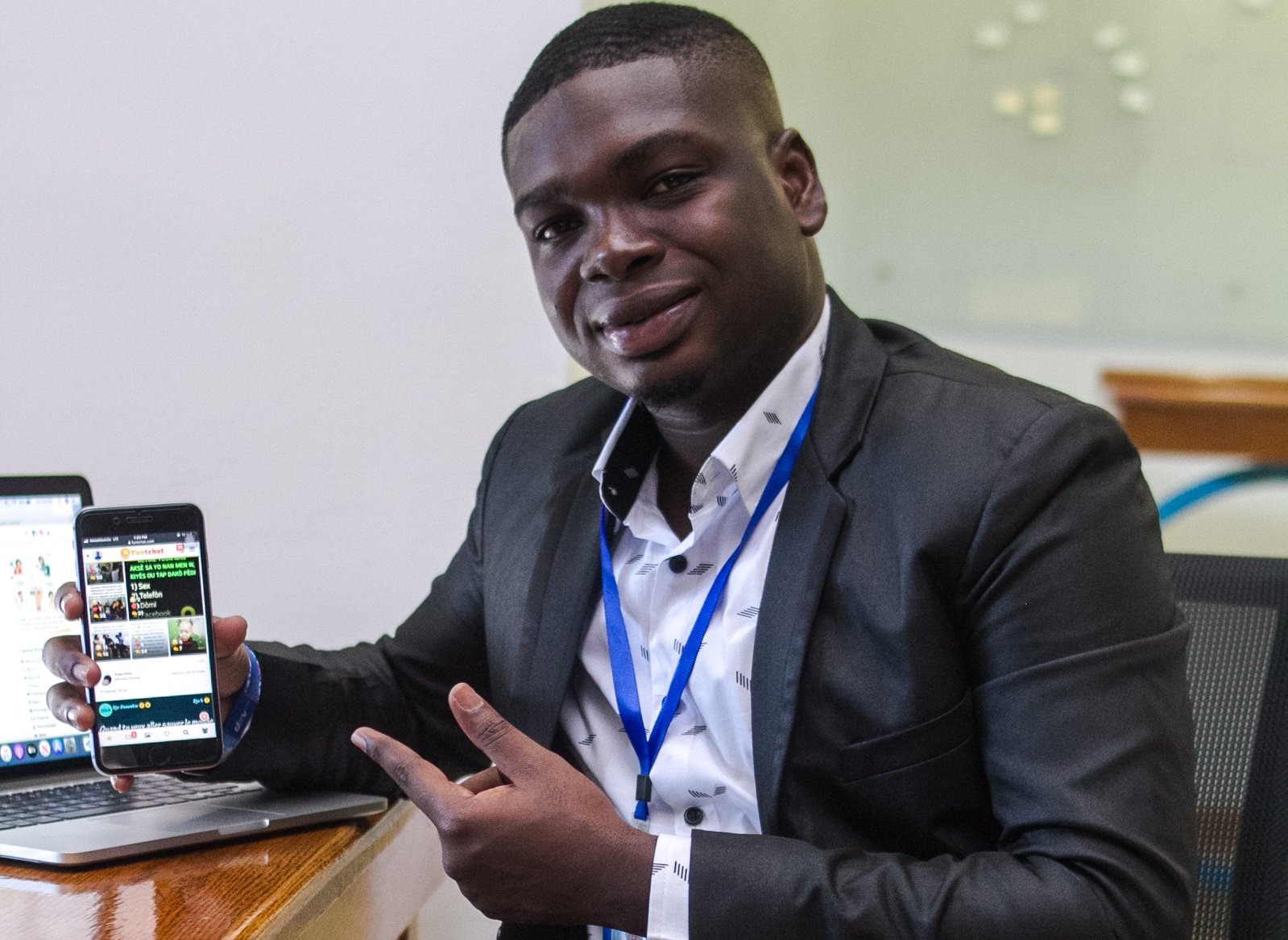
John Wisky Louirard, the commitment of a generation that still believes in Haiti

John Wisky Louirard, the commitment of a generation that still believes in Haiti

Discover the commitment of Haitian youth to a promising future with John Wisky Louirard. A glimmer of hope for Haiti.

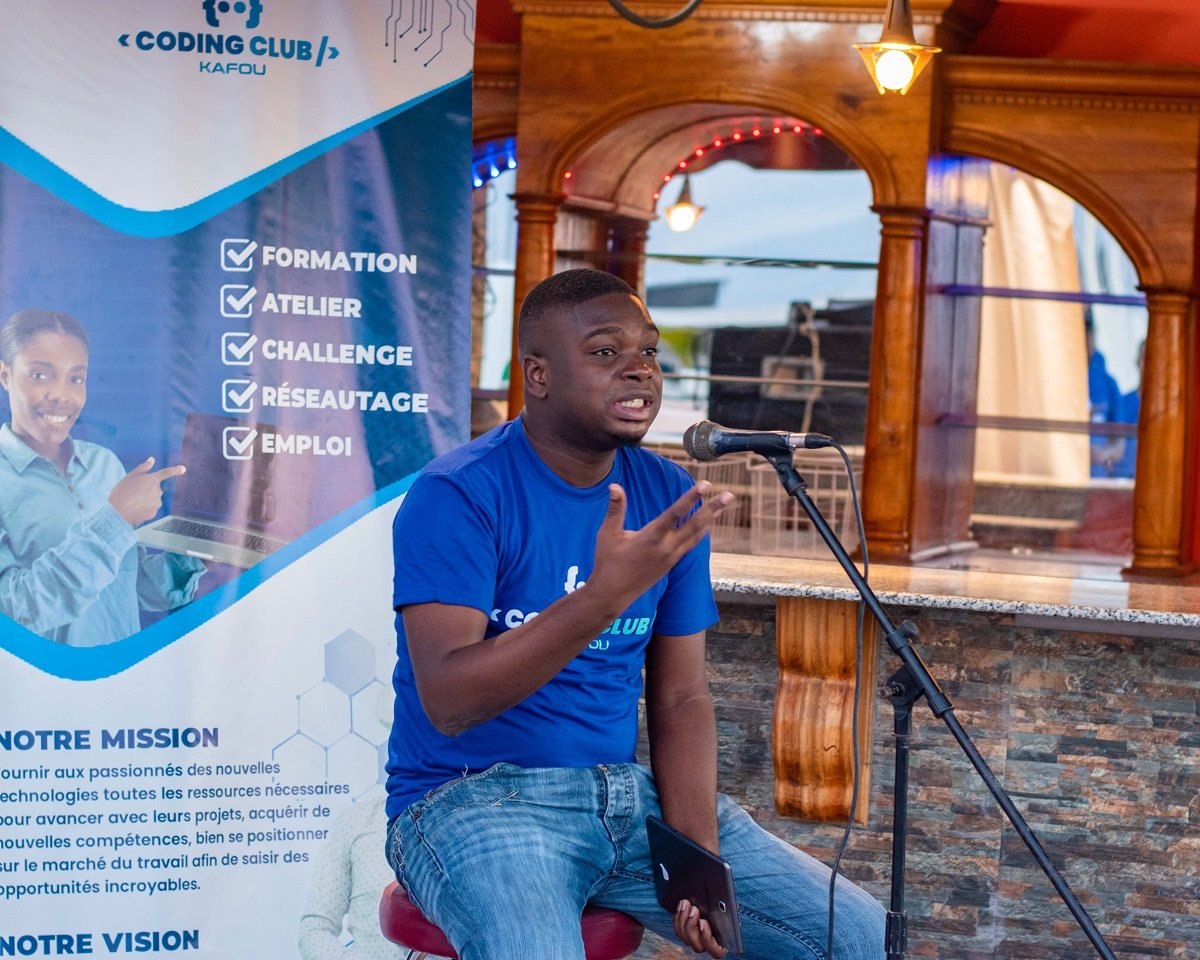
John Wisky Louirard is a young man from Gonâve, the 6 janvier 1996. who has chosen to dedicate a significant part of his life to education, culture, and supporting the most vulnerable. Trained in educational sciences at USFAH, theology at INUKA, art history and archaeology at IERAH/ISERSS, as well as online child psychology (FUN), he has built an academic path deeply rooted in understanding human beings and in the desire to transform society through knowledge. He describes himself as a young man who grew up in the shadows, but who has managed to accomplish many things through his personal projects. Among them is PROFORMAT-AIDE, a training platform he established to provide free support to numerous young people in the fields of psychology and educational sciences. He is also the driving force behind LENDI BATBOUCH, a training and reflection space designed to empower young people. Educational and cultural initiatives across the country. His commitment doesn’t stop there. He also helps many children with learning difficulties, without asking for anything in return. For him, offering a child a new perspective on the future is already an act of social transformation. He has conducted various training sessions throughout the country on Creole language and culture, leadership, and technology, convinced that these elements are essential pillars of individual and collective development. John is also the driving force behind the Port-au-Prince book fair, as he is a founding member of ACSLPAP, which organizes the event every year-end in the Haitian capital.

Haïti
Haïti
Haïti

Fundamental Values as a Compass

Several fundamental principles guide his daily actions: living in harmony with one another; defending and promoting Creole language and culture; and promoting technology as a tool for empowerment. These convictions lead him to dedicate himself to those in great need who, all too often, find no one to listen to their stories. His commitment aims to make a concrete contribution to the rehabilitation of young Haitians, particularly through mentoring, training, and the transmission of strong values.

See as well

Haïti
Haïti
Haïti

A Vision of Hope for Haïti and its Youth

Also a poet and slammer, the young man is currently working on a collection of poems scheduled for publication in 2026. This literary project is a continuation of his intellectual and cultural commitment, he told us. He is also developing a training project focused on preserving and perpetuating Haitian moral and cultural values, believing that the country’s future also depends on the strength of its ethical foundations.
Despite the difficult realities of life for a young person currently living in Port-au-Prince, he remains convinced that renewal is possible for Haiti. He has a different perspective on his country. Where some see only collapse, he sees a youth that is beginning to understand the challenges and to engage in various fields. For him, the future is built through education, work, and perseverance, because these paths do not betray those who invest themselves in them seriously. His message to Haitian youth is consistent. He urges them not to give up on school: "Go to school. Learn. Get involved. Dare. Preserve your moral and ethical values in everything you undertake," he declared. Furthermore, he advises young people to refuse to submit to the scourge of corruption: "Reject corruption and compromises that destroy dignity." He reminds them that every young person represents a great force for the country and that doing a good deed every day is a concrete way to build the edifice of change.
Through his exemplary journey, John Wisky Louirard embodies a generation that still believes in hope, beyond the stereotypes that characterize Haitian youth in these very difficult times. He aspires to be an integral part of a generation that chooses to act, to educate, to mentor, and to pass on its knowledge. A generation that refuses to give up on Haïti and that works, step by step, to prepare a better tomorrow.

Share
About the Author
Moise Francois
Moise Francois
Moise Francois

Journalist editor, poet and apprentice lawyer.

See other articles from Moise Francois
Leave a comment

Recently Posted

Jean-Jacques Dessalines, leader of the Haitian Revolution

In the annals of the history of Haiti, an island located in the Caribbean at the entrance to the Gulf of Mexico and shared with the Dominican Republic, Jean-Jacques Dessalines emerges like a phoenix from the ashes of oppression. Born a slave on September 20, 1758 in the home of Henri Duclos, in Cormier (Grande-Rivière-du-Nord), in the French colony of Saint-Domingue, Dessalines was a Creole of African (Afro-Caribbean) origin. Freed during the 1794 abolition achieved through slave revolts, actually served as an officer in the French army during the French Revolution. At that time, the ideas of freedom and equality were at the heart of the concerns of the inhabitants of the colonies. Dessalines actively participated in the fighting against the Spanish and British forces, alongside the French, in Santo Domingo. Having risen to the rank of Lieutenant General, Jean-Jacques Dessalines turned against the French during the Leclerc expedition, sent to Saint-Domingue by Bonaparte to reestablish colonial authority and slavery during the Haitian Revolution. After the capture and deportation of Toussaint Louverture to France on June 7, 1802, Dessalines assumed a leading role in continuing the struggle for independence. He led numerous battles, including the battle of Crête-à-Pierrot in March 1802, where he galvanized his soldiers with his famous declaration: “Let those who want to remain slaves of the French leave the fort, let those, on the contrary, who want to die as free men, line up around me.” On January 1, 1804, Jean-Jacques Dessalines achieved the long-awaited goal of independence by proclaiming Haïti as a sovereign nation, becoming the second country in the Americas to gain independence from a colonial power. He became the first leader of the newly formed nation and was named Emperor under the name James I. However, his imperial reign was marked by authoritarian and brutal policies, including the massacre of many white settlers and the redistribution of land to peasants that was in the hands of the generals of the independence army. In addition, he organized the hunt for delinquents in the city while implementing rigorous agrarian policies, considering that they represented a threat to the stability of the nation, these controversial actions caused divisions within Haitian society. Dessalines was assassinated on October 17, 1806 following a plot organized by some of his generals in the Haitian army. His death marked the end of his brief but influential period in power. Despite the controversies surrounding his methods, he is recognized as the main architect of Haiti’s independence and his name was honored in 1903 by being attributed to the Haitian national anthem, La Dessalinienne, composed by Justin Lhérisson.Finally, the great visionary man Jean Jacques Dessalines remains an emblematic figure in the history of Haiti, recognized for his role in the fight for independence and the end of slavery in the region.

Newsletter

Subscribe to our newsletter to stay informed of all our activities and news on Haiti.

Timoun se Moun: A poetry competition to promote children’s rights in Haiti

A wounded country. Bent under the weight of a multidimensional crisis. Widespread violence. Hope slammed shut. A sacrificed generation. Children are increasingly threatened. They are increasingly confronted with all forms of vulnerability that hinder their overall development. ACTIF is launching the second edition of the "Timoun se Moun" poetry competition. A citizen initiative in which the organization uses writing as a springboard to build what life deprives Haitian children of. Pain can be turned into gold. For ACTIF (Community Action for Transformation and Formal Integration), poetry is a philosopher’s stone. Not only for this organization, but also for all those who believe that writing can help rekindle the stars. Faced with this urgent need for action, this is "an initiative to raise awareness, denounce, and affirm loud and clear that every child matters, every child deserves protection, hope, and a future," reads the competition’s descriptive document. So what do you intend to do with your human light? Through this competition, participants have the opportunity to engage in an act of resistance, like a cry of conscience to raise the voice of broken childhoods. Open from May 18 to June 18, "Timoun se Moun" is open to all Haitians living in the country and aged 18 and over. Texts must be submitted in Creole. Behind this initiative, ACTIF intends, on the one hand, to affirm our cultural and linguistic identity, and on the other, to enrich our Creole literature, promote it, and encourage creativity in our vernacular. The text must not exceed 500 words. The format chosen is PDF, Times New Roman font, size 12, and 1.5 line spacing. This competition aims to offer a touch of affection to these children who are the first victims of the country’s descent into hell. To evaluate the literary quality and essence of the submitted texts, a jury is composed of Ruthza Paul, Douglas Zamor, and Darly Renois. The former is a physician and winner of the first edition of this competition. The other two work in the fields of sociology, psychology, and literature. In addition to the "Jury Prize: 15,000 HTG + books + certificate" and "Audience Prize: 5,000 HTG + certificate + books" prizes, the best texts will be included in an anthology to be published by Éditions Répérages. It should be noted that there will be one winner for each prize. This initiative reflects ACTIF’s commitment to honoring authors who embrace the cause of underprivileged children while enriching Haiti’s literary heritage. This competition extends a helping hand to all those who believe that through poetry, one can transform one’s life into a masterpiece. At the same time, it offers the opportunity to contribute to ACTIF’s child protection program. Each participant may submit a single text. It must be sent by email to the following address: actifkonkoupwezi@gmail.com. The partial results will be published on June 30, 2025, and the final results on July 18, 2025. For more information, visit ACTIF at the following address: 18 Rue Desdunes, Imp. Thoby, Mahotière 79, Carrefour, Haiti, or contact the organization at the following number: (+509) 38 44 57 57. More than just a contest, ACTIF invites you to say No. No to forgetting. No to passivity. No to violence against children and the violation of their rights.

Recently Posted

History

History

First black nation to free itself from slavery and gain independence from France in 1804 and influenced other liberation movements around the world, inspiring struggles for freedom and equality.

Natural beauty

Natural beauty

Haïti is blessed with spectacular natural landscapes, including white sand beaches, mountains and rich biodiversity.

Heritage

Heritage

Haïti has a rich historical heritage, including sites like the Citadelle Laferrière and the Sans-Souci Palace, listed as UNESCO World Heritage Sites.

Culture

Culture

Haïti has a rich and diverse culture, influenced by African, European and indigenous elements. Haitian music, dance, art and cuisine are celebrated around the world.

  • +
    • Post