Ingredients:
- 1 cup millet
- 2 cups water
- 1/2 teaspoon salt
- 1 tablespoon olive oil (optional)
Hey Generation Z, I know what you’re thinking: another weird dish? But trust me, even if it doesn’t look like much, millet is amazing! At first, you might cringe, but once you taste it, you’ll be asking for more. So, are you ready to embark on this culinary adventure?
Read the article in :
- 1 cup millet
- 2 cups water
- 1/2 teaspoon salt
- 1 tablespoon olive oil (optional)
1. Rinse the millet: Rinse the millet under cold water to remove any excess dust or impurities. 2. Cook the millet: In a saucepan, combine the millet, water, salt, and olive oil (if using). Bring to a boil over high heat.
3. Reduce heat and simmer: Once the water boils, reduce heat to low, cover the pan, and simmer for about 15 to 20 minutes. The millet is ready when it has absorbed all the water and is tender.
4. Fluff and serve: After cooking, use a fork to fluff the millet. Serve it warm, as a side dish, or as a base for other dishes.

Facebook : https://www.facebook.com/haitiwonderland
Youtube : https://www.youtube.com/@haitiwonderland
Instagram : https://www.instagram.com/haitiwonderland/
Twitter : https://twitter.com/haitiwonderland
Linkedin : https://www.linkedin.com/in/haitiwonderland/
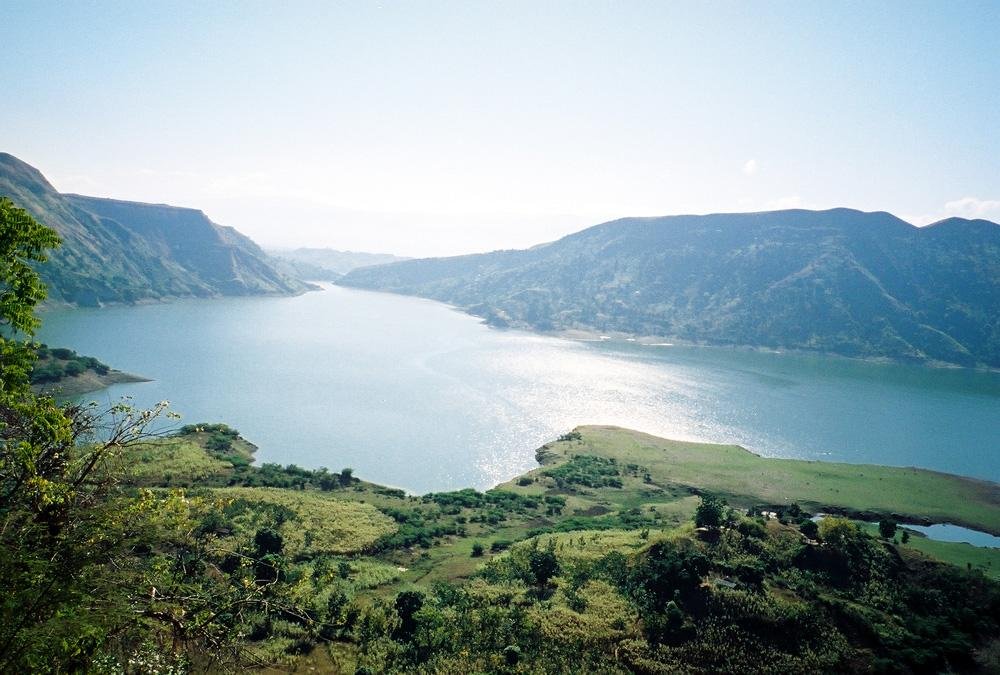
The Center department, commonly called Plateau Central, is one of the ten (10) departments of Haïti most robust in the face of certain natural phenomena. Before becoming one of the ten (10) departments of Haiti, the Center department was part of the Great North. It is renowned for its natural landscapes, its biosphere climate and its resistance to certain natural phenomena. In addition to its natural productions such as corn, millet and livestock, the Center department is also known for its high mountains which constitute a robust defense against certain natural phenomena such as earthquakes and floods. Composed mainly of high mountains, the department of Charlemagne Peralte and Benoît Batravil is the only one of the ten (10) not to have an outlet to the sea. However, its inhabitants take advantage of the vast rivers, rivers and lakes which cross it . With an area of 3,487 km², the population of the Center department is estimated at 678,626 according to a study carried out in 2009. On this same area, the department is divided into four (4) districts and twelve (12) communes. Bordered to the east by the Dominican Republic, the Center department connects other departments of the country such as Nord and Artibonite, and connects the two countries of the island through border areas like Balladère, Hinche and Cerca Carvajal. In the Center department, there are sites that could attract tourists for their natural beauty. In Saut d’Eau, there is the Saut d’Eau waterfall, in Hinche we find the Zim basin, the Péligre lake, the Péligre hydroelectric dam, the Artibonite river, and the Deux river (2 ) Rooms in Thomonde, more precisely in "El Manni", not far from the communal section of Caille-Epin. Thanks to its strong mountains and its natural climate, the Center department remains one of the most resistant departments in the event of an earthquake in Haiti.
Subscribe to our newsletter to stay informed of all our activities and news on Haiti.
Haiti, as a Caribbean nation rich in history and culture, has played a crucial role in the promotion and defense of human rights since its independence in 1804. The Universal Declaration of Human Rights (UDHR), adopted by the he United Nations General Assembly in 1948, embodies the fundamental principles of human dignity, equality and freedom for all individuals, regardless of their origin or status.
The international music scene buzzed with excitement on Saturday, October 20, 2023 when talented Haitian singer Rutshelle Guillaume was crowned “Best Caribbean Artist” at the prestigious Trace Awards & Festival 2023, held in Kigali, Rwanda. This award recognizes a remarkable career and a significant contribution to the evolution of Caribbean music. Rutshelle Guillaume is an artist who has captured the hearts of music lovers thanks to her undeniable talent and her numerous quality productions. The Trace Awards & Festival is an event renowned for its promotion of Afrocentric music and culture. It is a platform that celebrates the musical diversity of the Caribbean while highlighting the creativity of the region. Caribbean artists are honored for their exceptional contribution to the enrichment of world music. Rutshelle Guillaume’s victory at this prestigious event is not only a tribute to her talent, but also a recognition of the richness of Caribbean music and its ability to transcend geographical boundaries. The Haitian singer knew how to embody this musical diversity and touched the hearts of many listeners around the world. Her career, marked by memorable titles and collaborations with other talented artists, has made her an ambassador for Caribbean music on an international scale. His commitment to promoting Haitian and Caribbean culture has helped strengthen ties between artists in the region and the rest of the world. Rutshelle Guillaume continues to inspire many emerging artists and show that passion, talent and dedication can lead to extraordinary achievements. His victory at the Trace Awards & Festival 2023 is a well-deserved tribute to his influence and undeniable contribution to Caribbean music. Ultimately, Rutshelle Guillaume’s recognition as "Best Caribbean Artist" at the Trace Awards & Festival 2023 is a reminder of the power of music to unite cultures and celebrate artistic diversity. It is a historic moment for the Haitian artist and a source of pride for the Caribbean as a whole. Rutshelle Guillaume continues to be an inspiration to many artists and music lovers around the world, and her music will live on as a testament to her incredible talent and dedication to her art.
The Olympic Games are in full swing, and this year, Haïti is making a remarkable entrance. For Haitian athletes, these games are not only an opportunity to demonstrate their sporting talent, but also to fly the flag for their culture and history. And this, thanks to an exceptional collaboration between Stella Jean and Philippe Dodard.
On January 1, 1804, Haïti became free after a fierce struggle against colonization and slavery. Located in the Caribbean region, it occupies the western third of the island of Hispaniola, which it shares with the Dominican Republic. With an area of 27,750 km², it is bordered to the north by the Atlantic Ocean, to the south and west by the Caribbean Sea and to the east by a land border of 376 kilometers with its eastern neighbor. This geographical location, rich in contrasts, shapes not only its identity, but also the economic and environmental challenges that the country must face.

First black nation to free itself from slavery and gain independence from France in 1804 and influenced other liberation movements around the world, inspiring struggles for freedom and equality.

Haïti is blessed with spectacular natural landscapes, including white sand beaches, mountains and rich biodiversity.

Haïti has a rich historical heritage, including sites like the Citadelle Laferrière and the Sans-Souci Palace, listed as UNESCO World Heritage Sites.

Haïti has a rich and diverse culture, influenced by African, European and indigenous elements. Haitian music, dance, art and cuisine are celebrated around the world.