contact@haitiwonderland.com+509 36184317

Discover

Shopping Cart

What is the name of Haiti’s largest plateau?

What is the name of Haiti’s largest plateau?

Haiti’s largest plateau is the Central Plateau. This vast territory, located in the central region of the country, is an emblematic area of ​​Haiti’s environment, rich in natural resources, history, and agricultural potential. In this article, we will explore the characteristics of this plateau that make it an essential region for understanding Haiti.

Impressive Geography

The Central Plateau in Haïti is a vast region located mainly in the Centre department. It is characterized by an interior plain surrounded by mountains, notably the Matheux Range to the west and the Trou d’Eau Range to the east.

Crossed by several rivers, including the Artibonite River, it plays a strategic role in agriculture thanks to its fertile land and water resources. Its geography also makes it an important area for the preservation of local ecosystems.

Immense Agricultural Potential

The Central Plateau is a key area for agriculture in Haiti. Thanks to its fertile land, it is used to grow numerous crops, such as:
- Corn, an essential grain for the local diet.
- Beans, which are an important source of protein for Haitians.
- Tropical fruits, such as mangoes, bananas, and citrus fruits, which thrive in this favorable climate.

Farming practices are still often traditional, but they provide income for thousands of families living in the region. However, soil erosion and deforestation represent major challenges that require sustainable solutions.

A Place Rich in Biodiversity

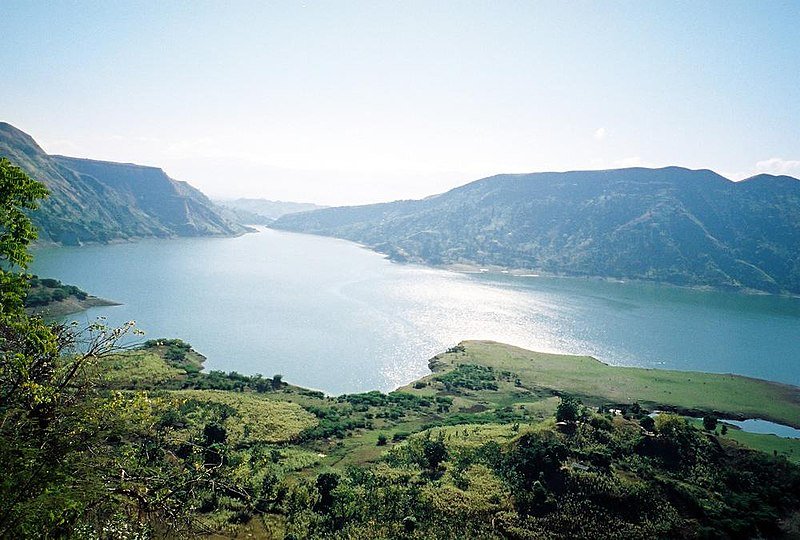
In addition to its agricultural importance, the Central Plateau is home to unique biodiversity. Its forests, although threatened, are habitats for numerous animal and plant species. The region is also an important freshwater reservoir, thanks to its rivers and its role in feeding the Péligre Dam, which is crucial for irrigation and electricity production in Haiti.

A region steeped in history

The Central Plateau is also a historic site. During the Haitian Revolution, this region was the scene of several decisive battles. Its proximity to the mountains provided a strategic refuge for the combatants.

Today, the remains of this era and local traditions attest to the historical and cultural importance of the Central Plateau. It is also known for its local festivals, which bring communities together and celebrate their rich heritage.

Some key figures about the Central Plateau

- Area: Approximately 5,000 km², making it one of the largest flat areas in the country. - Average Altitude: The plateau rises to an altitude of 600 to 1,000 meters above sea level.
- Population: More than 1 million people live in this region, spread across urban and rural areas.
- Climate: A tropical climate that favors a wide variety of agricultural crops.

Environmental and Social Challenges

Despite its importance, the Central Plateau faces several challenges. Soil erosion caused by deforestation threatens the fertility of the land, while limited access to modern infrastructure hinders the region’s development.

The inhabitants of the Central Plateau are actively working to preserve their land and improve their living conditions. Reforestation initiatives, rural development programs, and education projects are underway to meet local needs and enhance the value of this territory.

The Central Plateau, a symbol of resilience and natural wealth

The Central Plateau is much more than just a geographical region of Haiti; it is a place where nature, history, and culture come together to shape the country’s identity. It embodies the challenges and opportunities that define Haiti, while offering a glimpse of its immense potential.

If you have any anecdotes or memories related to the Central Plateau, share them in the comments to enrich this collective discovery!

Share
About the Author
Appolon Guy Alain
Appolon Guy Alain
Appolon Guy Alain

Full Stack Developer, Créatif, expérimenté, passionné des nouvelles technologies et de l’art.

See other articles from Appolon Guy Alain
Leave a comment

Recently Posted

Newsletter

Subscribe to our newsletter to stay informed of all our activities and news on Haiti.

Haiti: The History of the World’s First Free Black Nation

Haiti, the pearl of the Antilles, is a Caribbean island with a rich and complex history. However, its special status as the world’s first free black nation gives it a unique place in the annals of history. This small island was the scene of an extraordinary revolution which resulted in independence, thus marking the beginning of a new era for the black community and the abolition of slavery. Let’s delve into the captivating story of the birth of the first black republic, Haiti. b~The colonial era and slavery~b Haiti’s history dates back to the arrival of Europeans in the 15th century, when Christopher Columbus discovered the island. European settlers, mainly Spanish and French, introduced slavery to exploit the island’s resources, including sugar, coffee and cotton. The indigenous Native American population was decimated, paving the way for the massive importation of African slaves. b~The Haitian Revolution~b On August 14, 1791, Haitian slaves rose up against their oppressors, sparking the Haitian Revolution. Under the leadership of iconic figures such as Toussaint Louverture, Jean-Jacques Dessalines and Henri Christophe, the insurgent slaves inflicted defeats on European armies, demonstrating fierce resistance and a desperate quest for freedom. b~The Declaration of Independence and the creation of the Republic of Haiti~b On January 1, 1804, Haïti proclaimed its independence, becoming the world’s first free black nation. This historic declaration symbolized the end of slavery and the triumph of the will of a people determined to live free. The Republic of Haïti was born in struggle and blood, asserting its autonomy in the face of the colonial powers. b~Post-independence challenges~b However, independence did not mean the end of challenges for Haiti. The country had to face external pressure, reparations imposed by France in exchange for recognition of its independence, as well as internal unrest. Despite these obstacles, Haïti strove to build a free and sovereign nation. The story of Haïti is that of a nation that overcame countless challenges to emerge as a pioneer of freedom for the black population. The Haitian Revolution remains a unique example of resistance, courage and determination, and Haïti continues to carry the torch of independence in the contemporary world. The legacy of this small Caribbean island still resonates today, reminding the world that freedom is a universal right that can be won even in the most difficult circumstances.

A Call for Online Media Awareness to improve the image of Haïti on the internet

A simple Google search for "Haïti" will leave you with a bitter taste, as you will mostly discover degrading images that fail to pay homage to Haïti’s natural beauty, rich history, and vibrant culture. This reality stems from a multitude of online media outlets that, in their relentless quest for visibility and profit, disseminate images that do not reflect the true essence of Haïti. It is time to challenge this trend and raise awareness among Haïtian online media of the profound impact of their editorial choices on the image of their own country. b~The Consequences of the Dissemination of Degrading Images:~b Sharing degrading images of Haïti contributes to perpetuating prejudices and reinforcing negative stereotypes associated with the country. This can have serious consequences for tourism, foreign investment, and even the national pride of Haïtians. Furthermore, it creates a distortion of reality, masking the many positive and inspiring aspects of Haïti. b~A Call for Editorial Responsibility:~b It is imperative that Haïtian online media take editorial responsibility in ensuring that the images and stories they broadcast reflect the diversity and richness of Haïti. Rather than focusing only on the negative aspects, they should highlight the successes, positive initiatives, and exceptional contributions of Haïtians to global society. b~Promote a Balanced Image:~b Haïti’s diversity, both culturally and socially, deserves to be celebrated. Haïtian online media have the opportunity to play a key role in promoting a more balanced image of the country by highlighting its successes, its innovations and its rich history. This will not only help educate the global public, but also inspire pride and confidence in Haïtians themselves. It is time for Haïtian online media to realize their power as opinion shapers and actively contribute to transforming Haïti’s image. By choosing to share balanced and positive stories, they can play a vital role in building a more accurate and respectful perception of this remarkable country. It is a call for editorial responsibility, sensitivity and national pride, in order to restore Haïti to its rightful place on the world stage.

Recently Posted

History

History

First black nation to free itself from slavery and gain independence from France in 1804 and influenced other liberation movements around the world, inspiring struggles for freedom and equality.

Natural beauty

Natural beauty

Haïti is blessed with spectacular natural landscapes, including white sand beaches, mountains and rich biodiversity.

Heritage

Heritage

Haïti has a rich historical heritage, including sites like the Citadelle Laferrière and the Sans-Souci Palace, listed as UNESCO World Heritage Sites.

Culture

Culture

Haïti has a rich and diverse culture, influenced by African, European and indigenous elements. Haitian music, dance, art and cuisine are celebrated around the world.

  • +
    • Post