contact@haitiwonderland.com+509 36184317

Discover

Shopping Cart

How long is Haiti?
How long is Haiti?
How long is Haiti?

How long is Haiti?

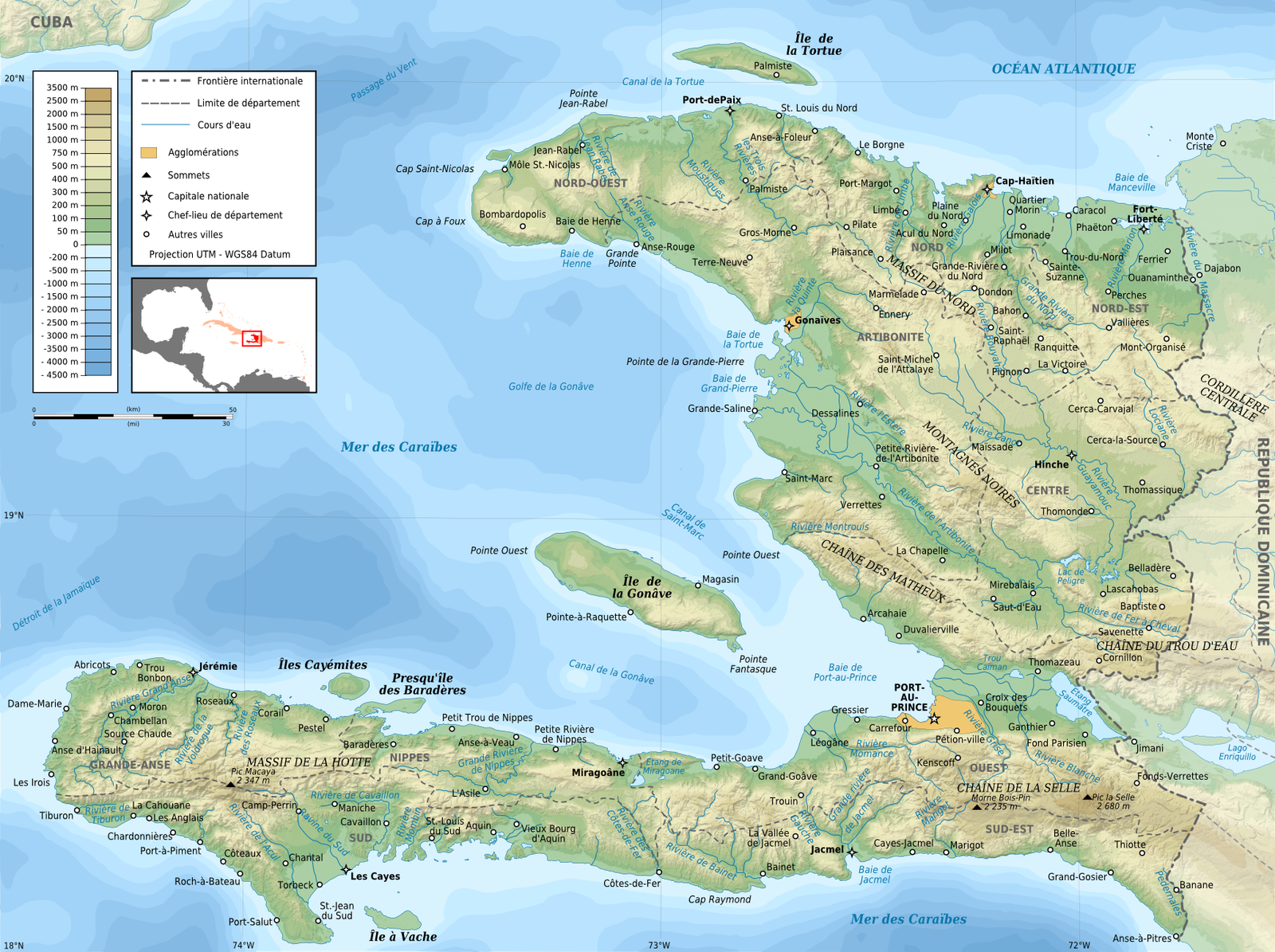
The length of Haiti, measured from west to east, is approximately 650 kilometers. This figure illustrates the extent of this country that shares the island of Hispaniola with the Dominican Republic. In this article, we explore in detail the geographical dimensions of Haiti, as well as their influence on the diversity and organization of the country.

Read the article in :

French : Quelle est la longueur d'Haïti ?

Spanish : ¿Cuánto mide Haití?

Creole : Konbyen tan Ayiti?

Reference page : How long is Haiti?

Other version : How long is Haiti?

A unique and diverse geography

With a length of approximately 650 kilometers, Haïti is distinguished by a complex geography that mixes mountains, valleys and plains. Located in the Caribbean, this country has a varied topography, and its elongated shape contributes to its contrasting landscapes.

The main geographical axes include:
- The Selle range, which extends from the southeast to the west and is home to the Pic la Selle, the highest point in Haïti at 2,680 meters.
- Coastal plains, such as the Artibonite, which are essential for agriculture.
- The northwestern and southern peninsulas, which give the country its characteristic shape.

These geographical features influence both the climate and the distribution of economic and social activities.

A modest but significant width

While the length of the country is impressive, its average width is much more modest, varying between 190 and 230 kilometers. This configuration gives Haïti a narrow strip of territory bordered by the Atlantic Ocean to the north and the Caribbean Sea to the south.

The limited width of the territory has major implications:
- It favors rapid access to the coasts for most populations, contributing to the development of maritime activities.
- It creates proximity between regions, although the mountains sometimes make travel difficult.

The influence of dimensions on economic development

Haiti’s length plays an important role in the distribution of resources and infrastructure. Roads, such as Route Nationale 1 and Route Nationale 2, cross the country from one side to the other, connecting major cities such as:
- Port-au-Prince, the capital located in the center of the country.
- Cap-Haïtien, in the north, an important economic and cultural hub.
- Les Cayes, in the south, a key agricultural region.

However, transportation infrastructure remains a major challenge for Haïti due to the difficulty of crossing mountainous areas.

Haiti’s key figures

Here are some key geographic data to better understand the size and characteristics of the country:
- Total area: 27,750 km².
- Coastal length: Approximately 1,771 kilometers, offering an abundance of beaches and seascapes.
- Land border with the Dominican Republic: 376 kilometers.

These figures reflect not only the size of the territory, but also its tourism and economic potential.

A territory full of history and culture

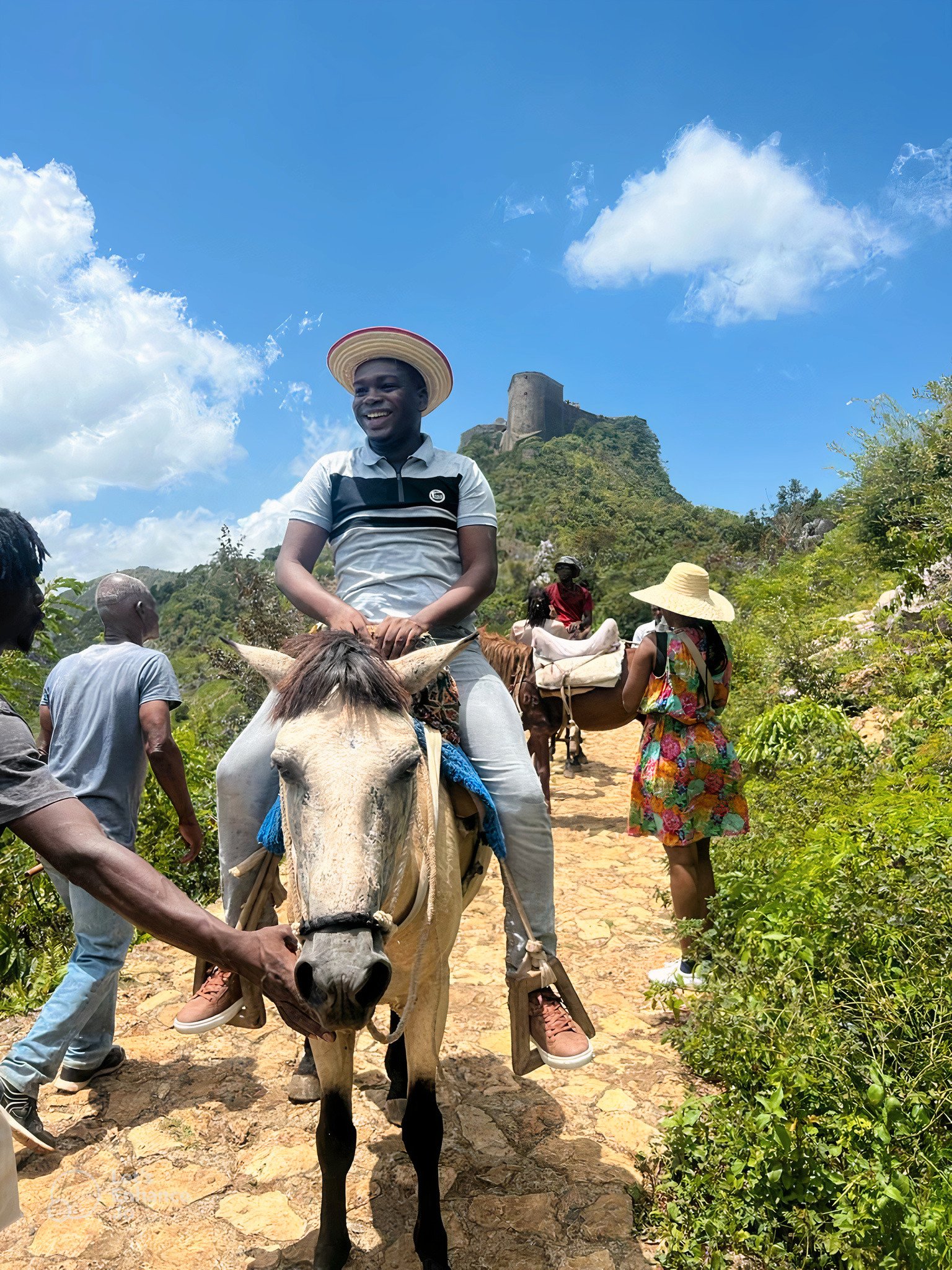
Haiti’s length also reflects the richness of its cultural and historical heritage. From east to west, the country is full of emblematic sites such as the Citadelle Laferrière, the Sans Souci Palace and the beaches of Labadie.

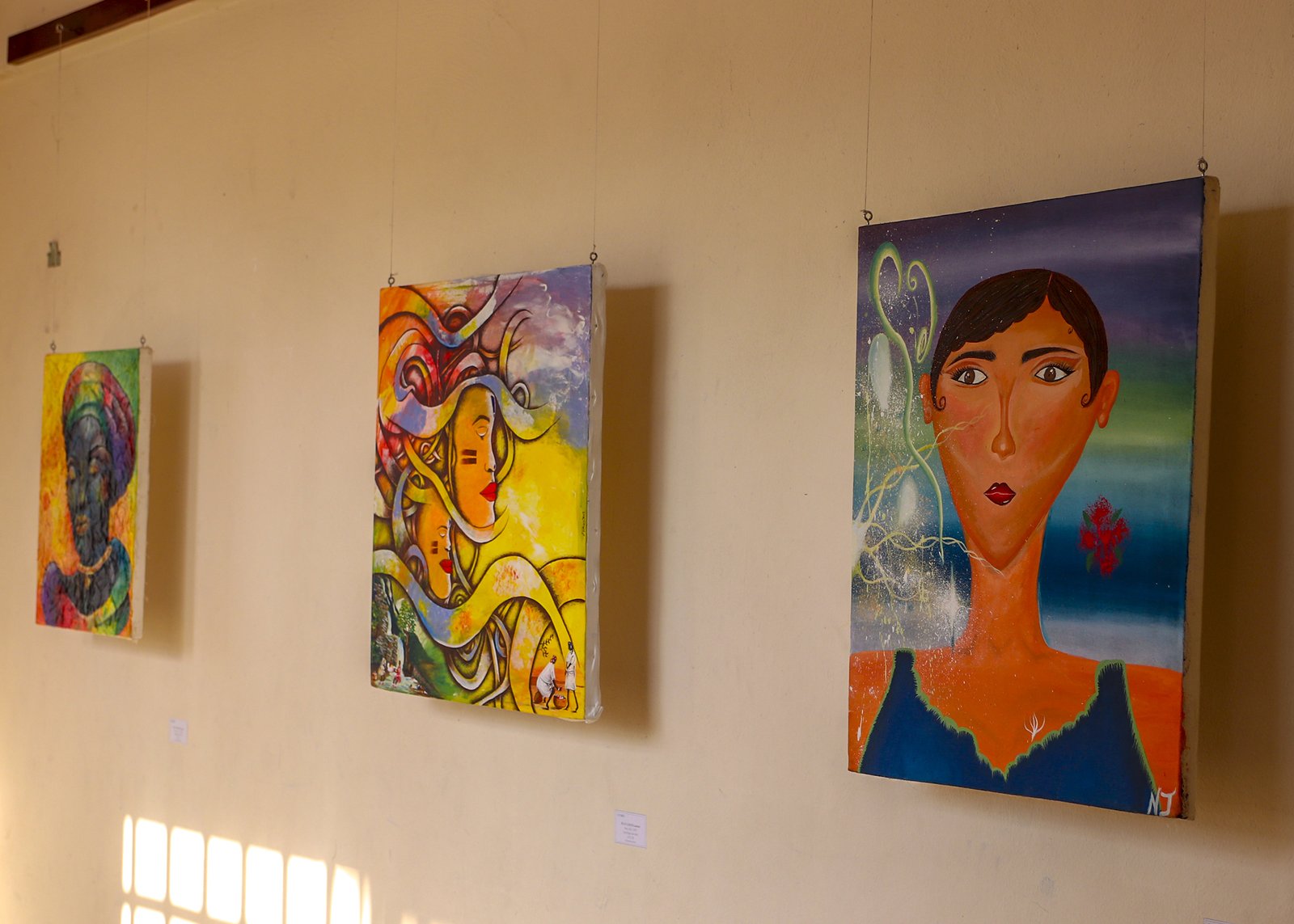
Each region contributes to Haiti’s cultural diversity, whether through music, cuisine or local traditions.

Although the length of the country offers it exceptional diversity, it also poses challenges. Long distances, combined with an often inadequate road network, complicate the transport of goods and people.

In addition, managing natural resources, such as the rivers that cross the country, requires coordinated efforts to prevent flooding and erosion.

Conclusion: A length full of promise

With its 650 kilometers in length, Haïti is a multifaceted country, where each region offers unique landscapes, cultures and opportunities. This geographical characteristic, far from being a simple fact, is a key to understanding the diversity and potential of Haiti.

Do you know other interesting facts about the geography of Haiti? Share them in the comments to enrich this discussion!

Share
About the Author
Haïti Wonderland
Haïti Wonderland
Leave a comment

Recently Posted

Haïti, a rich and impoverished country

Located in the western part of the island of Hispaniola, Haïti is a land imbued with natural, cultural and historical wealth. Unfortunately, behind the beauty of its landscapes, the richness of its culture and the delicacy of its cuisine lies a complex reality marked by the debt of its independence and the persistent interference of third countries, casting a shadow over its stability. b~The Natural Beauty of Haïti~b Haïti, nicknamed the "Pearl of the Antilles", dazzles with the diversity of its landscapes. From majestic mountains and lush valleys to meandering rivers and sandy beaches, the country offers natural beauty worth celebrating. The famous Citadelle Laferrière mountains and the refreshing waterfalls of Bassin-Bleu are just a few examples of the splendor that characterizes this nation. b~A Rich and Diverse Culture~b Haïti stands out for its vibrant and diverse culture. A heritage of African, French and indigenous influence, Haïtian music, dance and art reflect a unique fusion. Colorful festivals, like Carnival, are celebrations of this cultural richness, attracting visitors from all over the world. b~Delicious Cuisine~b Haïtian cuisine, tasty and spicy, is another aspect worth celebrating. Dishes like griot, sticky rice, and the legendary joumou soup, traditionally prepared to commemorate independence, are all culinary delights that demonstrate the country’s gastronomic ingenuity. b~Heritage Treasures and Paradise Beaches~b Haïti’s heritage treasures, such as the remains of the Sans-Souci Palace and the Citadelle Laferrière, listed as UNESCO World Heritage Sites, are testimonies to the architectural grandeur of Haïti’s past. At the same time, beaches like Labadee and Jacmel offer havens of peace with crystal clear waters, attracting travelers in search of a tropical paradise. b~A Fascinating Story~b The history of Haïti is both fascinating and tragic. It was the first country in the Americas to gain its independence, in 1804, after a courageous slave revolt. However, this independence came with a heavy financial price. France demanded exorbitant compensation, thus laying the foundations for Haïti’s foreign debt. b~The Debt of Independence and Foreign Interference~b Despite these treasures, Haïti struggles with the reality of its independence debt. After gaining its freedom, the country was forced to pay France a considerable sum in compensation for losses associated with the abolition of slavery. This debt has been a major economic burden for Haïti, hindering its development. Additionally, foreign interference continues to create significant challenges. External political and economic interventions have often contributed to the country’s instability, hindering its ability to build a sustainable future for its citizens. b~In conclusion~b Haïti remains a country of multiple riches, but its challenges persist. Despite its natural beauty, rich culture and fascinating history, the nation needs enlightened international support and lasting solutions to overcome the obstacles that stand in its way. Haïti’s wealth lies not only in its enchanting landscapes, but also in the potential of its people to be resilient and prosper despite persistent challenges.

Newsletter

Subscribe to our newsletter to stay informed of all our activities and news on Haiti.

Holidays in Haiti

Haiti, the pearl of the Antilles, is a country rich in history and culture. Its public holidays are moments of celebration, commemoration and reflection on its glorious past. Each date has a special meaning, plunging Haitians into a festive and memorable atmosphere. b~January 1: National Independence Day and New Year~b January 1st is a doubly special day in Haiti. On the one hand, it is National Independence Day, commemorating the victory of Haitian slaves over French colonial forces in 1804. On the other hand, it is New Year’s Eve, marking the start of a new year full of promises and hopes. b~January 2: Feast of the Forefathers~b January 2 is dedicated to the memory of ancestors. It is an opportunity for Haitians to remember their roots, to celebrate the cultural heritage passed down from generation to generation. b~February: Carnival, Shrove Monday, Fat Tuesday, Ash Wednesday~b The month of February is marked by Carnival, one of the most colorful and dynamic festivities in Haiti. The streets fill with parades, lively music and wild dancing. Mardi Gras is the culmination of Carnival, followed by Ash Wednesday, marking the start of Lent. b~April: Easter, Maundy Thursday, Good Friday~b Easter celebrations in Haïti include the religious traditions of Maundy Thursday and Good Friday. It is a time of prayer and reflection for many Haitians. b~May 1: Agriculture and Labor Day~b May 1 is dedicated to celebrating the work and importance of agriculture in the life of the country. It is an opportunity to recognize the efforts of workers and to highlight the agricultural sector. b~May 18: Flag Festival~b Flag Day celebrates the Haitian flag, a symbol of independence and national pride. Haitians honor their colors and remember the courage of their ancestors in the fight for freedom. b~May 23: National Sovereignty Day~b This day commemorates the recognition of Haitian sovereignty by France in 1805. It is a moment of national pride and reaffirmation of independence. b~May - August: Ascension~b The Ascension is celebrated between May and August, a religious festival marking the ascension of Jesus Christ into heaven. b~June: Fête-Dieu~b Fête-Dieu, also known as the Feast of the Body and Blood of Christ, is an important religious celebration in June. b~August 15: Assumption of Mary~b The Assumption of Mary is a Christian holiday marking the ascension of the Virgin Mary into heaven. It is celebrated with fervor in Haiti. b~September 20: Birth Anniversary of Jean-Jacques Dessalines~b This date commemorates the birth of Jean-Jacques Dessalines, one of the founding fathers of Haïti and a key leader in the struggle for independence. b~October 17: Death of Dessalines~b October 17 is a day of commemoration of the death of Jean-Jacques Dessalines, recalling his impact on Haitian history. b~November 1: All Saints’ Day~b All Saints’ Day is a religious holiday honoring all saints, celebrated with prayers and visits to cemeteries. b~November 2: Day of the Dead~b All Souls’ Day is an opportunity to pay homage to the deceased by decorating graves and participating in religious ceremonies. b~November 18: Commemoration of the Battle of Vertières~b This day honors the decisive Haitian victory at the Battle of Vertières in 1803, marking the end of the French occupation. b~December 5: Discovery Day~b December 5 celebrates the discovery of the island by Christopher Columbus in 1492. b~December 25: Christmas~b Christmas celebrations in Haïti are marked by family reunions, festive meals and religious traditions. Public holidays in Haïti are much more than breaks from everyday life; these are moments that embody the soul and resilience of a people. Each celebration provides an opportunity to come together, remember the past and look to the future with hope and determination.

Recently Posted

History

History

First black nation to free itself from slavery and gain independence from France in 1804 and influenced other liberation movements around the world, inspiring struggles for freedom and equality.

Natural beauty

Natural beauty

Haïti is blessed with spectacular natural landscapes, including white sand beaches, mountains and rich biodiversity.

Heritage

Heritage

Haïti has a rich historical heritage, including sites like the Citadelle Laferrière and the Sans-Souci Palace, listed as UNESCO World Heritage Sites.

Culture

Culture

Haïti has a rich and diverse culture, influenced by African, European and indigenous elements. Haitian music, dance, art and cuisine are celebrated around the world.

  • +
    • Post