contact@haitiwonderland.com+509 36184317

Discover

Shopping Cart

Haiti: What is the difference between "Liberty - Equality - Fraternity" and "Strength in Unity"?
Haiti: What is the difference between  Liberty - Equality - Fraternity  and  Strength in Unity ?
Haiti: What is the difference between Liberty - Equality - Fraternity and Strength in Unity ?

Haiti: What is the difference between "Liberty - Equality - Fraternity" and "Strength in Unity"?

"Liberty-Equality-Fraternity" vs. "Unity is Strength": finally understand the difference between Haiti's two mottos and their historical complementarity.

When we talk about the symbols of the Republic of Haiti, two emblematic expressions resonate in the heart of every Haitian: "Liberty - Equality - Fraternity" and "Strength in Unity." But what is really the difference between these two national mottoes? Why does Haïti have two distinct phrases? Let’s delve into the history and meaning of these phrases, which embody the soul of the first independent Black Republic.

The Constitutional Motto: "Liberty - Equality - Fraternity"

According to Article 4 of the 1987 Constitution of the Republic of Haiti, the official national motto is "Liberty - Equality - Fraternity." This triad of universal values ​​reflects the fundamental principles on which the Haitian state is based.

Origin and Meaning

This motto has its roots in the French revolutionary legacy, but it takes on a particular meaning in Haiti:

- Liberty: It recalls the heroic struggle of the slaves who broke their chains in 1804, making Haïti the first country in the world to emerge from a successful slave revolt.
- Equality: It symbolizes the rejection of the racist colonial system and the proclamation of equality among all citizens, regardless of their skin color.
- Fraternity: It expresses the ideal of a united society where all Haitians, despite their differences, form a united community.

This constitutional motto therefore defines the legal and philosophical identity of the Haitian nation.

The legend of the coat of arms: "Unity is Strength"

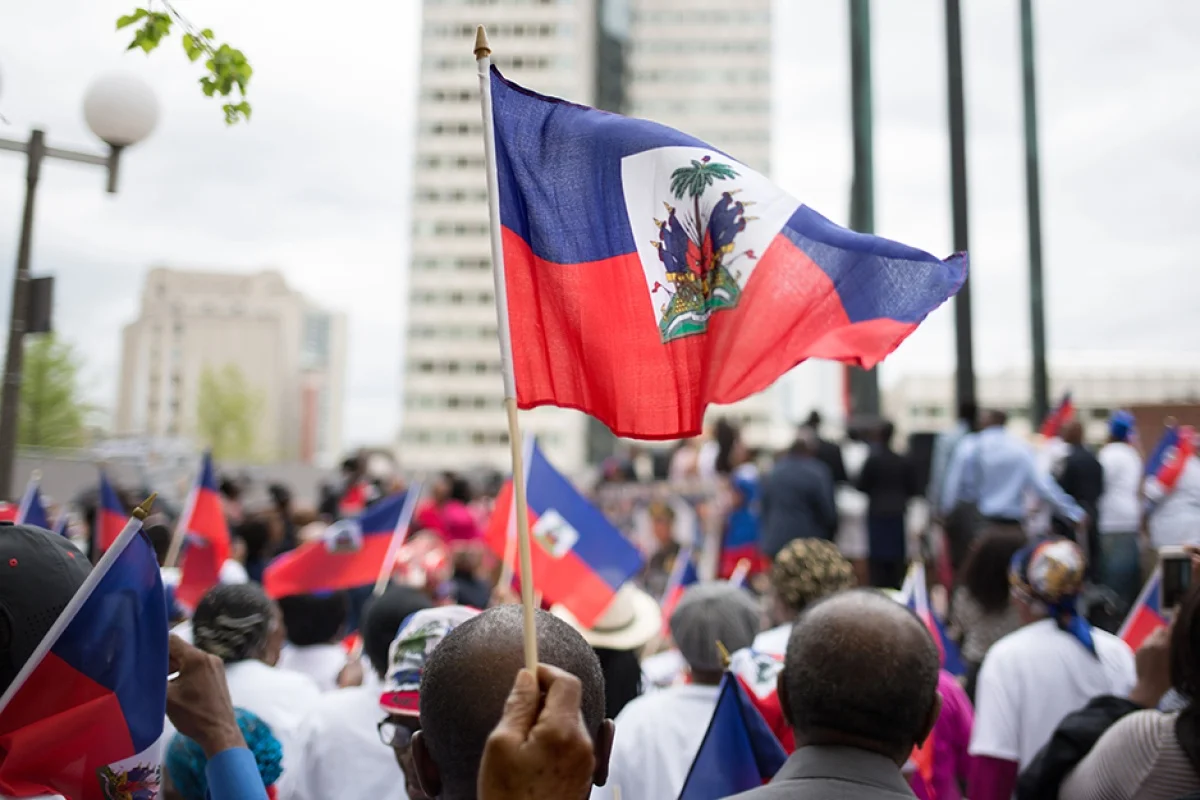
"Unity is Strength" is not just an inspiring phrase: it is the official legend that appears on the Arms of the Republic, at the center of the Haitian flag.

An emblematic place

According to the constitutional description of the flag, the arms of the Republic include:

- The palm tree surmounted by the cap of liberty
- A trophy of arms shaded by the palms
- And the legend: "Unity is Strength"

A powerful historical message

This motto originates from the very context of Haitian independence. It reminds us that:

- Victory against the French colonial armies was only possible thanks to the unity of former slaves, both mulattoes and blacks.
- Faced with hostile European powers, only national cohesion could guarantee the survival of the young Republic. - Solidarity between Haiti’s different social classes and regions remains the key to national prosperity.

Complementarity rather than opposition

These two mottos do not contradict each other: they complement each other.

- "Liberty - Equality - Fraternity" sets out the fundamental values ​​that must guide Haitian society.
- "Unity is Strength" recalls the means to achieve these ideals: through the unity and solidarity of the Haitian people.

One defines the "why" (the values), the other the "how" (the method).

Why two mottos for one nation?

This duality reflects the complexity of Haitian identity:

1. Universal heritage: With "Liberty - Equality - Fraternity," Haïti is part of the Enlightenment movement and affirms its place among the democratic nations of the world.

2. The Unique Experience: With "Unity is Strength," Haïti recalls its unique journey and the historical lesson that unity is essential for survival and national progress.

A Lesson Still Relevant

More than two centuries after independence, these two mottos resonate with particular acuity. They remind Haitians that:

- The ideals of liberty, equality, and fraternity must guide all political and social action.
- Only the unity of the Haitian people, beyond partisan, regional, or social divisions, will overcome contemporary challenges.

Two Sides of the Same Coin

"Liberty - Equality - Fraternity" and "Unity is Strength" are not two competing mottos, but two complementary expressions of the Haitian soul. The first establishes the principles, the second recalls the method. Together, they form the symbolic foundation on which Haiti’s national identity rests.

To understand this difference is to grasp the full depth of the Haitian national project: a free, egalitarian, and fraternal society, built on the union of all its children. A message as relevant today as it was in 1804.

Share
About the Author
Appolon Guy Alain
Appolon Guy Alain
Appolon Guy Alain

Full Stack Developer, Créatif, expérimenté, passionné des nouvelles technologies et de l’art.

See other articles from Appolon Guy Alain
Leave a comment

Recently Posted

The Port-au-Prince Book Fair announces the opening of author registration for its second edition

The Port-au-Prince Book Fair is a literary initiative of the cultural organization Port-au-Prince Book Fair (OCSLP), based on the desire to promote Haitian culture in general, with a particular focus on literature. The organizers of the event have just announced the registration of authors, who will number 20, and those of publishing houses, who will number 5 for the second edition, which will take place on Friday, December 13, 2024, in the premises of the French Institute in Haiti. The registration deadline is Thursday, October 10 of this year. Please note that the first to arrive who have met the required criteria will be eligible to take part in this second edition of the event, according to the organizers’ admission. This rigorous and restricted selection of only 20 authors aims to guarantee an enriching experience for authors and the public, thus promoting authentic exchanges around the works presented. Independent authors and publishing houses interested in registering their authors to participate in this second edition of the fair are invited to submit their application via this link: https://form.jotform.com/louirardjohn8/salon-du-livre-de-port-au-prince. For publishing and distribution houses planning to exhibit on the day of the event, you can register by clicking on this link: https://form.jotform.com/242596699603068. You are requested to contact them at the following address: salondulivre2023@gmail.com in case of difficulties. The Port-au-Prince Book Fair remains faithful to its philosophy, which is to offer a platform to young authors and to promote the richness of Haitian literary production, by supporting new authors who contribute to its growth. This event is a continuation of the first edition, aimed at allowing the emergence of an environment conducive to exchanges, where young authors can meet, share their experiences and engage in dialogue with readers and book professionals. According to the organizers of the event, your participation as a young author will be essential to enrich the fair and offer a diverse experience to visitors. The invitation to join this noble initiative is extended to young authors who have not yet published 5 books. You who are concerned, the ball is now in your court. Do not hesitate to go and make this day, December 13, 2024, an unforgettable day for all book lovers.

Newsletter

Subscribe to our newsletter to stay informed of all our activities and news on Haiti.

Conference / Festival Quatre Chemins / 21st edition

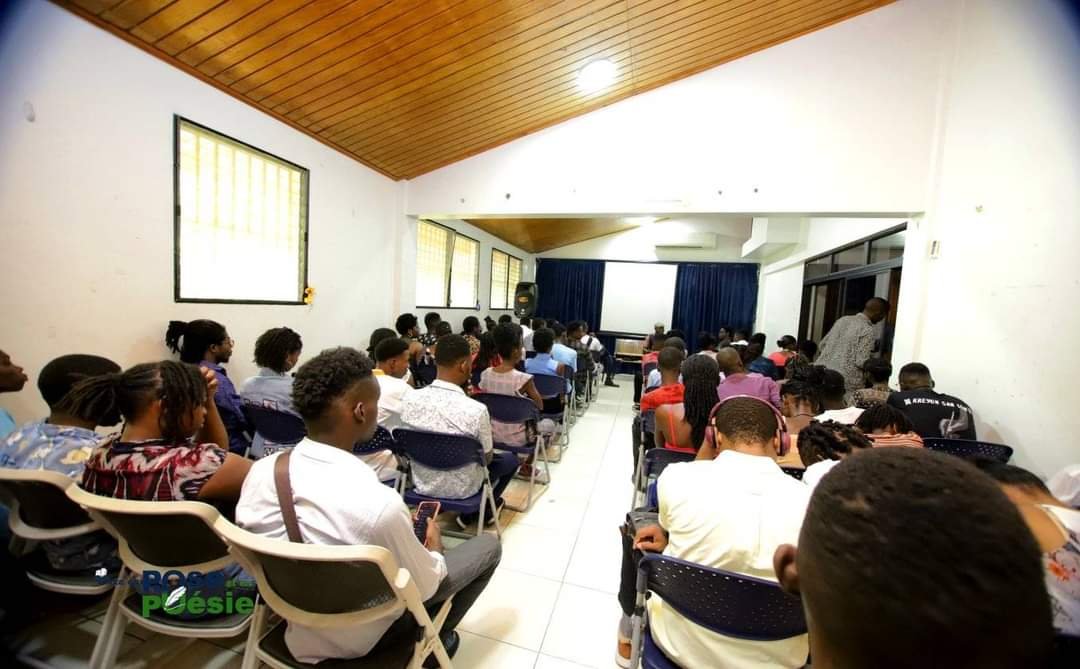
The impact of collective and individual trauma on the personal development of young people in Port-au-Prince While writers, actors, dancers, poets, among others, have gratified us with their performances, the master’s degree student in psychology at the Faculty of Human Sciences (FASCH), Lourdya Blaise, spoke with the audience about trauma. Structured around the theme "Youth and Trauma, analysis of the impact of collective and individual trauma on the personal development of young people living in Port-au-Prince between 2010-2024", this conference gave rise to enriching discussions. During this meeting, moderated by Michaël Formilus, Ms. Blaise showed how the events that have taken place in the country have caused cases of trauma among Haitians. According to the student, citing the American Psychological Association, we speak of trauma as a consequence of trauma. The latter is explained by the fact that we feel threatened, whether it is the person in question or their loved ones. However, she specifies that a collective trauma remains depending on the impact that the event has on the individual. To illustrate her remarks, she mentioned the earthquake of January 12, 2010, considered a collective trauma, insofar as it still occupies our minds. This tragedy reminds us of the disappearance of our loved ones and enormous losses. This is the case of a trauma that becomes a collective trauma. For the student, it should be emphasized that when an event occurs, some people are traumatized and others are not. According to him, the violence of armed gangs is not perceived in the same way, says Ms. Blaise. There are people who have fled their homes but are not traumatized. In fact, some people see traumatic situations as a passing event, she says. The speaker also spoke about collective trauma, which, according to him, preoccupies the mind, even if we no longer experience it. It manifests itself in several forms: lack of sleep, fear psychosis, intrusive thoughts, intense heartbeat, etc. Generally, symptoms related to trauma are hard to die. When it persists, it becomes acute stress. To deal with it, we must talk to other people. If the situation persists, acute stress turns into a phase of post-traumatic stress; in this case, we must confide in a trusted person or go see a mental health specialist, she advises. In her presentation, Lourdya Bazile also drew attention to the psychological state of children in these times. According to the presenter, children are also facing this crisis situation, even if they do not talk about it to their parents. As much as adults, children also plan their future. Faced with flouted school years, they become pensive and worried, she stressed. They withdraw. The child who used to be brilliant can become violent and perform less well at school. Parents are called upon to listen to them and understand them. A good moment of exchange, rich in practical advice. The audience participated fully. In turn, the presenter invites them to breathe better and meditate. "We live in a country where worries mix, we must take time for ourselves, do sports, eat well, make sure that the sleeping space is clean and take time for ourselves. There is more than one way to find calm," recalls the psychologist. Gertrude Jean-Louis

Recently Posted

History

History

First black nation to free itself from slavery and gain independence from France in 1804 and influenced other liberation movements around the world, inspiring struggles for freedom and equality.

Natural beauty

Natural beauty

Haïti is blessed with spectacular natural landscapes, including white sand beaches, mountains and rich biodiversity.


Heritage

Heritage

Haïti has a rich historical heritage, including sites like the Citadelle Laferrière and the Sans-Souci Palace, listed as UNESCO World Heritage Sites.

Culture

Culture

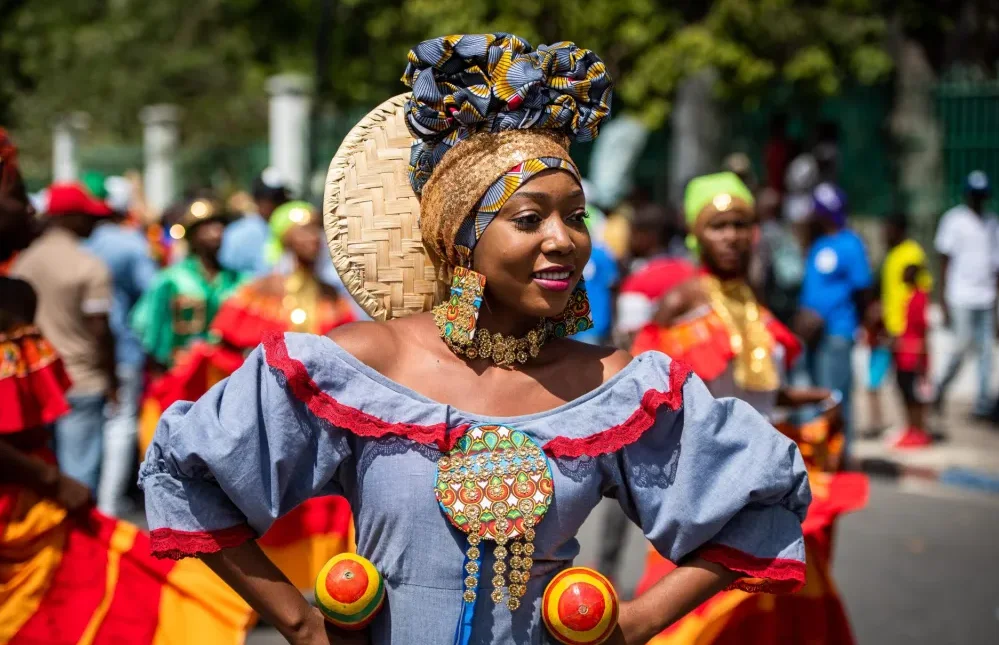
Haïti has a rich and diverse culture, influenced by African, European and indigenous elements. Haitian music, dance, art and cuisine are celebrated around the world.

  • +
    • Post