contact@haitiwonderland.com+509 36184317

Discover

Shopping Cart

Ayiti Liv: A Digital Initiative for the Preservation of Haitian Literary Heritage

Ayiti Liv: A Digital Initiative for the Preservation of Haitian Literary Heritage

"Ayiti Liv" is an online platform dedicated strictly to promoting Haitian literature. It will be operational starting May 1, 2025, and will feature about 300 major works of Haitian literature, written by over 70 authors. Full public access will be granted for its launch phase.
Jean Venel Casseus, one of the platform’s initiators, explains that this initiative was created to fill a significant gap, and this vast project is being carried out by him and a passionate team of Haitian literature lovers.

A Necessity

In Haiti, the lack of libraries remains a major challenge within the educational system. The culture of young people is often severely affected by this glaring lack. The current security crisis in Port-au-Prince, the capital of Haiti, plays a significant role in the degradation of the Haitian educational system, further exacerbating this shortage. Faced with this gap, a group of well-informed individuals decided to act to provide a serious alternative for those eager to learn more about Haitian literature. In this sense, this digital library dedicated exclusively to Haitian writers is a welcome addition.

See as well

Why Was This Project Created?

The idea for Ayiti Liv emerged from the harsh reality of the absence of accessible libraries in Haiti. Jean Venel Casseus explains: "The Haitian state has not truly taken charge of the intellectual training of the youth. In countries that believe in the fundamental role of books in individual development, every neighborhood has a library. In Haiti, some departments don’t even have a space where people can sit down to read and reflect. Yet, entertainment clubs are plentiful." In response to this situation, the Ayiti Liv team chose to use digital tools to provide a tangible and accessible solution for everyone. The platform www.ayitiliv.com was thus born, with the aim of providing unlimited access to Haitian writers’ works while making Haitian culture more accessible and visible to the world.

The Driving Forces Behind the Project

Ayiti Liv is supported by a team of four people: Jean Venel Casseus, Kerbson Louis (engineer), France Medeley Guillou, and Sophia Mésius. They have joined their efforts to bring this ambitious project to life. Their goal is simple: to give every young person with a smartphone the opportunity to access the richness of Haitian literary works, no matter where they are. The team works tirelessly, "day and night," as Jean Venel Casseus emphasizes, to ensure the platform’s sustainability and accessibility.

The Crucial Role of Literature in the Haitian Context

According to the initiators of Ayiti Liv, literature plays a fundamental role in the development of both individuals and society. It has two essential facets: creative and critical. Literature allows for dreaming through novels and poetry, as well as reflecting on one’s own reality through essays and academic works. In a country like Haiti, where social and economic challenges are numerous, Ayiti Liv aims to provide a space for reflection and a tool for shaping citizens who can think critically and constructively. "The more citizens we have who can think rigorously, both in science and in art, the more we will be shaping individuals with a soul and deep convictions," adds Jean Venel Casseus.

Ambitions for the Future

The Ayiti Liv team has high hopes for the future of this digital library. Their greatest wish is for this project to go beyond their own efforts and become a true cultural heritage, accessible to all future generations. They hope that the platform will not only be a reading tool but also become a true driver of intellectual and social transformation in Haiti.

Ayiti Liv, far more than just a digital library, represents hope for Haitian culture. Through this initiative, the team aims to reinvent access to literature and critical thinking, offering Haitian youth a gateway to better understanding their identity and future.

In a country where access to books is becoming increasingly limited, where even the National Library of Haïti is no longer truly under the control of Haitian authorities, and where more and more young people have access to smartphones, the importance of this digital library can no longer be questioned.

Share
About the Author
Moise Francois
Moise Francois
Moise Francois

Journalist editor, poet and apprentice lawyer.

See other articles from Moise Francois
Leave a comment

Recently Posted

Newsletter

Subscribe to our newsletter to stay informed of all our activities and news on Haiti.

Haïti et son Rôle Pionnier dans l’Abolition de l’Esclavage Mondial

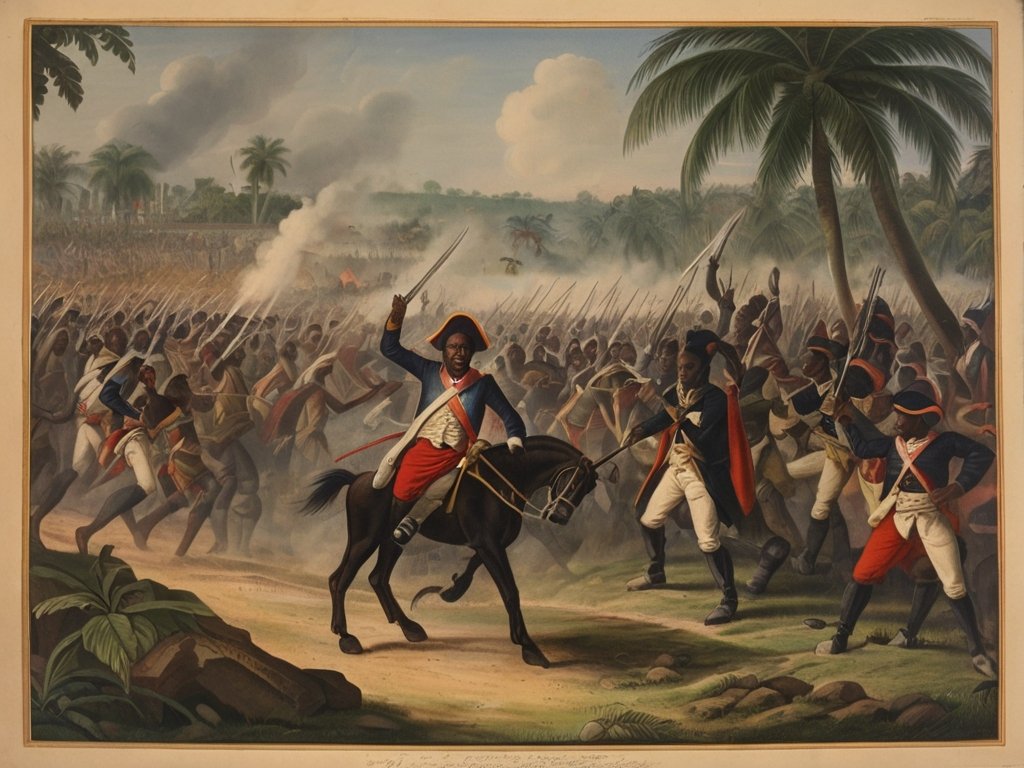
For centuries, the institution of slavery has darkened human history, leaving behind a legacy of pain, oppression and the struggle for freedom. However, in this dark tale, one nation stands out for its courage and determination to break the chains of oppression: Haiti. Located in the Caribbean, Haïti played a pioneering role in the abolition of slavery, laying the foundation for the fight for freedom and equality around the world. The history of slavery in Haïti dates back to the arrival of Europeans on the island, which was then called Santo Domingo, in the 15th century. French colonists quickly established an economy based on sugar and coffee production, cruelly exploiting millions of African slaves deported to work on plantations. However, this brutal system engendered fierce resistance from slaves, whose fight for freedom ultimately led to one of the most significant revolutions in history. In 1791, under the leadership of iconic figures such as Toussaint Louverture, Jean-Jacques Dessalines and Henri Christophe, Haitian slaves rose up against their oppressors in an unprecedented rebellion. This revolt resulted in a war of independence that lasted more than a decade, but ultimately resulted in the proclamation of Haiti’s independence in 1804, making that country the first post-colonial nation ruled by people from slavery. The impact of the Haitian Revolution on the abolition of slavery worldwide cannot be overstated. By breaking the chains of oppression and proclaiming their independence, Haitians have sent a powerful message to all oppressed peoples around the world: freedom is possible, and it is worth the struggle. The example of Haïti inspired other movements for the abolition of slavery in the Americas and beyond, thus helping to shake the very foundations of the institution of slavery. Haiti’s participation in the fight against slavery was not limited to its territory; it also extended to external actions where Haitian men were sent or actively participated in movements for the abolition of slavery in other regions of the world. For example, Haitian President Alexandre Pétion supported Simón Bolívar, the leader of the South American revolution, by providing him with weapons, money and even men, which contributed to the liberation of several countries in America Latin of colonial domination. Haïti also provided support for independence movements in Central America. Haitian fighters, led by General Jean-Pierre Boyer, helped Venezuelan patriots fight against Spanish rule, contributing to the liberation of that region. The Haitian government financially and diplomatically supported movements for the abolition of slavery in countries such as Venezuela, Colombia and Mexico, contributing to the gradual eradication of this institution throughout the region. Although Haïti did not directly participate in the American Civil War, many Haitians and descendants of Haitians played crucial roles in the abolitionist movement in the United States. Figures who were of Haitian origin or of Haitian ancestry, were important voices in the fight against slavery and for equal rights in the United States. The legacy of the Haitian Revolution remains a symbol of resistance and courage for future generations. Today, as the world continues to struggle against injustice and oppression in various forms, Haiti’s history reminds us that the fight for freedom is a universal fight, one that transcends borders and times. Haiti’s participation in the abolition of slavery throughout the world remains a crucial chapter in the history of humanity. Through their courage and determination, Haitians have paved the way for a future where freedom and equality are inalienable rights for all.

Recently Posted

History

History

First black nation to free itself from slavery and gain independence from France in 1804 and influenced other liberation movements around the world, inspiring struggles for freedom and equality.

Natural beauty

Natural beauty

Haïti is blessed with spectacular natural landscapes, including white sand beaches, mountains and rich biodiversity.

Heritage

Heritage

Haïti has a rich historical heritage, including sites like the Citadelle Laferrière and the Sans-Souci Palace, listed as UNESCO World Heritage Sites.

Culture

Culture

Haïti has a rich and diverse culture, influenced by African, European and indigenous elements. Haitian music, dance, art and cuisine are celebrated around the world.

  • +
    • Post