contact@haitiwonderland.com+509 36184317

Discover

Shopping Cart

IMANA by DarlinJohancy

IMANA by DarlinJohancy

In Arabic, the family of words Amin, Iman or imam, imana designate faith, trust, security. This word is also present in the Swahili language (Kenya, Tanzania, East Congo Kinshasa) in the form imani: trust.

"The term Imana is not the equivalent of God-Goddess which is a Western vision of divinity. Indeed,: "the term "imana" does not designate above all a personal being that should be honored and implored, but a diffuse fluid that should be captured." In other words, Imana is a neutral vital force that manifests itself in the inner cosmos of each living being." ¹

Imana, by Michel Darlin Johancy is a musical, symphonic and spiritual journey through three geographies: an inner geography of meditation, a cultural identity journey and an artistic musical stroll. These three itineraries unfold in Haitian spaces.

This symphonic and spiritual journey takes place in 10 stages or 10 movements.

Read the article in :

French : IMANA de DarlinJohancy

Spanish : IMANA de DarlinJohancy

Creole : IMANA pa DarlinJohancy

Reference page : IMANA by DarlinJohancy

Other version : IMANA de DarlinJohancy

1- Ouvè pòt yo: the opening of the doors ::

The opening of the doors is commanded by the saxophone which plays the role of a common thread. The opening is slow as in some symphonies. This slowness allows us to gently enter an atmosphere of travel and reflection. Musically, the opening is based on the dialogue between the choir, the guitar/piano duo and jerky percussions, katap katap type.

See as well

2- Chache limyè, chache chimen mòn: the quest for light and the path of the mountain:

“Si mòn pa bay, lavil ap peri”: if the hill does not produce, the city will perish”. The quest for the mountain is doubled by other quests: the search for effort (monte mòn), the return to the countryside, which must be revalued, and also the search for elevation of the spirit. It is like a pilgrimage. We can also lighten our multiple burdens or problems by depositing them on the other side of the mountain.

3- Incantation and crowd noise.

The saxophone introduces this sequence. We hear like the noise of a crowd marching and an incantation, a repetition, like a mantra of the name of the divinity Oloroun, from the Afro-Brazilian Yoruba pantheon.

4- Èske Bondye pale kreyòl? Does God speak Creole?
While the saxophone and katap percussions draw the path like a musical vèvè (ritual drawing), the artist wonders. Can worship be creolized? Drums and tchatchas have their place wherever the soul rises. They also punctuate our cultural identity.

5-Kote m ye? Where am I?
-

6-Call the rain

"Creator of the World, you who trace all things, make the rain fall." It is a call for a nourishing and invigorating rain.

7-Pase m t ap pase: I was only passing by.

"Pase m t ap pase", this refrain, symbol of the journey, is punctuated by the percussions that play in cadence.

8-Second instrumental interlude

This interlude marks a well-paced pause of very diverse percussions, between katap and rabòday.

9-Ekri pou nou pa disparèt: writing so as not to disappear

“Writing so as not to disappear, because the wind carries away the words” (Van pote pawòl ale) says Darlin Johancy. He continues: “Writing what we say and what we produce”. It is a call to protect, safeguard our creative heritage. And then above all, he affirms “mete sèl anba lan nou! Let’s put salt under our tongues! Because salt protects us from the zombification that threatens us”.

10-The alchemy of creation

First the sound of water in dialogue with the saxophone playing in soft flame, "an alchemical marriage" Darlin Johancy tells us, between water and fire. The choir returns, voices, murmurs, whispers, with, in parallel, a "marriage" katap rabòday. "It is not a coldly programmed composition", Darlin Johancy tells us, all this music and this spiritual journey met inside me. I had to put all this in harmony. It also corresponded to a time when I myself needed harmony. I hope that it will have a calming effect and conducive to meditation in those who listen to Imana. "

https://on.soundcloud.com/vwhiN

Rafael Lucas, Lecturer, teacher-researcher, University of Bordeaux Montaigne

IMANA is produced thanks to the support of the Swiss Cooperation in Haiti. Music credits:

Natzart: Lead and choirs
Ery Guillaume: Saxophone
Herbysson Pierre: Bass
Schneider Saint fort: Drums
Drums: maestro Lélé
DarlinJohancy: Composition, arrangements, production, lyricist.

¹.https://www.kugaruka.org/post/imana-le-culte-de-kiranga-ryangombe-uburundi-urwanda

Share
About the Author
Haïti Wonderland
Haïti Wonderland
Leave a comment

Recently Posted

Newsletter

Subscribe to our newsletter to stay informed of all our activities and news on Haiti.

Haïti Wonderland: Technology at the Service of the Haïtian Narrative

On this 220th anniversary of the legendary independence of Haïti, a new initiative is born on the web: Haïti Wonderland. Launched on January 28, 2024, this innovative site’s mission is to revolutionize the way Haïti is perceived online, by highlighting its natural, cultural, historical and human assets. b~An Ambitious Vision~b Haïti Wonderland aspires to a significant change in the perception of Haïti on the Internet. The goal is clear: when you search for “Haïti” on search engines, you should be greeted by beautiful images and inspiring stories. The team behind Haïti Wonderland wants to transform the web to allow only the beauty and wealth of this country to emerge, thus reflecting Haïtian reality. b~Authentic and Immersive Content~b To achieve these goals, Haïti Wonderland regularly publishes news articles and special blogs highlighting Haïti’s beauty, historic destinations, exquisite cuisine and anything else that can spark Haïtian pride. The emphasis is on promoting a positive and authentic image of the country. The experience offered to visitors to the site is also out of the ordinary. Thanks to virtual reality, you can explore the treasures of Haïti from anywhere in the world, providing total immersion in the splendor of this jewel of the Antilles. b~Smart Support and Rewards~b Haïti Wonderland goes beyond by integrating artificial intelligence on its site. This AI is there to provide visitors with all the information they need about Haïti, thus guiding their journey through the site in an interactive way. And that’s not all ! Haïti Wonderland offers an incentive compensation program for contributors. You can earn money by publishing blog posts on the site, rewarded based on the number of views generated. b~Commitment to Narrative Change~b The founder of Haïti Wonderland, Appolon Guy Alain, sees his initiative as a way to actively participate in changing the Haïtian narrative on the Internet. It is open to any collaboration and support aimed at achieving this common objective of improving the image of Haïti online. Through Haïti Wonderland, Appolon also wishes to raise awareness among online media to stop broadcasting demeaning images of Haïti that contribute to tarnishing its reputation. He calls for collective commitment to present the best version of Haïti. To discover the beauty of Haïti from a new perspective, visit the website: https://haitiwonderland.com or download the application from Play Store: https://play.google.com/store/apps/details?id =com.appographic.haitiwonderland. For all correspondence, contact them by email at contact@haitiwonderland.com. Haïti Wonderland: Rediscover, Share, Marvel.

Guédés: When Haïti celebrates its ancestors with color and fervor

Every November 1st and 2nd, Haïti comes alive with the colors black and purple to celebrate the Guédés, spirits venerated in the voodoo religion, symbols of a powerful bond between the living and the dead. Fascinating, indomitable and provocative, the Guédés form a true family in the pantheon of Haitian voodoo, where they are respected for their role as spiritual guides of the deceased to the afterlife. Led by iconic figures such as the legendary Baron Samedi and his companion Grann Brigitte, the Guédés embody the paradoxes of life and death. Each Baron has a unique personality: Baron Cimetière, Baron Kriminel, and Baron La Croix are the guardians of the souls that wander on the borders of the world of the dead. Together, they form a powerful and somewhat frightening presence, but one that is deeply rooted in Haitian culture. The Guédés are not like other voodoo spirits; they demonstrate their fearlessness in a spectacular way. Accustomed to death, they are fearless and are provocative: they eat glass, raw peppers, and coat their sensitive parts with rum and pepper. These gestures mark their indifference to danger and remind us that they have already known earthly life. They are thus psychopomps – these beings who lead the souls of the dead – and act as bridges between the world of the living and that of the dead. Some Guédés, like Guédé Nibo, wear black, purple, and white clothing, each with unique characteristics. They are many and varied: Guédé Fouillé, Guédé Loraj, Papa Guédé, and many others. These are the spirits who, each year, remind Haitians of the importance of remembering and honoring the deceased. The cult of the Guédés is not only religious; it is also cultural and historical. According to tradition, their spiritual territory, or “Fètomè” – nicknamed the “Country without Hats” – is a place where the souls of ancestors reside. According to stories, the origins of this cult go back to the Abomey plateau, the ancient capital of the kingdom of Dahomey, in Africa, where death and life coexist in a form of symbiosis. This celebration in Haïti even finds echoes in ancient history. The Romans also honored their dead with the “Fête des Lémuria”, which took place in February, to ward off spirits and restore peace between the world of the living and that of the deceased. For Haitians, honoring the Guédés is about accepting death as a part of life and celebrating the invisible bonds that unite us with those who have left us. It is also a way of resisting, because life, despite its challenges, must be celebrated in all its complexity and depth.


Recently Posted

History

History

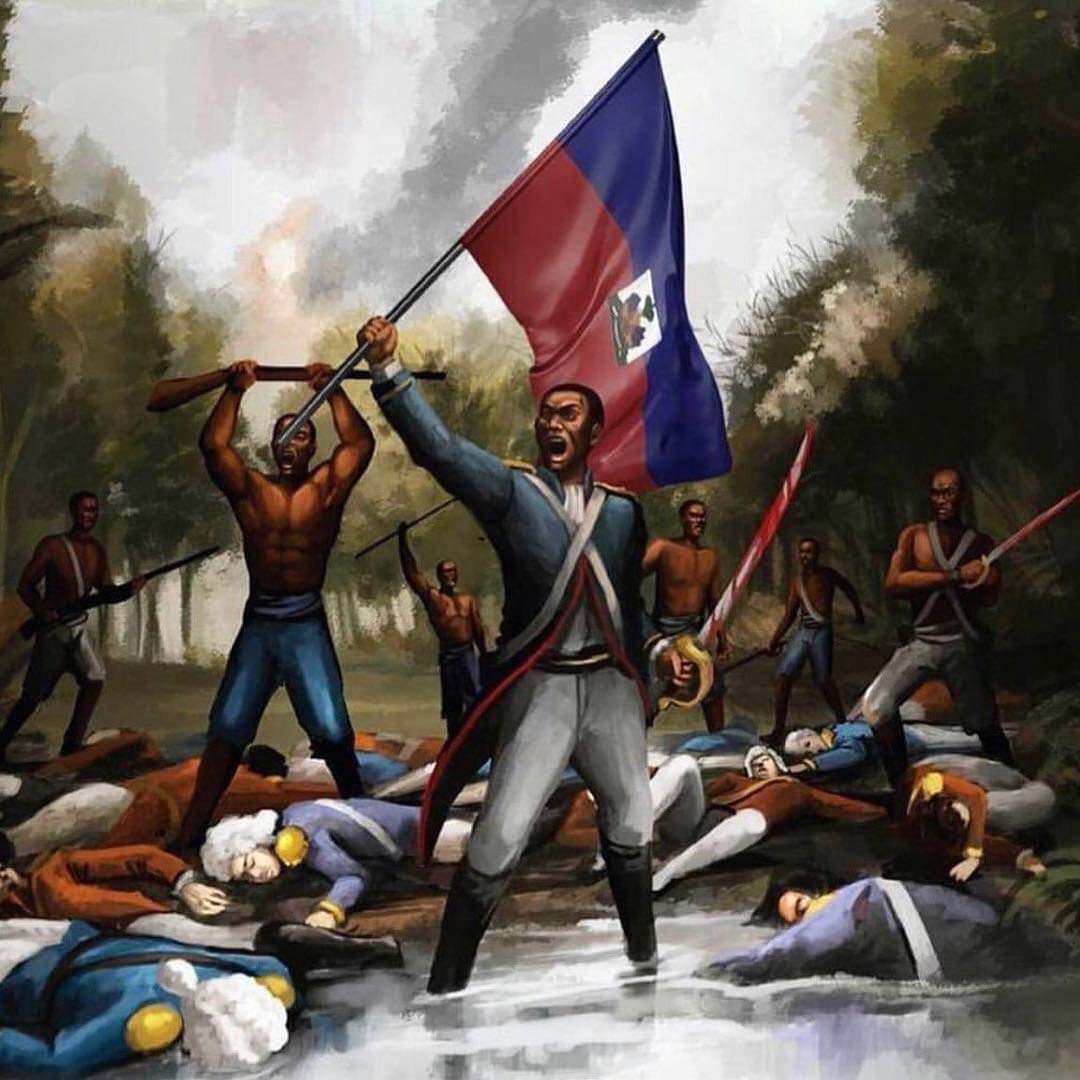
First black nation to free itself from slavery and gain independence from France in 1804 and influenced other liberation movements around the world, inspiring struggles for freedom and equality.

Natural beauty

Natural beauty

Haïti is blessed with spectacular natural landscapes, including white sand beaches, mountains and rich biodiversity.

Heritage

Heritage

Haïti has a rich historical heritage, including sites like the Citadelle Laferrière and the Sans-Souci Palace, listed as UNESCO World Heritage Sites.

Culture

Culture

Haïti has a rich and diverse culture, influenced by African, European and indigenous elements. Haitian music, dance, art and cuisine are celebrated around the world.

  • +
    • Post