contact@haitiwonderland.com+509 36184317

Discover

Shopping Cart

Letter to My Favorite Author: An Initiative by CSimon Publishing and the Port-au-Prince Book Fair

Letter to My Favorite Author: An Initiative by CSimon Publishing and the Port-au-Prince Book Fair

The "Letter to My Favorite Author" contest is a joint initiative by CSmon Publishing, a publishing house based in Virginia, USA, and the Port-au-Prince Book Fair. The contest aims to create a platform where young literature enthusiasts can express their affection and admiration for the authors who have impacted their lives through a letter dedicated to them. This letter can be written in Haitian Creole or French by any young person aged 18 to 30 living in Haiti. The author to whom the letter is addressed can be Haitian or foreign, and even from the medieval period.

The contest began on January 27, with registration closing on that date, and will continue until April 15, when the prizes will be awarded. The awards, which are 75,000 gourdes for the winner, 50,000 gourdes for the second place, and 25,000 gourdes for third place, will be presented during the event "Living in Prose and Poetry," organized annually by the Port-au-Prince Book Fair, to be held in 2025 at the French Institute in Haiti.

A Contest Serving Youth and Literary Culture

The initiative seeks to encourage young people to understand the value of books and invite them to appreciate the impact of authors on their personal and intellectual lives. Through this action, the contest allows participants not only to pay tribute to their favorite authors but also to affirm their commitment to preserving and promoting literary culture. Additionally, this contest is a wonderful opportunity to discover new emerging talents in the literary field, contributing to the building of the Haitian literary world of tomorrow.
Haïti
Haïti
Haïti

Contest Stages

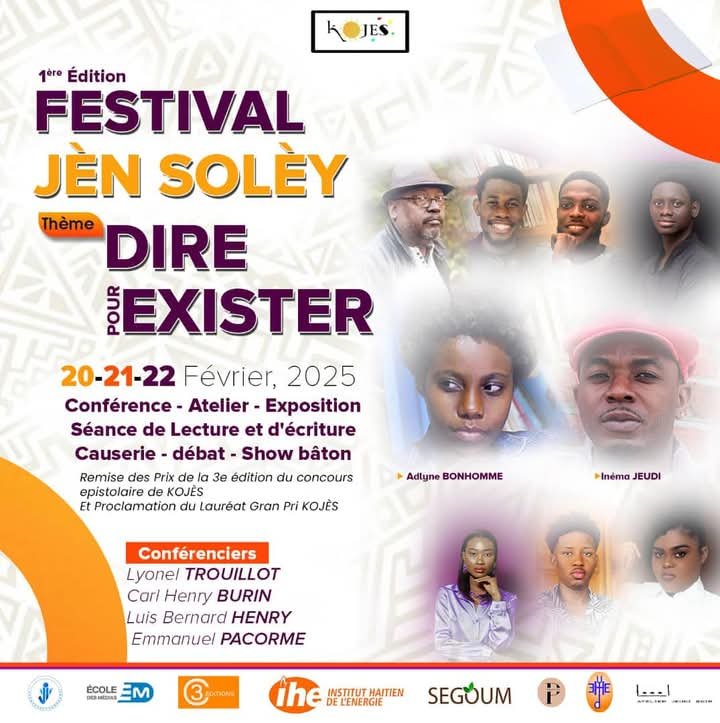
The "Letter to My Favorite Author" contest proceeds in several stages to select the best texts. The first phase involves receiving participants’ letters. The first thirty candidates who express their interest are invited to submit their letters to the Pyepoudré Cultural Center, located on Bourdon Road, from February 4 to 8, 2025. These letters will then undergo a rigorous selection process conducted by a competent jury, consisting of Evens Dossous, poet Adlyne Bonhomme, Marc Exavier, and presided over by Moïse François. After a first round of corrections and careful evaluation, the top ten texts will be selected and publicly announced.

Haïti
Haïti
Haïti

Audiovisual Recording of Selected Texts and Public Voting

Once the ten letters are selected, the authors will be invited to record their works in audiovisual format. The recordings will be done with the technical support of the organizing committee, ensuring professional-quality videos. These recordings will then be published on the various platforms of the Port-au-Prince Book Fair and open to public judgment. This moment is important, as the public will have the chance to discover budding literary talents and support them through voting.

Haïti
Haïti
Haïti

Reducing the List to Five Finalists

After the voting, the list will be reduced to five finalists. Among these finalists, three winners will be selected, and an official announcement will be made to announce the three grand winners of the contest. The winners will receive their awards on April 15, 2025, at the French Institute in Haiti. Thus, this contest will give each participant hope for recognition of their love for literature, while encouraging the emergence of new literary voices.

A Well-Deserved Tribute

Authors, whether contemporary or classical, play a crucial role in the evolution of societies by offering, through their works, reflections on the human condition, culture, and the history of humanity. Their influence is profound and should be categorized as one of the most valuable. It is essential to grant them the recognition and affection they truly deserve, whether they are still biologically alive or remain alive through their works. By paying tribute to them through this contest, CSmon Publishing and the Port-au-Prince Book Fair pay a vibrant tribute to literature itself and its transformative power. Specifically, CSmon Publishing demonstrates its commitment to Haitian literature and its global development. By financing the contest in large part, it shows its desire to invest in youth and the emergence of new voices within Haitian literature, thus contributing to enriching our literary heritage and encouraging the literary voices of tomorrow.

Share
About the Author
Moise Francois
Moise Francois
Moise Francois

Journalist editor, poet and apprentice lawyer.

See other articles from Moise Francois
Makenson Cajuste

Malheureusement, les conditions sont données après le dépôt du texte. On a beau demander les conditions, mais aucune réponse n'a été donnée à cet effet. On n'avait pas mentionné l'âge d'éligibilité avant. C'est domage que j'ai déjà dépose mon texte alors que j'ai plus que l'âge exigé. Dans ce cas, je me demande si je dois reprendre mon texte ?

February 04, 2025 - 03:21:40 PM
Witchel Tcheetto VILMÉ

Bon bagay,bon travay nou pap lage

February 04, 2025 - 03:25:56 PM
Dr Cherlin SIMON

Ansanm nap batay poun gen yon loy edikasyon Nan peyi nou

February 04, 2025 - 07:53:31 PM
Leave a comment

Recently Posted

Pap Jazz 2025, a Celebration of Haiti’s Great Musical Richness

On Sunday, April 6, 2025, the Karibe Convention Center in Juvenat transformed into a true cultural temple to close the 18th edition of the Port-au-Prince International Jazz Festival (PAPJAZZ). This year, the festival took place under the evocative theme "PAP JAZZ it UP", and it was held in three sites primarily located in the Pétion-Ville commune. The festival took place entirely at these wonderful musical venues: a reference was made to the Latin Quarter, the Haiti-Brazil Cultural Center, and the Karibe Hotel. Due to the deteriorating situation in downtown Port-au-Prince in recent times, the French Institute site had to be abandoned by the festival organizers. Nevertheless, we can absolutely call this 18th edition of Pap Jazz a success. Indeed, this festival, now a major event of the Haitian year, was especially marked this year by the great resilience and determination of the organizers who were able to adapt to the country’s rhythm in order to satisfy their loyal festival-goers. Despite the difficult context, these festival-goers did not miss the opportunity to escape their harsh daily lives through music. It’s also important to note that this 18th edition of Pap Jazz took place after two postponements, at the very beginning of this year, with the last one occurring in March due to insecurity. In this regard, it is appropriate to call the monumental achievement of the Haïti Jazz Foundation and their partners an exceptional feat, as they were not discouraged and showed remarkable tenacity, while adapting to offer Port-au-Prince and its surroundings this moment of growth, beyond the city’s great sorrow, through music.

Newsletter

Subscribe to our newsletter to stay informed of all our activities and news on Haiti.

Pity or the work of an old soul crushed under the weight of an absinthe-flavored existence

The word crisis carries an infinite number of meanings. No intention of revealing them all this afternoon. However, a few clarifications are necessary. A kid whose parents do not have enough money at Christmas to buy her a Little Black Mermaid doll has a fit and locks herself in her room without touching her meals for the day. A boy whose dog was suddenly poisoned by a neighbor in revenge or shot after contracting rabies, losing a faithful friend overnight, enters into crisis. Finally, a society in the grip of all sorts of mutations and whose leaders are weak, perhaps prolonged in a deep crisis. In the first case, the young girl sulks to attract the attention of her parents in order to feel appreciated by children her age at school or in the neighborhood. Today, thirty minutes of negotiations can be enough to find a lasting solution. In my day, a few well-aimed belt blows would have overcome this whim. But, humanity evolves, they say. In the second case, this boy can find his smile again after a few weeks. He needs a little attention and, probably, another dog. As Stendhal would say, only passion triumphs over passion. In the last case, this society led by inepts is shaken to its deep foundations. Its institutions can disintegrate one by one. The vital forces dissolve in no time. This situation creates a societal tsunami that destroys all life within this community. It is indeed a crisis. The crisis from this point of view constitutes an alarming, desperate situation in the existence of a community where nothing is going well. Chaos reigns supreme. The very essence of life disappears. The individual can take precedence over the community. Everyone tries to solve their problems without worrying about others. The closest neighbor is relegated light years away from you. How can we turn to creation? How can we continue to conceive of otherness? How can the artist absorb this great collective disarray as a source of motivation? These are the questions I must answer. An artist sees and feels what ordinary mortals cannot even imagine in a thousand-year life. He creates to denounce, when his conscience as a human being is revolted. He exalts heroes or the homeland according to his feelings. He sings the beauty of an irresistible, captivating or ugly resplendent woman. He can also use the ambient desolation to give meaning to life. Creating in literature as in the arts in general does not depend on the situation. The act of creation depends on the creator’s disposition. Events paralyze some and galvanize others. Creating is enjoyable. Everyone therefore enjoys according to their own whim. Writing opens the way to change. The writer takes a different look at the world. By embedding himself in reality, he embellishes it, makes it better or hideous depending on the message he intends to share. All things considered, with him, life is never fixed. Writing is putting the world in a jar to travel the universe. The artist broods over his work in all weathers. Oswald Durand was delighted to see Choucoune’s beautiful body from his secret observatory. Musset, on the other hand, was in pain writing his October night. As for Dany Laferrière, in exile, he described the horrors of the Duvalier dictatorship and the carefree attitude of the young girls in his neighborhood in this violent and dangerous world. Ultimately, the writer lives in a society with values ​​that he shares or not. They condition his existence or have no hold on him. In many ways, the surrounding world serves as his laboratory. He carries out his experiments there. He casts a new, worn, disillusioned, melancholic, violent, bitter look at the world depending on his mood. Pitié is the work of an old soul crushed under the weight of an existence that tastes of absinthe. Young Mike Bernard Michel lives by expedients and lies. The hands of life fall on him with indescribable violence. Misfortune embraces him day and night. Should we give up? Musset liked to say: "Man is an apprentice, pain is his master. And no one knows himself until he has suffered." The artist must produce under all skies. Such is his vocation. Incompetents in power, legal or highway bandits, the high cost of living, unemployment, heartaches are all subjects of concern for him. If it is true that a hungry belly has no ears, the fact remains that it keeps the brain awake. What am I saying, it stimulates it to the point of creating timeless works. Mr. Pitié, you have a bright future ahead of you. Work of Jean Rony Charles, the book is available from Éditions Repérage.

The Haitian Carnival: A Festival of Colors, Music and Traditions

The Haitian carnival, an emblematic and essential celebration of the country’s festive calendar, is much more than a simple party. It embodies the very essence of Haitian culture, joyfully blending ancestral traditions, intoxicating music and a deep sense of community. Each year, this vibrant celebration transforms the streets into a vibrant and colorful spectacle, attracting thousands of participants and spectators eager to take part in this one-of-a-kind celebration. Haitian carnival has deep roots in the country’s history, dating back to colonial times. It has evolved over the centuries, incorporating elements of African, French and Creole culture to create a distinct and captivating celebration. The carnival period in Haïti traditionally begins in January and culminates with extravagant festivities that take place over several days. One of the most striking features of the Haitian carnival is the profusion of colors. Traditional costumes, called "masks", are elaborate and beautifully designed. They feature vivid patterns and vibrant decorations, creating a vivid picture of Haitian cultural identity. Participants, dressed in these elaborate costumes, parade through the streets to the sound of lively music, creating an electric atmosphere. Music is at the heart of the Haitian carnival. The captivating rhythms of compass, rasin, rara and other local musical genres resonate throughout the city, inviting people to dance to the rhythm of the party. Orchestras parade through the streets, accompanying the dancers and creating a unique symbiosis between the music and the graceful movements of the participants. The Haitian carnival parade is not just about the music and costumes; it also celebrates the richness of street arts. Talented artists create giant sculptures, art installations and theatrical performances that tell deep stories of Haitian history and culture. These artistic expressions contribute to the transmission of values ​​and stories that shape the identity of the Haitian people.

Recently Posted

History

History

First black nation to free itself from slavery and gain independence from France in 1804 and influenced other liberation movements around the world, inspiring struggles for freedom and equality.

Natural beauty

Natural beauty

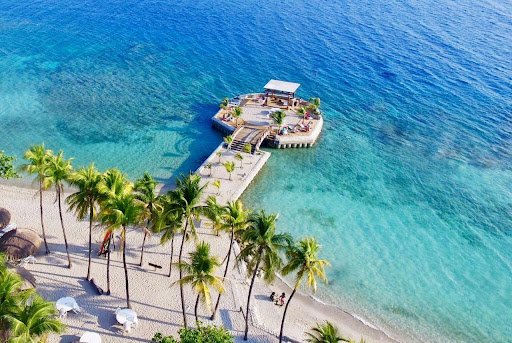
Haïti is blessed with spectacular natural landscapes, including white sand beaches, mountains and rich biodiversity.

Heritage

Heritage

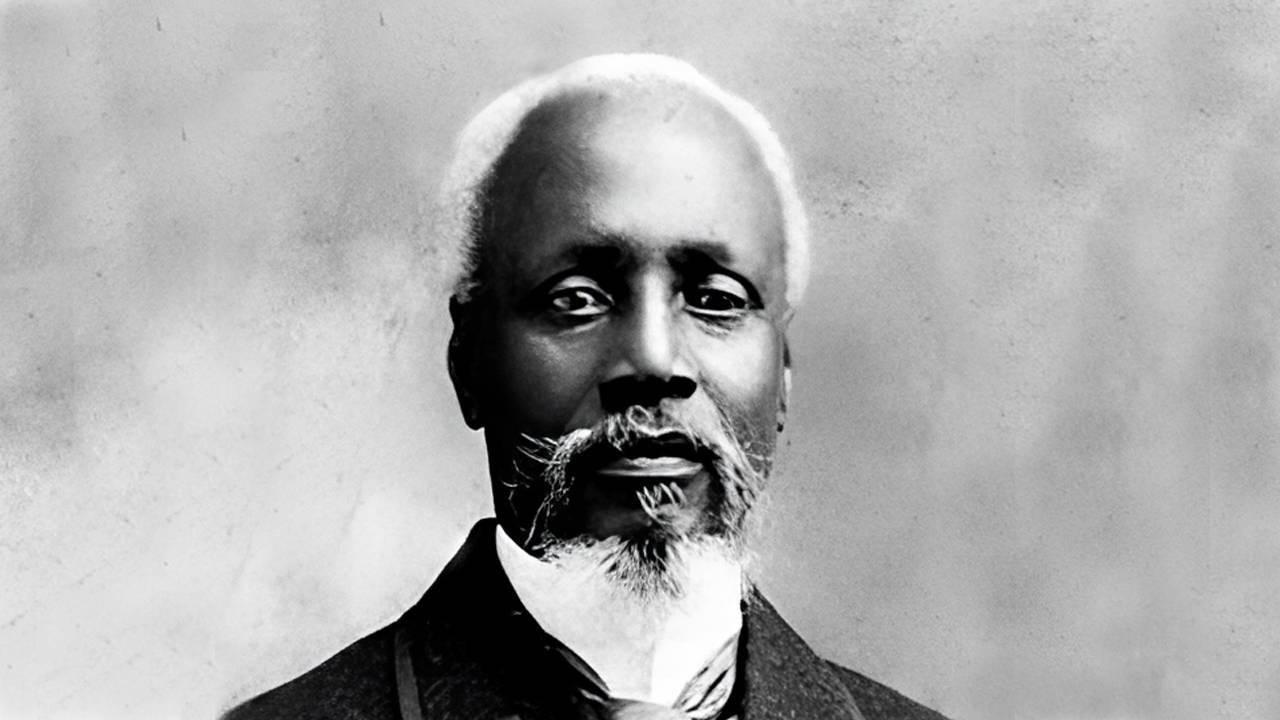
Haïti has a rich historical heritage, including sites like the Citadelle Laferrière and the Sans-Souci Palace, listed as UNESCO World Heritage Sites.

Culture

Culture

Haïti has a rich and diverse culture, influenced by African, European and indigenous elements. Haitian music, dance, art and cuisine are celebrated around the world.

  • +
    • Post