contact@haitiwonderland.com+509 36184317

Discover

Shopping Cart

Difference Between Haitian Tonmtonm and African Foutou (Fufu)

Difference Between Haitian Tonmtonm and African Foutou (Fufu)

Haitian and African cuisine are gastronomic treasures that highlight local ingredients and preparation techniques passed down through generations. Among the most popular dishes of both cuisines, Haitian Tonmtonm and African Foutou (or Fufu) are distinguished by their rich flavors and unique textures. These two dishes, although they share a similar foundation - the use of local products such as cassava or plantain - have interesting differences, especially in their preparation, taste and accompaniment.

Tonmtonm Haïti
Tonmtonm Haïti
Tonmtonm Haïti

Haitian Tonmtonm: A Pounded Breadfruit Delight

Tonmtonm is a simple but delicious Haitian dish. Breadfruit, a staple food in Haiti, is first boiled to release its flavor, then pounded by hand in a mortar and pestle, a step that requires strength and patience. This preparation process, often performed by several family members, represents a moment of sharing and passing on culinary traditions. Sometimes seasoned with pepper, garlic, or other light spices, Tonmtonm takes on a mild, subtle, and slightly spicy flavor.

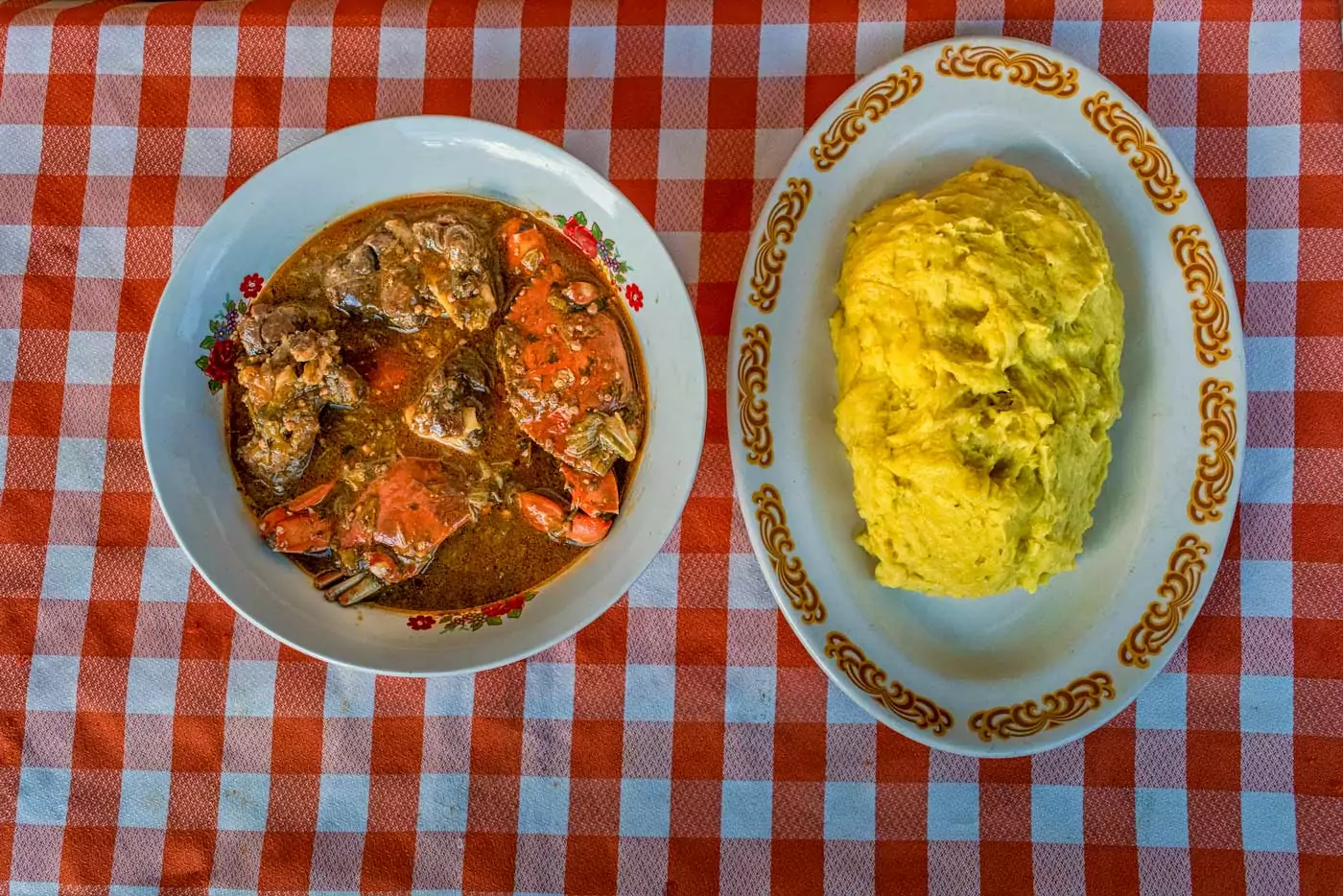
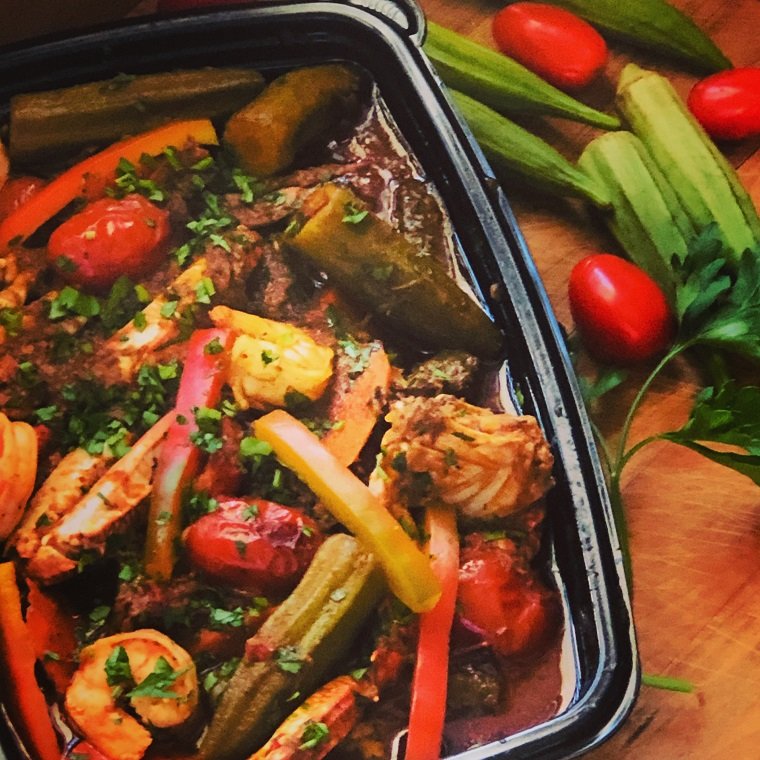
Its texture is firm but soft, creating a dense purée that pairs perfectly with a variety of dishes. Tonmtonm is often served with okra sauce (or Sòs kalalou), a slightly acidic and spicy sauce, which brings a richness of flavors and pairs harmoniously with the pounded breadfruit.

It is often accompanied by savory meats, such as beef or pork. Crabs can also be a traditional accompaniment, bringing a maritime touch and a delicious contrast to the dense texture of Tonmtonm.

See as well

Foutou Africain
Foutou Africain
Foutou Africain

African Foutou: A Pounded Plantain Tradition

Foutou, or Fufu, is an iconic dish in African cuisine, particularly popular in Côte d’IVoire. It is prepared from plantain, which can be used ripe or unripe, and cassava boiled together and then pounded to a smooth, elastic consistency. The pounding process gives Foutou a chewy texture that pairs perfectly with the rich sauces of African cuisine.

Foutou is often served with spicy sauces such as sauce graine (a palm nut-based sauce), or other meat and vegetable sauces, and is commonly eaten in the central and eastern regions of Côte d’IVoire. This dish is an essential accompaniment to many meals, providing a neutral but nourishing base for the sauces and meats that accompany it.

Tonmtonm Haïti
Tonmtonm Haïti
Tonmtonm Haïti

Differences Between Haitian Tonmtonm and African Foutou

Although Haitian Tonmtonm and African Foutou have similarities, such as using local products and adding a creamy or elastic texture, they have some marked differences:

1. Main Ingredients:

- Haitian Tonmtonm: It is mainly made from boiled breadfruit, a staple food in Haiti, which gives it a firmer texture and a mild, slightly sweet flavor.
- African Foutou: It is mainly made from plantain and cassava, which gives it a chewier texture and a slightly sweet but also denser flavor, especially when made with ripe plantains.

2. Preparation method:

- Tonmtonm is boiled and pounded in a mortar and pestle, which gives it a more consistent and slightly grainy texture.
- Foutou, on the other hand, requires mixing boiled plantain and cassava, before pounding them until a smooth and elastic paste is obtained.

3. Accompaniments:

- Tonmtonm is often served with okra sauce (sòs kalalou), a spicy sauce that gives it depth and a slightly acidic taste.
- Foutou is usually accompanied by palm nut-based sauces such as seed sauce, or other sauces rich in meat or vegetables, thus bringing a different depth of flavor.

4. Regions of consumption:

- Haitian Tonmtonm is a dish rooted in Haitian culture, enjoyed throughout the island, especially during celebrations and family gatherings.
- Foutou is widely consumed in West Africa, particularly in Côte d’IVoire, and is also a dish of choice in other African countries, where it is often associated with festive meals.

Foutou Africain
Foutou Africain
Foutou Africain

Haitian and African Cuisine: A Fusion of Flavors

Haitian and African cuisine have deep roots that connect them through the history of the African diaspora. Dishes like Tonmtonm and Foutou are a testament to the ingenuity of African and Haitian peoples in using local produce and creating dishes that are both nourishing and flavorful.

Both cuisines share a rich palette of spices and flavors, with African, European, and indigenous influences. Spicy sauces, grilled meats, and breadfruit or plantains are recurring elements that give these cuisines an authenticity and richness that is unmatched.

Haitian Tonmtonm and African Foutou are two delicious dishes that exemplify the diversity of Haitian and African cuisines. While they differ in ingredients, preparation, and accompaniments, these dishes offer an exceptional culinary experience that celebrates the history, culture, and generosity of the people who created them. Whether you are a fan of Haitian or African cuisine, these dishes deserve to be savored for their richness and unique character.

Share
About the Author
Appolon Guy Alain
Appolon Guy Alain
Appolon Guy Alain

Full Stack Developer, Créatif, expérimenté, passionné des nouvelles technologies et de l’art.

See other articles from Appolon Guy Alain
Leave a comment

Recently Posted

Conference / Festival Quatre Chemins / 21st edition

The impact of collective and individual trauma on the personal development of young people in Port-au-Prince While writers, actors, dancers, poets, among others, have gratified us with their performances, the master’s degree student in psychology at the Faculty of Human Sciences (FASCH), Lourdya Blaise, spoke with the audience about trauma. Structured around the theme "Youth and Trauma, analysis of the impact of collective and individual trauma on the personal development of young people living in Port-au-Prince between 2010-2024", this conference gave rise to enriching discussions. During this meeting, moderated by Michaël Formilus, Ms. Blaise showed how the events that have taken place in the country have caused cases of trauma among Haitians. According to the student, citing the American Psychological Association, we speak of trauma as a consequence of trauma. The latter is explained by the fact that we feel threatened, whether it is the person in question or their loved ones. However, she specifies that a collective trauma remains depending on the impact that the event has on the individual. To illustrate her remarks, she mentioned the earthquake of January 12, 2010, considered a collective trauma, insofar as it still occupies our minds. This tragedy reminds us of the disappearance of our loved ones and enormous losses. This is the case of a trauma that becomes a collective trauma. For the student, it should be emphasized that when an event occurs, some people are traumatized and others are not. According to him, the violence of armed gangs is not perceived in the same way, says Ms. Blaise. There are people who have fled their homes but are not traumatized. In fact, some people see traumatic situations as a passing event, she says. The speaker also spoke about collective trauma, which, according to him, preoccupies the mind, even if we no longer experience it. It manifests itself in several forms: lack of sleep, fear psychosis, intrusive thoughts, intense heartbeat, etc. Generally, symptoms related to trauma are hard to die. When it persists, it becomes acute stress. To deal with it, we must talk to other people. If the situation persists, acute stress turns into a phase of post-traumatic stress; in this case, we must confide in a trusted person or go see a mental health specialist, she advises. In her presentation, Lourdya Bazile also drew attention to the psychological state of children in these times. According to the presenter, children are also facing this crisis situation, even if they do not talk about it to their parents. As much as adults, children also plan their future. Faced with flouted school years, they become pensive and worried, she stressed. They withdraw. The child who used to be brilliant can become violent and perform less well at school. Parents are called upon to listen to them and understand them. A good moment of exchange, rich in practical advice. The audience participated fully. In turn, the presenter invites them to breathe better and meditate. "We live in a country where worries mix, we must take time for ourselves, do sports, eat well, make sure that the sleeping space is clean and take time for ourselves. There is more than one way to find calm," recalls the psychologist. Gertrude Jean-Louis

Haiti: The Center department, one of the departments most resistant to natural earthquakes

The Center department, commonly called Plateau Central, is one of the ten (10) departments of Haïti most robust in the face of certain natural phenomena. Before becoming one of the ten (10) departments of Haiti, the Center department was part of the Great North. It is renowned for its natural landscapes, its biosphere climate and its resistance to certain natural phenomena. In addition to its natural productions such as corn, millet and livestock, the Center department is also known for its high mountains which constitute a robust defense against certain natural phenomena such as earthquakes and floods. Composed mainly of high mountains, the department of Charlemagne Peralte and Benoît Batravil is the only one of the ten (10) not to have an outlet to the sea. However, its inhabitants take advantage of the vast rivers, rivers and lakes which cross it . With an area of ​​3,487 km², the population of the Center department is estimated at 678,626 according to a study carried out in 2009. On this same area, the department is divided into four (4) districts and twelve (12) communes. Bordered to the east by the Dominican Republic, the Center department connects other departments of the country such as Nord and Artibonite, and connects the two countries of the island through border areas like Balladère, Hinche and Cerca Carvajal. In the Center department, there are sites that could attract tourists for their natural beauty. In Saut d’Eau, there is the Saut d’Eau waterfall, in Hinche we find the Zim basin, the Péligre lake, the Péligre hydroelectric dam, the Artibonite river, and the Deux river (2 ) Rooms in Thomonde, more precisely in "El Manni", not far from the communal section of Caille-Epin. Thanks to its strong mountains and its natural climate, the Center department remains one of the most resistant departments in the event of an earthquake in Haiti.

Newsletter

Subscribe to our newsletter to stay informed of all our activities and news on Haiti.

Recently Posted

History

History

First black nation to free itself from slavery and gain independence from France in 1804 and influenced other liberation movements around the world, inspiring struggles for freedom and equality.

Natural beauty

Natural beauty

Haïti is blessed with spectacular natural landscapes, including white sand beaches, mountains and rich biodiversity.

Heritage

Heritage

Haïti has a rich historical heritage, including sites like the Citadelle Laferrière and the Sans-Souci Palace, listed as UNESCO World Heritage Sites.

Culture

Culture

Haïti has a rich and diverse culture, influenced by African, European and indigenous elements. Haitian music, dance, art and cuisine are celebrated around the world.

  • +
    • Post