contact@haitiwonderland.com+509 36184317

Discover

Shopping Cart

Everything You Need to Know About the Map of Haiti

Everything You Need to Know About the Map of Haiti

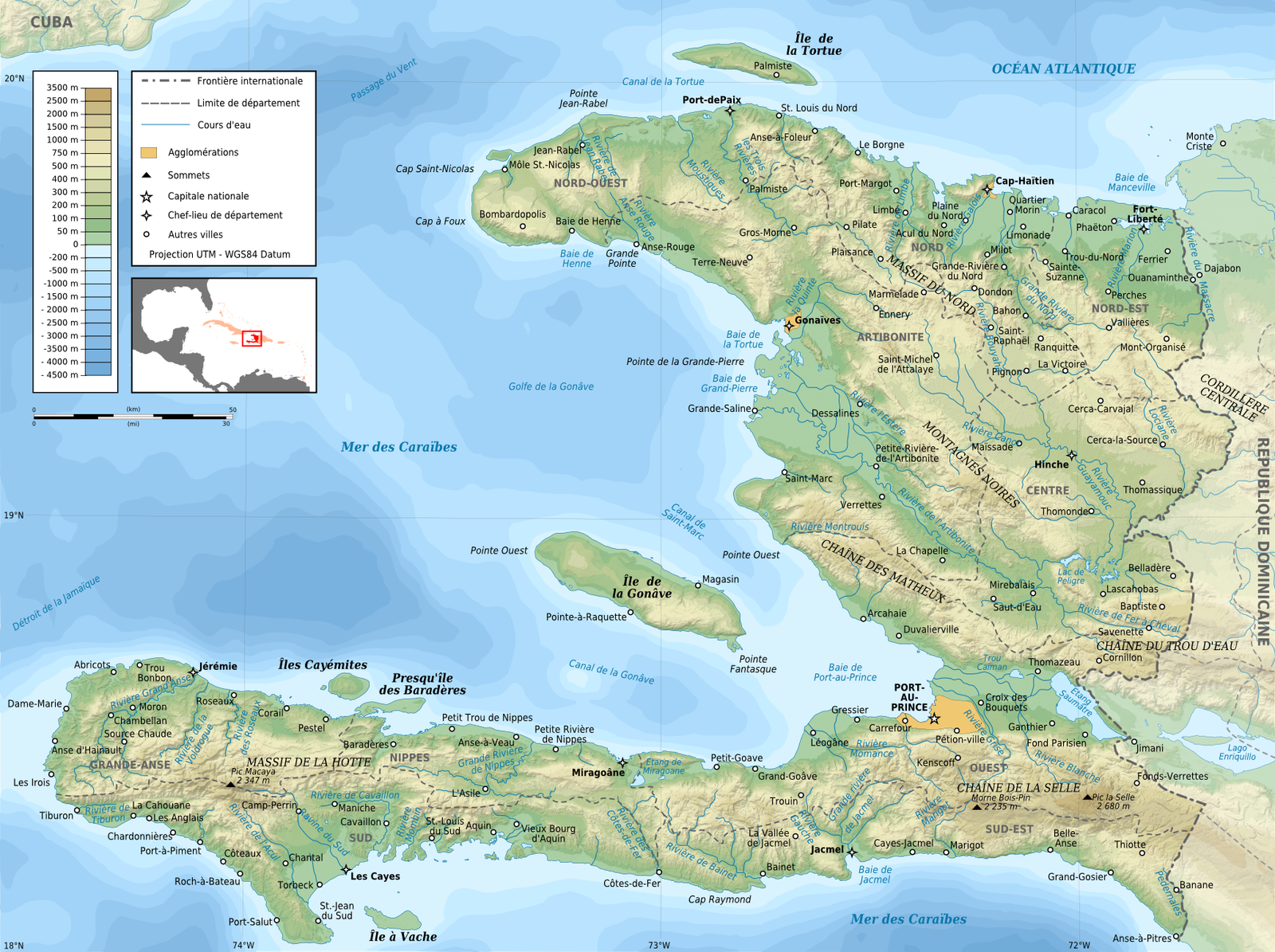
The map of Haïti is an essential tool for understanding the geography of the country, its political organization, and its different regions. Whether for travelers, researchers, or those interested in the history of Haiti, this map provides crucial information on the location of cities, mountains, coastlines, and borders. This article explores the map of Haiti, its key elements, and what it represents for the Haitian people.

The Geography of Haiti: A Global Overview

Haïti is an island nation located in the Caribbean, on the island of Hispaniola, which it shares with the Dominican Republic. The map of Haïti shows a territory that extends over approximately 27,750 km², making Haïti the 3rd smallest country in the Caribbean region.

The country is divided into 10 departments, which are themselves subdivided into districts and communes. Haiti’s geography is marked by mountains, coastal plains, and impressive biodiversity. The country has a particularly mountainous relief, with the Massif de la Selle mountain range, which peaks at more than 2,600 meters above sea level, offering spectacular landscapes.

Maps of Haïti allow you to visualize these mountains, valleys, and rivers that mark the territory, while highlighting the coastal areas and neighboring islands.

Haiti’s Departments: A Journey Through the Country

The map of Haïti reveals the administrative structure of the country through its departments. Haïti has ten departments:

1. Artibonite
2. Centre
3. Grand’Anse
4. Nippes
5. Nord
6. Nord-Est
7. Nord-Ouest
8. Ouest
9. Sud
10. Sud-Est

Each department has a capital, which is often a major city where much of the economic and cultural activity is concentrated. For example, Port-au-Prince, the country’s capital, is located in the Ouest department, and is also the largest city in Haiti.

The maps detail not only the capitals of each department, but also the main roads connecting these cities, making it easier to get around and understand the country’s territorial organization.

Haiti’s Borders: Sharing the Island of Hispaniola

The map of Haïti also highlights the country’s borders, particularly its long land border with the Dominican Republic, which occupies the eastern part of the island. The border, which stretches for approximately 380 kilometers, is a crucial element in diplomatic and commercial relations between the two countries.

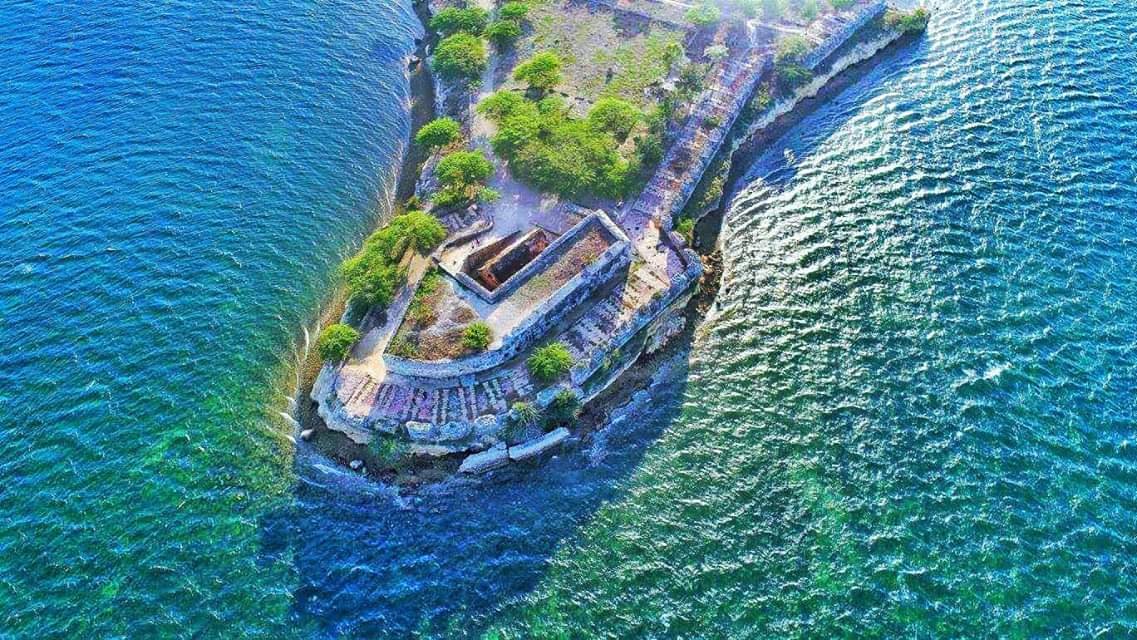
To the south, Haïti is bordered by the Caribbean Sea, while to the north, it faces the Atlantic Ocean. The map also illustrates small neighboring islets such as Île de la Tortue to the northwest, an important historical site for Haitians.

Modern maps often show maritime boundaries, which are essential for understanding geopolitical issues related to natural resources and navigation.

Haiti’s Coasts and Beaches: Unparalleled Beauty

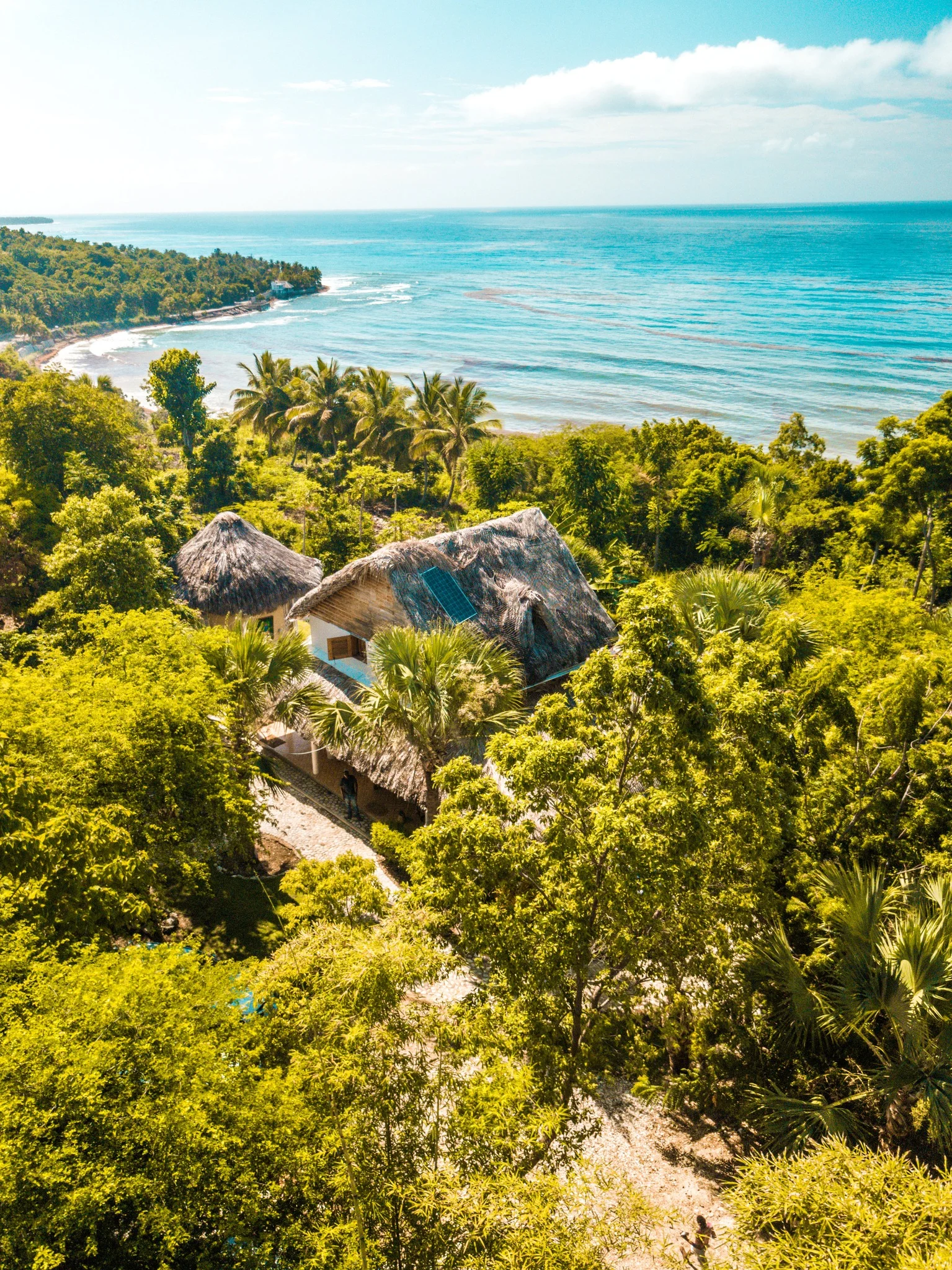
The map of Haïti highlights its magnificent coastline that stretches for more than 1,700 kilometers. These beaches line the island and are among the most beautiful in the Caribbean. The west coast, which overlooks the Caribbean Sea, is dotted with beaches like Jacmel and Port-Salut, known for their white sand and crystal-clear waters.

The map also shows the presence of important tourist sites, including resorts and national parks, which are essential to Haiti’s tourism industry.

Major Cities: Focal Points of Haitian Life

In addition to Port-au-Prince, the map of Haïti highlights other important cities in the country, such as Cap-Haïtien in the north, which is a key economic center and strategic port. Les Cayes in the south is another port city, and Jacmel in the southeast is known for its cultural heritage and historical role in the Haitian Revolution.

The maps help locate these important cities and better understand their role in the country’s economy, politics, and culture.

Roads and Infrastructure: Key to Development

Maps of Haïti also show the country’s main infrastructure, including roads and transportation networks. Roads connecting major cities and departments are essential for the movement of goods and services. However, the quality of infrastructure remains a challenge, with roads sometimes damaged due to weather and lack of maintenance.

Modern maps also highlight progress made in modernizing infrastructure, as well as development projects to improve connectivity between different regions.

Maps: An Educational and Tourism Tool

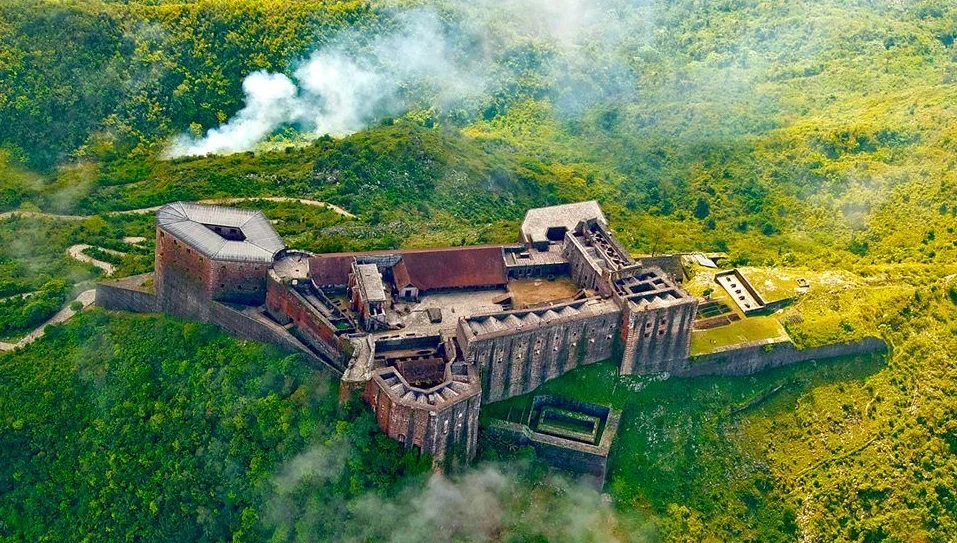
Maps of Haïti are not only navigation tools, they also play an important educational role. They are used in schools to teach the geography and history of the country. Tourist maps allow travelers to discover the natural and cultural riches of Haiti, whether it is its heavenly beaches, its majestic mountains, or its historical sites such as the Citadelle Laferrière.

Maps are therefore essential to raise awareness of the importance of Haitian geography and environment, and to promote tourism through valuable information.

A Fundamental Tool to Understand Haiti

The map of Haïti is much more than a simple geographical document. It is a fundamental tool to understand the structure and beauty of this country, while offering an overview of its history, resources and challenges. Whether for Haitians themselves or for foreigners who wish to discover Haiti, the map of the country remains an essential guide to appreciate the geographical, cultural and historical richness of this Caribbean nation.

Share
About the Author
Appolon Guy Alain
Appolon Guy Alain
Appolon Guy Alain

Full Stack Developer, Créatif, expérimenté, passionné des nouvelles technologies et de l’art.

See other articles from Appolon Guy Alain
Leave a comment

Recently Posted

Haiti: A Little-Known Pillar of World Independence

Haiti, the world’s first independent black republic, played an exceptional role in the quest for independence for other nations. Although often overshadowed by other historical events, Haiti’s contribution to the liberation of other countries was significant and deserves to be highlighted. b~The Haitian Revolution~b At the turn of the 19th century, Haïti threw off the chains of slavery and achieved the impossible by freeing itself from French colonial rule. In 1804, the country proclaimed its independence, ushering in a new era for oppressed peoples around the world. b~Inspiration for Latin America~b The Haitian Revolution was a major source of inspiration for independence movements in Latin America. Iconic figures such as Simón Bolívar and Francisco de Miranda recognized the courage and determination of Haitians as a driving force for their own struggles. By materially and ideologically supporting these movements, Haïti contributed to the emergence of several independent nations in South America. b~Influence in Africa~b Beyond the Americas, Haïti also played a crucial role in the quest for independence in Africa. African leaders have left a legacy that has inspired entire generations of freedom fighters on the African continent. The idea that oppressed people could rise up against their oppressors found a powerful echo in the struggles for independence in Africa. b~Support for Liberation Movements~b Throughout its history, Haïti has provided substantial support to liberation movements around the world. Whether through troop dispatches, financial resources or active diplomacy, the country has demonstrated its solidarity with those fighting for their autonomy. Haiti’s contributions have often been discreet but crucial. Haiti, as a pioneer of independence and freedom, has left a lasting impact on the world stage. His legacy resonates across continents, reminding the world that the quest for freedom is universal. By recognizing and celebrating Haiti’s role in the independence of other nations, we not only honor its history, but we also commit to promoting a future where all people have the opportunity to shape their destiny.

Newsletter

Subscribe to our newsletter to stay informed of all our activities and news on Haiti.

Conference / Festival Quatre Chemins / 21st edition

The impact of collective and individual trauma on the personal development of young people in Port-au-Prince While writers, actors, dancers, poets, among others, have gratified us with their performances, the master’s degree student in psychology at the Faculty of Human Sciences (FASCH), Lourdya Blaise, spoke with the audience about trauma. Structured around the theme "Youth and Trauma, analysis of the impact of collective and individual trauma on the personal development of young people living in Port-au-Prince between 2010-2024", this conference gave rise to enriching discussions. During this meeting, moderated by Michaël Formilus, Ms. Blaise showed how the events that have taken place in the country have caused cases of trauma among Haitians. According to the student, citing the American Psychological Association, we speak of trauma as a consequence of trauma. The latter is explained by the fact that we feel threatened, whether it is the person in question or their loved ones. However, she specifies that a collective trauma remains depending on the impact that the event has on the individual. To illustrate her remarks, she mentioned the earthquake of January 12, 2010, considered a collective trauma, insofar as it still occupies our minds. This tragedy reminds us of the disappearance of our loved ones and enormous losses. This is the case of a trauma that becomes a collective trauma. For the student, it should be emphasized that when an event occurs, some people are traumatized and others are not. According to him, the violence of armed gangs is not perceived in the same way, says Ms. Blaise. There are people who have fled their homes but are not traumatized. In fact, some people see traumatic situations as a passing event, she says. The speaker also spoke about collective trauma, which, according to him, preoccupies the mind, even if we no longer experience it. It manifests itself in several forms: lack of sleep, fear psychosis, intrusive thoughts, intense heartbeat, etc. Generally, symptoms related to trauma are hard to die. When it persists, it becomes acute stress. To deal with it, we must talk to other people. If the situation persists, acute stress turns into a phase of post-traumatic stress; in this case, we must confide in a trusted person or go see a mental health specialist, she advises. In her presentation, Lourdya Bazile also drew attention to the psychological state of children in these times. According to the presenter, children are also facing this crisis situation, even if they do not talk about it to their parents. As much as adults, children also plan their future. Faced with flouted school years, they become pensive and worried, she stressed. They withdraw. The child who used to be brilliant can become violent and perform less well at school. Parents are called upon to listen to them and understand them. A good moment of exchange, rich in practical advice. The audience participated fully. In turn, the presenter invites them to breathe better and meditate. "We live in a country where worries mix, we must take time for ourselves, do sports, eat well, make sure that the sleeping space is clean and take time for ourselves. There is more than one way to find calm," recalls the psychologist. Gertrude Jean-Louis

Haïti, a rich and impoverished country

Located in the western part of the island of Hispaniola, Haïti is a land imbued with natural, cultural and historical wealth. Unfortunately, behind the beauty of its landscapes, the richness of its culture and the delicacy of its cuisine lies a complex reality marked by the debt of its independence and the persistent interference of third countries, casting a shadow over its stability. b~The Natural Beauty of Haïti~b Haïti, nicknamed the "Pearl of the Antilles", dazzles with the diversity of its landscapes. From majestic mountains and lush valleys to meandering rivers and sandy beaches, the country offers natural beauty worth celebrating. The famous Citadelle Laferrière mountains and the refreshing waterfalls of Bassin-Bleu are just a few examples of the splendor that characterizes this nation. b~A Rich and Diverse Culture~b Haïti stands out for its vibrant and diverse culture. A heritage of African, French and indigenous influence, Haïtian music, dance and art reflect a unique fusion. Colorful festivals, like Carnival, are celebrations of this cultural richness, attracting visitors from all over the world. b~Delicious Cuisine~b Haïtian cuisine, tasty and spicy, is another aspect worth celebrating. Dishes like griot, sticky rice, and the legendary joumou soup, traditionally prepared to commemorate independence, are all culinary delights that demonstrate the country’s gastronomic ingenuity. b~Heritage Treasures and Paradise Beaches~b Haïti’s heritage treasures, such as the remains of the Sans-Souci Palace and the Citadelle Laferrière, listed as UNESCO World Heritage Sites, are testimonies to the architectural grandeur of Haïti’s past. At the same time, beaches like Labadee and Jacmel offer havens of peace with crystal clear waters, attracting travelers in search of a tropical paradise. b~A Fascinating Story~b The history of Haïti is both fascinating and tragic. It was the first country in the Americas to gain its independence, in 1804, after a courageous slave revolt. However, this independence came with a heavy financial price. France demanded exorbitant compensation, thus laying the foundations for Haïti’s foreign debt. b~The Debt of Independence and Foreign Interference~b Despite these treasures, Haïti struggles with the reality of its independence debt. After gaining its freedom, the country was forced to pay France a considerable sum in compensation for losses associated with the abolition of slavery. This debt has been a major economic burden for Haïti, hindering its development. Additionally, foreign interference continues to create significant challenges. External political and economic interventions have often contributed to the country’s instability, hindering its ability to build a sustainable future for its citizens. b~In conclusion~b Haïti remains a country of multiple riches, but its challenges persist. Despite its natural beauty, rich culture and fascinating history, the nation needs enlightened international support and lasting solutions to overcome the obstacles that stand in its way. Haïti’s wealth lies not only in its enchanting landscapes, but also in the potential of its people to be resilient and prosper despite persistent challenges.


Recently Posted

History

History

First black nation to free itself from slavery and gain independence from France in 1804 and influenced other liberation movements around the world, inspiring struggles for freedom and equality.

Natural beauty

Natural beauty

Haïti is blessed with spectacular natural landscapes, including white sand beaches, mountains and rich biodiversity.

Heritage

Heritage

Haïti has a rich historical heritage, including sites like the Citadelle Laferrière and the Sans-Souci Palace, listed as UNESCO World Heritage Sites.

Culture

Culture

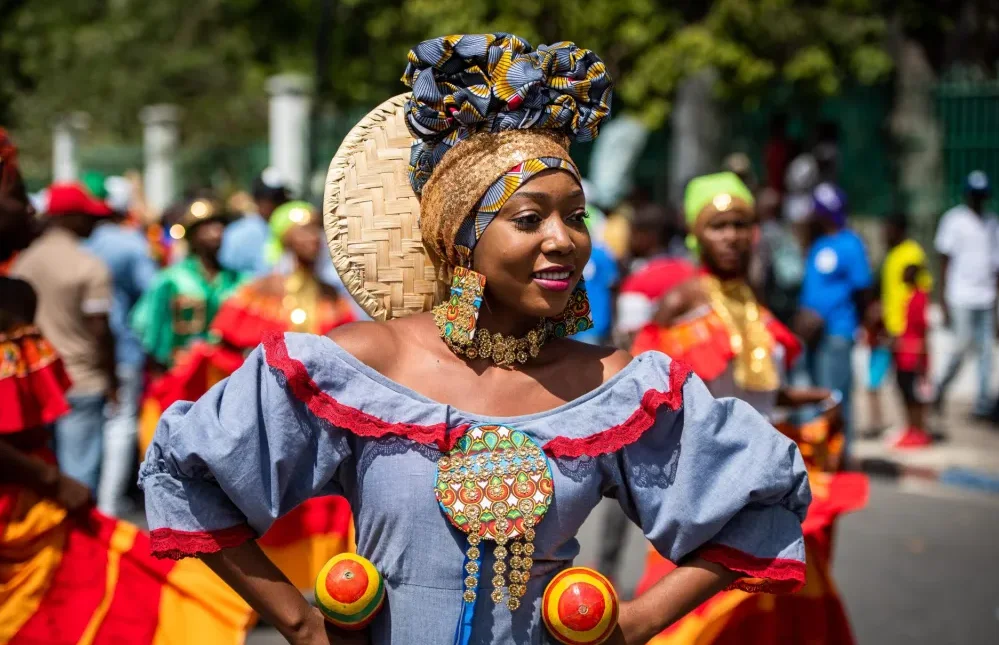
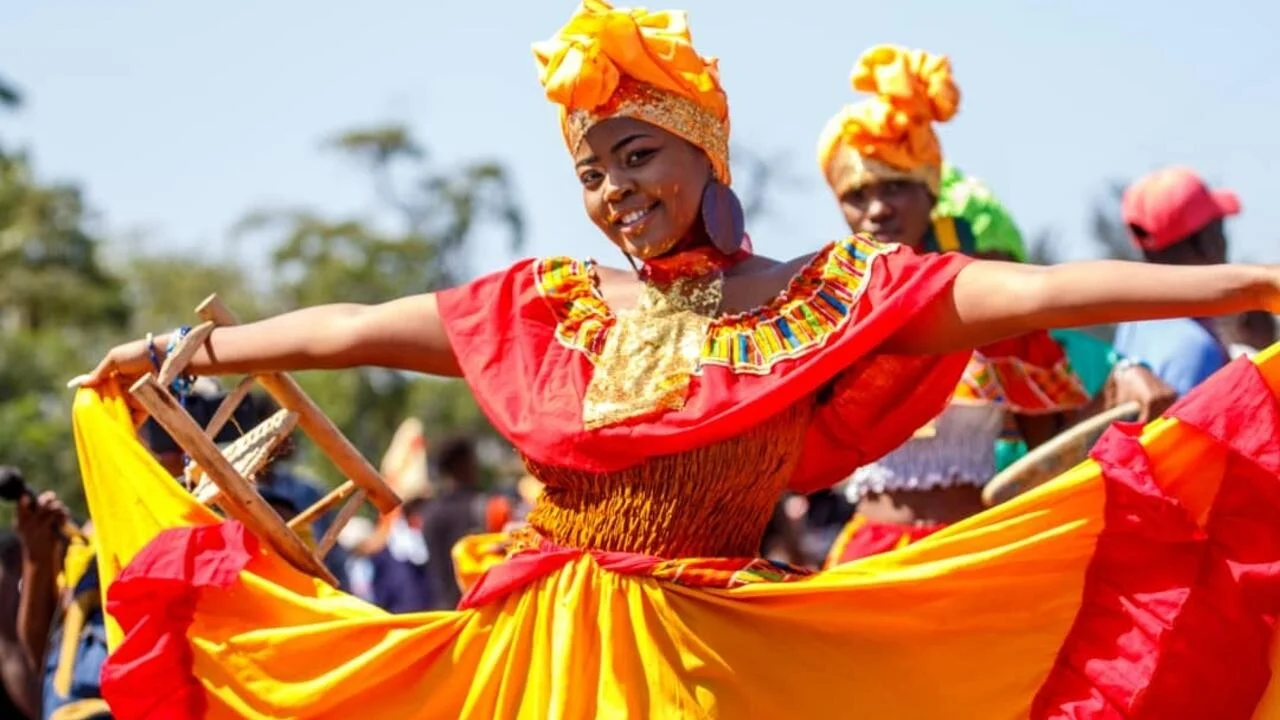
Haïti has a rich and diverse culture, influenced by African, European and indigenous elements. Haitian music, dance, art and cuisine are celebrated around the world.

  • +
    • Post