contact@haitiwonderland.com+509 36184317

Discover

Shopping Cart

Haiti’s Citadelle Laferrière: Eighth Wonder of the World?

Haiti’s Citadelle Laferrière: Eighth Wonder of the World?

Among the world’s architectural and historical treasures, the Citadelle Laferrière, perched high in the north of Haiti, occupies a unique place. Dubbed by some the “Eighth Wonder of the World,” this colossal fortress is much more than a feat of engineering: it is a powerful symbol of freedom, resilience, and national pride. Discover why this impressive site continues to captivate visitors from around the world and deserves this honorary distinction.

Haïti
Haïti
Haïti

A Monument Born of the Struggle for Freedom

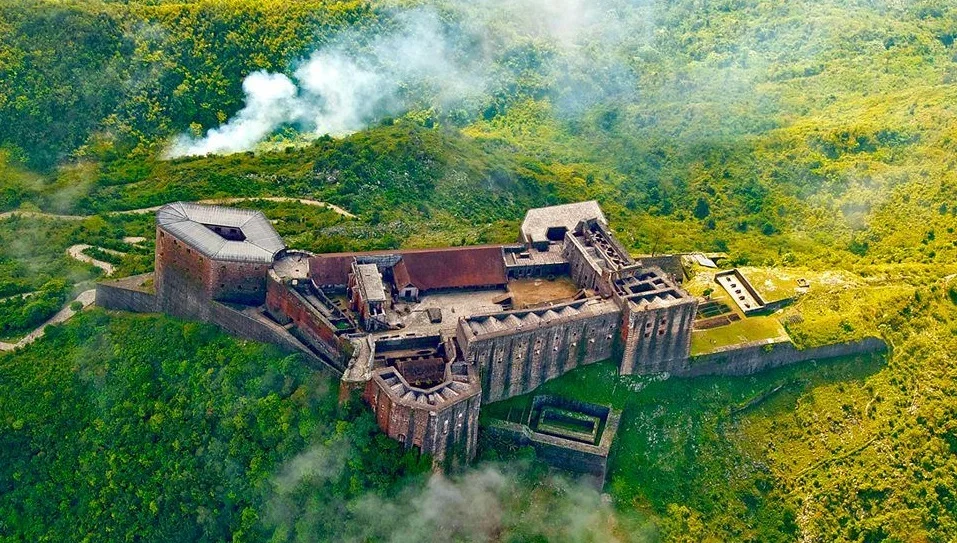
After Haïti gained independence in 1804, acquired through fierce struggles against the French colonial army, King Henri Christophe ordered the construction of the Citadelle Laferrière to protect the young nation from possible attempts at reconquest. Built between 1805 and 1820, this imposing fortress dominates the surrounding plains at an altitude of nearly 900 meters, offering a strategic view of the entire north of Haïti and, on a clear day, all the way to the Cuban coast.

With massive walls sometimes reaching 40 meters high, the Citadel was designed to withstand the most violent bombardments. Its capacity to accommodate up to 5,000 soldiers, combined with its reserves of food, water and ammunition, made it an impregnable refuge.

Haïti
Haïti
Haïti

Impressive dimensions

Ranked among the largest fortresses in the world, the Citadelle Laferrière covers an area of ​​10,000 square meters. Here are some key figures that illustrate its scale:
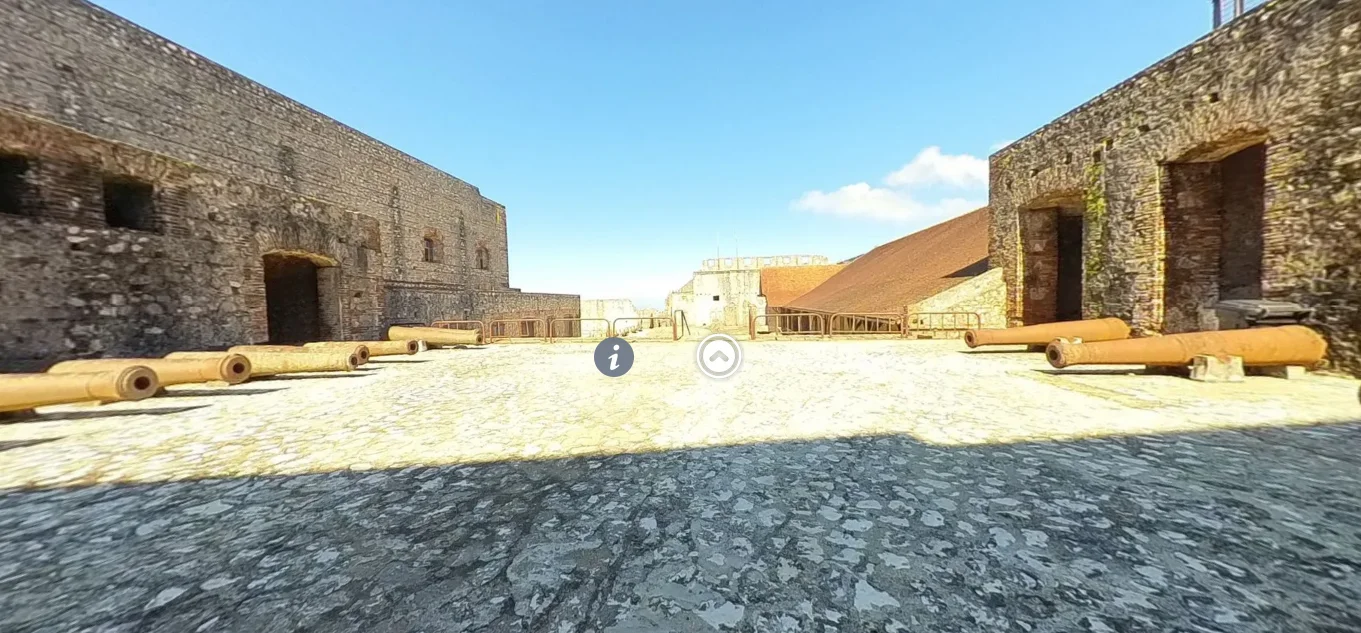
- 365 cannons of various sizes, from different Napoleonic battles, are stored there. - Tons of cannonballs, perfectly stacked, bear witness to the meticulous preparation for defense.
- More than 20,000 workers participated in its construction, using local materials transported by man and mule.

Its robust and imposing design makes it a masterpiece of military architecture.

Haïti
Haïti
Haïti

A UNESCO World Heritage Site

In 1982, the Citadelle Laferrière was inscribed on the UNESCO World Heritage List in recognition of its historical and cultural importance. It is part of the National Historical Park, alongside the Sans Souci Palace and other remains from the era of Henri Christophe.

This classification highlights not only its role as a symbol of freedom for Haiti, but also its impact on universal history as a testimony to the first free black nation in the world.

Haïti
Haïti
Haïti

Why the "Eighth Wonder of the World"?

The nickname "Eighth Wonder of the World" given to the Citadelle Laferrière is not official, but it reflects the admiration it inspires in those who visit it. This title evokes:
- Its architectural ingenuity: Few fortresses in the world combine such size, strategic design and resistance to the natural elements.
- Its historical role: It embodies the spirit of struggle and independence of a people who defied the colonial powers of the time.
- Its majestic beauty: Nestled atop a mountain, the Citadel offers a spectacular panoramic view of the surrounding valleys and the Atlantic Ocean.

Haïti
Haïti
Haïti

A world-renowned tourist attraction

Every year, thousands of local and international tourists visit the Citadelle Laferrière. It is often the highlight of their trip to Haiti.

Access to the Citadel is by hiking or horseback riding, adding an adventurous dimension to the experience. Once at the top, visitors are rewarded with a breathtaking spectacle and a deep insight into Haiti’s heroic history.

Some key facts about the Citadel

- Strategic position: It overlooks the northern plains, offering a clear view of possible enemy approaches.
- Symbolic construction: The fortress was built to represent freedom, even though it has never been attacked.
- An intact masterpiece: After more than two centuries, it remains in excellent condition and continues to fascinate with its solidity.

A symbol of resilience for future generations

The Citadelle Laferrière is not only a historical monument, but also a source of inspiration for Haitians and the world. It is a reminder of the price of freedom and the importance of preserving one’s heritage.

If you haven’t had the opportunity to visit the Citadel yet, it deserves to be at the top of your list of destinations. Come discover this wonder, share your experience and, why not, contribute to making Haïti shine on the world stage.

And you, what do you think of this "Eighth Wonder of the World"? Do you have any anecdotes or memories to share? Do so in the comments!

Share
About the Author
Appolon Guy Alain
Appolon Guy Alain
Appolon Guy Alain

Full Stack Developer, Créatif, expérimenté, passionné des nouvelles technologies et de l’art.

See other articles from Appolon Guy Alain
KEMIH SANROAH

Je suis en Afrique de l'ouest dans la republique soeur de Haití et je veux connaitre plus sur la 8eme merveille svp
Merci

August 04, 2025 - 01:33:02 PM
Leave a comment

Recently Posted

Jacmel: the Haitian city whose history is linked to the liberation of Latin America

Jacmel is a city located on the southern coast of Haiti, specifically in the southeastern department. To this day, the city is known for its well-preserved colonial architecture and rich historical heritage, as well as its carnival, one of the most famous in the Caribbean. Jacmel is one of the oldest cities in Haiti. Its origins, according to some historians, trace back to the time of the Taíno people, the island’s first inhabitants, who lived here long before the arrival of Christopher Columbus and his settlers in 1492. Long before it became Jacmel, this city in southeastern Haïti was called Yakimel. The renaming of Jacmel was carried out by the French during their colonization of the western part of the island of Hispaniola. Over the years, Jacmel has transformed into a city where living well blends with the beauty of the sea, in the hearts of its visitors. Nature is fully embraced here, and the sea remains a source of joy throughout the day. Jacmel offers all of this, in addition to its glorious past, which anchors it as a major location in Haiti’s grand history. With its unique charm, Jacmel is among the Haitian cities that can leave a lasting impression. In the 1950s and 60s, until the early 1980s, Jacmel was one of the most popular tourist destinations in the Caribbean due to its reputation as a city with unmatched natural beauty and grace. During this time, the Jacmel coastline warmly welcomed cruise ships filled with tourists from all corners of the world. It was also during this period that Jacmel was one of the most commercially active cities in Haiti, among the country’s most economically flourishing, thanks to the significant influx of tourists.

The Haitian Carnival: A Festival of Colors, Music and Traditions

The Haitian carnival, an emblematic and essential celebration of the country’s festive calendar, is much more than a simple party. It embodies the very essence of Haitian culture, joyfully blending ancestral traditions, intoxicating music and a deep sense of community. Each year, this vibrant celebration transforms the streets into a vibrant and colorful spectacle, attracting thousands of participants and spectators eager to take part in this one-of-a-kind celebration. Haitian carnival has deep roots in the country’s history, dating back to colonial times. It has evolved over the centuries, incorporating elements of African, French and Creole culture to create a distinct and captivating celebration. The carnival period in Haïti traditionally begins in January and culminates with extravagant festivities that take place over several days. One of the most striking features of the Haitian carnival is the profusion of colors. Traditional costumes, called "masks", are elaborate and beautifully designed. They feature vivid patterns and vibrant decorations, creating a vivid picture of Haitian cultural identity. Participants, dressed in these elaborate costumes, parade through the streets to the sound of lively music, creating an electric atmosphere. Music is at the heart of the Haitian carnival. The captivating rhythms of compass, rasin, rara and other local musical genres resonate throughout the city, inviting people to dance to the rhythm of the party. Orchestras parade through the streets, accompanying the dancers and creating a unique symbiosis between the music and the graceful movements of the participants. The Haitian carnival parade is not just about the music and costumes; it also celebrates the richness of street arts. Talented artists create giant sculptures, art installations and theatrical performances that tell deep stories of Haitian history and culture. These artistic expressions contribute to the transmission of values ​​and stories that shape the identity of the Haitian people.

Newsletter

Subscribe to our newsletter to stay informed of all our activities and news on Haiti.

Haiti: Is buying votes to be elected a form of corruption or political strategy?

The democratic political system requires the active participation of citizens in the management of the city. Everyone freely expresses their opinion for harmonious management of society. Generally the choices are made from the organization of free and honest elections. However, sometimes candidates use diverted means to achieve their ends. Can we consider this act as a form of corruption or a political strategy? In a democratic society, the organization of elections at regular intervals is an imperative. Managers are generally elected by the majority of voters, which ensures them a certain legitimacy within the framework of government management. Today, more and more, around the world, the elections are controlled by economic power. This sector gives a lot of silver to candidates who often buy the media services in order to have certain visibility through mass communication means (radio, VAT, Internet, etc.) and do without constraints Many very expensive trips, which require enormous capital. By the way, the possibility that a candidate with low financial means of being elected is increasingly reduced in Western societies. Despite everything, it is illegal to buy the votes of the voters. It is an act of corruption that should lead to criminal sanctions. No society can tolerate this practice which could hamper the degeneration of the democratic system and, consequently, of the electorate system. Civil society and human rights organizations must be vigilant in order to avoid these harmful drifts in the democratic system. In fact, the temptation to bribe the voters in order to access elective positions must be denounced as an act of corruption. In doing so, will lead to political dissenting between duty, and law, because citizens are called upon to freely choose the leaders of the city. Ultimately, the organization of the elections must be the fruit of consensus between the various groups of the social system. Managers must be chosen according to their ability to provide adequate answers to the problems of the company. They can still benefit from powerful financial means from other partners. But, giving voters directly money is a condemnable detective act which reduces the autonomy of action and thinking of voters. In this sense, the latter’s vote must reflect the desire to choose or build a fair, fair and favorable company.

Conference / Festival Quatre Chemins / 21st edition

The impact of collective and individual trauma on the personal development of young people in Port-au-Prince While writers, actors, dancers, poets, among others, have gratified us with their performances, the master’s degree student in psychology at the Faculty of Human Sciences (FASCH), Lourdya Blaise, spoke with the audience about trauma. Structured around the theme "Youth and Trauma, analysis of the impact of collective and individual trauma on the personal development of young people living in Port-au-Prince between 2010-2024", this conference gave rise to enriching discussions. During this meeting, moderated by Michaël Formilus, Ms. Blaise showed how the events that have taken place in the country have caused cases of trauma among Haitians. According to the student, citing the American Psychological Association, we speak of trauma as a consequence of trauma. The latter is explained by the fact that we feel threatened, whether it is the person in question or their loved ones. However, she specifies that a collective trauma remains depending on the impact that the event has on the individual. To illustrate her remarks, she mentioned the earthquake of January 12, 2010, considered a collective trauma, insofar as it still occupies our minds. This tragedy reminds us of the disappearance of our loved ones and enormous losses. This is the case of a trauma that becomes a collective trauma. For the student, it should be emphasized that when an event occurs, some people are traumatized and others are not. According to him, the violence of armed gangs is not perceived in the same way, says Ms. Blaise. There are people who have fled their homes but are not traumatized. In fact, some people see traumatic situations as a passing event, she says. The speaker also spoke about collective trauma, which, according to him, preoccupies the mind, even if we no longer experience it. It manifests itself in several forms: lack of sleep, fear psychosis, intrusive thoughts, intense heartbeat, etc. Generally, symptoms related to trauma are hard to die. When it persists, it becomes acute stress. To deal with it, we must talk to other people. If the situation persists, acute stress turns into a phase of post-traumatic stress; in this case, we must confide in a trusted person or go see a mental health specialist, she advises. In her presentation, Lourdya Bazile also drew attention to the psychological state of children in these times. According to the presenter, children are also facing this crisis situation, even if they do not talk about it to their parents. As much as adults, children also plan their future. Faced with flouted school years, they become pensive and worried, she stressed. They withdraw. The child who used to be brilliant can become violent and perform less well at school. Parents are called upon to listen to them and understand them. A good moment of exchange, rich in practical advice. The audience participated fully. In turn, the presenter invites them to breathe better and meditate. "We live in a country where worries mix, we must take time for ourselves, do sports, eat well, make sure that the sleeping space is clean and take time for ourselves. There is more than one way to find calm," recalls the psychologist. Gertrude Jean-Louis

Recently Posted

History

History

First black nation to free itself from slavery and gain independence from France in 1804 and influenced other liberation movements around the world, inspiring struggles for freedom and equality.

Natural beauty

Natural beauty

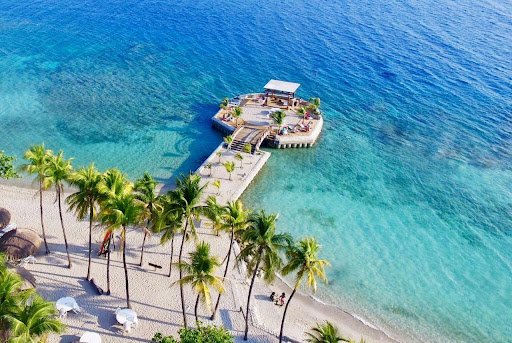
Haïti is blessed with spectacular natural landscapes, including white sand beaches, mountains and rich biodiversity.

Heritage

Heritage

Haïti has a rich historical heritage, including sites like the Citadelle Laferrière and the Sans-Souci Palace, listed as UNESCO World Heritage Sites.

Culture

Culture

Haïti has a rich and diverse culture, influenced by African, European and indigenous elements. Haitian music, dance, art and cuisine are celebrated around the world.

  • +
    • Post