contact@haitiwonderland.com+509 36184317

Discover

Shopping Cart

Discover the Origins of the Haitian Creole Language

Discover the Origins of the Haitian Creole Language

The Haitian Creole language, spoken by nearly 12 million people, is much more than just a means of communication. It embodies the history, culture, and identity of Haiti. But where does this unique language come from? This article explores its origins, evolution, and central role in Haitian society.

Haïti
Haïti
Haïti

A Language Born of Resistance and Resilience

Haitian Creole was born during the 17th and 18th centuries, during the French colonial period in Saint-Domingue (now Haiti). At that time, millions of Africans were uprooted from their lands and enslaved to work on sugarcane, coffee, and indigo plantations.

These slaves came from different regions of Africa and spoke different languages, making communication between them difficult. They had to find a way to communicate not only with each other, but also with the French colonists. Haitian Creole thus developed as a mixture of African languages, regional French dialects, and to a lesser extent, terms borrowed from other European and indigenous languages.

The Creole language was thus born out of a need for survival and resistance, becoming a symbol of unity for the slaves in their fight against oppression.

The Influence of French and African Languages ​​

Haitian Creole finds its main roots in French, which was the language of the colonists. However, it incorporates many elements of African languages, particularly in terms of grammatical structure, pronunciation, and vocabulary.

- French: The majority of words in Haitian Creole come from French, but their pronunciation and spelling have been adapted to reflect the sounds and needs of the speakers. For example, mwen (I, me) comes from the French moi, and li (he/she) from lui.
- African languages: African influence can be found in syntax, tones, and some specific terms, such as vèvè (a symbol used in voodoo) or zantray (entrails).
- Other influences: Some words come from Spanish, English, and Native American languages, due to cultural and commercial exchanges in the Caribbean region.

This unique fusion gave birth to an original language, with its own grammar and phonetic system.

Haïti
Haïti
Haïti

The Role of Creole in Haitian History and Culture

After Haïti gained independence in 1804, Creole remained the majority language spoken by the population. However, French continued to dominate as the official language and language of the elite, creating a linguistic and social divide that persists to this day.

Despite this, Haitian Creole has always been at the heart of Haitian culture. It is the language of songs, stories, proverbs and voodoo rituals. It reflects the spirit and creativity of the Haitian people, preserving and transmitting the oral traditions and history of the country.

In 1987, the Constitution of Haïti officially recognized Creole as a national and co-official language alongside French, marking a turning point in its promotion.

Haiti: Carnival and Rara: Crossed Perspectives on Culture and Haitian Identity

Haiti: Carnival and Rara: Crossed Perspectives on Culture and Haitian Identity

In our tradition, carnival represents an essential cultural activity. Indeed, for the holding of it this year, the State had drawn from the public treasury not only a huge sum but also a strong concentration of law enforcement to ensure the protection and security of carnival-goers in the area. metropolitan. Despite numerous criticisms and concerns expressed by certain media on the one hand, then on the other hand by the democratic opposition. While it is true that in Port au Prince these concerns had had a no less valuable consequence on the progress of this festivity. It is no less true that this was the case in other provincial towns, as proof in the southeast department the authorities did not record anything as an element of accident or incident during the progress of the carnival unlike Port au Prince. Certainly, socio/economic problems are increasingly worrying, nevertheless what makes us what we are today, a free and independent people is none other than our exceptionality. This deeply expresses our intrinsic characteristic in relation to people. In fact, historically we are a people who laugh and cry, smile and irritate, dance and hit the system, sing and fight so well that "grenadya alaso sa ki mouri zafè ya yo" is the most emblematic song of the slaves for the conquest of our freedom. We do not intend to claim that those who expressed their disagreement with the carnival are showing a historical deficit. However, we leave in the shadows a fundamental question: why is carnival taken care of by the State while the rara is like an abandoned child? The rara is not only a simple cultural tradition but, above all, it is the heritage of our valiant warriors who bravely fought the French expeditionary army, the most powerful of the time. While, this mass cultural, she is still marginalized by state authorities. It is emphasized that social cohesion is the dead point of carnival. On the other hand, this is the strong point of rara. As proof, the Thursday of the Dead in our Voudouesque tradition which represents the opening ceremony for the rara bands is the blatant testimony of this social cohesion. And, in fact, there were circles of people who took divergent directions to attend the opening ceremony of their rara bands. For this opening ceremony the atmosphere was a taste of carnival in terms of color. On the side of Croix Hilaire, for the title champion Ratyèfè full force band, the color of his club was very diverse, a long dress of apricot yellow, mauve white, then white scarf. In terms of performance, this band had completely proven its champion skills thanks to its arsenal of musicians who were not in their testing phase. To tell the truth, they performed their note with surgical precision as a doctor-surgeon in his surgical procedure. The synchronization between the musicians, the instruments and then the fans form a whole and harmonize perfectly well. This band not only has the magic of words and verbs, it seems that they also have the magic to thrill even the most reluctant fans. Moreover, his performance for this dead Thursday was a challenge for his rivals this weekend to the extent that their performances were less good. On the symbol side of light, Grap Kenèp was the wonder of the Thursday evening of the dead. His club dressed in the appropriate color for this evening, purple scarf, purple jersey, then white “kolan”. In a symbolic way, this marriage of color represents Baron in Haitian Vodou. Without a doubt, it was the most beautiful symbolic representation of the evening. In terms of performance, returning from the cemetery we felt a very strong warmth of jubilation, elation, and playfulness for a completely balanced performance. As far as Chenn Tamarin is concerned, it was already 2 a.m. when our team met him, it was a less good performance than what we were accustomed to. On the symbolic side it leaves something to be desired. His news was that he had his own media. Petit-Goave/Culture and Society

Haïti
Haïti
Haïti

Creole Today: A Living and Dynamic Language

Today, Haitian Creole is spoken by the entire population of Haïti and by the Haitian diaspora around the world. It continues to evolve, enriched with new expressions and adapting to modern realities.

Many initiatives aim to promote and develop Creole, including through:
- Education: School programs and textbooks in Creole are increasingly used to facilitate children’s learning.
- Media: Radio, television, and social networks in Creole play a crucial role in its dissemination.
- Literature: Haitian writers publish works in Creole, contributing to its cultural influence.

Creole is also taught in universities abroad and studied as an example of a Creole language in its own right, which reinforces its international recognition.

A Symbol of Haitian Identity

Haitian Creole is not only a language; it is a pillar of national identity. It testifies to the resilience and creativity of Haitians in the face of the trials of their history.

Through Creole, Haitians affirm their cultural pride and their attachment to their roots. It is a language that unites, that tells a story of struggle and triumph, and that continues to carry the soul of a people.

Why is Creole so Important to Haitians?

Haitian Creole is much more than a tool of communication: it is a reflection of the history, culture and spirit of the Haitian people. Its birth in the most difficult conditions, its evolution into a symbol of national pride and its central role in daily life make it an exceptional and precious language.

In Haïti and abroad, Creole remains a bridge between the past and the future, uniting generations and reminding everyone of the very essence of what it means to be Haitian.

Share
About the Author
Appolon Guy Alain
Appolon Guy Alain
Appolon Guy Alain

Full Stack Developer, Créatif, expérimenté, passionné des nouvelles technologies et de l’art.

See other articles from Appolon Guy Alain
Kervensky

Premye ak dezyèm rezolisyon sou alfabèt kreyòl la

August 10, 2025 - 08:47:26 PM
Jeanbertho Tilus

Mwwen se yon ayisen tout bon vle map mouriii pou hayti kpk bwa kale net a les.

August 23, 2025 - 05:46:54 AM
Leave a comment

Recently Posted

Newsletter

Subscribe to our newsletter to stay informed of all our activities and news on Haiti.

Haiti: “Kanbiz Toupatou”, the new game from Katkat Games is coming soon!

For some time now, engineer Certil Rémy has enthusiastically announced the imminent release of his new game, now officially named "Kanbiz Toupatou". Details about this exciting game are now available on the official Katkat Games website: https://www.katkatgame.com/ . By diving into this game, you will embark on a cultural and gastronomic journey through the treasures of the Caribbean, in particular those of Haiti. Explore the rich culture, immerse yourself in a world of authentic gastronomic delights and discover the traditional and delicious dishes of each region. This adventure promises to be extraordinary, offering an unparalleled immersion in the treasures of Haiti. From Les Anglais to La Tortue, each town crossed will offer its own culinary challenges, as well as the possibility of unlocking unique souvenirs. Collect them all to unlock new destinations and continue this captivating adventure. In "Kanbiz Toupatou", you will also have the opportunity to live a unique tourist experience by collecting souvenir cards representing the ancestors and famous sites of Haiti. Each map will bring you closer to culinary mastery and allow you to unlock exquisite new communes. Likino and Amarah will be the two main characters of the game, and you will have to choose one of them as a guide for this culinary adventure through the different stages of Haitian cuisine. With over 167 exciting levels to unlock, this game offers a great challenge to becoming a master of Haitian culture. Collect souvenirs, perfect your culinary skills and share your creations with the world! You can also invite your friends to join you on this culinary adventure, exchange memories and share tips. Prepare for an exceptional experience through the bustling streets and vibrant culture of Haiti. Although the game has not yet been launched, you can already reserve your place by adding your email address on the official Katkat Games website. You will be among the first to be informed when it is available for download. Don’t miss this opportunity to discover Haïti through "Kanbiz Toupatou", the exciting new game from Certil Rémy and the Katkat Games team. With its historic sites, tourist attractions, delicious cuisine, heavenly beaches and vibrant culture, Haïti awaits you for an unforgettable adventure in this jewel of the Antilles.



Haiti: In the Kingdom of Legends: Le Colombier, Keeper of the Secrets of Belle-Anse

In the heart of the azure waters of the Caribbean Sea, stands majestically the Colombier, an imposing rock mass that defies time and the elements. Located off the picturesque coast of Belle-Anse in southeastern Haiti, the Colombier is more than just a geological formation; it is a symbol of the natural beauty and cultural heritage of the region. Dominating the marine horizon with its imposing silhouette, the Colombier is shrouded in mystery and legends passed down from generation to generation. According to local stories, this rock was formed by the sea gods themselves, testifying to their passage through these crystal clear waters. A legend which adds an aura of fascination to this already enchanting place. But beyond its mythical appearance, the Colombier also offers a breathtaking visual experience. Visitors who venture to this natural wonder are rewarded with breathtaking panoramas: steep cliffs plunging into turquoise waters, isolated coves hemmed with golden sand, and abundant marine flora that enlivens the seabed. Le Colombier is also a refuge for remarkable biodiversity. Its waters are home to a multitude of marine species, from colorful fish to spectacular corals and majestic sea turtles. Scuba diving and snorkeling enthusiasts will find a preserved paradise there, where nature reigns supreme and each immersion is a fascinating exploration. As a tourist spot, Le Colombier offers an unforgettable getaway for travelers looking for adventure and authentic discoveries. Boat excursions from Belle-Anse allow visitors to get up close and personal with this natural wonder, contemplate its spectacular shapes and let themselves be captivated by its captivating beauty. In short, the Colombier embodies the quintessence of Haiti’s natural beauty, a hidden treasure in the heart of the Caribbean Sea. Between its breathtaking landscapes, its cultural heritage rich in legends and its exceptional biodiversity, this maritime jewel fully deserves its reputation as an essential tourist destination. Come discover the Colombier and let yourself be carried away by the magic of this exceptional place.

Recently Posted

History

History

First black nation to free itself from slavery and gain independence from France in 1804 and influenced other liberation movements around the world, inspiring struggles for freedom and equality.

Natural beauty

Natural beauty

Haïti is blessed with spectacular natural landscapes, including white sand beaches, mountains and rich biodiversity.

Heritage

Heritage

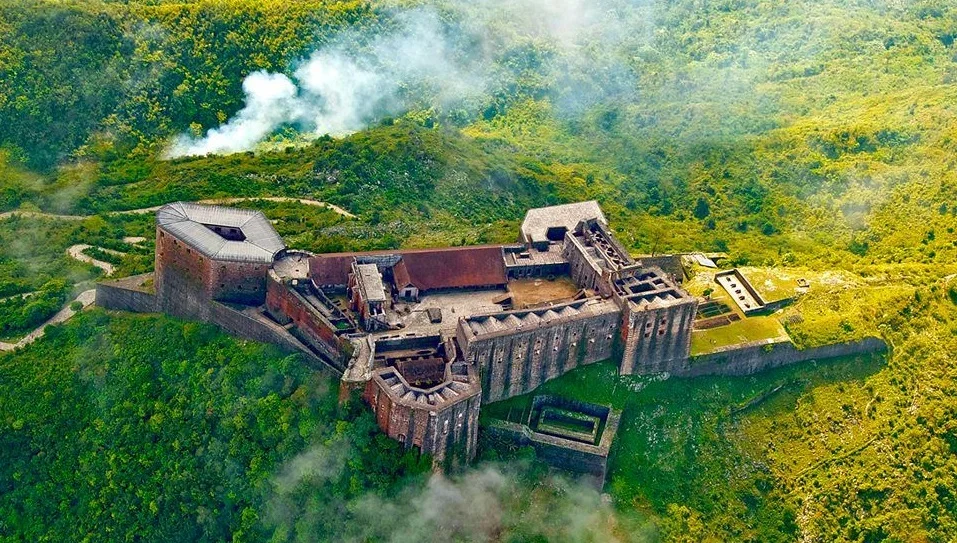
Haïti has a rich historical heritage, including sites like the Citadelle Laferrière and the Sans-Souci Palace, listed as UNESCO World Heritage Sites.

Culture

Culture

Haïti has a rich and diverse culture, influenced by African, European and indigenous elements. Haitian music, dance, art and cuisine are celebrated around the world.

  • +
    • Post