contact@haitiwonderland.com+509 36184317

Discover

Shopping Cart

What is the Origin of the Haitian Creole Language? A History of Mixture and Resilience

What is the Origin of the Haitian Creole Language? A History of Mixture and Resilience

The Haitian Creole language, or Kreyòl Ayisyen, is one of the most remarkable features of Haitian culture. Speaking Creole is not only about communicating, but also about asserting an identity, a heritage, and a history of resilience in the face of adversity. But where does this unique language come from? What is its origin and how did it become a symbol of Haitian culture? Let’s dive into the fascinating history of the Haitian Creole language.

Haïti
Haïti
Haïti

The Legacy of African Slaves

The origin of Haitian Creole dates back mainly to the period of slavery, when Africans from different regions of the continent were deported to Haïti to work on sugarcane plantations. These slaves came from various ethnic groups and spoke different languages, such as Fon, Yoruba, Lingala, and other Bantu languages. The lack of a common language led them to create a pidgin, a simplified language, to be able to understand each other and communicate with the European settlers, mainly the French.

This pidgin evolved over time and became a true creole, a mixture of French and African languages, with the influence of other elements from indigenous languages ​​and colonizers.

The Influence of Colonial French

The Haitian Creole language was mainly formed on the basis of Colonial French, the language of the French settlers who occupied the island from the 17th century. However, it is important to note that this creole is not simply a distorted French, but a real linguistic system, with its own grammar, phonetic rules, and distinct syntactic structures.

Creole retained a large number of French wordsmainly terms related to culture, religion, administration, and daily life. However, the French of the colonists was not reproduced literally. Creole transformed many French words, adapted them phonetically, and combined them with words of African and Amerindian origin, giving Creole a unique sound and unprecedented richness.

Haïti
Haïti
Haïti

African Languages: The Soul of Haitian Creole

Although French was a major influence, African languages ​​also played a fundamental role in the evolution of Haitian Creole. Slaves incorporated words and grammatical structures from their original languages, including languages ​​of ethnic groups such as the Mandingo, Yoruba, Fon, Ewe, and Bantu.

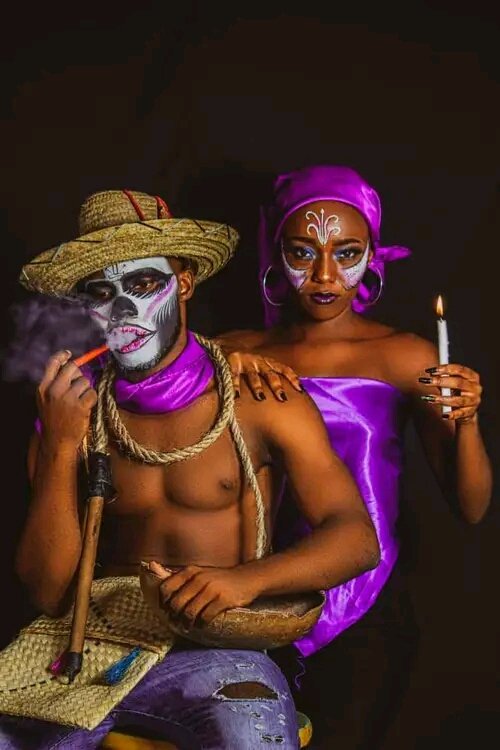
Some linguistic aspects of Haitian Creolesuch as verb constructions, prepositions, and words that designate elements of daily lifebear the mark of these African influences. In addition, expressions of spirituality and terms related to religious beliefs and practices often come from these African languages, particularly in the context of Vodou, which is practiced by a significant portion of the Haitian population.

The Influence of Indigenous and European Languages

Although the main contribution comes from African languages ​​and French, Haitian Creole has also been influenced by indigenous languages ​​such as Taino (the language of the first inhabitants of the island, before the arrival of Europeans). Although this influence is less pronounced, some words of Taino origin can still be found in the Creole language today, especially in terms designating natural elements, plants, and everyday objects.

In addition, other European languages, such as Spanish, have had an indirect influence on Creole, particularly in areas near the Dominican Republic, which shares the island of Hispaniola with Haiti.

Official Recognition and Standardization of Creole

Although Haitian Creole has evolved over the centuries, it was not officially recognized as a national language until 1987, after the fall of the dictatorship of Jean-Claude Duvalier. This recognition marked an important turning point, as it allowed Creole to be valued as a fundamental element of Haitian identity.

Today, Haitian Creole is one of the two official languages ​​of Haiti, along with French. The Creole language is spoken by the vast majority of the population, while French is used in administration, education, and business. The language is increasingly used in the media, music, literature, and even public affairs.

A Living Language and Resplendent Culture

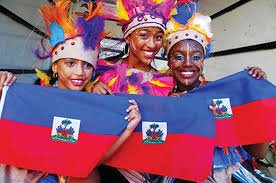
Haitian Creole is more than just a means of communication. It is a living expression of Haiti’s history and culture. It conveys values, traditions, and stories that shape the country’s national identity. When listening to Creole, one hears the resilience of Haitians, their struggle for freedom and independence, and their joy of living despite the challenges they face.

Haitian poets, writers, and musicians have highlighted the beauty and richness of the language in their works, and Creole remains a central pillar of artistic creation in Haiti.

Haïti
Haïti
Haïti

The Haitian Creole Language, An Indestructible Heritage

The history of Haitian Creole is a testament to the resilience and creativity of the Haitian people. It was born from a blend of diverse cultures and influences, and today, it remains a powerful symbol of Haitian identity. The Creole language, with its deep roots in the past, continues to thrive and transform, carrying with it the stories, struggles and hopes of an entire people.

Share
About the Author
Appolon Guy Alain
Appolon Guy Alain
Appolon Guy Alain

Full Stack Developer, Créatif, expérimenté, passionné des nouvelles technologies et de l’art.

See other articles from Appolon Guy Alain
Leave a comment

Recently Posted

Bassin Bleu in Jacmel: The Ultimate Natural Retreat in Southeast Haiti

Nestled in the picturesque coastal town of Jacmel, in southeastern Haiti, Bassin Bleu is a true haven of tranquility in the heart of nature. Its crystal-clear blue waters and imposing rock formations make it a breathtakingly beautiful site, attracting travelers from around the world in search of escape and discovery. The sparkling turquoise waters of Bassin Bleu offer a feast for the eyes, inviting visitors to relax and rejuvenate in this idyllic setting. Whether swimming in its refreshing waters or lounging on its lush green banks, this natural oasis provides a welcome escape from the hustle and bustle of daily life. Surrounded by lush tropical vegetation, Bassin Bleu is home to exceptional biodiversity, with a multitude of unique plants and animals to discover. Hiking enthusiasts can venture along winding trails that meander through the surrounding forest, offering spectacular views of this pristine landscape. As a tourist destination, Bassin Bleu also offers economic development opportunities for local communities. By promoting sustainable tourism, it contributes to job creation, infrastructure development, and the promotion of local culture. Moreover, by raising awareness among visitors about the importance of preserving this fragile natural environment, tourism plays an essential role in its long-term conservation. Bassin Bleu in Jacmel is much more than just a tourist attraction: it is a true natural treasure to be preserved and appreciated. With its stunning natural beauty, remarkable biodiversity, and sustainable development opportunities, this magical place offers an authentic experience for travelers seeking moments of tranquility in the heart of nature.

Beven brings Haïti among the elite of world slam

This Thursday, November 14, 2024, the young slam artist Youven Beaubrun, Beven by his stage name, qualified Haiti, for the very first time in its history, for the final of the Slam World Cup. This competition, which brings together the best slam artists on the planet, took place on African soil, more precisely in Togo. In a country held by the throat, a country that is dying from start to finish, under the dangerous feat of a certain armed part of its youth, Beven’s extraordinary performance in this competition resonates with the echo of a whole piece of the country, in the thirst for beauty. Beven is the symbol of a youth that refuses to give in to the chaos that surrounds the face of its motherland. Art, slam being his field of specialization, is used in the best possible way to make hope resonate. And to continue to believe that a country that made 1804 cannot afford the luxury of sinking so hard in the face of human history. "It is with pride that I advanced in this competition. Especially with the crisis that is going through the country at the moment. My qualification for the final is an eternal sign of hope, which confirms the fact that not everything in this country will end in death," the young slammer told us before going to compete in the final. The final took place on Saturday, November 16, 2024, where Beven had his chance to represent his wounded land well on the doorstep of a world victory, a victory that if it had taken place, would have been initialed in the name of an entire people, in the absolute race against a great chaos that dreams only of suffocating it. Although he failed to win this cup (finishing in sixth place overall), the Haitian slam champion had time to inspire an entire country during his great journey in this competition. This is only a postponement, next time victory will be achieved for sure.

Newsletter

Subscribe to our newsletter to stay informed of all our activities and news on Haiti.

The literary and philosophical club of Galette-Chambon reveals its second edition: a journey to the heart of books

In an atmosphere of madness, at the Auditorium Saint Jean Marie Vianney de Galette-Chambon, where the laughs broke out, the music resounded, and the talents were dismented, started the second edition of the reading competition, around the theme "Ann Li pou n chanje peyi n ». This initiative, organized by the literary and philosophical club of Galette Chambon (CLPGACH) on Friday 06 October 2024, was marked by an overflowing passion within the public. The spectators came for several reasons: to support the applicants and live their presentations. The works, as "thus spoke of the uncle", "the vocation of the elite" of Jean Price Mars, "the ten black men" of Etzer vilary and "the courage to live in Haïti in the 21st century" of Hérold Toussaint, present innovative arguments linked to the societal context. They intertwine with folklore, Haitian culture, sociology and anthropology. These books are given to the applicants for a period of 15 days. Back, they come with their summaries and, after each presentation, in turn, reveal new perspectives on burning questions and delicate themes from works, while taking into account the concepts learned in public speaking. In this arena where the verve and the verb clash as well as logic, conviction, precision and clarity, it is a question of "saying all in a few words". The judgments are based on three criteria: the methodology concerning the substance and the form of the work; The eloquence which concerns verbal and non -verbal discourse (micro management, good pronunciation, etc.); And finally, an essential criterion: understanding. This is to assess whether the applicant has controlled the work. Questions can be asked without ignoring the context in which he lives. In addition, assistants have the opportunity to vote for the applicant who charmed them the most. This vote is precious at a higher level. Note that this vote can be made not only face -to -face but also online on our Facebook page CLPGACH. In addition, the public has always changed well through this trip to the universe of regional authors. The latter weave the frame and make vital the very repertoire of the competition vital, made up of impactful works such as "the price of irresponsibility" of Montuma Murat, "the return to citizen responsibility" written by Jean Jacquesson Thelucier and "Courage to live in Haïti in the 21st century "Professor Hérold Toussaint, to name a few. Although they died, some writers still live at the heart of our situation through their inheritance. Among them, it is necessary to quote: "the vocation of the elite" of Doctor Jean Price Mars, "the ten black men" of Etzer Villaire and "the Governor of the dew" by Jacques Roumain, as well as so many others . For this literary event to be moving and meets expectations for this second edition, many sacrifices are necessary on the part of the staff as well as the public which never leaves us alone. In this sense, we would like to thank them and call all those wishing to support this event. Indeed, if this competition is a solution found to advance together towards a common goal, its success depends on everyone’s commitment. About two years ago, the security climate in the area was not conducive to the completion of the competition. Although it is not yet ideal today, it is time to triumph over obscurantism and fight the dictatorship of ambient ignorance.

Recently Posted

History

History

First black nation to free itself from slavery and gain independence from France in 1804 and influenced other liberation movements around the world, inspiring struggles for freedom and equality.

Natural beauty

Natural beauty

Haïti is blessed with spectacular natural landscapes, including white sand beaches, mountains and rich biodiversity.

Heritage

Heritage

Haïti has a rich historical heritage, including sites like the Citadelle Laferrière and the Sans-Souci Palace, listed as UNESCO World Heritage Sites.

Culture

Culture

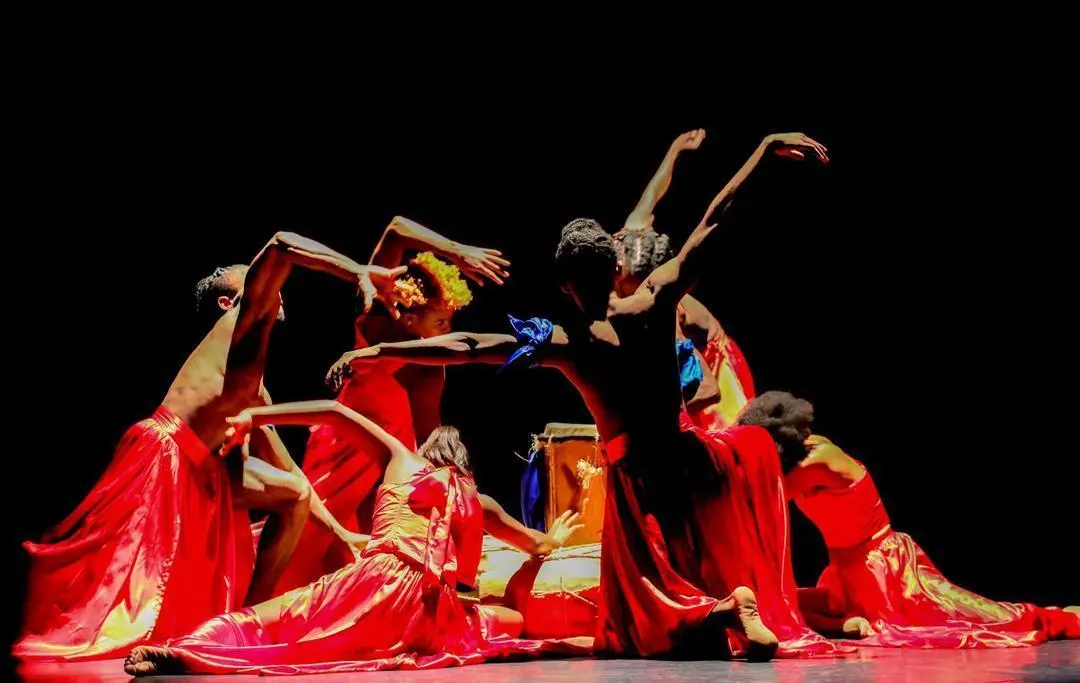
Haïti has a rich and diverse culture, influenced by African, European and indigenous elements. Haitian music, dance, art and cuisine are celebrated around the world.

  • +
    • Post