Christmas Feasts in Haiti: Traditional Dishes and Local Flavors
Christmas in Haïti is a holiday rich in flavors, where meals occupy a central place in the celebrations. More than just a moment of culinary sharing, the Christmas feast in Haïti is a true immersion in the culture and traditions of the country. This article explores the must-have dishes and unique flavors that make Christmas a memorable experience for Haitians and their guests.
Haitian Cuisine: A Blend of Flavors and Traditions
Haitian cuisine is distinguished by its richness and originality, combining African, French, and Creole influences. During the Christmas holidays, this culinary diversity is fully expressed through dishes prepared with care and passion. Each family makes a point of honor to cook traditional recipes, often passed down from generation to generation, to delight their loved ones.
Christmas meals in Haïti are not limited to a simple dinner. They are a time of conviviality, where we savor a variety of dishes, while sharing memories and laughter around the table.
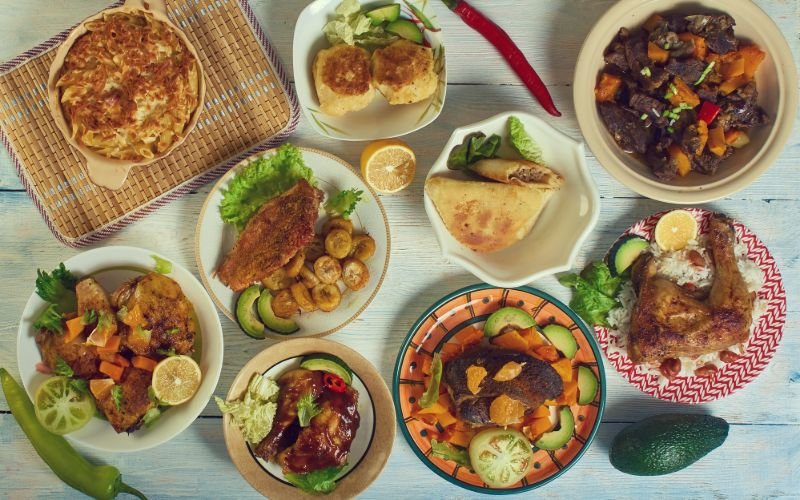
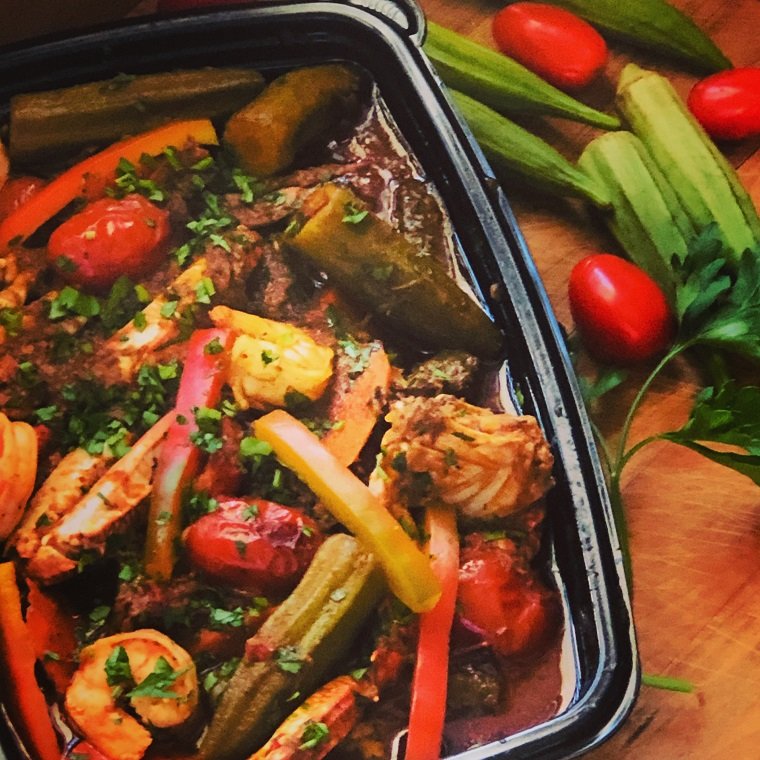
The Christmas feast in Haïti is a true explosion of flavors, with dishes that reflect the authenticity of the local gastronomy. Here are some must-haves:
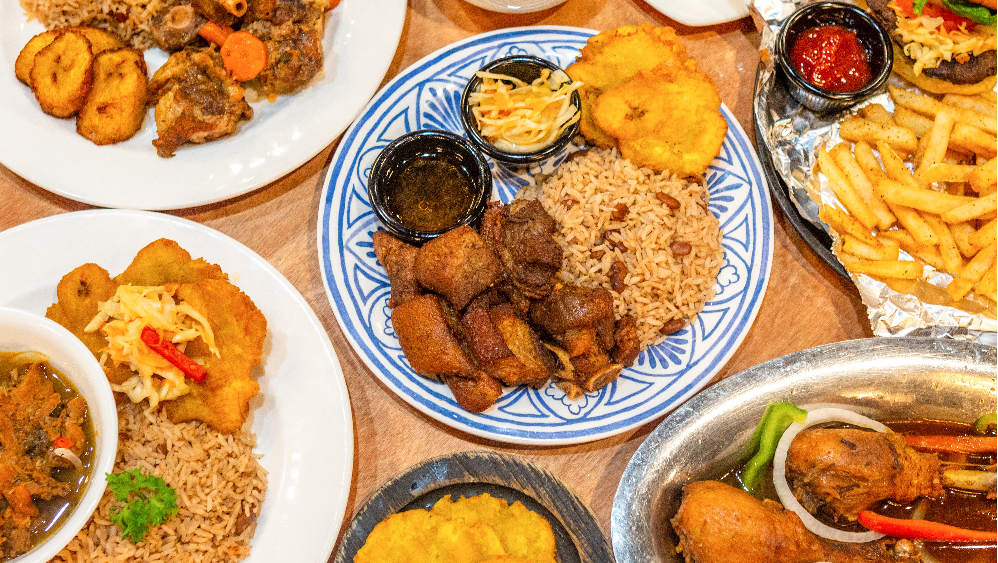
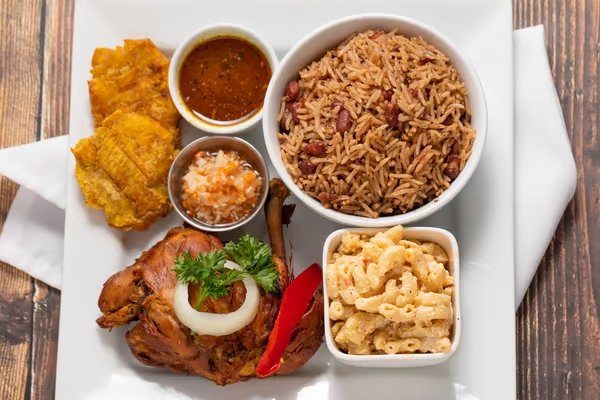
- Griot: This iconic dish, composed of marinated and fried pieces of pork, is a must-have for the holidays. Accompanied by bananas pesées (fried plantains) and pikliz (marinated cabbage and carrots with chili peppers), the griot is a true explosion of flavors.
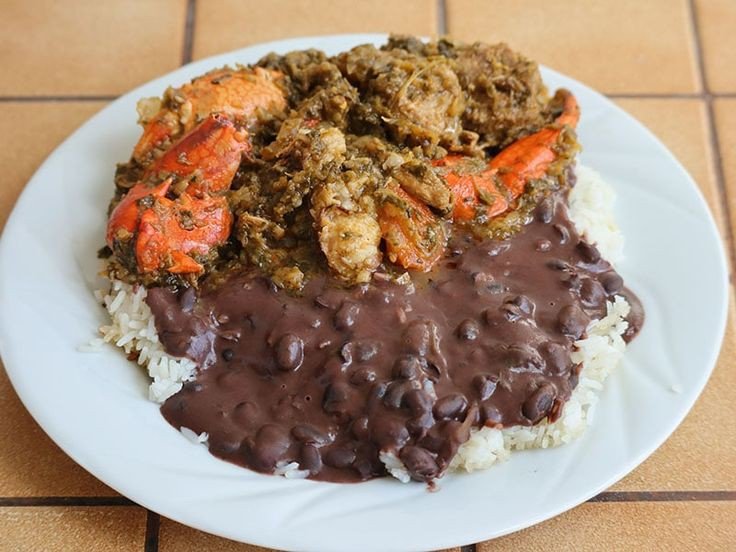
- Diri djon djon: This black rice, cooked with local mushrooms, is often served as an accompaniment. Its unique flavor and elegant appearance make it a favorite choice for festive meals. - Christmas Ham: Carefully prepared, the ham is marinated in local spices and roasted to perfection. Sometimes glazed with a sweet and sour mixture, it is often the centerpiece of the table.
- Pumpkin Soup: Although traditionally eaten on January 1st to mark Haiti’s independence, this rich and comforting squash soup can also be served during Christmas festivities.
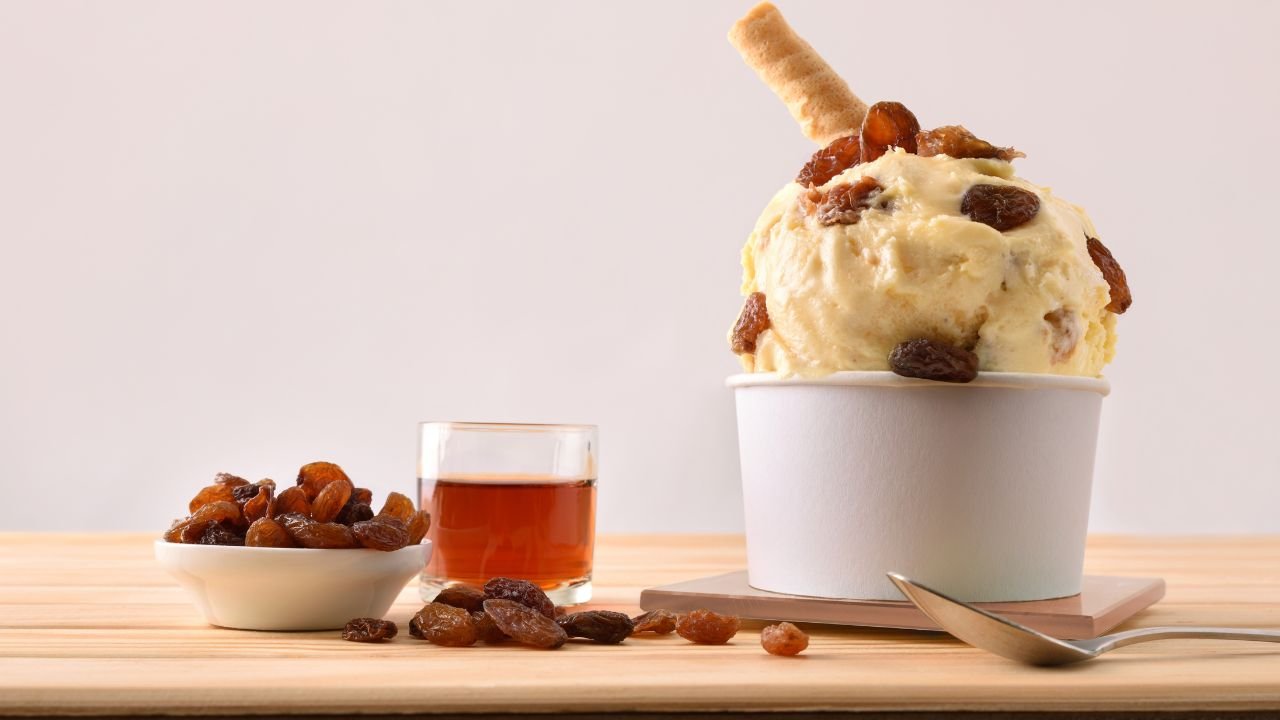
- Local Desserts: Sweet treats like pain patate (sweet potato cake), blan manje (coconut milk flan), and beignets are essential to end the meal in style.
These dishes, in addition to being tasty, carry within them the history and culture of the country, recalling the deep roots of Haitian cuisine.
Holiday Drinks: A Perfect Balance of Tradition and Pleasure
No Christmas meal in Haïti would be complete without the traditional drinks that accompany the feast. Haitians know how to perfectly pair their dishes with local drinks, including:
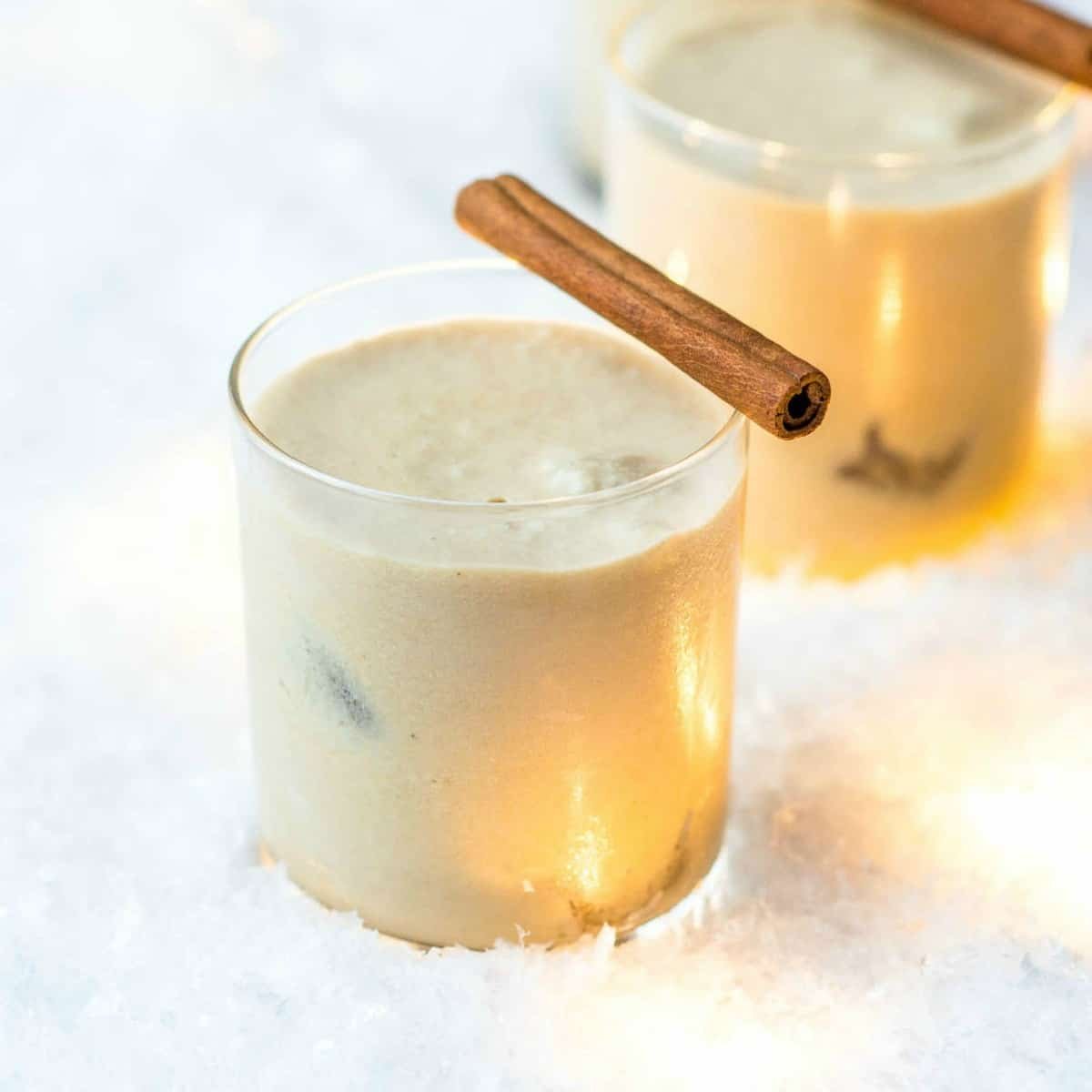
- Kremas: This sweet and creamy drink, made with condensed milk, nutmeg, vanilla and rum, is a must during the holidays. Kremas is often prepared at home, according to family recipes.
- Natural juices: Haitians love homemade juices, such as soursop, tamarind or passion fruit juice, which bring a refreshing touch to the meal.
- Haitian rum: Known for its quality, rum is sometimes used to make a toast or to enhance desserts and drinks.
These drinks add a festive touch to meals while reflecting local traditions.
In Haiti, preparing Christmas meals is just as important as eating them. It becomes a time of bonding, where family members gather to cook together. Elders share their cooking tips and secrets with the younger ones, ensuring the transmission of traditions.
Christmas Eve is particularly lively, with kitchens filled with fresh ingredients, spicy aromas, and laughter. Children often participate by helping to prepare desserts or decorating the table. This preparation process strengthens family ties and gives the meal an even more special flavor.
Generosity is a fundamental value of Christmas celebrations in Haiti. Even in modest circumstances, families do everything they can to prepare a meal worthy of the occasion. It is common to share dishes with neighbors or invite friends to the table.
In many communities, collective meals are organized to allow everyone, even the most deprived, to enjoy the holiday. This solidarity reflects the spirit of Christmas and the deep sense of sharing that characterizes Haitian culture.
Haitians living abroad perpetuate these culinary traditions by adapting recipes to the ingredients available in their host country. In cities like New York, Montreal or Paris, Haitians organize meals where the authentic flavors of their home country remain at the heart of the festivities.
These diaspora feasts not only allow to maintain a link with Haitian culture, but also to introduce it to other communities. They thus become a platform for cultural sharing.
Christmas feasts in Haïti embody the spirit of the holiday, where generosity, sharing and traditions are in the spotlight. Traditional dishes, local drinks and the friendly atmosphere make Christmas an unforgettable moment for Haitians. It is much more than just a meal: it is a celebration of culture, history and unity. Whether in a family home in Haïti or in a Haitian community abroad, Christmas feasts remain a vibrant expression of Haitian identity and the true meaning of the holiday.
Share
About the Author
Appolon Guy Alain
Appolon Guy Alain
Full Stack Developer, Créatif, expérimenté, passionné des nouvelles technologies et de l’art.
First black nation to free itself from slavery and gain independence from France in 1804 and influenced other liberation movements around the world, inspiring struggles for freedom and equality.
Natural beauty
Haïti is blessed with spectacular natural landscapes, including white sand beaches, mountains and rich biodiversity.
Heritage
Haïti has a rich historical heritage, including sites like the Citadelle Laferrière and the Sans-Souci Palace, listed as UNESCO World Heritage Sites.
Culture
Haïti has a rich and diverse culture, influenced by African, European and indigenous elements. Haitian music, dance, art and cuisine are celebrated around the world.