contact@haitiwonderland.com+509 36184317

Discover

Shopping Cart

Soup Joumou Recipe: Discover the Iconic Dish of Haitian Cuisine

Soup Joumou Recipe: Discover the Iconic Dish of Haitian Cuisine

Soupe joumou, also known as soupe au giraumon, is much more than just a dish for Haitians. It embodies the spirit of freedom and resilience, celebrating Haiti’s independence every January 1st. This unique dish, made with giraumon, a tropical squash, fresh vegetables and meat, is known for its rich flavor and historical roots. Discover the traditional recipe for soupe joumou and its history, as well as the steps to prepare it at home.

Haïti - soupe joumou

Why is Soupe Joumou So Important in Haiti?
-

Haïti - soupe joumou

Traditional Soupe Joumou Recipe: Ingredients and Preparation

Here are the ingredients and steps for an authentic soupe joumou recipe that you can easily prepare at home to enjoy this iconic Haitian dish.

- Meat: 500 g beef
- Pumpkin: 1 kg, peeled and cut into pieces
- 2 potatoes
- 2 carrots
- 1 leek
- 1/2 cabbage
- 1 turnip
- Pasta: 100 g macaroni
- 3 cloves garlic
- 1 onion
- Parsley
- 1 beef bouillon cube
- Salt, pepper, thyme and ground cloves
- 2 habanero peppers (optional for spiciness)

Haïti - soupe joumou

Steps to Prepare a Delicious Joumou Soup

1. Prepare the Meat: Marinate the beef with lemon, garlic, salt, and pepper, then brown until golden brown. Cover with water and cook for an hour.

2. Cook the Pumpkin: Boil the pumpkin until tender, then puree it.

3. Mix the Puree and Meat: Add the pumpkin puree to the pot with the cooked meat.

4. Stir in the Vegetables and Spices: Add the potatoes, carrots, leek, cabbage, turnip and the bouillon cube. Season with parsley, thyme, habanero pepper and ground cloves.

5. Cook the Pasta: Add the pasta when the vegetables are tender and cook until the pasta is ready.

6. Adjust the Seasoning and Serve: Remove the peppers and serve the soup piping hot, accompanied by crusty bread.
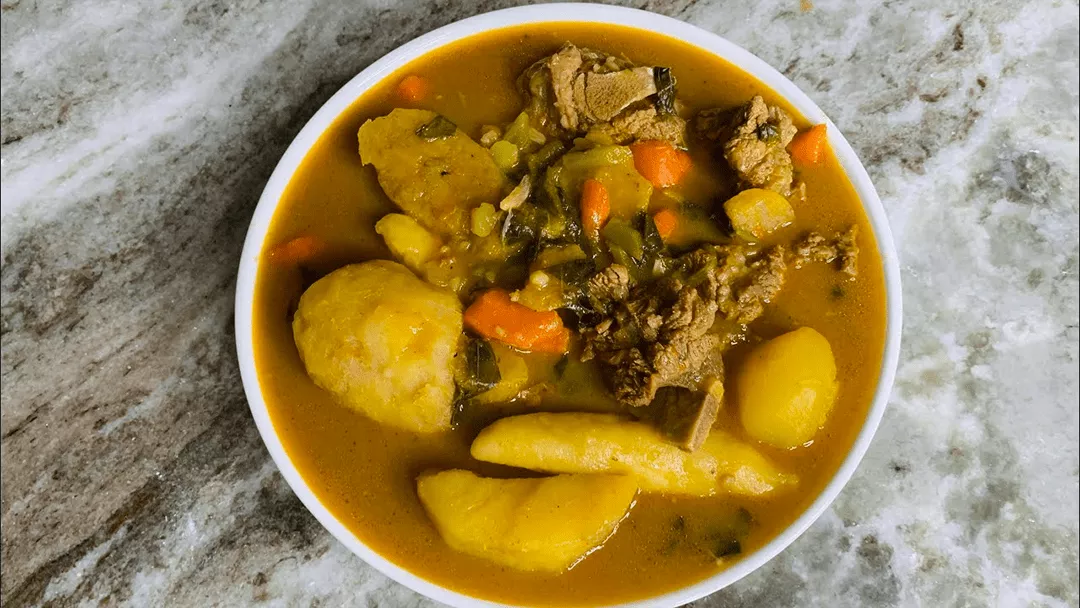
Haïti - soupe joumou

Tips for a Successful Joumou Soup

- Use fresh pumpkin: Choose a very ripe pumpkin for a more flavorful soup.
- Avoid overcooking the pasta: Add it at the end of cooking to prevent it from becoming mushy.
- Adjust the spices to your taste: Soup joumou can be adjusted according to your tolerance for spiciness.

Haïti - soupe joumou

Soup Joumou and World Heritage

In 2021, UNESCO inscribed soup joumou as an intangible cultural heritage of humanity, highlighting its importance as a symbol of freedom and culture for Haiti. Each spoonful of this soup tells a story of courage and pride.

Haïti - soupe joumou

Frequently Asked Questions about Soup Joumou

1. Why is soup joumou prepared on New Year’s Day?
Traditionally, this soup is a festive dish that symbolizes Haiti’s independence and pays tribute to ancestors every January 1st.

2. What is the difference between giraumon and pumpkin?
Giraumon is a tropical squash used in Haiti, with a smoother texture and mild flavor compared to the classic pumpkin.

3. Can you add other vegetables to soup joumou?
Yes, some variations include peas, celery, or even yams to diversify the texture.

Haïti - soupe joumou

Enjoy Soup Joumou to Celebrate Haiti

Making and enjoying soup joumou is a unique way to honor Haitian history. Whether it’s for New Year’s or to celebrate Haïti beyond its borders, this recipe allows you to feel the spirit of freedom and sharing. Try the recipe and let yourself be transported by the rich flavors and powerful history of this must-try dish!

Share
About the Author
Appolon Guy Alain
Appolon Guy Alain
Appolon Guy Alain

Full Stack Developer, Créatif, expérimenté, passionné des nouvelles technologies et de l’art.

See other articles from Appolon Guy Alain
Leave a comment

Recently Posted

Newsletter

Subscribe to our newsletter to stay informed of all our activities and news on Haiti.

Haiti: Flora and Fauna

Haiti, located on the western part of the Caribbean island of Hispaniola, is often associated with its rich and complex history. However, beyond its cultural and historical aspects, Haïti is home to a remarkable diversity of fauna and flora that deserves to be explored and preserved. This article highlights the ecological wealth of Haiti, emphasizing its unique flora and fauna. Fauna: Haïti is home to a variety of animal species, some of which are endemic to the island. The country’s tropical rainforests are home to a great diversity of birds. The rugged mountains provide suitable habitat for rare species. The waters surrounding Haïti are also rich in biodiversity. Colorful corals, tropical fish and sea turtles find refuge in the coral reefs along the coast. Conservation efforts are crucial to protect these fragile marine ecosystems and preserve marine life. Flora: Haiti’s landscapes are adorned with a wide variety of plants and flowers. The tropical rainforests are home to majestic trees, the Hispaniola pine and the gum tree. These forests play an essential role in climate regulation and the preservation of biodiversity. The coastal plains are dotted with palm trees, including Haiti’s iconic royal palm. Botanical gardens, such as the Jardin Botanique des Cayes, are havens of greenery where you can admire a wide variety of tropical plants, some of which are endemic to the region. Haiti, with its unique flora and fauna, is an ecological gem that deserves to be preserved for future generations. Awareness, conservation and sustainable development are key elements to ensure the survival of this natural wealth. By investing in the protection of its environment, Haïti can not only preserve its ecological heritage, but also promote sustainable tourism and strengthen the resilience of its ecosystems in the face of current global challenges.

Caractéristique d’un lapin

Les lapins sont des mammifères appartenant à la famille des Leporidae. Voici quelques-unes de leurs caractéristiques principales : 1. **Physique** : Les lapins ont un corps couvert de fourrure douce, des oreilles longues et droites, de grands yeux sur les côtés de leur tête, et une queue courte et duveteuse. Ils possèdent de puissantes pattes arrière adaptées au saut. 2. **Taille et poids** : La taille et le poids peuvent varier considérablement selon la race, allant d’environ 500 grammes pour les plus petits à plus de 5 kilogrammes pour les plus grands. 3. **Comportement** : Les lapins sont connus pour être sociaux et peuvent vivre en groupes dans la nature. Ils communiquent entre eux par différents moyens, y compris par des sons et des mouvements corporels. Les lapins creusent des terriers pour y vivre et se protéger des prédateurs. 4. **Alimentation** : Ils sont herbivores, se nourrissant principalement de foin, d’herbes, de feuilles, de fleurs, et de certains légumes. Leur système digestif est adapté pour traiter une grande quantité de fibres. 5. **Reproduction** : Les lapins sont réputés pour leur capacité à se reproduire rapidement, avec des gestations courtes d’environ 28 à 31 jours. Une portée peut compter de un à douze lapereaux, selon la race. 6. **Sens** : Ils ont une excellente vision périphérique pour détecter les mouvements tout autour d’eux, mais ont une zone aveugle juste devant leur nez. Leur ouïe est également très développée, leur permettant de capter des sons à de grandes distances. 7. **Espérance de vie** : En captivité, les lapins peuvent vivre de 7 à 10 ans, selon la race et les soins prodigués, tandis que dans la nature, leur espérance de vie est généralement plus courte en raison des prédateurs et des maladies. Ces animaux nécessitent des soins appropriés, notamment un régime alimentaire équilibré, de l’exercice, et une attention particulière à leur bien-être émotionnel et physique pour vivre une vie saine et heureuse en captivité.

Recently Posted

History

History

First black nation to free itself from slavery and gain independence from France in 1804 and influenced other liberation movements around the world, inspiring struggles for freedom and equality.

Natural beauty

Natural beauty

Haïti is blessed with spectacular natural landscapes, including white sand beaches, mountains and rich biodiversity.

Heritage

Heritage

Haïti has a rich historical heritage, including sites like the Citadelle Laferrière and the Sans-Souci Palace, listed as UNESCO World Heritage Sites.

Culture

Culture

Haïti has a rich and diverse culture, influenced by African, European and indigenous elements. Haitian music, dance, art and cuisine are celebrated around the world.

  • +
    • Post