Haiti: What is the difference between "Liberty - Equality - Fraternity" and "Strength in Unity"?
"Liberty-Equality-Fraternity" vs. "Unity is Strength": finally understand the difference between Haiti's two mottos and their historical complementarity.
When we talk about the symbols of the Republic of Haiti, two emblematic expressions resonate in the heart of every Haitian: "Liberty - Equality - Fraternity" and "Strength in Unity." But what is really the difference between these two national mottoes? Why does Haïti have two distinct phrases? Let’s delve into the history and meaning of these phrases, which embody the soul of the first independent Black Republic.
The Constitutional Motto: "Liberty - Equality - Fraternity"
According to Article 4 of the 1987 Constitution of the Republic of Haiti, the official national motto is "Liberty - Equality - Fraternity." This triad of universal values reflects the fundamental principles on which the Haitian state is based.
Origin and Meaning
This motto has its roots in the French revolutionary legacy, but it takes on a particular meaning in Haiti:
- Liberty: It recalls the heroic struggle of the slaves who broke their chains in 1804, making Haïti the first country in the world to emerge from a successful slave revolt.
- Equality: It symbolizes the rejection of the racist colonial system and the proclamation of equality among all citizens, regardless of their skin color.
- Fraternity: It expresses the ideal of a united society where all Haitians, despite their differences, form a united community.
This constitutional motto therefore defines the legal and philosophical identity of the Haitian nation.
The legend of the coat of arms: "Unity is Strength"
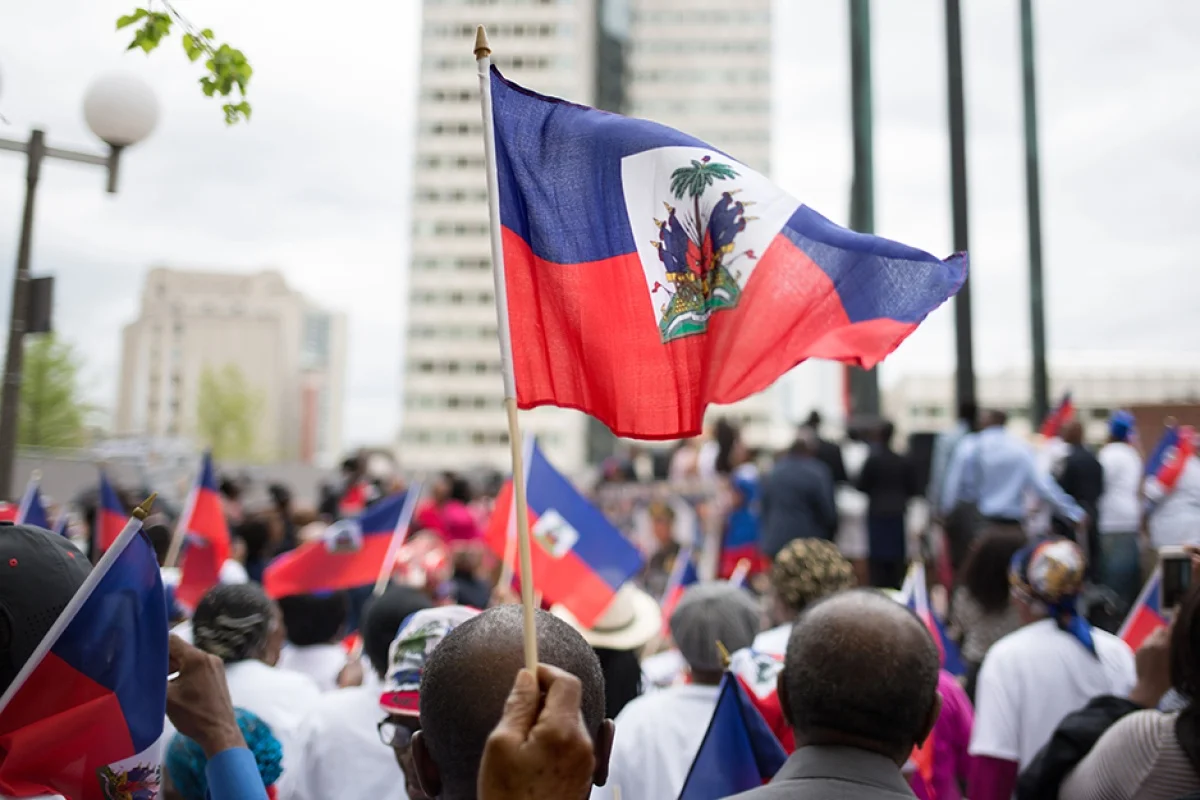
"Unity is Strength" is not just an inspiring phrase: it is the official legend that appears on the Arms of the Republic, at the center of the Haitian flag.
An emblematic place
According to the constitutional description of the flag, the arms of the Republic include:
- The palm tree surmounted by the cap of liberty
- A trophy of arms shaded by the palms
- And the legend: "Unity is Strength"
A powerful historical message
This motto originates from the very context of Haitian independence. It reminds us that:
- Victory against the French colonial armies was only possible thanks to the unity of former slaves, both mulattoes and blacks.
- Faced with hostile European powers, only national cohesion could guarantee the survival of the young Republic. - Solidarity between Haiti’s different social classes and regions remains the key to national prosperity.
Complementarity rather than opposition
These two mottos do not contradict each other: they complement each other.
- "Liberty - Equality - Fraternity" sets out the fundamental values that must guide Haitian society.
- "Unity is Strength" recalls the means to achieve these ideals: through the unity and solidarity of the Haitian people.
One defines the "why" (the values), the other the "how" (the method).
Why two mottos for one nation?
This duality reflects the complexity of Haitian identity:
1. Universal heritage: With "Liberty - Equality - Fraternity," Haïti is part of the Enlightenment movement and affirms its place among the democratic nations of the world.
2. The Unique Experience: With "Unity is Strength," Haïti recalls its unique journey and the historical lesson that unity is essential for survival and national progress.
A Lesson Still Relevant
More than two centuries after independence, these two mottos resonate with particular acuity. They remind Haitians that:
- The ideals of liberty, equality, and fraternity must guide all political and social action.
- Only the unity of the Haitian people, beyond partisan, regional, or social divisions, will overcome contemporary challenges.
Two Sides of the Same Coin
"Liberty - Equality - Fraternity" and "Unity is Strength" are not two competing mottos, but two complementary expressions of the Haitian soul. The first establishes the principles, the second recalls the method. Together, they form the symbolic foundation on which Haiti’s national identity rests.
To understand this difference is to grasp the full depth of the Haitian national project: a free, egalitarian, and fraternal society, built on the union of all its children. A message as relevant today as it was in 1804.