contact@haitiwonderland.com+509 36184317

Discover

Shopping Cart

Everything You Need to Know About the Map of Haiti

Everything You Need to Know About the Map of Haiti

The map of Haïti is an essential tool for understanding the geography of the country, its political organization, and its different regions. Whether for travelers, researchers, or those interested in the history of Haiti, this map provides crucial information on the location of cities, mountains, coastlines, and borders. This article explores the map of Haiti, its key elements, and what it represents for the Haitian people.

The Geography of Haiti: A Global Overview

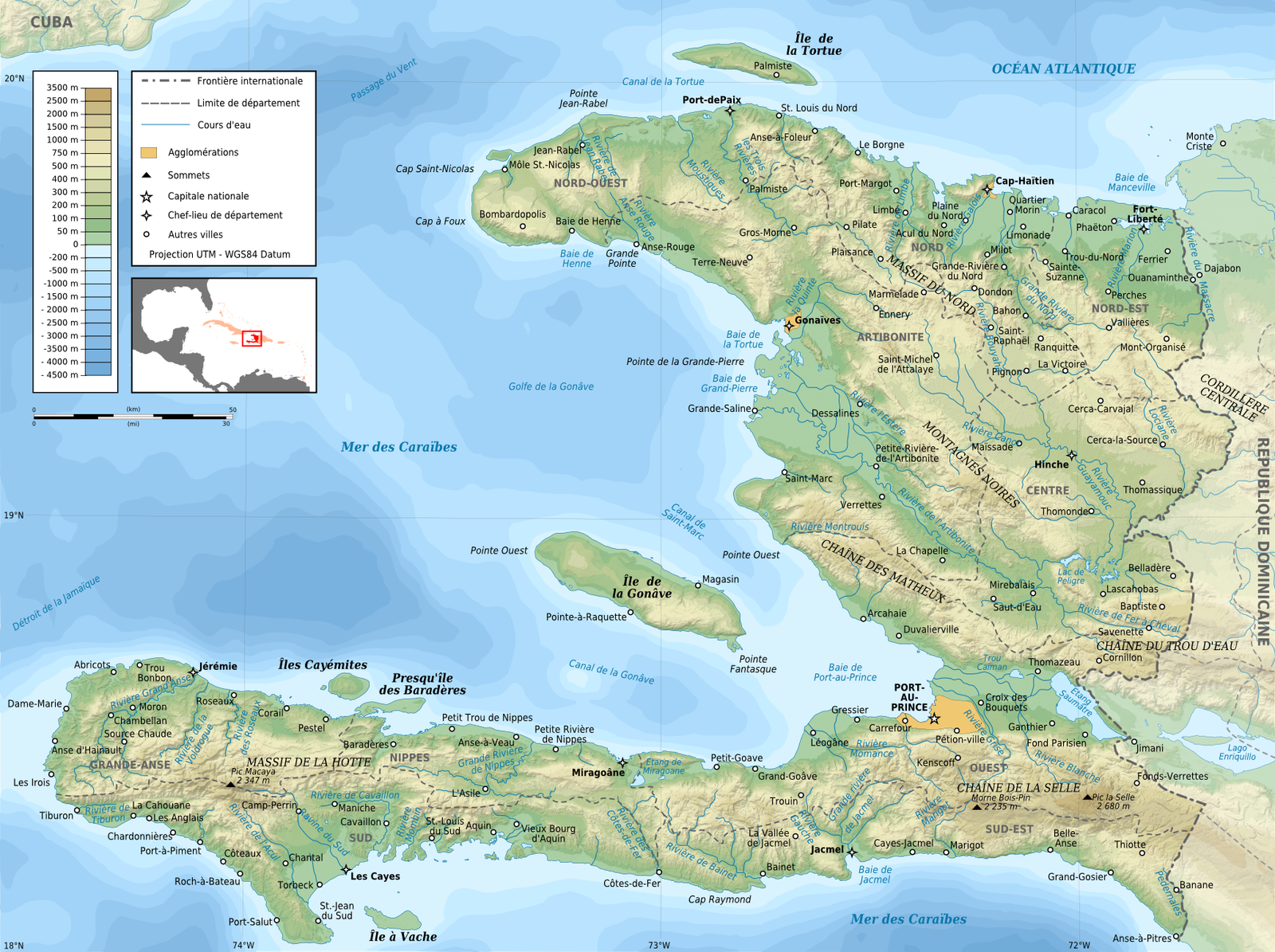
Haïti is an island nation located in the Caribbean, on the island of Hispaniola, which it shares with the Dominican Republic. The map of Haïti shows a territory that extends over approximately 27,750 km², making Haïti the 3rd smallest country in the Caribbean region.

The country is divided into 10 departments, which are themselves subdivided into districts and communes. Haiti’s geography is marked by mountains, coastal plains, and impressive biodiversity. The country has a particularly mountainous relief, with the Massif de la Selle mountain range, which peaks at more than 2,600 meters above sea level, offering spectacular landscapes.

Maps of Haïti allow you to visualize these mountains, valleys, and rivers that mark the territory, while highlighting the coastal areas and neighboring islands.

Haiti’s Departments: A Journey Through the Country

The map of Haïti reveals the administrative structure of the country through its departments. Haïti has ten departments:

1. Artibonite
2. Centre
3. Grand’Anse
4. Nippes
5. Nord
6. Nord-Est
7. Nord-Ouest
8. Ouest
9. Sud
10. Sud-Est

Each department has a capital, which is often a major city where much of the economic and cultural activity is concentrated. For example, Port-au-Prince, the country’s capital, is located in the Ouest department, and is also the largest city in Haiti.

The maps detail not only the capitals of each department, but also the main roads connecting these cities, making it easier to get around and understand the country’s territorial organization.

Haiti’s Borders: Sharing the Island of Hispaniola

The map of Haïti also highlights the country’s borders, particularly its long land border with the Dominican Republic, which occupies the eastern part of the island. The border, which stretches for approximately 380 kilometers, is a crucial element in diplomatic and commercial relations between the two countries.

To the south, Haïti is bordered by the Caribbean Sea, while to the north, it faces the Atlantic Ocean. The map also illustrates small neighboring islets such as Île de la Tortue to the northwest, an important historical site for Haitians.

Modern maps often show maritime boundaries, which are essential for understanding geopolitical issues related to natural resources and navigation.

Haiti’s Coasts and Beaches: Unparalleled Beauty

The map of Haïti highlights its magnificent coastline that stretches for more than 1,700 kilometers. These beaches line the island and are among the most beautiful in the Caribbean. The west coast, which overlooks the Caribbean Sea, is dotted with beaches like Jacmel and Port-Salut, known for their white sand and crystal-clear waters.

The map also shows the presence of important tourist sites, including resorts and national parks, which are essential to Haiti’s tourism industry.

Major Cities: Focal Points of Haitian Life

In addition to Port-au-Prince, the map of Haïti highlights other important cities in the country, such as Cap-Haïtien in the north, which is a key economic center and strategic port. Les Cayes in the south is another port city, and Jacmel in the southeast is known for its cultural heritage and historical role in the Haitian Revolution.

The maps help locate these important cities and better understand their role in the country’s economy, politics, and culture.

Roads and Infrastructure: Key to Development

Maps of Haïti also show the country’s main infrastructure, including roads and transportation networks. Roads connecting major cities and departments are essential for the movement of goods and services. However, the quality of infrastructure remains a challenge, with roads sometimes damaged due to weather and lack of maintenance.

Modern maps also highlight progress made in modernizing infrastructure, as well as development projects to improve connectivity between different regions.

Maps: An Educational and Tourism Tool

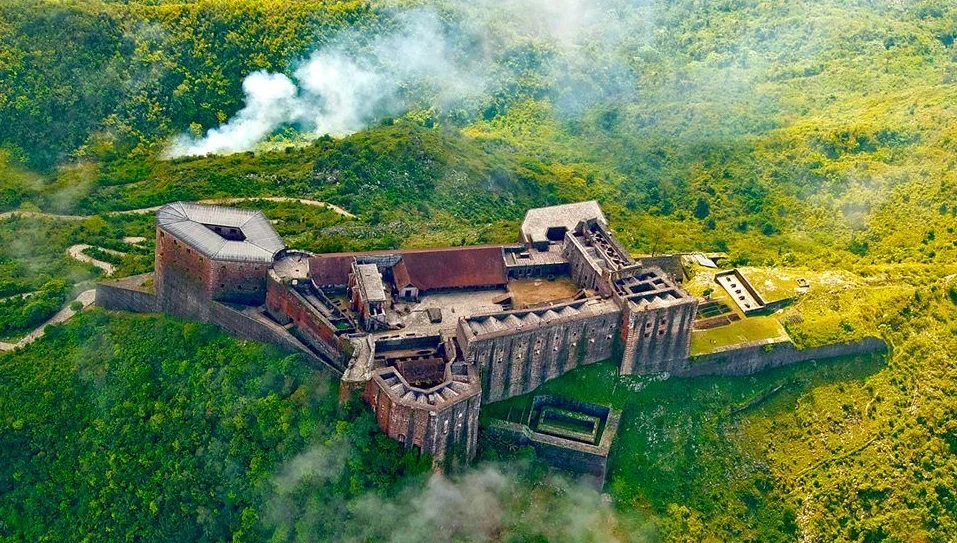
Maps of Haïti are not only navigation tools, they also play an important educational role. They are used in schools to teach the geography and history of the country. Tourist maps allow travelers to discover the natural and cultural riches of Haiti, whether it is its heavenly beaches, its majestic mountains, or its historical sites such as the Citadelle Laferrière.

Maps are therefore essential to raise awareness of the importance of Haitian geography and environment, and to promote tourism through valuable information.

A Fundamental Tool to Understand Haiti

The map of Haïti is much more than a simple geographical document. It is a fundamental tool to understand the structure and beauty of this country, while offering an overview of its history, resources and challenges. Whether for Haitians themselves or for foreigners who wish to discover Haiti, the map of the country remains an essential guide to appreciate the geographical, cultural and historical richness of this Caribbean nation.

Share
About the Author
Appolon Guy Alain
Appolon Guy Alain
Appolon Guy Alain

Full Stack Developer, Créatif, expérimenté, passionné des nouvelles technologies et de l’art.

See other articles from Appolon Guy Alain
Leave a comment

Recently Posted

Newsletter

Subscribe to our newsletter to stay informed of all our activities and news on Haiti.

Carrefour: Kay Jèn Yo s’ouvre aux enfants

Dans le cadre du programme de promotion des droits et de l’épanouissement de l’enfant "Timoun se moun" piloté par l’organisation Action Communautaire de Transformation et d’Intégration Formelle (ACTIF), Kay Jèn Yo organise, du 18 au 24 août 2025 (9h am - 1h pm), "Espas Lajwa", un camp d’été qui cible trente (30) enfants de 7 à 15 ans. Une grande panoplie d’activités éducatives, créatives et ludiques sont programmées pour le plus grand bien des enfants. Ils auront droit à des ateliers de : peinture, crochet, macramé, langue des signes, théãtre, lecture, échec, etc. Dans un contexte aussi traumatogène où la violence est monnaie courante, de telles initiaves sont d’une importance capitale. " Les enfants ne sont pas imperméables au stress et autres pathologies que peut provoquer la situation morbide qui sévit dans le pays actuellement", souligne Blondy Wolf Leblanc (Gabynho) DG a.i de ACTIF. "Espace Lajwa se veut donc, un refuge, un lieu où les enfants peuvent s’exprimer en toute sécurité, un espace sécurisant où ils peuvent exprimer leurs émotions à travers plusieurs médiums", précise-t-il. Plus loin, l’animateur socioculturel encourage d’autres structures à travers le pays à prendre des initiatives de ce genre au bénéfice de la santé mentale des enfants. Espas Lajwa est quasiment gratuit. Un frais de participation de 150 gourdes est requis pour la semaine. Quid Kay Jèn Yo Issu du projet "Pran Swen Tèt ou", Kay Jèn Yo est un projet de l’organisation ACTIF supporté par La Perfection École de Haute Couture visant à combattre la violence par l’engagement communautaire à travers des programmes de formation professionnelle et artistique. Situé au numéro 18, imp. Thoby, rue Desdunes, Mahotière 79, Kay Jèn Yo est ouvert du lundi au dimanche (9h am - 6h pm). Sebastien Jean Michel

The Monferrier Dorval Chair of Constitutional Law, a gesture from the State University of Haiti, for the preservation of the memory of Professor Dorval

The Monferrier Dorval Chair of Constitutional Law is a high-intellectual-intensity initiative, taken by the State University of Haïti (UEH), through the leadership of its rectorate, in agreement with the leaders of the Faculty of Law and Economics (FDSE). The initiative’s primary goal is to honor and perpetuate the memory of the valiant and brilliant Professor Monferrier Dorval, assassinated in unclear circumstances, about three years ago. And in order to make a scientific contribution to the great debate that has been going on in Haitian society for about ten years about the need to change or not, the constitution of March 29, 1987, amended on May 11, 2011. Shouldn’t we try to apply it preferably? If it needs to be changed, should this change be radical, otherwise what should it have in terms of change within a new mother law for a better institutional organization of Haiti. The chair is scientifically chaired by Professor Henri Marge. Dorléans, (current head of AFPEC), and is vice-chaired by the dean of the faculty of law and economics, Me Eugène Pierre Louis. The Chair is materialized by a set of conferences and debates (15 in total), which take place in the premises of the Office of the Protection of the Citizen OPC, under the name of Wednesday of the Monferrier Dorval Chair. It is in this sense that for the fifth edition of the Wednesday of the chair (which took place this Wednesday, October 9, 2024 at the OPC, in the presence of the protector of the citizen, Me Renan Hédouville), attention was placed on education within the debate surrounding the possible development of a new constitution for Haiti. This 5th meeting took place under the theme of: "Education, Teaching, Research, Science and Technologies". The conference was hosted by three greats of the Haitian intellectual community, including two eminent professors of the UEH, namely, Professor Odonel Pierre Louis, academic director of the École normale supérieure (ENS); the vice rector of the UEH, Professor Jacques Blaise. Their interventions were followed by that of the director of the national institute of vocational training (INFP) Mr. Dikel Delvariste.

Haïti et son Rôle Pionnier dans l’Abolition de l’Esclavage Mondial

For centuries, the institution of slavery has darkened human history, leaving behind a legacy of pain, oppression and the struggle for freedom. However, in this dark tale, one nation stands out for its courage and determination to break the chains of oppression: Haiti. Located in the Caribbean, Haïti played a pioneering role in the abolition of slavery, laying the foundation for the fight for freedom and equality around the world. The history of slavery in Haïti dates back to the arrival of Europeans on the island, which was then called Santo Domingo, in the 15th century. French colonists quickly established an economy based on sugar and coffee production, cruelly exploiting millions of African slaves deported to work on plantations. However, this brutal system engendered fierce resistance from slaves, whose fight for freedom ultimately led to one of the most significant revolutions in history. In 1791, under the leadership of iconic figures such as Toussaint Louverture, Jean-Jacques Dessalines and Henri Christophe, Haitian slaves rose up against their oppressors in an unprecedented rebellion. This revolt resulted in a war of independence that lasted more than a decade, but ultimately resulted in the proclamation of Haiti’s independence in 1804, making that country the first post-colonial nation ruled by people from slavery. The impact of the Haitian Revolution on the abolition of slavery worldwide cannot be overstated. By breaking the chains of oppression and proclaiming their independence, Haitians have sent a powerful message to all oppressed peoples around the world: freedom is possible, and it is worth the struggle. The example of Haïti inspired other movements for the abolition of slavery in the Americas and beyond, thus helping to shake the very foundations of the institution of slavery. Haiti’s participation in the fight against slavery was not limited to its territory; it also extended to external actions where Haitian men were sent or actively participated in movements for the abolition of slavery in other regions of the world. For example, Haitian President Alexandre Pétion supported Simón Bolívar, the leader of the South American revolution, by providing him with weapons, money and even men, which contributed to the liberation of several countries in America Latin of colonial domination. Haïti also provided support for independence movements in Central America. Haitian fighters, led by General Jean-Pierre Boyer, helped Venezuelan patriots fight against Spanish rule, contributing to the liberation of that region. The Haitian government financially and diplomatically supported movements for the abolition of slavery in countries such as Venezuela, Colombia and Mexico, contributing to the gradual eradication of this institution throughout the region. Although Haïti did not directly participate in the American Civil War, many Haitians and descendants of Haitians played crucial roles in the abolitionist movement in the United States. Figures who were of Haitian origin or of Haitian ancestry, were important voices in the fight against slavery and for equal rights in the United States. The legacy of the Haitian Revolution remains a symbol of resistance and courage for future generations. Today, as the world continues to struggle against injustice and oppression in various forms, Haiti’s history reminds us that the fight for freedom is a universal fight, one that transcends borders and times. Haiti’s participation in the abolition of slavery throughout the world remains a crucial chapter in the history of humanity. Through their courage and determination, Haitians have paved the way for a future where freedom and equality are inalienable rights for all.



Recently Posted

History

History

First black nation to free itself from slavery and gain independence from France in 1804 and influenced other liberation movements around the world, inspiring struggles for freedom and equality.

Natural beauty

Natural beauty

Haïti is blessed with spectacular natural landscapes, including white sand beaches, mountains and rich biodiversity.

Heritage

Heritage

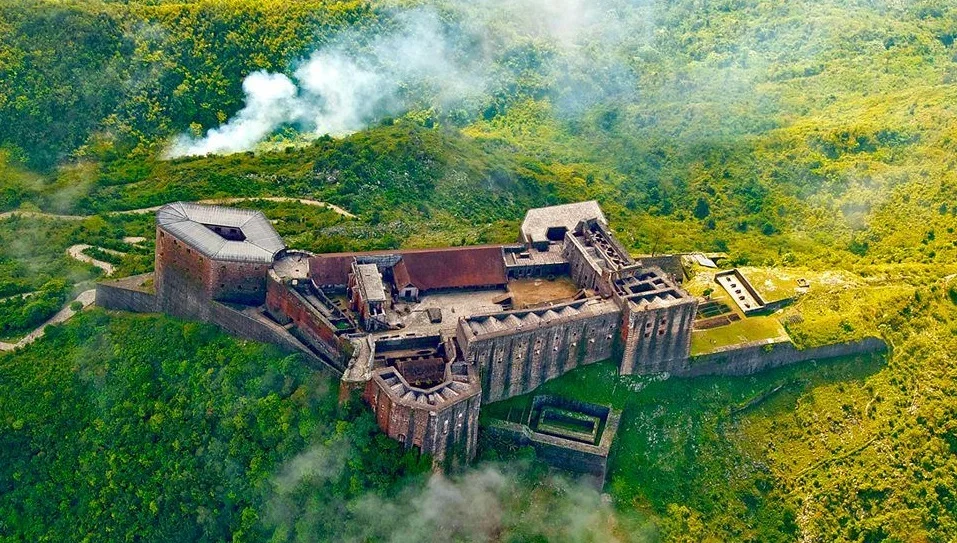
Haïti has a rich historical heritage, including sites like the Citadelle Laferrière and the Sans-Souci Palace, listed as UNESCO World Heritage Sites.

Culture

Culture

Haïti has a rich and diverse culture, influenced by African, European and indigenous elements. Haitian music, dance, art and cuisine are celebrated around the world.

  • +
    • Post