contact@haitiwonderland.com+509 36184317

Discover

Shopping Cart

How do Haitians celebrate Christmas?

How do Haitians celebrate Christmas?

Christmas in Haïti is a holiday full of traditions, spirituality and moments of conviviality. Marked by religious celebrations, family feasts and unique cultural expressions, Haitian Christmas is a magical time that reflects the generous and festive soul of the Haitian people. This article takes you to the heart of Christmas traditions in Haiti.

A Religious Celebration at the Heart of Christmas

For Haitians, Christmas often begins with religious celebrations. Most families go to church to attend midnight mass or special services held on December 24 or 25. These moments of prayer and song are an opportunity to reconnect with their Christian faith and celebrate the birth of Jesus Christ.

Traditional Christmas carols, often performed in Creole, occupy an important place in these ceremonies. They reflect both religious fervor and the richness of Haitian musical culture. Churches, decorated for the occasion, become community gathering places, symbolizing unity and peace.

Haïti
Haïti
Haïti

Family Reunions: At the Heart of the Holidays

In Haiti, Christmas is above all a family celebration. Families come together, often as early as December 24, to share a sumptuous meal. This moment of conviviality is a way to strengthen family ties and create unforgettable memories.

The Christmas meal is a feast that highlights Haitian cuisine. Among the most popular dishes are griot (fried pork), roast turkey, rice stuck to peas, bananas weighed, and desserts such as pain patate or rum cake. To accompany this feast, Haitians often enjoy the famous crémas, a sweet and creamy drink made with condensed milk and rum.

In many families, the meal is prolonged by lively discussions, laughter, and sometimes even singing or dancing. It is a time of sharing and joy, where everyone expresses their gratitude for the past year.

Haïti
Haïti
Haïti

Traditions of Sharing and Generosity

Christmas in Haïti is also a time marked by a strong spirit of solidarity. Haitians take advantage of this holiday to help the less fortunate. Churches, associations and even individuals organize collections or community meals to ensure that no one is left behind during the holidays.

Children play a central role in this generosity. It is common for families to give symbolic gifts to the youngest, often in the form of toys or clothing. In some neighborhoods, children sing Christmas carols in the streets, receiving sweets or small contributions in return.

Haïti
Haïti
Haïti

Animated and Lively Holidays

In Haiti, Christmas is not limited to a single day. The entire holiday season is animated by traditions and celebrations. Christmas markets, music concerts, and dance parties add a festive atmosphere to cities and villages.

Christmas decorations are also present. Although modest in some regions, they are nonetheless full of charm. Houses are decorated with fairy lights and, sometimes, improvised Christmas trees, often made from local materials.

In Haitian culture, Christmas is also an opportunity to tell stories, pass on local legends, or revisit biblical stories around the nativity. These moments of storytelling strengthen intergenerational bonds and preserve cultural traditions.

Haïti
Haïti
Haïti

Christmas: A Celebration That Brings People Together and Inspires

For Haitians, Christmas is a celebration that goes far beyond gifts and feasts. It is a time when faith, family, and generosity take on their full meaning. Celebrations, whether modest or grandiose, are always marked by a deep respect for traditions and a spirit of unity.

Between time spent in church, meals shared with family, and solidarity initiatives, Christmas in Haïti is a celebration that perfectly illustrates the values ​​of community and human warmth specific to the Haitian people. It is a time when everyone, rich or poor, celebrates hope, peace, and the joy of living.

Share
About the Author
Appolon Guy Alain
Appolon Guy Alain
Appolon Guy Alain

Full Stack Developer, Créatif, expérimenté, passionné des nouvelles technologies et de l’art.

See other articles from Appolon Guy Alain
Leave a comment

Recently Posted

Conference / Festival Quatre Chemins / 21st edition

The impact of collective and individual trauma on the personal development of young people in Port-au-Prince While writers, actors, dancers, poets, among others, have gratified us with their performances, the master’s degree student in psychology at the Faculty of Human Sciences (FASCH), Lourdya Blaise, spoke with the audience about trauma. Structured around the theme "Youth and Trauma, analysis of the impact of collective and individual trauma on the personal development of young people living in Port-au-Prince between 2010-2024", this conference gave rise to enriching discussions. During this meeting, moderated by Michaël Formilus, Ms. Blaise showed how the events that have taken place in the country have caused cases of trauma among Haitians. According to the student, citing the American Psychological Association, we speak of trauma as a consequence of trauma. The latter is explained by the fact that we feel threatened, whether it is the person in question or their loved ones. However, she specifies that a collective trauma remains depending on the impact that the event has on the individual. To illustrate her remarks, she mentioned the earthquake of January 12, 2010, considered a collective trauma, insofar as it still occupies our minds. This tragedy reminds us of the disappearance of our loved ones and enormous losses. This is the case of a trauma that becomes a collective trauma. For the student, it should be emphasized that when an event occurs, some people are traumatized and others are not. According to him, the violence of armed gangs is not perceived in the same way, says Ms. Blaise. There are people who have fled their homes but are not traumatized. In fact, some people see traumatic situations as a passing event, she says. The speaker also spoke about collective trauma, which, according to him, preoccupies the mind, even if we no longer experience it. It manifests itself in several forms: lack of sleep, fear psychosis, intrusive thoughts, intense heartbeat, etc. Generally, symptoms related to trauma are hard to die. When it persists, it becomes acute stress. To deal with it, we must talk to other people. If the situation persists, acute stress turns into a phase of post-traumatic stress; in this case, we must confide in a trusted person or go see a mental health specialist, she advises. In her presentation, Lourdya Bazile also drew attention to the psychological state of children in these times. According to the presenter, children are also facing this crisis situation, even if they do not talk about it to their parents. As much as adults, children also plan their future. Faced with flouted school years, they become pensive and worried, she stressed. They withdraw. The child who used to be brilliant can become violent and perform less well at school. Parents are called upon to listen to them and understand them. A good moment of exchange, rich in practical advice. The audience participated fully. In turn, the presenter invites them to breathe better and meditate. "We live in a country where worries mix, we must take time for ourselves, do sports, eat well, make sure that the sleeping space is clean and take time for ourselves. There is more than one way to find calm," recalls the psychologist. Gertrude Jean-Louis

Newsletter

Subscribe to our newsletter to stay informed of all our activities and news on Haiti.

Haïti / Fort Picolet: Historical Guardian of Liberty

Cap-Haïtien, Haiti’s historic jewel, is home to a fascinating architectural relic: Fort Picolet. Built at the end of the 18th century by the French, this imposing bastion majestically dominates the bay of Cap-Haïtien, bearing witness to the tumults of Haitian history and the fierce struggle for independence. The history of Fort Picolet is closely linked to that of Haiti, particularly at the time of the Haitian Revolution. During this tumultuous period, when slaves and freedmen rose up against colonial oppression, the fort was the scene of epic battles and fierce sieges. Sometimes used by French forces, sometimes by Haitian revolutionaries, Fort Picolet was a silent witness to the events that shaped the destiny of the nation. Designed with a strategic vision, the fort embodies the military architecture of its era. Its thick stone walls, strategically positioned cannons and viewpoints overlooking the bay make it an impregnable bastion. Its name, Fort Picolet, pays homage to General Louis Marie, Marquis de Picolet, French governor of Cap-Français at the end of the 18th century. Today, Fort Picolet remains much more than a simple historical monument. It is a living symbol of the resilience and determination of the Haitian people. Visitors who wander through its ruins can feel the imprint of history and contemplate the remains of a tumultuous past. From up there, a panoramic view of the bay of Cap-Haitien is available to them, offering a unique perspective on the strategic importance of this place in the maritime history of Haiti. As a pillar of Haitian tourism, Fort Picolet attracts visitors from around the world. Its historical aura, combined with the natural beauty of its environment, makes it a must-see destination for history and culture lovers. More than just a tourist attraction, Fort Picolet is a poignant testimony to the endless struggle for freedom and the cultural richness of Haiti. Throughout the centuries, Fort Picolet has survived the test of time, reminding everyone that freedom is an inalienable right, hard won and carefully preserved. By exploring its ramparts, contemplating its silent cannons, visitors find themselves immersed in the tormented history of Haiti, a story of courage, resistance and hope. Live an extraordinary experience by virtually visiting the ruins of Fort Picolet: https://haitiwonderland.com/haiti-virtual-reality-ht/monuments-histoire/haiti--fort-picolet--visite-virtuelle/14

Recently Posted

History

History

First black nation to free itself from slavery and gain independence from France in 1804 and influenced other liberation movements around the world, inspiring struggles for freedom and equality.

Natural beauty

Natural beauty

Haïti is blessed with spectacular natural landscapes, including white sand beaches, mountains and rich biodiversity.

Heritage

Heritage

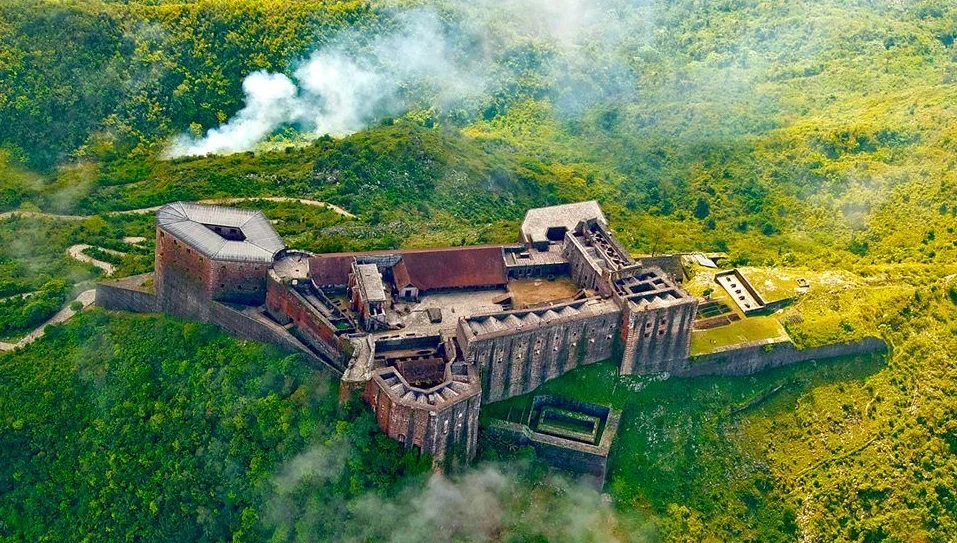
Haïti has a rich historical heritage, including sites like the Citadelle Laferrière and the Sans-Souci Palace, listed as UNESCO World Heritage Sites.

Culture

Culture

Haïti has a rich and diverse culture, influenced by African, European and indigenous elements. Haitian music, dance, art and cuisine are celebrated around the world.

  • +
    • Post