contact@haitiwonderland.com+509 36184317

Discover

Shopping Cart

What is the real name of Haïti throughout history?

What is the real name of Haïti throughout history?

Haiti, a land rich in history and culture, has had several names over the centuries, each reflecting a significant period in its evolution. These names reveal the changing identity of the island, from pre-Columbian times to today. Let’s discover together the different names that this emblematic territory has had and their meaning.

Ayiti: the original name of the Taino

Before the arrival of the Europeans, the indigenous inhabitants of the island, the Taino, called their land “Ayiti”, a word in their language meaning “land of high mountains” or “mountainous country”.

- A geographical description: This name reflected the topography of the island, marked by its imposing mountain ranges and lush nature.
- A rooted identity: For the Taino, “Ayiti” represented much more than a place; it was a symbol of their spiritual connection to the land and their way of life in harmony with nature.

This name, deeply rooted in the Taíno culture, is the first known name of the island.

Hispaniola: the era of Spanish colonization

In 1492, Christopher Columbus landed on the island and named it Hispaniola (or “La Española” in Spanish), which means “Little Spain”.

- A new chapter: This name reflected the Spanish intention of making the island an extension of their empire in America.
- A political division: Under Spanish rule, the island was divided into several territories, marking the beginning of a colonial control that would last for several centuries.

Hispaniola still remains the official name of the island in some international contexts, although each nation that composes it has its own identity.

Saint-Domingue: The French Legacy

In the 17th century, the French took control of the western part of the island, which they named Saint-Domingue.

- A symbol of prosperity: Saint-Domingue became one of the richest colonies of the French empire, thanks to the exploitation of sugar, coffee and indigo plantations.
- A place of suffering: This wealth was based on the forced labor of hundreds of thousands of African slaves, making Saint-Domingue a theater of struggles for freedom.

The name Saint-Domingue is associated with a period of economic greatness, but also of deep inequality and oppression.

Haiti: A return to roots after independence

On January 1, 1804, after a fierce struggle for freedom, the Republic of Haïti was proclaimed, marking a historic turning point.

- A tribute to ancestors: The name “Haiti” was chosen to honor the Tainos and their original name for the island, “Ayiti.”
- A symbol of freedom: By abandoning the colonial name, Haitian leaders affirmed their independence and their break with the oppressive past.

Today, Haïti remains the official name of the world’s first independent black republic.

A legacy of names, a wealth of identity

The different names that Haïti has borne over the centuries bear witness to its turbulent history and resilience.

- Ayiti: A land of mountains and spirituality.
- Hispaniola: A point of contact between the New and Old Worlds.
- Santo Domingo: A rich and tragic colony.
- Haiti: A free and proud nation.

Each name embodies a facet of Haiti’s history, which has preserved its identity despite challenges.

Haiti: An Inspiring History

Haiti’s evolving names reflect a constant quest for independence and dignity. Today, the word “Haiti” represents not only a country, but also a global symbol of resilience and freedom.

What is your connection to the name “Haiti” and the history it carries? Share your thoughts and celebrate with us this land with a unique past and promising future.

Share
About the Author
Appolon Guy Alain
Appolon Guy Alain
Appolon Guy Alain

Full Stack Developer, Créatif, expérimenté, passionné des nouvelles technologies et de l’art.

See other articles from Appolon Guy Alain
Leave a comment

Recently Posted

Haiti: A Little-Known Pillar of World Independence

Haiti, the world’s first independent black republic, played an exceptional role in the quest for independence for other nations. Although often overshadowed by other historical events, Haiti’s contribution to the liberation of other countries was significant and deserves to be highlighted. b~The Haitian Revolution~b At the turn of the 19th century, Haïti threw off the chains of slavery and achieved the impossible by freeing itself from French colonial rule. In 1804, the country proclaimed its independence, ushering in a new era for oppressed peoples around the world. b~Inspiration for Latin America~b The Haitian Revolution was a major source of inspiration for independence movements in Latin America. Iconic figures such as Simón Bolívar and Francisco de Miranda recognized the courage and determination of Haitians as a driving force for their own struggles. By materially and ideologically supporting these movements, Haïti contributed to the emergence of several independent nations in South America. b~Influence in Africa~b Beyond the Americas, Haïti also played a crucial role in the quest for independence in Africa. African leaders have left a legacy that has inspired entire generations of freedom fighters on the African continent. The idea that oppressed people could rise up against their oppressors found a powerful echo in the struggles for independence in Africa. b~Support for Liberation Movements~b Throughout its history, Haïti has provided substantial support to liberation movements around the world. Whether through troop dispatches, financial resources or active diplomacy, the country has demonstrated its solidarity with those fighting for their autonomy. Haiti’s contributions have often been discreet but crucial. Haiti, as a pioneer of independence and freedom, has left a lasting impact on the world stage. His legacy resonates across continents, reminding the world that the quest for freedom is universal. By recognizing and celebrating Haiti’s role in the independence of other nations, we not only honor its history, but we also commit to promoting a future where all people have the opportunity to shape their destiny.

Newsletter

Subscribe to our newsletter to stay informed of all our activities and news on Haiti.

The Haïtian Compas: A Musical and Cultural Journey

Music has always been an essential part of Haïtian culture, and among the many genres that have emerged from this Caribbean island, Compas holds a special place. It is a musical style that carries with it the history, cultural diversity and vibrant energy of Haïti. b~Origins and Evolution~b The Compas Haïtien, also known as Kompa, has deep roots in Haïtian and African musical traditions. Its development was influenced by genres such as Dominican merengue, Cuban salsa, jazz and even rock. This fusion of styles has resulted in a distinctive sound that embodies the cultural richness and diversity of Haïti. The Haïtian Compass has evolved over the decades, moving from a more traditional style to more modern and sophisticated forms. Iconic artists such as Nemours Jean-Baptiste and Tabou Combo helped shape the genre and propel it onto the international music scene. b~The Characteristics of the Compass~b Le Compas Haïtien is characterized by its intoxicating rhythm and complex arrangements. Traditional instruments such as guitar, saxophone, drums, and of course, bass, play a crucial role in creating this catchy music. The lyrics, often sung in Haïtian Creole, address varied themes, from love and joy to social and political issues. Dance is an inseparable component of the Haïtian Compass. The irresistible rhythms encourage the dancers to sway to the music. Traditional dance moves, such as "Kompa Direk" and "Kompa Love," reflect the joyful expression and sensuality that characterize this musical genre. b~Global Influence~b Over the years, the Haïtian Compas has transcended the borders of Haïti to conquer the international stages. Haïtian artists helped popularize the genre around the world, bringing with them the warmth and vitality of Haïtian culture. Music festivals dedicated to Compas attract fans from around the world, providing an immersive experience of this catchy music. The Haïtian Compass is much more than a musical genre; it is a standard bearer of Haïtian culture, a mirror reflecting the history, diversity and resilience of the Haïtian people. Discovering the Haïtian Compas means diving into a world of captivating rhythms, passionate dances and captivating stories, while celebrating Haïti’s unique musical heritage. Whether you are a world music lover or simply curious about new experiences, the Compas Haïtien is an invitation to an unforgettable sound journey.


The Republic of the Stateless?

Haïti is making headlines all over the world. And it’s not good news. The exploits of Haitians rarely generate so much interest, but we always tend to point out the excesses, spill ink to stir up thorns in the side, broadcast on loop to relay the chaos that is raging. There is hardly any media to make amends for the resilience of this cornered people. No one to highlight the fierce resistance that serves as fuel for this people hanging in the gorges of death. And what if it was to a certain extent the only way to talk about this country to finally attract attention? It is July 26, 2024. The Olympic Games have just started in France. The 33rd Olympiad of modern times. Without realizing it, according to Forbes Magazine, Haïti ranks among the ten nations with the best costume, proudly pointing to third place. At the same time, miles away from France, on “The Island of Skillfully Orchestrated Chaos,” Haitians do not even realize how much this recognition borders on irony. A paradox whose unpopular evocation is likely to greatly displease. An aerial image shows the city of Paris in all its splendor, illuminated like the gates of paradise, reflecting all the grandeur of France, all the magnificence it has acquired over the centuries, without forgetting the contribution of the blood shed by the horrible machine of colonization. I close my eyes, I go back in time, I see again this boy left to his own devices, lost without even knowing it, doomed to failure without even understanding it. And then there are the others. Boys in the same situation, or worse. Banished from society, they do not know what life has in store for them. They form the elegant class of the marginalized, in their quality of scoundrels, good-for-nothings, and thugs who spoil the splendor of society. This contrast challenges me, and I wonder for a moment if those who live the chaos from the outside grasp the stakes and the reality of the situation. Moreover, it seems to me that even the majority of Haitians living in the territory have no notion of the fundamental and essential aspects of the situation.

Recently Posted

History

History

First black nation to free itself from slavery and gain independence from France in 1804 and influenced other liberation movements around the world, inspiring struggles for freedom and equality.

Natural beauty

Natural beauty

Haïti is blessed with spectacular natural landscapes, including white sand beaches, mountains and rich biodiversity.

Heritage

Heritage

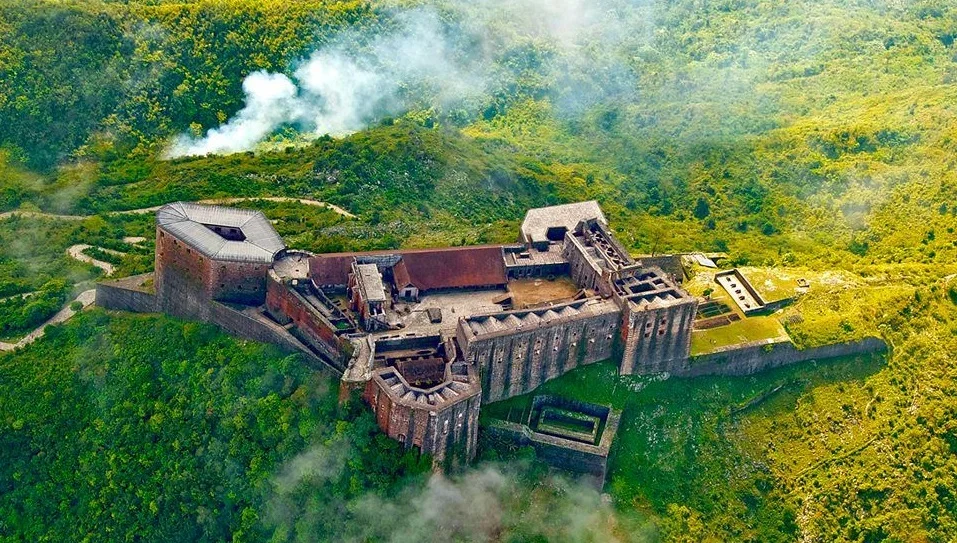
Haïti has a rich historical heritage, including sites like the Citadelle Laferrière and the Sans-Souci Palace, listed as UNESCO World Heritage Sites.

Culture

Culture

Haïti has a rich and diverse culture, influenced by African, European and indigenous elements. Haitian music, dance, art and cuisine are celebrated around the world.

  • +
    • Post