contact@haitiwonderland.com+509 36184317

Discover

Shopping Cart

What is the emblem of Haiti?

What is the emblem of Haiti?

The national emblem of Haïti is a powerful symbol of the country’s identity, history, and values. It embodies the struggle for independence and the fundamental principles that unite Haitians. This article explores in depth the national emblem of Haiti, its elements, meaning, and importance to the Haitian nation.

The National Emblem of Haiti: Coat of Arms

The national emblem of Haïti consists of the country’s coat of arms, an important and distinctive symbol. This coat of arms was adopted in 1807 and is featured on the flag and official documents of the Republic of Haiti. The emblem is divided into several symbolic elements that reflect the country’s history, culture, and fundamental values.

Haïti
Haïti
Haïti

The Elements of the Emblem of Haiti

The emblem of Haïti is rich in symbolism. At the center of the coat of arms is a palm tree (symbol of freedom), with cannons and flags representing the defense of the nation. A Haitian flag flies around the palm tree, evoking the struggle for independence.

Two crossed arrows, accompanied by laurel branches, symbolize the military victory and the honor of the Haitian people in their quest for freedom. On the bottom of the coat of arms, a banner bears the national motto: "L’Union fait la force", a principle that reaffirms the importance of national solidarity.

The blue and red colors that appear on the emblem symbolize unity and freedom. The blue represents the descendants of slaves who fought for independence, while the red represents the brotherhood between all Haitians.

The Meaning of the Coat of Arms

The coat of arms of Haïti has a deep and historical meaning. The palm tree, at the center of the emblem, symbolizes the freedom acquired after the Haitian revolution. It also represents the perseverance of the Haitian people in the face of adversity.

The cannons and flags on the sides are reminders of the heroic fight of the Haitians for their independence. These symbols embody the defense of the country and the spirit of resistance that allowed Haïti to become the first country to abolish slavery and found an independent black republic.

The laurel branches are a reference to military victory, but also to peace, honor and integrity. They are a sign of triumph and the dignity regained by the Haitian people after centuries of oppression.

Haïti
Haïti
Haïti

The Emblem as a Symbol of National Pride

The emblem of Haïti plays a central role in the construction of national identity. It is a constant reminder of the sacrifices and struggles that allowed Haïti to obtain its independence. Each element of the emblem is a symbol of Haitian pride and the sovereignty of the country.

Haitians both inside and outside the country view this emblem as a source of dignity and resilience. It is worn with pride during national celebrations and events where the unity and solidarity of the Haitian people are highlighted.

A Living Emblem of Haitian History

The national emblem of Haïti is much more than a simple design: it is a living testimony to the country’s history. It recalls not only the war of independence, but also the slave revolt and the victory over colonial oppression. As such, it represents the ideals of liberty, equality, and fraternity that have shaped Haiti.

Haitians continue to reclaim their emblem and bring it to life, whether it is seen flying in the streets during protests or finding it in art, music, and discussions about the nation. The emblem is a testament to the continuity of Haiti’s history and soul across generations.

Haïti
Haïti
Haïti

The Emblem of Haiti: A Universal Symbol

Although specific to Haiti, the national emblem also has a universal dimension. It embodies the principles of the struggle for freedom, human dignity, and solidarity. These values ​​resonate throughout the world, especially in Haitian communities in the diaspora, where the symbol continues to serve as a rallying point and collective pride.

The emblem of Haïti is therefore much more than a decorative element. It embodies the heritage, culture, and strength of the Haitian people, and it is a powerful vector of national identity, inspiring respect and solidarity on a global scale.

Share
About the Author
Appolon Guy Alain
Appolon Guy Alain
Appolon Guy Alain

Full Stack Developer, Créatif, expérimenté, passionné des nouvelles technologies et de l’art.

See other articles from Appolon Guy Alain
Leave a comment

Recently Posted

Newsletter

Subscribe to our newsletter to stay informed of all our activities and news on Haiti.

Haiti, dream space.

Between dream and Haitian reality: A call for unity and action Many men have dreamed big for Haiti. Toussaint Louverture and Jean Jacques Dessalines are examples. Although torn apart by invisible hands, the social fabric of the country had always been considered the greatest project to be set in motion by men of letters. Until then, the history of Haïti remains and remains for Haitians the most appropriate space to dream and propose full and complete freedom. Indeed, Toussaint Louverture had the dream of improving the lot of slaves. Dessalines, for his part, sacrificed himself for the independence of our island (Haiti-Saint-Domingue). After our liberation from the French, men of letters had to take other paths to safeguard the dignity of the country. This situation showed another form of revolution like poets of the patriotism school with supporters such as: Louis Joseph Janvier, Anténor Firmin, Demesvar Délorme and the Generation of the Round with Fernand Hibbert, Georges Sylvain also the indigenous school with Jean Price Mars, Jacques Stephen Alexis, Roussan Camille etc... who express their discontent by pouring ink. By describing or painting the situation of the country. Several years which were first conceived and then born the idea of ​​giving the country its sovereignty, its own bicolor, its army, etc. it was not easy and did not continue like this. Haïti needs for the moment men of dreams, men who love their countries, but not the wealth of this country, men who love the happiness of their country, but not its misfortunes, men who have viable projects , but are not specialists in carnage who are only interested in their pockets, rather for the happiness of our two-tone, men who must fight against corruption, against waste, against the invisible hands of foreigners, against this form of public administration which targets only a small group of people in the country to the detriment of the population, this form of insecurity planned by the state, the so-called bourgeoisies, economic powers from abroad such as: France, USA, Canada, Brazil. q~Haïti in 1979 with full power. Maître Fevry is said to have declared: The dream of Haïti cannot support, nor accept improvised solutions ~q. The Haitian’s dream must always be a team effort. A team of men of skill, vision, good will, reflection and meditation. q~ Men who can place their personal and private interests over public interests. Men who want to make a new start to achieve the dream of Jean Jacques Dessalines and that of Henri Christophe who aimed that Haitians will not envy any other country in the world so that all Haitians can be happy in their own country, chanted Professor Lesly Saint Roc Manigat.~q Our dear Haiti, which was once the pearl of the Antilles, is no longer present today. For this we ask all Haitians: children, young people, adults and old people, let us unite our arms, our strength, our voices and all that we could do to liberate our dear homeland Haïti Chérie. Let’s change our reality together! Long live Haiti, long live freedom for the whole world.

The Port-au-Prince Book Fair announces the opening of author registration for its second edition

The Port-au-Prince Book Fair is a literary initiative of the cultural organization Port-au-Prince Book Fair (OCSLP), based on the desire to promote Haitian culture in general, with a particular focus on literature. The organizers of the event have just announced the registration of authors, who will number 20, and those of publishing houses, who will number 5 for the second edition, which will take place on Friday, December 13, 2024, in the premises of the French Institute in Haiti. The registration deadline is Thursday, October 10 of this year. Please note that the first to arrive who have met the required criteria will be eligible to take part in this second edition of the event, according to the organizers’ admission. This rigorous and restricted selection of only 20 authors aims to guarantee an enriching experience for authors and the public, thus promoting authentic exchanges around the works presented. Independent authors and publishing houses interested in registering their authors to participate in this second edition of the fair are invited to submit their application via this link: https://form.jotform.com/louirardjohn8/salon-du-livre-de-port-au-prince. For publishing and distribution houses planning to exhibit on the day of the event, you can register by clicking on this link: https://form.jotform.com/242596699603068. You are requested to contact them at the following address: salondulivre2023@gmail.com in case of difficulties. The Port-au-Prince Book Fair remains faithful to its philosophy, which is to offer a platform to young authors and to promote the richness of Haitian literary production, by supporting new authors who contribute to its growth. This event is a continuation of the first edition, aimed at allowing the emergence of an environment conducive to exchanges, where young authors can meet, share their experiences and engage in dialogue with readers and book professionals. According to the organizers of the event, your participation as a young author will be essential to enrich the fair and offer a diverse experience to visitors. The invitation to join this noble initiative is extended to young authors who have not yet published 5 books. You who are concerned, the ball is now in your court. Do not hesitate to go and make this day, December 13, 2024, an unforgettable day for all book lovers.

Recently Posted

History

History

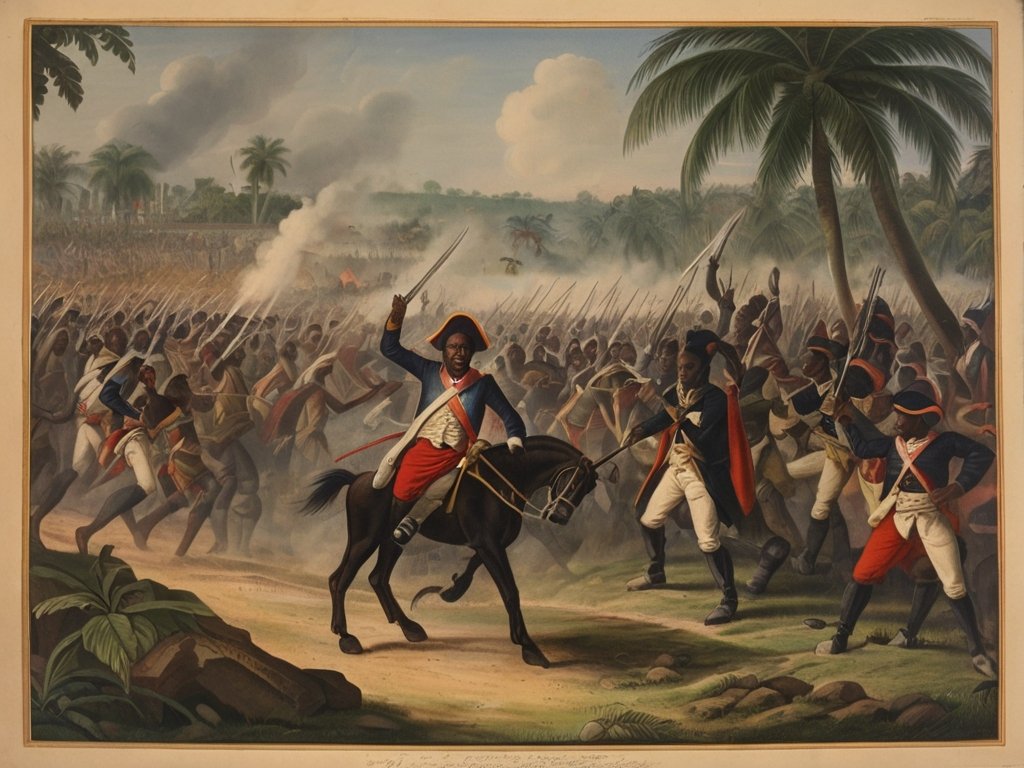
First black nation to free itself from slavery and gain independence from France in 1804 and influenced other liberation movements around the world, inspiring struggles for freedom and equality.

Natural beauty

Natural beauty

Haïti is blessed with spectacular natural landscapes, including white sand beaches, mountains and rich biodiversity.

Heritage

Heritage

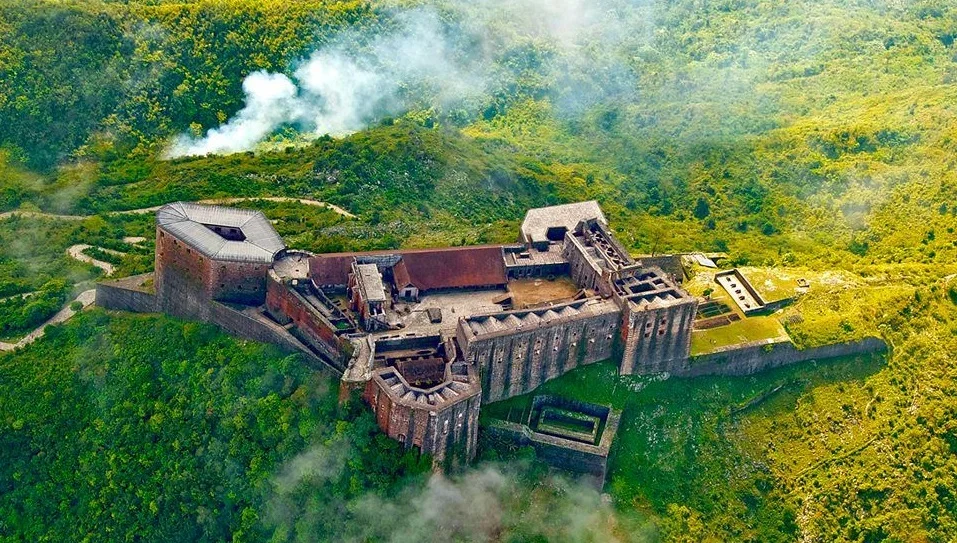
Haïti has a rich historical heritage, including sites like the Citadelle Laferrière and the Sans-Souci Palace, listed as UNESCO World Heritage Sites.

Culture

Culture

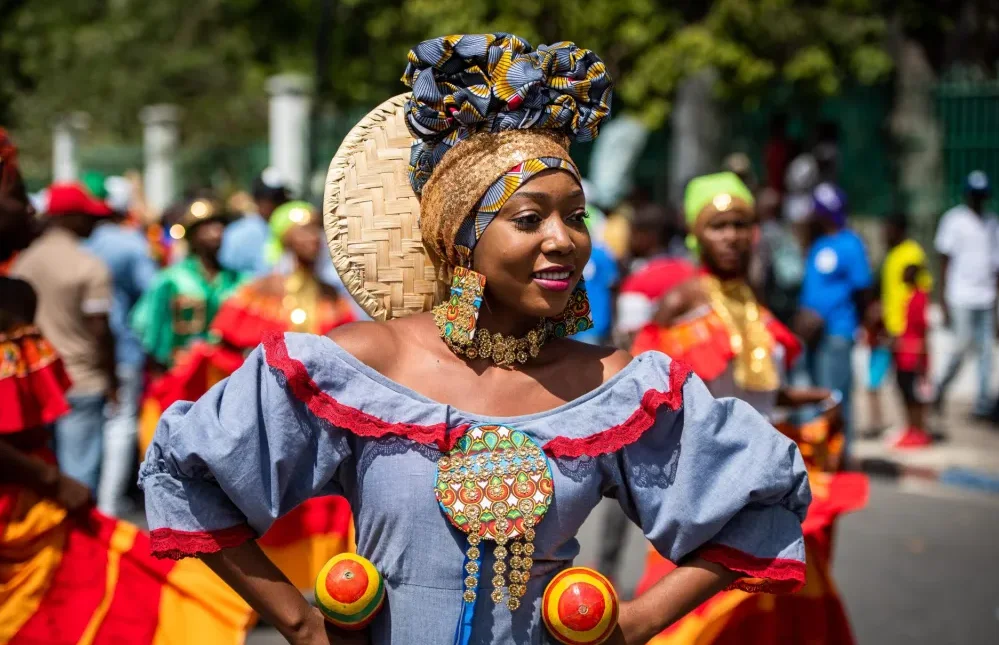
Haïti has a rich and diverse culture, influenced by African, European and indigenous elements. Haitian music, dance, art and cuisine are celebrated around the world.

  • +
    • Post