contact@haitiwonderland.com+509 36184317

Discover

Shopping Cart

What Continent is Haïti in? A Journey to the Heart of the Caribbean

What Continent is Haïti in? A Journey to the Heart of the Caribbean

Haiti, this vibrant and characterful country, is located in a fascinating region of the world. Although many know it as an island state in the Caribbean, one question often comes up: in which continent is Haïti located? This article provides you with the answer while exploring the unique geographical and cultural identity of this jewel of the Antilles.

Haïti
Haïti
Haïti

Haïti and its Geographical Position

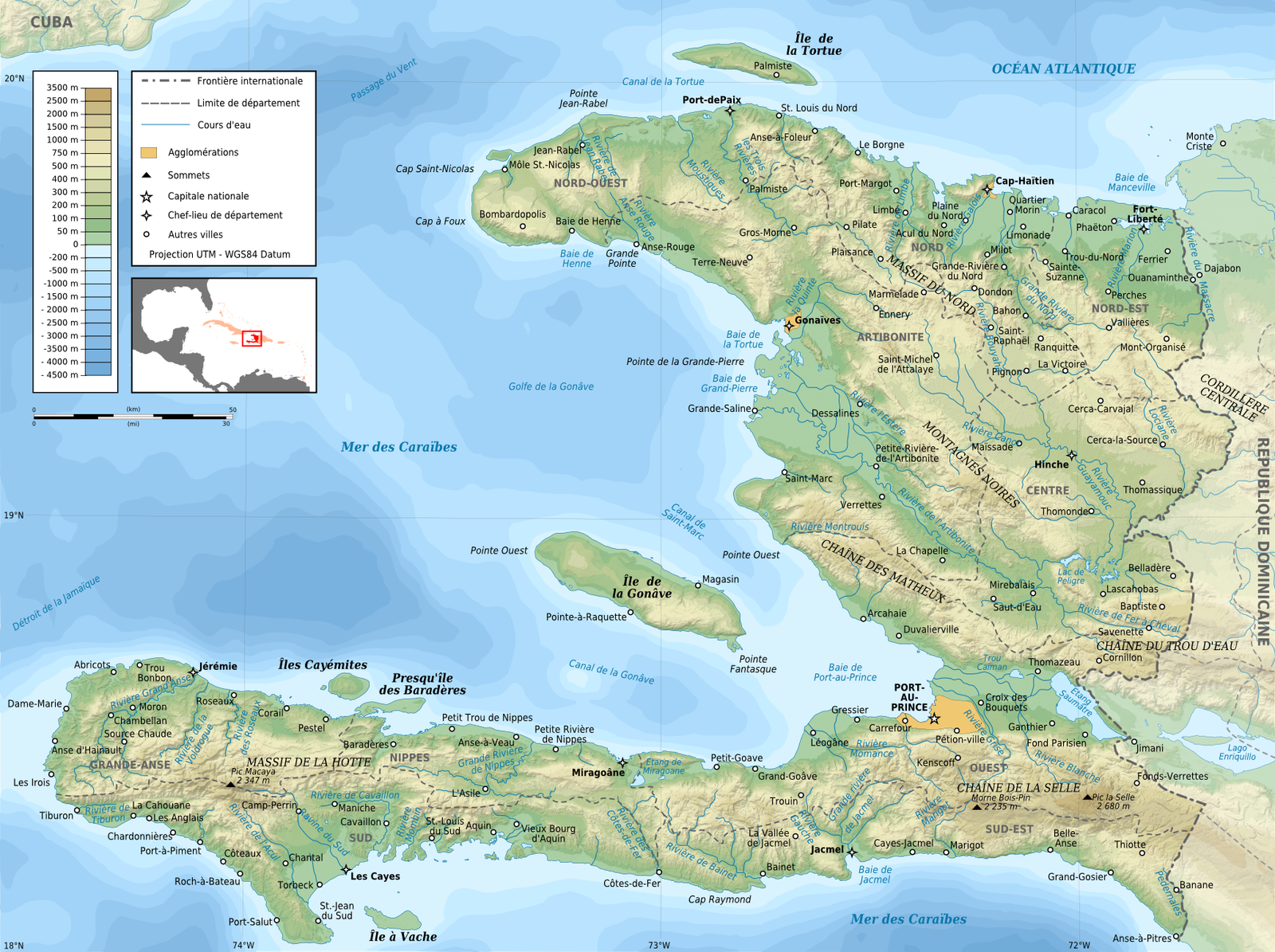
Haïti is located on the American continent, more precisely in the Central Americas and Caribbean region. Located in the Caribbean Sea, Haïti occupies the western third of the island of Hispaniola, which it shares with the Dominican Republic. This island is the second largest in the Greater Antilles, after Cuba.
Haïti
Haïti
Haïti

Some Key Data:

- Continent: America.

- Region: Caribbean, part of Latin America and the Antilles.
- Geographic coordinates: Between latitudes 18° and 20° north and longitudes 71° and 74° west.
- Neighboring countries: The Dominican Republic to the east, Cuba and Jamaica to the northwest, and Puerto Rico to the east across the Caribbean Sea.

Haïti
Haïti
Haïti

Why is Haïti a Caribbean country?

Although Haïti is located on the American continent, it is generally referred to as a Caribbean country because of its island position and its cultural and historical affiliation to this region.

The Traits that Anchor Haïti in the Caribbean:
1. Tropical climate: Warm temperatures all year round and a typical rainy season.
2. Caribbean culture: Haïti shares common traditions with the other islands, such as music, dance, and culinary flavors.
3. Caribbean Sea: This sea, with turquoise waters, is a central feature of Haiti’s geography.

Haïti
Haïti
Haïti

A Cultural Identity Rooted in the Americas

Haïti is the first independent country in Latin America and the Caribbean, having gained its independence in 1804 after a historic revolution. This strong historical link, added to its geographical position, fully integrates it into the American continent while maintaining its Caribbean singularity.

Haïti
Haïti
Haïti

Haiti: A Gateway to the Caribbean

For visitors, Haïti is often seen as an ideal gateway to the Caribbean. With its heavenly beaches, majestic mountains and impressive cultural heritage, the country offers an unforgettable experience to those looking to explore this region of the globe.

- Main attraction: The Citadelle Laferrière, a true symbol of resistance and national pride.
- Gastronomy: Dishes like djon djon rice or griot combine African, European and Caribbean flavors.
- Ecotourism: Natural parks like La Visite and Macaya illustrate the ecological richness of the island.

Haïti
Haïti
Haïti

A Proudly American and Caribbean Nation

Haïti is located in America, but it embodies the very essence of the Caribbean. This country, at the crossroads of geographical and cultural influences, offers a unique experience within the Western Hemisphere. Understanding where Haïti is located also means understanding the importance of its strategic position and its role in the history and culture of the Americas.

Share
About the Author
Appolon Guy Alain
Appolon Guy Alain
Appolon Guy Alain

Full Stack Developer, Créatif, expérimenté, passionné des nouvelles technologies et de l’art.

See other articles from Appolon Guy Alain
Leave a comment

Recently Posted

Caractéristique d’un lapin

Les lapins sont des mammifères appartenant à la famille des Leporidae. Voici quelques-unes de leurs caractéristiques principales : 1. **Physique** : Les lapins ont un corps couvert de fourrure douce, des oreilles longues et droites, de grands yeux sur les côtés de leur tête, et une queue courte et duveteuse. Ils possèdent de puissantes pattes arrière adaptées au saut. 2. **Taille et poids** : La taille et le poids peuvent varier considérablement selon la race, allant d’environ 500 grammes pour les plus petits à plus de 5 kilogrammes pour les plus grands. 3. **Comportement** : Les lapins sont connus pour être sociaux et peuvent vivre en groupes dans la nature. Ils communiquent entre eux par différents moyens, y compris par des sons et des mouvements corporels. Les lapins creusent des terriers pour y vivre et se protéger des prédateurs. 4. **Alimentation** : Ils sont herbivores, se nourrissant principalement de foin, d’herbes, de feuilles, de fleurs, et de certains légumes. Leur système digestif est adapté pour traiter une grande quantité de fibres. 5. **Reproduction** : Les lapins sont réputés pour leur capacité à se reproduire rapidement, avec des gestations courtes d’environ 28 à 31 jours. Une portée peut compter de un à douze lapereaux, selon la race. 6. **Sens** : Ils ont une excellente vision périphérique pour détecter les mouvements tout autour d’eux, mais ont une zone aveugle juste devant leur nez. Leur ouïe est également très développée, leur permettant de capter des sons à de grandes distances. 7. **Espérance de vie** : En captivité, les lapins peuvent vivre de 7 à 10 ans, selon la race et les soins prodigués, tandis que dans la nature, leur espérance de vie est généralement plus courte en raison des prédateurs et des maladies. Ces animaux nécessitent des soins appropriés, notamment un régime alimentaire équilibré, de l’exercice, et une attention particulière à leur bien-être émotionnel et physique pour vivre une vie saine et heureuse en captivité.

Newsletter

Subscribe to our newsletter to stay informed of all our activities and news on Haiti.

Holidays in Haiti

Haiti, the pearl of the Antilles, is a country rich in history and culture. Its public holidays are moments of celebration, commemoration and reflection on its glorious past. Each date has a special meaning, plunging Haitians into a festive and memorable atmosphere. b~January 1: National Independence Day and New Year~b January 1st is a doubly special day in Haiti. On the one hand, it is National Independence Day, commemorating the victory of Haitian slaves over French colonial forces in 1804. On the other hand, it is New Year’s Eve, marking the start of a new year full of promises and hopes. b~January 2: Feast of the Forefathers~b January 2 is dedicated to the memory of ancestors. It is an opportunity for Haitians to remember their roots, to celebrate the cultural heritage passed down from generation to generation. b~February: Carnival, Shrove Monday, Fat Tuesday, Ash Wednesday~b The month of February is marked by Carnival, one of the most colorful and dynamic festivities in Haiti. The streets fill with parades, lively music and wild dancing. Mardi Gras is the culmination of Carnival, followed by Ash Wednesday, marking the start of Lent. b~April: Easter, Maundy Thursday, Good Friday~b Easter celebrations in Haïti include the religious traditions of Maundy Thursday and Good Friday. It is a time of prayer and reflection for many Haitians. b~May 1: Agriculture and Labor Day~b May 1 is dedicated to celebrating the work and importance of agriculture in the life of the country. It is an opportunity to recognize the efforts of workers and to highlight the agricultural sector. b~May 18: Flag Festival~b Flag Day celebrates the Haitian flag, a symbol of independence and national pride. Haitians honor their colors and remember the courage of their ancestors in the fight for freedom. b~May 23: National Sovereignty Day~b This day commemorates the recognition of Haitian sovereignty by France in 1805. It is a moment of national pride and reaffirmation of independence. b~May - August: Ascension~b The Ascension is celebrated between May and August, a religious festival marking the ascension of Jesus Christ into heaven. b~June: Fête-Dieu~b Fête-Dieu, also known as the Feast of the Body and Blood of Christ, is an important religious celebration in June. b~August 15: Assumption of Mary~b The Assumption of Mary is a Christian holiday marking the ascension of the Virgin Mary into heaven. It is celebrated with fervor in Haiti. b~September 20: Birth Anniversary of Jean-Jacques Dessalines~b This date commemorates the birth of Jean-Jacques Dessalines, one of the founding fathers of Haïti and a key leader in the struggle for independence. b~October 17: Death of Dessalines~b October 17 is a day of commemoration of the death of Jean-Jacques Dessalines, recalling his impact on Haitian history. b~November 1: All Saints’ Day~b All Saints’ Day is a religious holiday honoring all saints, celebrated with prayers and visits to cemeteries. b~November 2: Day of the Dead~b All Souls’ Day is an opportunity to pay homage to the deceased by decorating graves and participating in religious ceremonies. b~November 18: Commemoration of the Battle of Vertières~b This day honors the decisive Haitian victory at the Battle of Vertières in 1803, marking the end of the French occupation. b~December 5: Discovery Day~b December 5 celebrates the discovery of the island by Christopher Columbus in 1492. b~December 25: Christmas~b Christmas celebrations in Haïti are marked by family reunions, festive meals and religious traditions. Public holidays in Haïti are much more than breaks from everyday life; these are moments that embody the soul and resilience of a people. Each celebration provides an opportunity to come together, remember the past and look to the future with hope and determination.

Recently Posted

History

History

First black nation to free itself from slavery and gain independence from France in 1804 and influenced other liberation movements around the world, inspiring struggles for freedom and equality.

Natural beauty

Natural beauty

Haïti is blessed with spectacular natural landscapes, including white sand beaches, mountains and rich biodiversity.

Heritage

Heritage

Haïti has a rich historical heritage, including sites like the Citadelle Laferrière and the Sans-Souci Palace, listed as UNESCO World Heritage Sites.

Culture

Culture

Haïti has a rich and diverse culture, influenced by African, European and indigenous elements. Haitian music, dance, art and cuisine are celebrated around the world.

  • +
    • Post