contact@haitiwonderland.com+509 36184317

Discover

Shopping Cart

What is the primary language of Haiti?

What is the primary language of Haiti?

Haiti, with its unique history and vibrant culture, is a country where language plays a central role in national identity. Haiti’s primary language is Haitian Creole, a rich and expressive language that reflects the country’s cultural mix. Although French is also an official language, Creole is spoken by almost the entire population and is a fundamental part of daily life. In this article, we will explore the origins, uses, and importance of Creole in Haiti.

Haïti
Haïti
Haïti

The Origins of Haitian Creole

Haitian Creole originated during the colonial period in the 17th and 18th centuries, when enslaved African populations were forced to communicate with their French colonists and each other, despite their different original languages. Creole developed from French, while incorporating African, Spanish, Taíno, and English influences.

Today, it is considered one of the most developed creoles, with a well-defined grammatical structure and a rich vocabulary that reflects multiple cultural influences.

A symbol of national identity

In 1987, with the adoption of the Constitution, Haitian Creole was recognized as an official language alongside French. This recognition marked a historic turning point, affirming the central role of Creole in Haitian culture and identity.

Creole is much more than just a means of communication:
- It is the common bond between all Haitians, regardless of their social class or region.
- It is used in songs, proverbs and oral stories, which are pillars of Haitian culture.
- It symbolizes the resilience and creativity of the Haitian people in the face of historical challenges.

Creole and French: A Complex Coexistence

In Haiti, approximately 95% of the population speaks Creole, making it the most widely used language in everyday life. However, French remains widely used in official spheres, such as administration, education, and business.

This situation creates a linguistic divide:
- A minority, approximately 10% of the population, fully masters French, often used as a status symbol.
- Creole, although omnipresent, is sometimes perceived as a less prestigious language, a perception that is changing with promotion and standardization efforts.

Education in Creole: A Major Challenge

One of the challenges Haïti faces is the integration of Creole into the education system. Historically, education was primarily provided in French, which excluded a large portion of the population.

In recent decades, initiatives have emerged to:
- Introduce instruction in Creole from the earliest years of schooling.
- Train teachers capable of transmitting knowledge in this language.
- Develop textbooks and educational resources in Creole.

These efforts aim to reduce the illiteracy rate, which is still high, and to increase access to education for all.

Haitian Creole in the World

With a large diaspora in the United States, Canada, France and other countries, Haitian Creole is exported beyond national borders.

Initiatives to promote the language include:
- The production of literature, music and films in Creole.
- The recognition of Creole as an official language in regions such as Florida and Massachusetts, where many Haitian communities live.
- International Creole Languages ​​Day, celebrated every year on October 28, which highlights the importance of Creole languages ​​in the world.

Did you know? Key figures on Haitian Creole

- Number of speakers: Approximately 11 million, in Haïti and in the diaspora.
- Alphabet: Uses a standardized spelling since 1979, composed of 32 letters.
- Literature: Authors such as Frankétienne have written major works in Creole, contributing to its promotion.

Haïti
Haïti
Haïti

A language that unites

Haitian Creole is much more than a main language: it is the soul of Haiti, unifying a people rich in cultural and historical diversity. Its recognition and promotion are essential to preserve national identity and offer opportunities to all Haitians.

What are your experiences with Haitian Creole? ​​Share your stories and thoughts in the comments!

Share
About the Author
Appolon Guy Alain
Appolon Guy Alain
Appolon Guy Alain

Full Stack Developer, Créatif, expérimenté, passionné des nouvelles technologies et de l’art.

See other articles from Appolon Guy Alain
Leave a comment

Recently Posted

A Call for Online Media Awareness to improve the image of Haïti on the internet

A simple Google search for "Haïti" will leave you with a bitter taste, as you will mostly discover degrading images that fail to pay homage to Haïti’s natural beauty, rich history, and vibrant culture. This reality stems from a multitude of online media outlets that, in their relentless quest for visibility and profit, disseminate images that do not reflect the true essence of Haïti. It is time to challenge this trend and raise awareness among Haïtian online media of the profound impact of their editorial choices on the image of their own country. b~The Consequences of the Dissemination of Degrading Images:~b Sharing degrading images of Haïti contributes to perpetuating prejudices and reinforcing negative stereotypes associated with the country. This can have serious consequences for tourism, foreign investment, and even the national pride of Haïtians. Furthermore, it creates a distortion of reality, masking the many positive and inspiring aspects of Haïti. b~A Call for Editorial Responsibility:~b It is imperative that Haïtian online media take editorial responsibility in ensuring that the images and stories they broadcast reflect the diversity and richness of Haïti. Rather than focusing only on the negative aspects, they should highlight the successes, positive initiatives, and exceptional contributions of Haïtians to global society. b~Promote a Balanced Image:~b Haïti’s diversity, both culturally and socially, deserves to be celebrated. Haïtian online media have the opportunity to play a key role in promoting a more balanced image of the country by highlighting its successes, its innovations and its rich history. This will not only help educate the global public, but also inspire pride and confidence in Haïtians themselves. It is time for Haïtian online media to realize their power as opinion shapers and actively contribute to transforming Haïti’s image. By choosing to share balanced and positive stories, they can play a vital role in building a more accurate and respectful perception of this remarkable country. It is a call for editorial responsibility, sensitivity and national pride, in order to restore Haïti to its rightful place on the world stage.

Vertières, Fort Mazi: Beyond historical truth;

If you look up the word vertière in a French dictionary, you will not find it for fear that the world does not know this place represents the Achilles heels of the most powerful European army. What’s more, this one had just successfully won the eastern campaign. French historians of the time erased this geographical location from the radar of history because they did not want to tell the story as it is in the sense of explaining the first great humiliation of the expeditionary army French by bands of slaves who were totally ignorant in the art of waging war, much less in the handling of weapons. However, these illiterate wars routed the Napoleonic army, the most powerful at that time, using the means at hand. This expeditionary army, after having brought Europe to its knees, would experience its first rout by slaves in this geographical location, located in the Northern department of Haiti. Funny story, this city is not on the list of French words even though given its historical importance, it should be at the heart of universal history, far from putting an end to the invincibility of the undefeated army army. So as not to offend the white masters, no political leader has ever asked why vertière does not appear in any French dictionary? However, they celebrate this battle with great fanfare every November 18. What historic hypocrisy among our leaders! After Vertière many other historical places are strangled by historians in order to hide the extremes of atrocities of the French colonists on the slaves. It is in this context of historical strangulation that “Fort Mazi” is not mentioned in school history textbooks. This is located in Petit-Goave, 2nd municipal section, Arnoux locality. We came across this mega fort, during a mobile clinic entirely financed by the Ernest Junior foundation, a charitable foundation which works in the social sector, particularly in the field of art and music. According to residents , the oldest in this locality, this fort was built on at least 20 squares of earth by the settlers. It was a huge military complex divided into compartments, outposts, turtle rooms, rooms for treating colonists, a large Catholic church, and a cemetery. However, we never talk about this fort so much so that it is ignored by history teachers in the town of Petit-Goave. Certainly, the desired disappearance of this fort under the radar of history buries the atrocities, the barbarities, the most inhumane punishments of the colonists on the slaves. Looking closely at reality, everything seems true that it is the largest fort ever built during the period of colonization. Moreover, it probably seems the most fortified in relation to its importance. Remember that Vertière only exists in Haitian school history textbooks while Fort Mazi does not appear, much less in French dictionaries or history books. This explains why this fort was a secret place in which the settlers practiced crimes and atrocities that went beyond human understanding. Is it not a clear desire of historians to hide what this immense fort built on at least 20 tiles of earth really was? Discover the history of Haiti: A fascinating story to explore! : https://haitiwonderland.com/haiti/histoire/decouvrez-l-histoire-d-haiti--un-recit-fascinant-a-explorer/81

Newsletter

Subscribe to our newsletter to stay informed of all our activities and news on Haiti.

Recently Posted

History

History

First black nation to free itself from slavery and gain independence from France in 1804 and influenced other liberation movements around the world, inspiring struggles for freedom and equality.

Natural beauty

Natural beauty

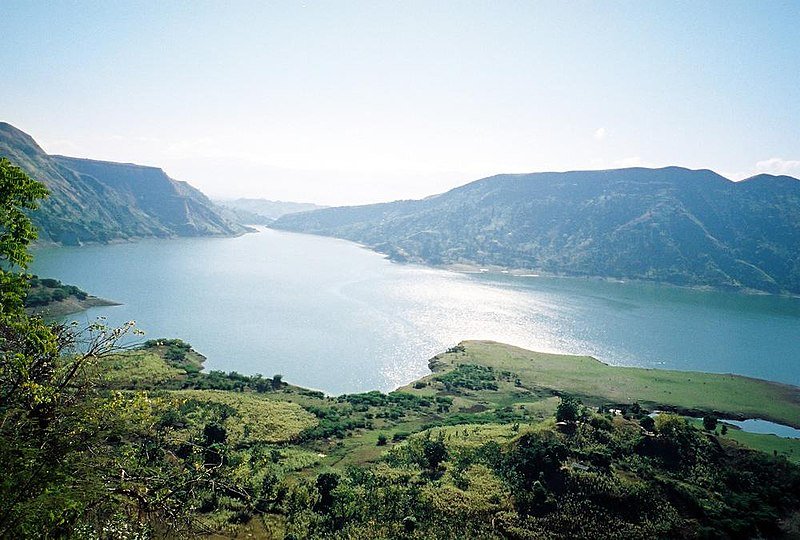
Haïti is blessed with spectacular natural landscapes, including white sand beaches, mountains and rich biodiversity.

Heritage

Heritage

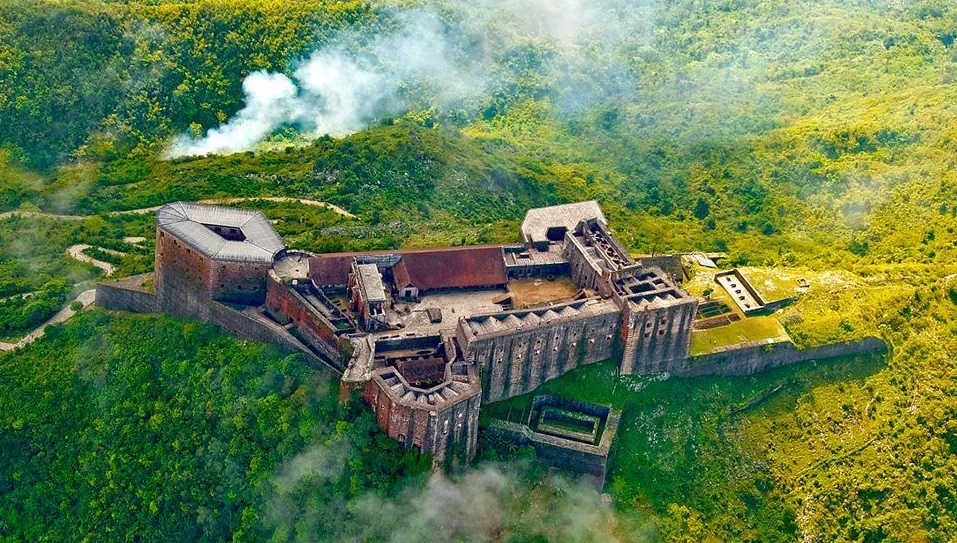
Haïti has a rich historical heritage, including sites like the Citadelle Laferrière and the Sans-Souci Palace, listed as UNESCO World Heritage Sites.

Culture

Culture

Haïti has a rich and diverse culture, influenced by African, European and indigenous elements. Haitian music, dance, art and cuisine are celebrated around the world.

  • +
    • Post