contact@haitiwonderland.com+509 36184317

Discover

Shopping Cart

What is the name of Haiti’s largest river?

What is the name of Haiti’s largest river?

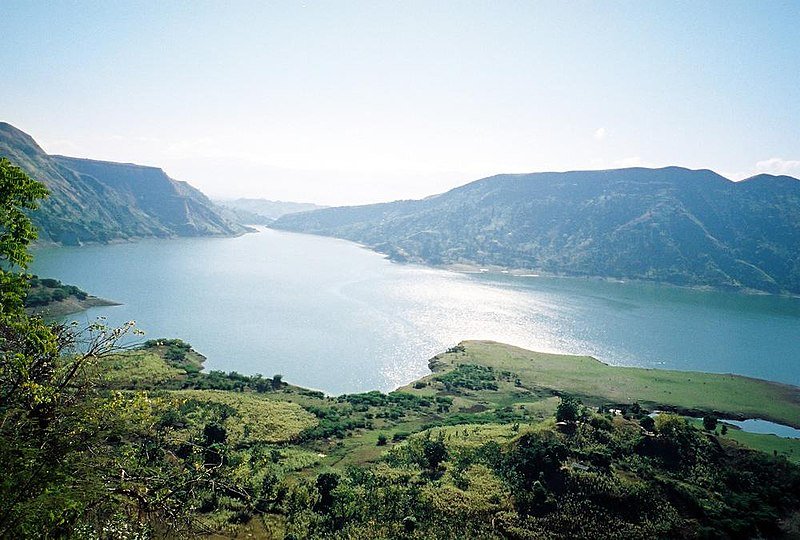
Haiti’s largest river is called the Artibonite. This majestic waterway, which crosses the country from one end to the other, is a key element in the geography, economy and daily life of Haitians. With its crucial role in agriculture, its historical importance and its impact on the local ecosystem, the Artibonite deserves special attention. This article explores the many facets of this iconic river.

The Artibonite: A River of Exceptional Magnitude

The Artibonite is Haiti’s longest river, with a length of approximately 320 kilometers. It rises in the mountains of the Dominican Republic, crosses the Haitian border and winds through the fertile valley that bears its name before emptying into the Gulf of Gonâve.

This river is a true artery of life for the region it irrigates. The Artibonite Valley is often referred to as the country’s “rice bowl,” due to the vast rice fields that depend on it. About 80% of Haiti’s rice production comes from this region, making the Artibonite a pillar of national food security.

A key role in agriculture and the economy

The Artibonite River is Haiti’s main irrigation system. Through irrigation projects such as the Péligre Dam, built in the 1950s, it provides water to thousands of hectares of arable land. In addition to rice, the region also produces corn, vegetables, and fruits, contributing to the local and national economy.

However, challenges abound. Soil erosion, caused by deforestation and poor land management, threatens the river’s ability to support agriculture. Reforestation and sustainable watershed management efforts are needed to preserve this vital ecosystem.

A historical and cultural heritage

The Artibonite is not only a natural resource; it is also deeply rooted in Haitian history and culture. The region around the river played a strategic role during the Haitian Revolution, hosting crucial battles that led to the country’s independence in 1804.

In addition, the river inspires many Haitian artists, writers, and musicians, who celebrate its beauty and importance in their works. It is often seen as a symbol of resilience and life for the Haitian people.

Some key figures about the Artibonite

- Total length: approximately 320 km, much of which flows through Haiti.
- Watershed area: approximately 9,500 km², covering a region rich in biodiversity.
- Rice production: The Artibonite Valley accounts for approximately 80% of Haiti’s rice production, feeding millions of people.
- Péligre Dam: Built on the river, it generates a significant portion of the country’s electricity while providing irrigation.

An ecosystem to preserve

The Artibonite is home to unique biodiversity, but it faces growing environmental challenges. Pollution, uncontrolled sand mining, and deforestation are affecting water quality and aquatic life. Conservation and environmental education initiatives are crucial to ensure the river continues to support life in Haiti.

Local and international organizations are working to raise awareness among communities about the importance of protecting the river. These efforts include planting trees, building dikes, and promoting sustainable agricultural practices.

The Artibonite, a national treasure

The Artibonite River is much more than just a body of water: it is an agricultural engine, a source of energy, and a historical symbol for Haiti. Its protection is essential not only for the communities that directly depend on it, but also for the future of the entire country.

Whether for its economic role, its rich history, or its natural beauty, the Artibonite is a river that Haïti can be proud of. If you have had the opportunity to visit the region or discover the river, do not hesitate to share your experiences in the comments!

Share
About the Author
Haïti Wonderland
Haïti Wonderland
Leave a comment

Recently Posted

Newsletter

Subscribe to our newsletter to stay informed of all our activities and news on Haiti.

The Port-au-Prince Book Fair announces the opening of author registration for its second edition

The Port-au-Prince Book Fair is a literary initiative of the cultural organization Port-au-Prince Book Fair (OCSLP), based on the desire to promote Haitian culture in general, with a particular focus on literature. The organizers of the event have just announced the registration of authors, who will number 20, and those of publishing houses, who will number 5 for the second edition, which will take place on Friday, December 13, 2024, in the premises of the French Institute in Haiti. The registration deadline is Thursday, October 10 of this year. Please note that the first to arrive who have met the required criteria will be eligible to take part in this second edition of the event, according to the organizers’ admission. This rigorous and restricted selection of only 20 authors aims to guarantee an enriching experience for authors and the public, thus promoting authentic exchanges around the works presented. Independent authors and publishing houses interested in registering their authors to participate in this second edition of the fair are invited to submit their application via this link: https://form.jotform.com/louirardjohn8/salon-du-livre-de-port-au-prince. For publishing and distribution houses planning to exhibit on the day of the event, you can register by clicking on this link: https://form.jotform.com/242596699603068. You are requested to contact them at the following address: salondulivre2023@gmail.com in case of difficulties. The Port-au-Prince Book Fair remains faithful to its philosophy, which is to offer a platform to young authors and to promote the richness of Haitian literary production, by supporting new authors who contribute to its growth. This event is a continuation of the first edition, aimed at allowing the emergence of an environment conducive to exchanges, where young authors can meet, share their experiences and engage in dialogue with readers and book professionals. According to the organizers of the event, your participation as a young author will be essential to enrich the fair and offer a diverse experience to visitors. The invitation to join this noble initiative is extended to young authors who have not yet published 5 books. You who are concerned, the ball is now in your court. Do not hesitate to go and make this day, December 13, 2024, an unforgettable day for all book lovers.

Haïti / Pot’iwa Pizza: A Culinary Odyssey

Since 2015, Pot’iwa Pizza has conquered the hearts and taste buds of the inhabitants of Port-au-Prince, the capital of Haiti. Founded by visionaries Jude Vaillant and Rock André, Pot’iwa Pizza has become a true gastronomic icon by offering a unique specialty: smoked herring pizza. This culinary creation has revived childhood nostalgia among many Haitians, marking the beginning of an exceptional culinary adventure. The very name of the company, "Pot’iwa", is a tribute to the Haitian regions where its founders were born. Jude Vaillant, originally from the "Iwa" region, and his accomplice Rock André, native of "Potino", have united their origins to create a company that harmoniously fuses tradition and innovation. Despite the socio-economic challenges that punctuate Haitian daily life, Pot’iwa Pizza is committed to constantly improving its services. This unwavering determination led to the opening of a second branch of the company, this time in the city of Cap-Haïtien, in the north of the country. The inhabitants of this region now have the privilege of tasting the famous herring pizza, previously reserved for the inhabitants of Port-au-Prince. Aware of the importance of protecting its culinary heritage, the company made a strategic decision by filing a patent in the United States to protect its specialty: herring pizza. Jude Vaillant, CEO of the company, shares his vision behind the choice of herring: "In Haiti, our childhood was rocked by a particular flavor, present in many traditional dishes. We decided to bring this flavor to an emblematic dish like pizza, to create a unique culinary experience." Pot’iwa Pizza embodies the passion, nostalgia and perseverance of Haitians for their traditional cuisine. It is a story of flavors and success that continues to seduce palates around the world. For those who want to taste this delicious herring pizza, go to Pot’iwa Pizza, located at 26 boulevard Cap-Haïtien, or contact them at +509-47-30-9090. And for fans residing in Miami, USA, Pot’iwa Pizza is also available at 12485 NE 6th CT, North Miami, FL 33161. To order, call 305-456-5152. Also explore the immersive experience of Pot’iwa Pizza through your smartphone or virtual reality headset, and dive into their mouth-watering menu by visiting the following link: https://haitiwonderland.com/haiti-virtual-reality-ht/ bar--restaurant/haiti--pot-iwa-pizza--virtual-tour/9.

Recently Posted

History

History

First black nation to free itself from slavery and gain independence from France in 1804 and influenced other liberation movements around the world, inspiring struggles for freedom and equality.

Natural beauty

Natural beauty

Haïti is blessed with spectacular natural landscapes, including white sand beaches, mountains and rich biodiversity.

Heritage

Heritage

Haïti has a rich historical heritage, including sites like the Citadelle Laferrière and the Sans-Souci Palace, listed as UNESCO World Heritage Sites.

Culture

Culture

Haïti has a rich and diverse culture, influenced by African, European and indigenous elements. Haitian music, dance, art and cuisine are celebrated around the world.

  • +
    • Post