contact@haitiwonderland.com+509 36184317

Discover

Shopping Cart

A successful eighth outing for the Wednesday of the Monferrier Dorval chair
  • News
  • November 09, 2024

A successful eighth outing for the Wednesday of the Monferrier Dorval chair

On Wednesday, October 24, 2024, in the premises of the Office of Citizen Protection, on the road to Bourdon, the 8th Wednesday outing of the Monferrier Dorval chair took place. As a reminder, the Wednesdays of the chair are one of the initiatives taken within the framework of the Monferrier Dorval chair of constitutional law, established on March 12 by the Council of the State University of Haïti (UEH). The rector, Mr. Fritz Deshommes, is the technical director. Professor Henri Marge Dorléans, former Minister of Justice, is the scientific director, and the dean of the Faculty of Law and Economics, Me Eugène Pierre Louis, holds the position of both technical and scientific vice-president. It should also be noted that the two main objectives of the chair are, on the one hand, to promote the memory of Professor Dorval, then President of the Bar Association, who was cowardly assassinated in front of his house, near that of the presidential couple at the time, on August 20, 2020. On the other hand, it is about promoting the work he had undertaken in the country, as a professor of constitutional law, around the need to make a constitutional change to facilitate effective governance and better institutional management of Haiti.

A successful eighth outing

This eighth edition was held around the themes of "Health, Environment and Territorial Planning", with three excellent guests, who mastered the field of their respective interventions as best as possible. They are Dr. Jean Patrick Alfred, Director of the MSPP Study and Programming Unit; Eng. Claude Germain, former Minister of the Environment of the Republic of Haiti, currently Vice-Rector of Lumière University; and finally Mrs. Christine Stéphenson, former Minister of Tourism of the Republic of Haiti, currently Executive Secretary of the National Committee for Territorial Planning. They respectively spoke on the themes of the day.

The doctor’s intervention focused mainly on the need to impose a regulation on what is commonly called traditional medicine. A minimum of science is needed in this sector, which will be able to provide more documentation on this medicinal practice. According to him. He even argued for an alliance between conventional medicine and the latter. He also stressed the need to better manage our waste, worrying about its extreme danger to our health (because it is a source of disease). He cited as examples corpses (which constitute the most dangerous waste for humans), hospital waste, and all other waste from our daily uses. Otherwise, the rest of his speech was devoted to the need to include, in a potential new constitution, and then enforce, access to health for all, to quality medicines and in sufficient quantities.

For his part, Engineer Claude Germain spoke on the theme of the environment. During his speech, he argued in favor of establishing a Haitian environmental code, rather than including articles in a new constitution concerning this sector. Because legislating without being able to enforce seems useless and ridiculous to him. Good environmental management is a serious matter. He recalled the systemic drama that Haïti is exposed to because of the changes due to climate disruption, caused by the harmful energy consumption of human beings on the planet. Haiti, alongside Burma and Honduras, remains one of the three countries most exposed to this danger, according to the final declaration made in Paris in 2015, during the COP 21 on climate. In short, Haïti will need an environmental code that can regulate the Haitian environment in its entirety. The engineer also had to denounce certain harmful practices, such as market gardening in our hills, burning our land before planting, which kill a lot of micro-organisms in our soils, making it increasingly difficult to fertilize our arable plots.

For her part, Ms. Christine spoke on the theme of land use planning, as a necessity for the development of Haiti. Because a country that knows itself is better able to move towards the well-being of its children. During her speech, she also conducted an analysis of Haiti’s territorial potential, which she described as rich and which deserves better consideration in the overall perspective of a land use plan for the development of Haiti. Because Haïti has assets that few countries in the region have, and whose better management should be able to change the country’s trajectory in order to bring it to the well-being of sustainable development.

See as well

A space for free exchange

The chair of constitutional law aims to be a space for exchange where primacy is given to scientific exchange. It is in this sense that this chair has established itself as a place where experts, in an exercise of scientific discussion, propose solutions (solutions concerning their professional fields) to be included in the perspective of a potential constitutional change. All this is accompanied by accessible debates, where the general Haitian public is invited to intervene to make their voice heard, in all its globality and diversity. The goal is to make the debate around the question of constitutional change relevant while being accessible to everyone, in particular, by emphasizing the promotion of the scientific and intelligent speaking of various Haitian experts.

Share
About the Author
Moise Francois
Moise Francois
Moise Francois

Journalist editor, poet and apprentice lawyer.

See other articles from Moise Francois
Leave a comment

Recently Posted

The Haïtian Compas: A Musical and Cultural Journey

Music has always been an essential part of Haïtian culture, and among the many genres that have emerged from this Caribbean island, Compas holds a special place. It is a musical style that carries with it the history, cultural diversity and vibrant energy of Haïti. b~Origins and Evolution~b The Compas Haïtien, also known as Kompa, has deep roots in Haïtian and African musical traditions. Its development was influenced by genres such as Dominican merengue, Cuban salsa, jazz and even rock. This fusion of styles has resulted in a distinctive sound that embodies the cultural richness and diversity of Haïti. The Haïtian Compass has evolved over the decades, moving from a more traditional style to more modern and sophisticated forms. Iconic artists such as Nemours Jean-Baptiste and Tabou Combo helped shape the genre and propel it onto the international music scene. b~The Characteristics of the Compass~b Le Compas Haïtien is characterized by its intoxicating rhythm and complex arrangements. Traditional instruments such as guitar, saxophone, drums, and of course, bass, play a crucial role in creating this catchy music. The lyrics, often sung in Haïtian Creole, address varied themes, from love and joy to social and political issues. Dance is an inseparable component of the Haïtian Compass. The irresistible rhythms encourage the dancers to sway to the music. Traditional dance moves, such as "Kompa Direk" and "Kompa Love," reflect the joyful expression and sensuality that characterize this musical genre. b~Global Influence~b Over the years, the Haïtian Compas has transcended the borders of Haïti to conquer the international stages. Haïtian artists helped popularize the genre around the world, bringing with them the warmth and vitality of Haïtian culture. Music festivals dedicated to Compas attract fans from around the world, providing an immersive experience of this catchy music. The Haïtian Compass is much more than a musical genre; it is a standard bearer of Haïtian culture, a mirror reflecting the history, diversity and resilience of the Haïtian people. Discovering the Haïtian Compas means diving into a world of captivating rhythms, passionate dances and captivating stories, while celebrating Haïti’s unique musical heritage. Whether you are a world music lover or simply curious about new experiences, the Compas Haïtien is an invitation to an unforgettable sound journey.

Newsletter

Subscribe to our newsletter to stay informed of all our activities and news on Haiti.

Recently Posted

History

History

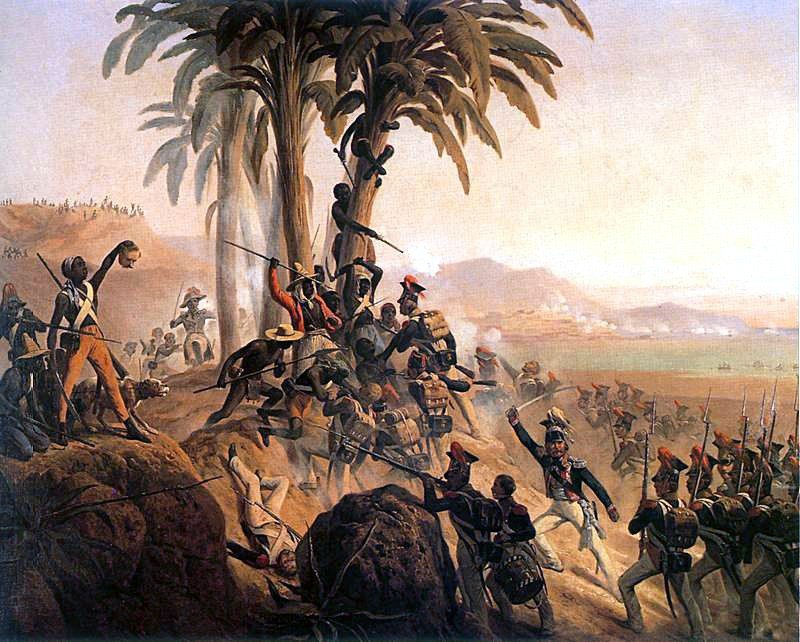
First black nation to free itself from slavery and gain independence from France in 1804 and influenced other liberation movements around the world, inspiring struggles for freedom and equality.

Natural beauty

Natural beauty

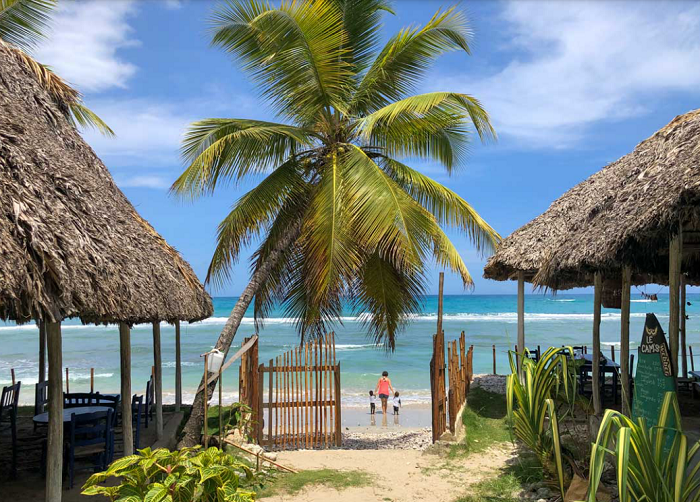
Haïti is blessed with spectacular natural landscapes, including white sand beaches, mountains and rich biodiversity.

Heritage

Heritage

Haïti has a rich historical heritage, including sites like the Citadelle Laferrière and the Sans-Souci Palace, listed as UNESCO World Heritage Sites.

Culture

Culture

Haïti has a rich and diverse culture, influenced by African, European and indigenous elements. Haitian music, dance, art and cuisine are celebrated around the world.

  • +
    • Post