contact@haitiwonderland.com+509 36184317

Discover

Shopping Cart

The Monferrier Dorval Chair of Constitutional Law, a gesture from the State University of Haiti, for the preservation of the memory of Professor Dorval
  • News
  • October 13, 2024
  •     1

The Monferrier Dorval Chair of Constitutional Law, a gesture from the State University of Haiti, for the preservation of the memory of Professor Dorval

The Monferrier Dorval Chair of Constitutional Law is a high-intellectual-intensity initiative, taken by the State University of Haïti (UEH), through the leadership of its rectorate, in agreement with the leaders of the Faculty of Law and Economics (FDSE).

The initiative’s primary goal is to honor and perpetuate the memory of the valiant and brilliant Professor Monferrier Dorval, assassinated in unclear circumstances, about three years ago. And in order to make a scientific contribution to the great debate that has been going on in Haitian society for about ten years about the need to change or not, the constitution of March 29, 1987, amended on May 11, 2011. Shouldn’t we try to apply it preferably? If it needs to be changed, should this change be radical, otherwise what should it have in terms of change within a new mother law for a better institutional organization of Haiti.

The chair is scientifically chaired by Professor Henri Marge. Dorléans, (current head of AFPEC), and is vice-chaired by the dean of the faculty of law and economics, Me Eugène Pierre Louis. The Chair is materialized by a set of conferences and debates (15 in total), which take place in the premises of the Office of the Protection of the Citizen OPC, under the name of Wednesday of the Monferrier Dorval Chair.

It is in this sense that for the fifth edition of the Wednesday of the chair (which took place this Wednesday, October 9, 2024 at the OPC, in the presence of the protector of the citizen, Me Renan Hédouville), attention was placed on education within the debate surrounding the possible development of a new constitution for Haiti. This 5th meeting took place under the theme of: "Education, Teaching, Research, Science and Technologies".

The conference was hosted by three greats of the Haitian intellectual community, including two eminent professors of the UEH, namely, Professor Odonel Pierre Louis, academic director of the École normale supérieure (ENS); the vice rector of the UEH, Professor Jacques Blaise. Their interventions were followed by that of the director of the national institute of vocational training (INFP) Mr. Dikel Delvariste.

Inclusive education, social justice

Professor Odonel Pierre-Louis focused his speech on the concept of universalist justice, which advocates the notions of equality of rights, opportunities, and situations for all citizens constituting a society. He especially emphasized the fact that education is a universal right, which leads to equality of opportunities and situations. He also emphasized the fact that the education project should be a priority in the constitution. And that the new constitution envisaged should provide the education sector with the necessary means to make this right effective in the life of every Haitian. He pointed out the passion for equality as one of the greatest virtues of democracy. Before concluding, by showing the need to promote education for citizenship, the irreversible love of our homeland, and the concern to defend it in any case, at the heart of the Haitian education system.


See as well

Research and Development

Vice Rector Jacques Blaise emphasized the need for the Haitian state to finance both the university and university research in Haiti. Because according to him, scientific research and the sustainable development of a country are closely linked and inseparable. While recalling the difficulties encountered by Haitian researchers, who struggle to fulfill their role well. Above all, he insisted on the fact that the new constitution under debate must devote research within the university, and guarantee funding by the Haitian state for research. Because according to him, research is very expensive, of course, but it is the main gateway to new scientific knowledge. Without forgetting the fact that the price of ignorance is even higher, because this is exactly what our dear country is paying in these dark hours.

Technical Trades, Development Factors

The intervention of Mr. Dikel Devariste, in his capacity as director of the National Institute of Vocational Training (INFP) was entirely dedicated to the issue of vocational training in Haiti. He began with a history of vocational training in Haiti, which he attributed to King Henri Christophe who, during his reign, took care to create an academy of sciences and arts in his kingdom. Then he emphasized the creation in 1973 of the pilot center for vocational training as one of the highlights of this particular sector of education in Haiti. The history was followed by a rather disconcerting inventory of this sector, which he heads. To date, the INFP has only 22 institutions dedicated to vocational training for the entire country. He made a plea in the same way as Vice Rector Jacques Blaise in favor of his sector. Affirming that the new constitution must universalize vocational training in Haiti, and require the Haitian state to invest in vocational training for young people, because the benefits would be enormous in this sense. And he concluded by arguing that technology is the driving force behind any major development.

In short, the three speakers of this edition of October 9, 2024, of the Wednesday of the Monferrier Dorval chair mainly emphasized the need to impose, in the next constitution, on the Haitian state the duty to better support the education sector in its public policies. Because it is a sector that is so vital for the overall development of Haitian society. All through a holistic approach, for a real boost to the sector, in order to help it reach the Haitian being at the base, to provide him with the knowledge necessary for his personal development, to help him contribute to the development of his country and to be useful to the rest of the world. For this, the Haitian State must assume its responsibilities in this matter, by paying the price to educate each of its children.

Share
About the Author
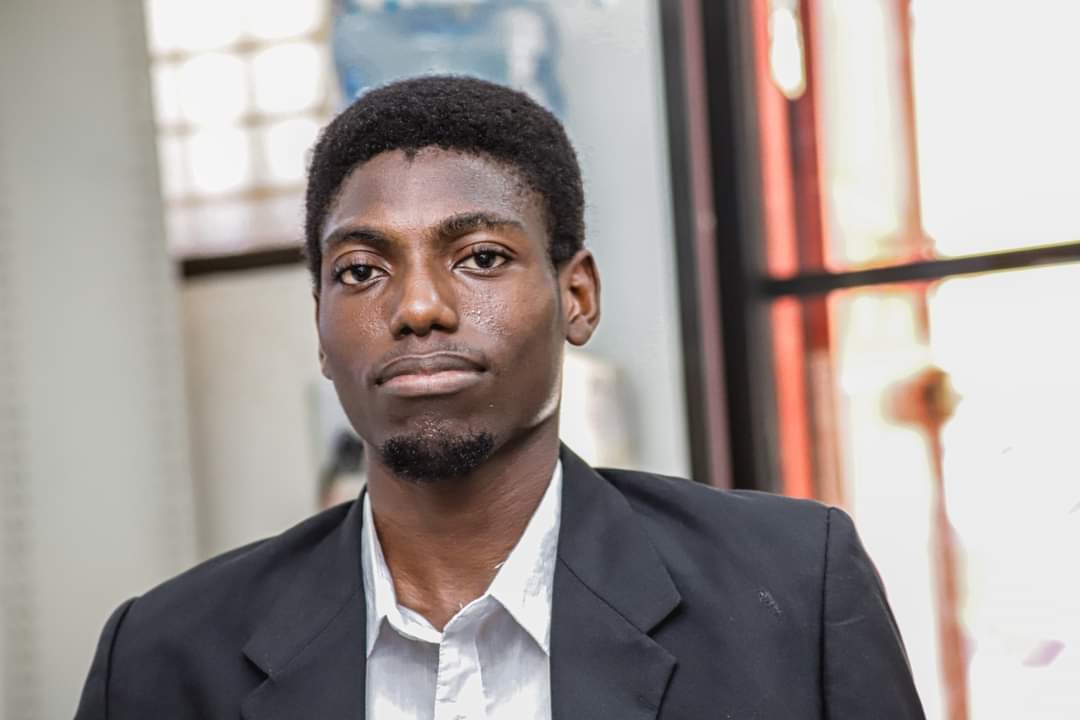
Moise Francois
Moise Francois
Moise Francois

Journalist editor, poet and apprentice lawyer.

See other articles from Moise Francois
Jonatas

Excellent 👍

October 14, 2024 - 12:11:58 PM
Leave a comment

Recently Posted

Haiti: Flora and Fauna

Haiti, located on the western part of the Caribbean island of Hispaniola, is often associated with its rich and complex history. However, beyond its cultural and historical aspects, Haïti is home to a remarkable diversity of fauna and flora that deserves to be explored and preserved. This article highlights the ecological wealth of Haiti, emphasizing its unique flora and fauna. Fauna: Haïti is home to a variety of animal species, some of which are endemic to the island. The country’s tropical rainforests are home to a great diversity of birds. The rugged mountains provide suitable habitat for rare species. The waters surrounding Haïti are also rich in biodiversity. Colorful corals, tropical fish and sea turtles find refuge in the coral reefs along the coast. Conservation efforts are crucial to protect these fragile marine ecosystems and preserve marine life. Flora: Haiti’s landscapes are adorned with a wide variety of plants and flowers. The tropical rainforests are home to majestic trees, the Hispaniola pine and the gum tree. These forests play an essential role in climate regulation and the preservation of biodiversity. The coastal plains are dotted with palm trees, including Haiti’s iconic royal palm. Botanical gardens, such as the Jardin Botanique des Cayes, are havens of greenery where you can admire a wide variety of tropical plants, some of which are endemic to the region. Haiti, with its unique flora and fauna, is an ecological gem that deserves to be preserved for future generations. Awareness, conservation and sustainable development are key elements to ensure the survival of this natural wealth. By investing in the protection of its environment, Haïti can not only preserve its ecological heritage, but also promote sustainable tourism and strengthen the resilience of its ecosystems in the face of current global challenges.

Newsletter

Subscribe to our newsletter to stay informed of all our activities and news on Haiti.

Haiti: A look back at the First Rara Weekend in Petit-Goave

Haitian culture is a true treasure, woven from the creativity of its artists, its rich heritage and the diversity of its cultural expressions. Among these cultural gems, the rara stands as a true national emblem, uniting Haitians through its captivating rhythms and centuries-old traditions. During the first Rara weekend, this very essence of Haitian culture shone brightly, revealing palpable social cohesion. Despite the absence of law enforcement, tranquility reigned in Petit-Goâve, testifying to the ability of citizens to come together in peace and conviviality. However, media attention was mainly focused on the first plain, leaving a certain imbalance in the coverage of the festivities. Ratyèfè, three-time reigning champion, once again captivated minds with his talent and artistic mastery, offering an unparalleled spectacle. But his rival, Lambi gran dlo, was not to be outdone, displaying a determination to compete for first place. The event was also marked by unfortunate incidents, reminding us that despite the beauty of tradition, tensions can arise. Clashes between fans of different groups tarnished the festive atmosphere, highlighting the need for careful management of celebrations to avoid such excesses. At the heart of this musical competition, where each group aspires to recognition and victory, a complex picture of rivalries and alliances emerges. Chenn tamarin, although appearing asleep in the first moments, shows signs of waking up, ready to shake up the established order. On Sunday evening, Lambi gran dlo honored the memory of one of its loyal supporters, while Grap Kenèp was the scene of violence between fans, recalling the fragility of social cohesion when passion runs wild. In this whirlwind of emotion and competition, it is crucial to keep in mind that it is the journalist who must look to the events, and not the other way around. This is how we draw up the first ranking for this first weekend: 1. Ratyèfè 2. Lambi grand dlo 3. Chenn tamarind Beyond the results, it is the preservation of unity and mutual respect that must remain at the heart of these celebrations, making the rara not only a musical festival, but above all a symbol of the wealth and resilience of the people Haitian.

Recently Posted

History

History

First black nation to free itself from slavery and gain independence from France in 1804 and influenced other liberation movements around the world, inspiring struggles for freedom and equality.

Natural beauty

Natural beauty

Haïti is blessed with spectacular natural landscapes, including white sand beaches, mountains and rich biodiversity.

Heritage

Heritage

Haïti has a rich historical heritage, including sites like the Citadelle Laferrière and the Sans-Souci Palace, listed as UNESCO World Heritage Sites.

Culture

Culture

Haïti has a rich and diverse culture, influenced by African, European and indigenous elements. Haitian music, dance, art and cuisine are celebrated around the world.

  • +
    • Post