contact@haitiwonderland.com+509 36184317

Discover

Shopping Cart

Haiti: The Ministry of Economy and Finance (MEF) Launches the 2025-2030 Recovery and Development Plan from the Far North
  • News
  • September 07, 2025

Haiti: The Ministry of Economy and Finance (MEF) Launches the 2025-2030 Recovery and Development Plan from the Far North

Haiti launches its 2025-2030 Recovery Plan from the Far North: economy, social services and institutions, heading for a more prosperous future.

Cap-Haïtien, September 4-6, 2025 The Hostellerie Roi Henry Christophe was the scene of a major event for the country’s future: the official launch of the 2025-2030 Recovery and Development Plan by the Ministry of Economy and Finance (MEF), under the leadership of Minister Alfred Fils METELLUS.

This initiative, carried out in collaboration with several sectoral ministries and technical and financial partners, has the ambitious objective of revitalizing the Haitian economy, strengthening basic social services, and consolidating public institutions.

CP : MakoLove
CP : MakoLove
CP : MakoLove

Building Haiti’s Future: An Inclusive and Participatory Plan

The MEF has chosen the Far North as the starting point for this recovery process. The North, North-West, and North-East departments were the focus of the initial consultations, due to their industrial, agricultural, tourism, and cultural potential, as well as their challenges in infrastructure, social services, and governance.

This regional tour is part of a series of inclusive consultations aimed at integrating territorial priorities and local realities into the national plan.

See as well

Three Days of Debates and Consultation

Day 1 September 4, 2025

Discussions began with local authorities, civil society, and the private sector. Together, they identified the main challenges and proposed medium-term solutions to revive the economy and improve public services.

Day 2 September 5, 2025

The day was dedicated to local authorities and young leaders. Youth organizations expressed their frustrations but also made constructive proposals that will play a key role in achieving the plan’s objectives.

Day 3 September 6, 2025

The tour concluded with a meeting with journalists and media stakeholders at the Ekologik Resort. This opportunity for sharing ensured that the population’s key messages were heard and that they would be reflected in future decisions.

Key Objectives of the Consultations

The MEF defined three main objectives for this round of consultations:

Inform and raise awareness about the three pillars of the plan and the rationale guiding future interventions.

Collect and prioritize the needs expressed by elected officials, the private sector, civil society, and youth.

Strengthen consultation between the State, local authorities, socioeconomic stakeholders, and technical and financial partners to better coordinate efforts.

Toward Concrete and Measurable Results

These consultations aim to generate:

Recommendations adapted to the unique context of the Far North.

A clear prioritization of priority projects to ensure efficient resource allocation.

Strengthened engagement of local stakeholders to ensure the plan reflects their aspirations.

Sustainable dialogue between the state and local authorities to improve governance and coordination of future initiatives.

A Strong Signal for the Future

This 2025-2030 Recovery and Development Plan constitutes a prioritized investment framework and a strategic budgetary orientation. It does not start from scratch: it incorporates lessons from previous experiences to ensure a realistic, inclusive, and action-oriented approach.

With this launch in the Far North, the MEF is sending a strong signal: Haïti is ready to turn the page on economic stagnation and build a more prosperous, equitable, and resilient future.

Carrefour: Kay Jèn Yo s’ouvre aux enfants

Carrefour: Kay Jèn Yo s’ouvre aux enfants

Dans le cadre du programme de promotion des droits et de l’épanouissement de l’enfant "Timoun se moun" piloté par l’organisation Action Communautaire de Transformation et d’Intégration Formelle (ACTIF), Kay Jèn Yo organise, du 18 au 24 août 2025 (9h am - 1h pm), "Espas Lajwa", un camp d’été qui cible trente (30) enfants de 7 à 15 ans. Une grande panoplie d’activités éducatives, créatives et ludiques sont programmées pour le plus grand bien des enfants. Ils auront droit à des ateliers de : peinture, crochet, macramé, langue des signes, théãtre, lecture, échec, etc. Dans un contexte aussi traumatogène où la violence est monnaie courante, de telles initiaves sont d’une importance capitale. " Les enfants ne sont pas imperméables au stress et autres pathologies que peut provoquer la situation morbide qui sévit dans le pays actuellement", souligne Blondy Wolf Leblanc (Gabynho) DG a.i de ACTIF. "Espace Lajwa se veut donc, un refuge, un lieu où les enfants peuvent s’exprimer en toute sécurité, un espace sécurisant où ils peuvent exprimer leurs émotions à travers plusieurs médiums", précise-t-il. Plus loin, l’animateur socioculturel encourage d’autres structures à travers le pays à prendre des initiatives de ce genre au bénéfice de la santé mentale des enfants. Espas Lajwa est quasiment gratuit. Un frais de participation de 150 gourdes est requis pour la semaine. Quid Kay Jèn Yo Issu du projet "Pran Swen Tèt ou", Kay Jèn Yo est un projet de l’organisation ACTIF supporté par La Perfection École de Haute Couture visant à combattre la violence par l’engagement communautaire à travers des programmes de formation professionnelle et artistique. Situé au numéro 18, imp. Thoby, rue Desdunes, Mahotière 79, Kay Jèn Yo est ouvert du lundi au dimanche (9h am - 6h pm). Sebastien Jean Michel

Share
About the Author
Appolon Guy Alain
Appolon Guy Alain
Appolon Guy Alain

Full Stack Developer, Créatif, expérimenté, passionné des nouvelles technologies et de l’art.

See other articles from Appolon Guy Alain
Leave a comment

Recently Posted

Newsletter

Subscribe to our newsletter to stay informed of all our activities and news on Haiti.

The Haitian Carnival: A Festival of Colors, Music and Traditions

The Haitian carnival, an emblematic and essential celebration of the country’s festive calendar, is much more than a simple party. It embodies the very essence of Haitian culture, joyfully blending ancestral traditions, intoxicating music and a deep sense of community. Each year, this vibrant celebration transforms the streets into a vibrant and colorful spectacle, attracting thousands of participants and spectators eager to take part in this one-of-a-kind celebration. Haitian carnival has deep roots in the country’s history, dating back to colonial times. It has evolved over the centuries, incorporating elements of African, French and Creole culture to create a distinct and captivating celebration. The carnival period in Haïti traditionally begins in January and culminates with extravagant festivities that take place over several days. One of the most striking features of the Haitian carnival is the profusion of colors. Traditional costumes, called "masks", are elaborate and beautifully designed. They feature vivid patterns and vibrant decorations, creating a vivid picture of Haitian cultural identity. Participants, dressed in these elaborate costumes, parade through the streets to the sound of lively music, creating an electric atmosphere. Music is at the heart of the Haitian carnival. The captivating rhythms of compass, rasin, rara and other local musical genres resonate throughout the city, inviting people to dance to the rhythm of the party. Orchestras parade through the streets, accompanying the dancers and creating a unique symbiosis between the music and the graceful movements of the participants. The Haitian carnival parade is not just about the music and costumes; it also celebrates the richness of street arts. Talented artists create giant sculptures, art installations and theatrical performances that tell deep stories of Haitian history and culture. These artistic expressions contribute to the transmission of values ​​and stories that shape the identity of the Haitian people.

Recently Posted

History

History

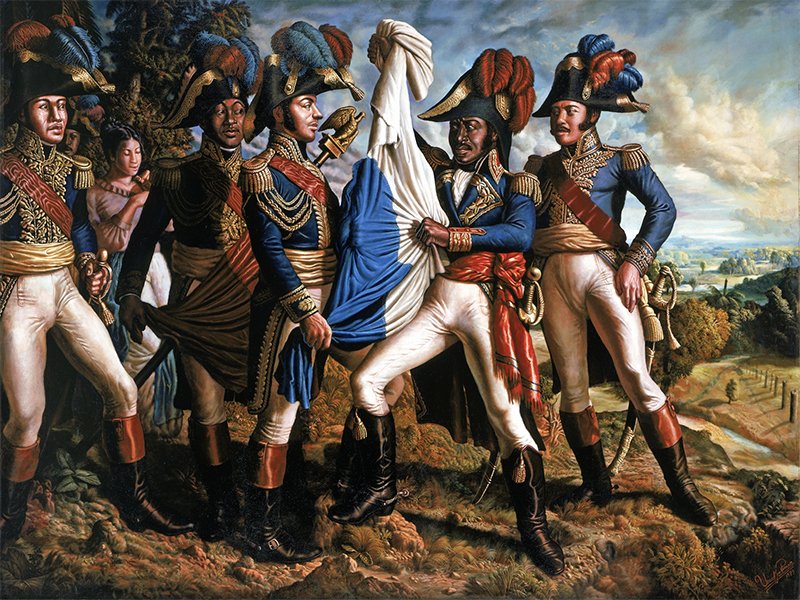
First black nation to free itself from slavery and gain independence from France in 1804 and influenced other liberation movements around the world, inspiring struggles for freedom and equality.

Natural beauty

Natural beauty

Haïti is blessed with spectacular natural landscapes, including white sand beaches, mountains and rich biodiversity.

Heritage

Heritage

Haïti has a rich historical heritage, including sites like the Citadelle Laferrière and the Sans-Souci Palace, listed as UNESCO World Heritage Sites.

Culture

Culture

Haïti has a rich and diverse culture, influenced by African, European and indigenous elements. Haitian music, dance, art and cuisine are celebrated around the world.

  • +
    • Post