What is the Origin of the Haitian Creole Language? A History of Mixture and ResilienceWhat is the Origin of the Haitian Creole Language? A History of Mixture and Resilience
What is the Origin of the Haitian Creole Language? A History of Mixture and Resilience
The Haitian Creole language, or Kreyòl Ayisyen, is one of the most remarkable features of Haitian culture. Speaking Creole is not only about communicating, but also about asserting an identity, a heritage, and a history of resilience in the face of adversity. But where does this unique language come from? What is its origin and how did it become a symbol of Haitian culture? Let’s dive into the fascinating history of the Haitian Creole language.
The origin of Haitian Creole dates back mainly to the period of slavery, when Africans from different regions of the continent were deported to Haïti to work on sugarcane plantations. These slaves came from various ethnic groups and spoke different languages, such as Fon, Yoruba, Lingala, and other Bantu languages. The lack of a common language led them to create a pidgin, a simplified language, to be able to understand each other and communicate with the European settlers, mainly the French.
This pidgin evolved over time and became a true creole, a mixture of French and African languages, with the influence of other elements from indigenous languages and colonizers.
The Haitian Creole language was mainly formed on the basis of Colonial French, the language of the French settlers who occupied the island from the 17th century. However, it is important to note that this creole is not simply a distorted French, but a real linguistic system, with its own grammar, phonetic rules, and distinct syntactic structures.
Creole retained a large number of French wordsmainly terms related to culture, religion, administration, and daily life. However, the French of the colonists was not reproduced literally. Creole transformed many French words, adapted them phonetically, and combined them with words of African and Amerindian origin, giving Creole a unique sound and unprecedented richness.
Although French was a major influence, African languages also played a fundamental role in the evolution of Haitian Creole. Slaves incorporated words and grammatical structures from their original languages, including languages of ethnic groups such as the Mandingo, Yoruba, Fon, Ewe, and Bantu.
Some linguistic aspects of Haitian Creolesuch as verb constructions, prepositions, and words that designate elements of daily lifebear the mark of these African influences. In addition, expressions of spirituality and terms related to religious beliefs and practices often come from these African languages, particularly in the context of Vodou, which is practiced by a significant portion of the Haitian population.
The Influence of Indigenous and European Languages
Although the main contribution comes from African languages and French, Haitian Creole has also been influenced by indigenous languages such as Taino (the language of the first inhabitants of the island, before the arrival of Europeans). Although this influence is less pronounced, some words of Taino origin can still be found in the Creole language today, especially in terms designating natural elements, plants, and everyday objects.
In addition, other European languages, such as Spanish, have had an indirect influence on Creole, particularly in areas near the Dominican Republic, which shares the island of Hispaniola with Haiti.
Official Recognition and Standardization of Creole
Although Haitian Creole has evolved over the centuries, it was not officially recognized as a national language until 1987, after the fall of the dictatorship of Jean-Claude Duvalier. This recognition marked an important turning point, as it allowed Creole to be valued as a fundamental element of Haitian identity.
Today, Haitian Creole is one of the two official languages of Haiti, along with French. The Creole language is spoken by the vast majority of the population, while French is used in administration, education, and business. The language is increasingly used in the media, music, literature, and even public affairs.
Haitian Creole is more than just a means of communication. It is a living expression of Haiti’s history and culture. It conveys values, traditions, and stories that shape the country’s national identity. When listening to Creole, one hears the resilience of Haitians, their struggle for freedom and independence, and their joy of living despite the challenges they face.
Haitian poets, writers, and musicians have highlighted the beauty and richness of the language in their works, and Creole remains a central pillar of artistic creation in Haiti.
The Haitian Creole Language, An Indestructible Heritage
The history of Haitian Creole is a testament to the resilience and creativity of the Haitian people. It was born from a blend of diverse cultures and influences, and today, it remains a powerful symbol of Haitian identity. The Creole language, with its deep roots in the past, continues to thrive and transform, carrying with it the stories, struggles and hopes of an entire people.
Share
About the Author
Appolon Guy Alain
Appolon Guy Alain
Full Stack Developer, Créatif, expérimenté, passionné des nouvelles technologies et de l’art.
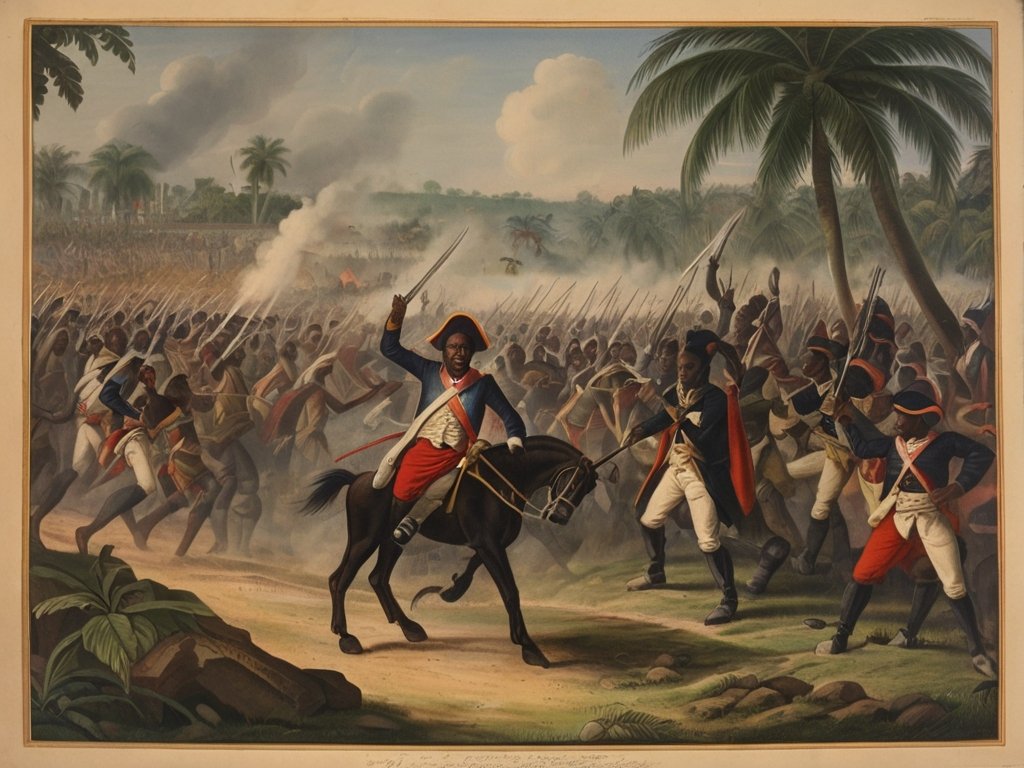
First black nation to free itself from slavery and gain independence from France in 1804 and influenced other liberation movements around the world, inspiring struggles for freedom and equality.
Natural beauty
Haïti is blessed with spectacular natural landscapes, including white sand beaches, mountains and rich biodiversity.
Heritage
Haïti has a rich historical heritage, including sites like the Citadelle Laferrière and the Sans-Souci Palace, listed as UNESCO World Heritage Sites.
Culture
Haïti has a rich and diverse culture, influenced by African, European and indigenous elements. Haitian music, dance, art and cuisine are celebrated around the world.