contact@haitiwonderland.com+509 36184317

Discover

Shopping Cart

Pot’iwa Pizza opens its doors in Brooklyn (New York)

Pot’iwa Pizza opens its doors in Brooklyn (New York)

Pot’iwa Pizza, a Haitian company renowned for its pizzas with authentic Haitian flavors, continues to expand its international footprint with the imminent opening of its fifth restaurant, located in Brooklyn, New York. This new opening marks an important step in the growth of Pot’iwa Pizza and demonstrates its undeniable success since its creation.

Pot’iwa Pizza
Pot’iwa Pizza
Pot’iwa Pizza

A 100% Haitian company

Founded in January 2015 in Pétion-Ville, Pot’iwa Pizza has seduced pizza lovers with its unique specialties such as aransò pizza, topped with herring, and griyo pizza, inspired by the traditional Haitian fried pork dish. In addition to these classics, Pot’iwa offers around twenty other varieties of pizzas with flavors as diverse as they are original, delighting the most curious gourmets.

On January 13, 2023, Pot’iwa Pizza made history by becoming the first Haitian restaurant company to open a franchise in the United States. This first foray onto American soil took place in North Miami, Florida, where the Haitian community and lovers of exotic cuisine welcomed the brand with enthusiasm.

With the opening of the Brooklyn restaurant, scheduled for Saturday June 1, 2024 at 5 p.m., Pot’iwa Pizza is strengthening its presence in the American market. This new restaurant joins the four existing establishments: in Pétion-Ville, in Les Irois, in Cap-Haïtien, and in North Miami. This rapid and strategic expansion demonstrates the growing popularity of the brand and the quality of its products.

The Pot’iwa Pizza team is extremely excited to share the delights of Haitian cuisine with residents of Brooklyn, as well as those in neighboring states like New Jersey, Connecticut and Pennsylvania. By bringing a touch of Caribbean flavor to the New York culinary scene, Pot’iwa Pizza hopes to not only delight the taste buds, but also promote the cultural and gastronomic richness of Haiti.

The grand opening in Brooklyn promises to be a memorable event, celebrating not only the opening of a new restaurant, but also the extraordinary journey of a small Haitian business becoming an international culinary ambassador. Pizza lovers and the curious are invited to join the party and discover the best that Pot’iwa Pizza has to offer.

Pot’iwa Pizza
Pot’iwa Pizza
Pot’iwa Pizza

A symbol of Haitian pride

For Jude Vaillant, CEO of Pot’iwa Pizza, this new opening is much more than just an addition to the restaurant chain.

The design of the restaurant, the standard, the quality of the pizzas that will be served, the music that will be played... everything has been designed with the aim of making Haitians proud, commensurate with the glorious past of the first republic black people in the world

, declared Jude Vaillant.

The choice of New York also has personal significance for Vaillant. In 2014, he left New York to return to Haiti, where he founded Pot’iwa Pizza with his associate and partner Rock André. Ten years later, the opening of this restaurant in Brooklyn represents a true "comeback" for him, symbolizing his dream come true to bring back to New York something precious, designed and born in Haiti.

Pot’iwa Pizza
Pot’iwa Pizza
Pot’iwa Pizza

Find a Pot’iwa Pizza restaurant

1. Port-au-Prince: 114, Rue Panamericane, Pétion-Ville
2. Cap-Haitien: 57, Rue 26, Boulevard Carrénage, Cap-Haitien
3. Les Irois: Downtown Les Irois
4. North Miami: 12485 NE, 6th CT, North Miami, FL 33161
5. Brooklyn: 1456 Flatbush Ave, Brooklyn, NY 11210

Explore the immersive experience of Pot’iwa Pizza in Cap-Haïtien through your smartphone or virtual reality headset by visiting the following link: https://haitiwonderland.com/haiti-virtual-reality-ht/bar--restaurant /haiti--pot-iwa-pizza--virtual-visit/9 .

The story of Pot’iwa Pizza, born from the combination of the birthplaces of founders Rock André (Potino) and Jude Vaillant (Irois), is a true source of inspiration and pride for the Haitian community. The opening of the Brooklyn restaurant marks a new stage in this wonderful culinary and cultural adventure.

Share
About the Author
Appolon Guy Alain
Appolon Guy Alain
Appolon Guy Alain

Full Stack Developer, Créatif, expérimenté, passionné des nouvelles technologies et de l’art.

See other articles from Appolon Guy Alain
Kimley NEGULA

Bon Travail à toute l’équipe

June 01, 2024 - 12:26:42 AM
Dan Price

Congratulations on your Success and ontinued growth in the future. Mrain paka tan poum descend Brooklyn poum vin mangé avec nou. Soon ak plusieurs zanmi.
Prix mangé a raisonnable main ti jan expansive. But it’s ok.
Prix soft drink, WATER, soda are beyond ridiculous. Sa sé abu.
Anyway a bientôt and again continuous success

July 13, 2024 - 04:10:03 PM
Leave a comment

Recently Posted

Newsletter

Subscribe to our newsletter to stay informed of all our activities and news on Haiti.

Haïti, a rich and impoverished country

Located in the western part of the island of Hispaniola, Haïti is a land imbued with natural, cultural and historical wealth. Unfortunately, behind the beauty of its landscapes, the richness of its culture and the delicacy of its cuisine lies a complex reality marked by the debt of its independence and the persistent interference of third countries, casting a shadow over its stability. b~The Natural Beauty of Haïti~b Haïti, nicknamed the "Pearl of the Antilles", dazzles with the diversity of its landscapes. From majestic mountains and lush valleys to meandering rivers and sandy beaches, the country offers natural beauty worth celebrating. The famous Citadelle Laferrière mountains and the refreshing waterfalls of Bassin-Bleu are just a few examples of the splendor that characterizes this nation. b~A Rich and Diverse Culture~b Haïti stands out for its vibrant and diverse culture. A heritage of African, French and indigenous influence, Haïtian music, dance and art reflect a unique fusion. Colorful festivals, like Carnival, are celebrations of this cultural richness, attracting visitors from all over the world. b~Delicious Cuisine~b Haïtian cuisine, tasty and spicy, is another aspect worth celebrating. Dishes like griot, sticky rice, and the legendary joumou soup, traditionally prepared to commemorate independence, are all culinary delights that demonstrate the country’s gastronomic ingenuity. b~Heritage Treasures and Paradise Beaches~b Haïti’s heritage treasures, such as the remains of the Sans-Souci Palace and the Citadelle Laferrière, listed as UNESCO World Heritage Sites, are testimonies to the architectural grandeur of Haïti’s past. At the same time, beaches like Labadee and Jacmel offer havens of peace with crystal clear waters, attracting travelers in search of a tropical paradise. b~A Fascinating Story~b The history of Haïti is both fascinating and tragic. It was the first country in the Americas to gain its independence, in 1804, after a courageous slave revolt. However, this independence came with a heavy financial price. France demanded exorbitant compensation, thus laying the foundations for Haïti’s foreign debt. b~The Debt of Independence and Foreign Interference~b Despite these treasures, Haïti struggles with the reality of its independence debt. After gaining its freedom, the country was forced to pay France a considerable sum in compensation for losses associated with the abolition of slavery. This debt has been a major economic burden for Haïti, hindering its development. Additionally, foreign interference continues to create significant challenges. External political and economic interventions have often contributed to the country’s instability, hindering its ability to build a sustainable future for its citizens. b~In conclusion~b Haïti remains a country of multiple riches, but its challenges persist. Despite its natural beauty, rich culture and fascinating history, the nation needs enlightened international support and lasting solutions to overcome the obstacles that stand in its way. Haïti’s wealth lies not only in its enchanting landscapes, but also in the potential of its people to be resilient and prosper despite persistent challenges.

Haïti et son Rôle Pionnier dans l’Abolition de l’Esclavage Mondial

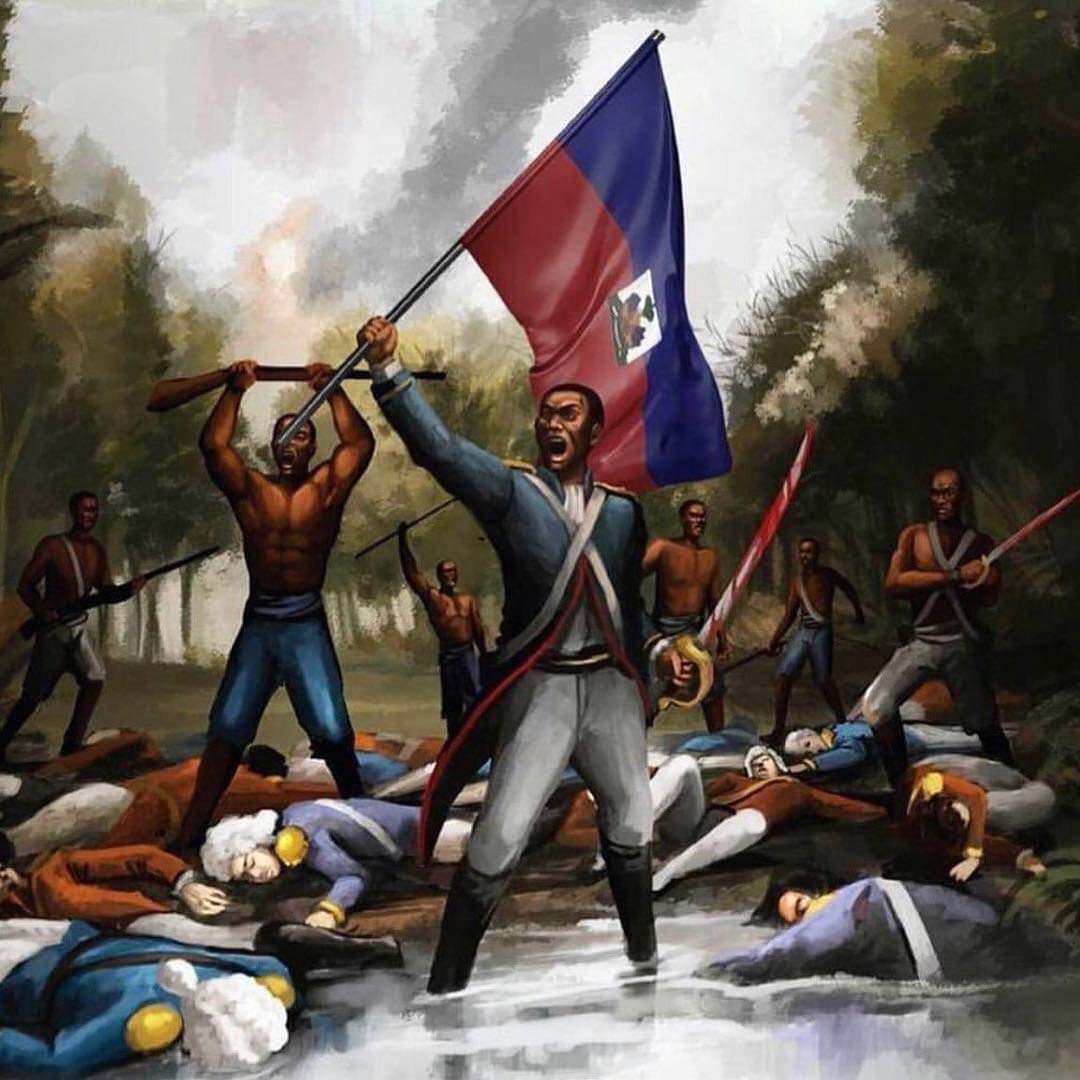
For centuries, the institution of slavery has darkened human history, leaving behind a legacy of pain, oppression and the struggle for freedom. However, in this dark tale, one nation stands out for its courage and determination to break the chains of oppression: Haiti. Located in the Caribbean, Haïti played a pioneering role in the abolition of slavery, laying the foundation for the fight for freedom and equality around the world. The history of slavery in Haïti dates back to the arrival of Europeans on the island, which was then called Santo Domingo, in the 15th century. French colonists quickly established an economy based on sugar and coffee production, cruelly exploiting millions of African slaves deported to work on plantations. However, this brutal system engendered fierce resistance from slaves, whose fight for freedom ultimately led to one of the most significant revolutions in history. In 1791, under the leadership of iconic figures such as Toussaint Louverture, Jean-Jacques Dessalines and Henri Christophe, Haitian slaves rose up against their oppressors in an unprecedented rebellion. This revolt resulted in a war of independence that lasted more than a decade, but ultimately resulted in the proclamation of Haiti’s independence in 1804, making that country the first post-colonial nation ruled by people from slavery. The impact of the Haitian Revolution on the abolition of slavery worldwide cannot be overstated. By breaking the chains of oppression and proclaiming their independence, Haitians have sent a powerful message to all oppressed peoples around the world: freedom is possible, and it is worth the struggle. The example of Haïti inspired other movements for the abolition of slavery in the Americas and beyond, thus helping to shake the very foundations of the institution of slavery. Haiti’s participation in the fight against slavery was not limited to its territory; it also extended to external actions where Haitian men were sent or actively participated in movements for the abolition of slavery in other regions of the world. For example, Haitian President Alexandre Pétion supported Simón Bolívar, the leader of the South American revolution, by providing him with weapons, money and even men, which contributed to the liberation of several countries in America Latin of colonial domination. Haïti also provided support for independence movements in Central America. Haitian fighters, led by General Jean-Pierre Boyer, helped Venezuelan patriots fight against Spanish rule, contributing to the liberation of that region. The Haitian government financially and diplomatically supported movements for the abolition of slavery in countries such as Venezuela, Colombia and Mexico, contributing to the gradual eradication of this institution throughout the region. Although Haïti did not directly participate in the American Civil War, many Haitians and descendants of Haitians played crucial roles in the abolitionist movement in the United States. Figures who were of Haitian origin or of Haitian ancestry, were important voices in the fight against slavery and for equal rights in the United States. The legacy of the Haitian Revolution remains a symbol of resistance and courage for future generations. Today, as the world continues to struggle against injustice and oppression in various forms, Haiti’s history reminds us that the fight for freedom is a universal fight, one that transcends borders and times. Haiti’s participation in the abolition of slavery throughout the world remains a crucial chapter in the history of humanity. Through their courage and determination, Haitians have paved the way for a future where freedom and equality are inalienable rights for all.

Conference / Festival Quatre Chemins / 21st edition

The impact of collective and individual trauma on the personal development of young people in Port-au-Prince While writers, actors, dancers, poets, among others, have gratified us with their performances, the master’s degree student in psychology at the Faculty of Human Sciences (FASCH), Lourdya Blaise, spoke with the audience about trauma. Structured around the theme "Youth and Trauma, analysis of the impact of collective and individual trauma on the personal development of young people living in Port-au-Prince between 2010-2024", this conference gave rise to enriching discussions. During this meeting, moderated by Michaël Formilus, Ms. Blaise showed how the events that have taken place in the country have caused cases of trauma among Haitians. According to the student, citing the American Psychological Association, we speak of trauma as a consequence of trauma. The latter is explained by the fact that we feel threatened, whether it is the person in question or their loved ones. However, she specifies that a collective trauma remains depending on the impact that the event has on the individual. To illustrate her remarks, she mentioned the earthquake of January 12, 2010, considered a collective trauma, insofar as it still occupies our minds. This tragedy reminds us of the disappearance of our loved ones and enormous losses. This is the case of a trauma that becomes a collective trauma. For the student, it should be emphasized that when an event occurs, some people are traumatized and others are not. According to him, the violence of armed gangs is not perceived in the same way, says Ms. Blaise. There are people who have fled their homes but are not traumatized. In fact, some people see traumatic situations as a passing event, she says. The speaker also spoke about collective trauma, which, according to him, preoccupies the mind, even if we no longer experience it. It manifests itself in several forms: lack of sleep, fear psychosis, intrusive thoughts, intense heartbeat, etc. Generally, symptoms related to trauma are hard to die. When it persists, it becomes acute stress. To deal with it, we must talk to other people. If the situation persists, acute stress turns into a phase of post-traumatic stress; in this case, we must confide in a trusted person or go see a mental health specialist, she advises. In her presentation, Lourdya Bazile also drew attention to the psychological state of children in these times. According to the presenter, children are also facing this crisis situation, even if they do not talk about it to their parents. As much as adults, children also plan their future. Faced with flouted school years, they become pensive and worried, she stressed. They withdraw. The child who used to be brilliant can become violent and perform less well at school. Parents are called upon to listen to them and understand them. A good moment of exchange, rich in practical advice. The audience participated fully. In turn, the presenter invites them to breathe better and meditate. "We live in a country where worries mix, we must take time for ourselves, do sports, eat well, make sure that the sleeping space is clean and take time for ourselves. There is more than one way to find calm," recalls the psychologist. Gertrude Jean-Louis

Recently Posted

History

History

First black nation to free itself from slavery and gain independence from France in 1804 and influenced other liberation movements around the world, inspiring struggles for freedom and equality.

Natural beauty

Natural beauty

Haïti is blessed with spectacular natural landscapes, including white sand beaches, mountains and rich biodiversity.

Heritage

Heritage

Haïti has a rich historical heritage, including sites like the Citadelle Laferrière and the Sans-Souci Palace, listed as UNESCO World Heritage Sites.

Culture

Culture

Haïti has a rich and diverse culture, influenced by African, European and indigenous elements. Haitian music, dance, art and cuisine are celebrated around the world.

  • +
    • Post