contact@haitiwonderland.com+509 36184317

Discover

Shopping Cart

Pot’iwa Pizza opens its doors in Brooklyn (New York)

Pot’iwa Pizza opens its doors in Brooklyn (New York)

Pot’iwa Pizza, a Haitian company renowned for its pizzas with authentic Haitian flavors, continues to expand its international footprint with the imminent opening of its fifth restaurant, located in Brooklyn, New York. This new opening marks an important step in the growth of Pot’iwa Pizza and demonstrates its undeniable success since its creation.

Pot’iwa Pizza
Pot’iwa Pizza
Pot’iwa Pizza

A 100% Haitian company

Founded in January 2015 in Pétion-Ville, Pot’iwa Pizza has seduced pizza lovers with its unique specialties such as aransò pizza, topped with herring, and griyo pizza, inspired by the traditional Haitian fried pork dish. In addition to these classics, Pot’iwa offers around twenty other varieties of pizzas with flavors as diverse as they are original, delighting the most curious gourmets.

On January 13, 2023, Pot’iwa Pizza made history by becoming the first Haitian restaurant company to open a franchise in the United States. This first foray onto American soil took place in North Miami, Florida, where the Haitian community and lovers of exotic cuisine welcomed the brand with enthusiasm.

With the opening of the Brooklyn restaurant, scheduled for Saturday June 1, 2024 at 5 p.m., Pot’iwa Pizza is strengthening its presence in the American market. This new restaurant joins the four existing establishments: in Pétion-Ville, in Les Irois, in Cap-Haïtien, and in North Miami. This rapid and strategic expansion demonstrates the growing popularity of the brand and the quality of its products.

The Pot’iwa Pizza team is extremely excited to share the delights of Haitian cuisine with residents of Brooklyn, as well as those in neighboring states like New Jersey, Connecticut and Pennsylvania. By bringing a touch of Caribbean flavor to the New York culinary scene, Pot’iwa Pizza hopes to not only delight the taste buds, but also promote the cultural and gastronomic richness of Haiti.

The grand opening in Brooklyn promises to be a memorable event, celebrating not only the opening of a new restaurant, but also the extraordinary journey of a small Haitian business becoming an international culinary ambassador. Pizza lovers and the curious are invited to join the party and discover the best that Pot’iwa Pizza has to offer.

Pot’iwa Pizza
Pot’iwa Pizza
Pot’iwa Pizza

A symbol of Haitian pride

For Jude Vaillant, CEO of Pot’iwa Pizza, this new opening is much more than just an addition to the restaurant chain.

The design of the restaurant, the standard, the quality of the pizzas that will be served, the music that will be played... everything has been designed with the aim of making Haitians proud, commensurate with the glorious past of the first republic black people in the world

, declared Jude Vaillant.

The choice of New York also has personal significance for Vaillant. In 2014, he left New York to return to Haiti, where he founded Pot’iwa Pizza with his associate and partner Rock André. Ten years later, the opening of this restaurant in Brooklyn represents a true "comeback" for him, symbolizing his dream come true to bring back to New York something precious, designed and born in Haiti.

Pot’iwa Pizza
Pot’iwa Pizza
Pot’iwa Pizza

Find a Pot’iwa Pizza restaurant

1. Port-au-Prince: 114, Rue Panamericane, Pétion-Ville
2. Cap-Haitien: 57, Rue 26, Boulevard Carrénage, Cap-Haitien
3. Les Irois: Downtown Les Irois
4. North Miami: 12485 NE, 6th CT, North Miami, FL 33161
5. Brooklyn: 1456 Flatbush Ave, Brooklyn, NY 11210

Explore the immersive experience of Pot’iwa Pizza in Cap-Haïtien through your smartphone or virtual reality headset by visiting the following link: https://haitiwonderland.com/haiti-virtual-reality-ht/bar--restaurant /haiti--pot-iwa-pizza--virtual-visit/9 .

The story of Pot’iwa Pizza, born from the combination of the birthplaces of founders Rock André (Potino) and Jude Vaillant (Irois), is a true source of inspiration and pride for the Haitian community. The opening of the Brooklyn restaurant marks a new stage in this wonderful culinary and cultural adventure.

Share
About the Author
Appolon Guy Alain
Appolon Guy Alain
Appolon Guy Alain

Full Stack Developer, Créatif, expérimenté, passionné des nouvelles technologies et de l’art.

See other articles from Appolon Guy Alain
Kimley NEGULA

Bon Travail à toute l’équipe

June 01, 2024 - 12:26:42 AM
Dan Price

Congratulations on your Success and ontinued growth in the future. Mrain paka tan poum descend Brooklyn poum vin mangé avec nou. Soon ak plusieurs zanmi.
Prix mangé a raisonnable main ti jan expansive. But it’s ok.
Prix soft drink, WATER, soda are beyond ridiculous. Sa sé abu.
Anyway a bientôt and again continuous success

July 13, 2024 - 04:10:03 PM
Leave a comment

Recently Posted

Pap Jazz 2025, a Celebration of Haiti’s Great Musical Richness

On Sunday, April 6, 2025, the Karibe Convention Center in Juvenat transformed into a true cultural temple to close the 18th edition of the Port-au-Prince International Jazz Festival (PAPJAZZ). This year, the festival took place under the evocative theme "PAP JAZZ it UP", and it was held in three sites primarily located in the Pétion-Ville commune. The festival took place entirely at these wonderful musical venues: a reference was made to the Latin Quarter, the Haiti-Brazil Cultural Center, and the Karibe Hotel. Due to the deteriorating situation in downtown Port-au-Prince in recent times, the French Institute site had to be abandoned by the festival organizers. Nevertheless, we can absolutely call this 18th edition of Pap Jazz a success. Indeed, this festival, now a major event of the Haitian year, was especially marked this year by the great resilience and determination of the organizers who were able to adapt to the country’s rhythm in order to satisfy their loyal festival-goers. Despite the difficult context, these festival-goers did not miss the opportunity to escape their harsh daily lives through music. It’s also important to note that this 18th edition of Pap Jazz took place after two postponements, at the very beginning of this year, with the last one occurring in March due to insecurity. In this regard, it is appropriate to call the monumental achievement of the Haïti Jazz Foundation and their partners an exceptional feat, as they were not discouraged and showed remarkable tenacity, while adapting to offer Port-au-Prince and its surroundings this moment of growth, beyond the city’s great sorrow, through music.

The Republic of the Stateless?

Haïti is making headlines all over the world. And it’s not good news. The exploits of Haitians rarely generate so much interest, but we always tend to point out the excesses, spill ink to stir up thorns in the side, broadcast on loop to relay the chaos that is raging. There is hardly any media to make amends for the resilience of this cornered people. No one to highlight the fierce resistance that serves as fuel for this people hanging in the gorges of death. And what if it was to a certain extent the only way to talk about this country to finally attract attention? It is July 26, 2024. The Olympic Games have just started in France. The 33rd Olympiad of modern times. Without realizing it, according to Forbes Magazine, Haïti ranks among the ten nations with the best costume, proudly pointing to third place. At the same time, miles away from France, on “The Island of Skillfully Orchestrated Chaos,” Haitians do not even realize how much this recognition borders on irony. A paradox whose unpopular evocation is likely to greatly displease. An aerial image shows the city of Paris in all its splendor, illuminated like the gates of paradise, reflecting all the grandeur of France, all the magnificence it has acquired over the centuries, without forgetting the contribution of the blood shed by the horrible machine of colonization. I close my eyes, I go back in time, I see again this boy left to his own devices, lost without even knowing it, doomed to failure without even understanding it. And then there are the others. Boys in the same situation, or worse. Banished from society, they do not know what life has in store for them. They form the elegant class of the marginalized, in their quality of scoundrels, good-for-nothings, and thugs who spoil the splendor of society. This contrast challenges me, and I wonder for a moment if those who live the chaos from the outside grasp the stakes and the reality of the situation. Moreover, it seems to me that even the majority of Haitians living in the territory have no notion of the fundamental and essential aspects of the situation.

Newsletter

Subscribe to our newsletter to stay informed of all our activities and news on Haiti.

Jean-Jacques Dessalines, leader of the Haitian Revolution

In the annals of the history of Haiti, an island located in the Caribbean at the entrance to the Gulf of Mexico and shared with the Dominican Republic, Jean-Jacques Dessalines emerges like a phoenix from the ashes of oppression. Born a slave on September 20, 1758 in the home of Henri Duclos, in Cormier (Grande-Rivière-du-Nord), in the French colony of Saint-Domingue, Dessalines was a Creole of African (Afro-Caribbean) origin. Freed during the 1794 abolition achieved through slave revolts, actually served as an officer in the French army during the French Revolution. At that time, the ideas of freedom and equality were at the heart of the concerns of the inhabitants of the colonies. Dessalines actively participated in the fighting against the Spanish and British forces, alongside the French, in Santo Domingo. Having risen to the rank of Lieutenant General, Jean-Jacques Dessalines turned against the French during the Leclerc expedition, sent to Saint-Domingue by Bonaparte to reestablish colonial authority and slavery during the Haitian Revolution. After the capture and deportation of Toussaint Louverture to France on June 7, 1802, Dessalines assumed a leading role in continuing the struggle for independence. He led numerous battles, including the battle of Crête-à-Pierrot in March 1802, where he galvanized his soldiers with his famous declaration: “Let those who want to remain slaves of the French leave the fort, let those, on the contrary, who want to die as free men, line up around me.” On January 1, 1804, Jean-Jacques Dessalines achieved the long-awaited goal of independence by proclaiming Haïti as a sovereign nation, becoming the second country in the Americas to gain independence from a colonial power. He became the first leader of the newly formed nation and was named Emperor under the name James I. However, his imperial reign was marked by authoritarian and brutal policies, including the massacre of many white settlers and the redistribution of land to peasants that was in the hands of the generals of the independence army. In addition, he organized the hunt for delinquents in the city while implementing rigorous agrarian policies, considering that they represented a threat to the stability of the nation, these controversial actions caused divisions within Haitian society. Dessalines was assassinated on October 17, 1806 following a plot organized by some of his generals in the Haitian army. His death marked the end of his brief but influential period in power. Despite the controversies surrounding his methods, he is recognized as the main architect of Haiti’s independence and his name was honored in 1903 by being attributed to the Haitian national anthem, La Dessalinienne, composed by Justin Lhérisson.Finally, the great visionary man Jean Jacques Dessalines remains an emblematic figure in the history of Haiti, recognized for his role in the fight for independence and the end of slavery in the region.

Recently Posted

History

History

First black nation to free itself from slavery and gain independence from France in 1804 and influenced other liberation movements around the world, inspiring struggles for freedom and equality.

Natural beauty

Natural beauty

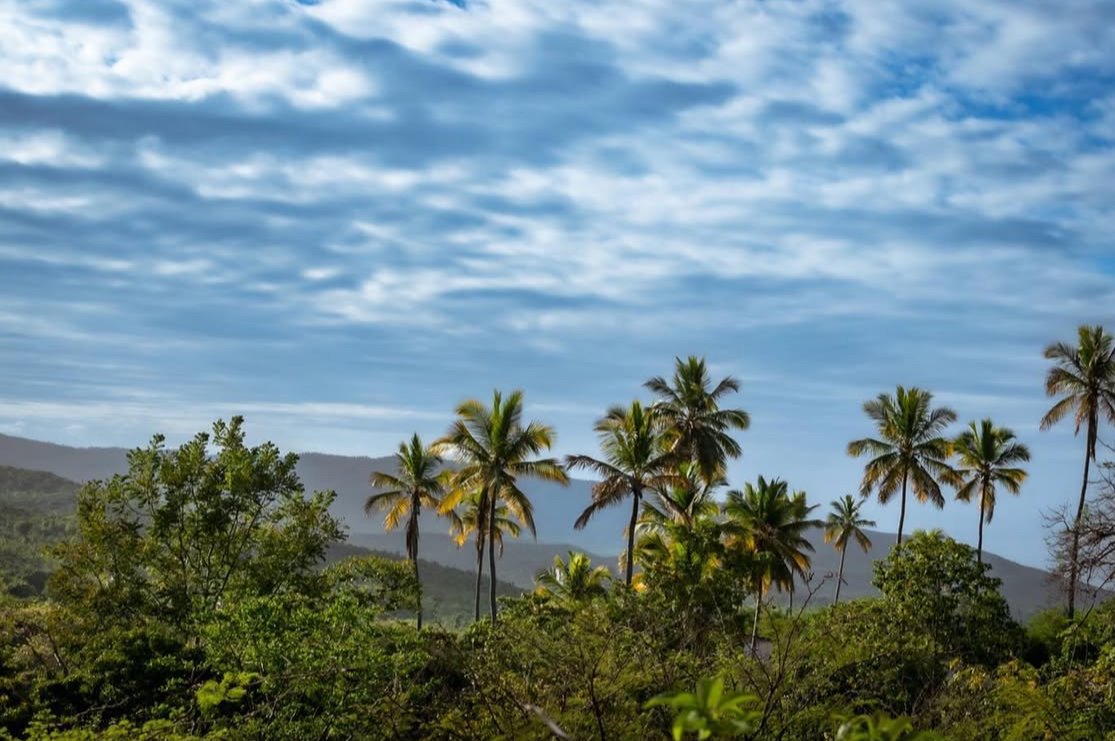
Haïti is blessed with spectacular natural landscapes, including white sand beaches, mountains and rich biodiversity.

Heritage

Heritage

Haïti has a rich historical heritage, including sites like the Citadelle Laferrière and the Sans-Souci Palace, listed as UNESCO World Heritage Sites.

Culture

Culture

Haïti has a rich and diverse culture, influenced by African, European and indigenous elements. Haitian music, dance, art and cuisine are celebrated around the world.

  • +
    • Post