contact@haitiwonderland.com+509 36184317

Discover

Shopping Cart

Celebrating Christmas in Haiti: How Haitian Culture Makes the Holidays Shine

Celebrating Christmas in Haiti: How Haitian Culture Makes the Holidays Shine

Christmas in Haïti is a time when culture, spirituality, and conviviality come together to create a unique and warm atmosphere. This holiday, deeply rooted in the country’s traditions, is an opportunity to bring families together, share delicious meals, and celebrate together in a spirit of solidarity. This article explores how Christmas is celebrated in Haiti, highlighting the local traditions, feasting, and community spirit that make this time of year an unforgettable experience.
Haïti
Haïti
Haïti

Religious Celebrations: A Time for Spiritual Gathering

In Haiti, Christmas is first and foremost a religious celebration. Haitians flock to Midnight Mass, a central event on Christmas Eve. This mass is an opportunity to gather as a family and community to celebrate the birth of Jesus Christ. The church becomes a place of prayer, carols and Christmas hymns, creating a spiritual atmosphere filled with devotion and joy.

After mass, celebrations continue at home, where families gather for a festive meal. It is a time of sharing, exchanges and strengthening family and community ties. Christmas in Haïti is also a time to remember the importance of unity and brotherhood, values ​​dear to Haitian culture.

Haïti
Haïti
Haïti

Christmas Feasts: Traditional Dishes and Local Flavors

Haitian cuisine takes center stage during the Christmas holidays. Meals often consist of typical dishes, carefully prepared for the occasion. Among the most popular dishes is griot, a marinated and fried pork, accompanied by diri ak pwa (rice and beans), local vegetables and fried plantains. These tasty and nourishing dishes are shared with loved ones and create a warm atmosphere.

Another popular dish during the holidays is ham soup, a traditional dish that symbolizes Haitian generosity and hospitality. This rich dish, often prepared with boiled ham, fresh vegetables and local spices, is enjoyed on Christmas Eve and is one of the must-have delicacies of this period.

Desserts also occupy a special place in Christmas meals. Candied fruits, pain patate (a sweet potato cake) and homemade chocolate candies are typical sweets found on tables during this festive period.

Cultural Traditions: Music, Dance and Sharing

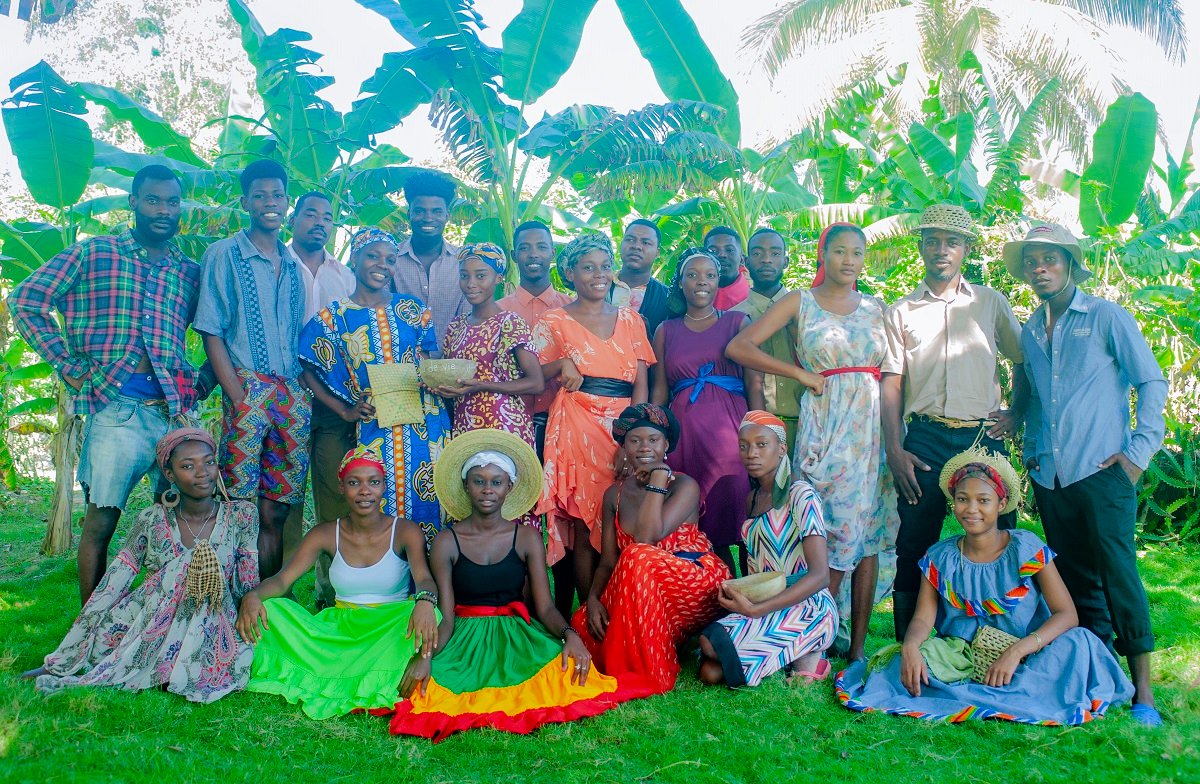
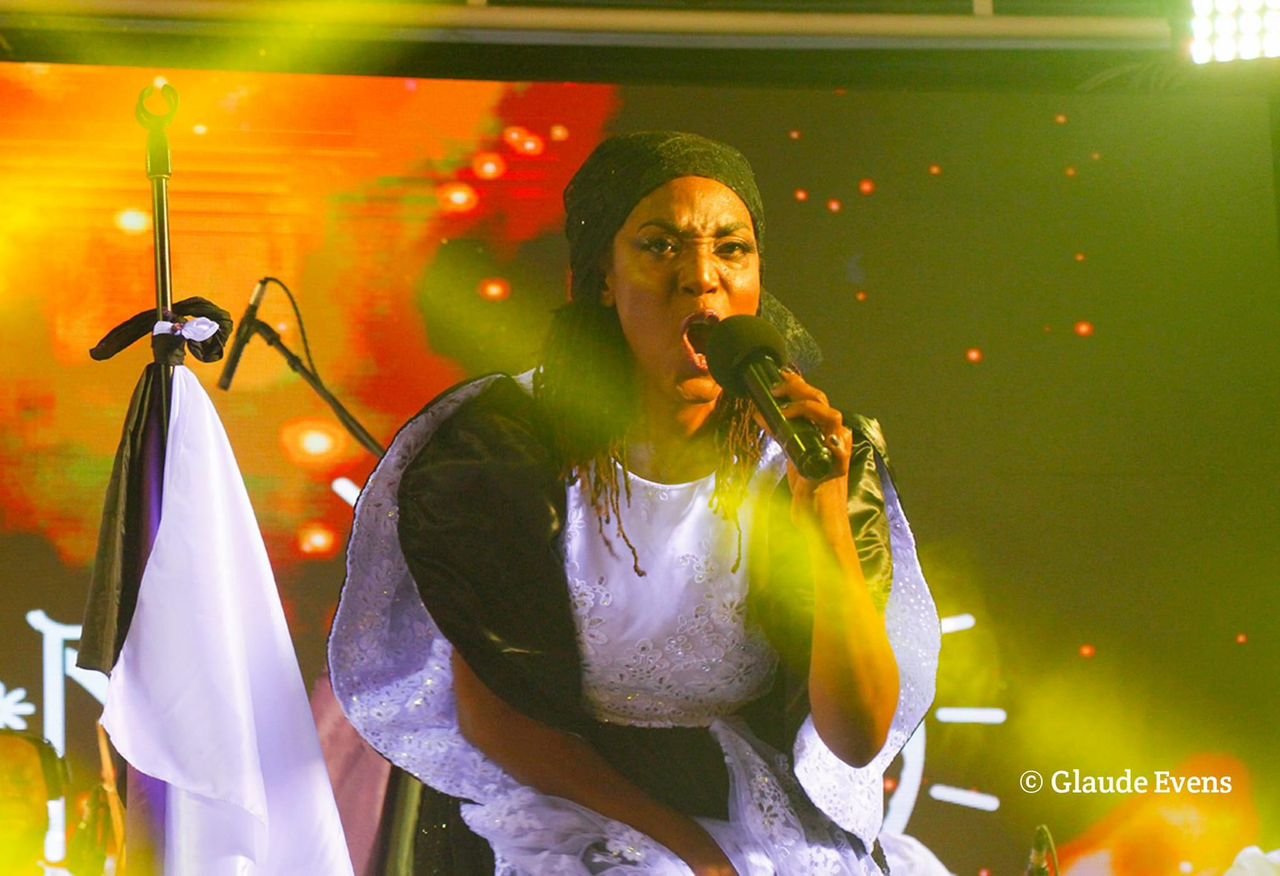
Christmas in Haïti is not only a religious or culinary celebration, it is also a time of great conviviality. Haitians love to get together with family and friends to sing, dance and share moments of happiness. Music is essential to the celebration: traditional Christmas carols performed by local bands are often heard, as well as Haitian folk music that punctuates the evenings.

Dancing is an integral part of the festivities. After dinner, family members gather for dancing, where Haitian rhythms such as kompa and zouk set the tone. These dances and music create a lively and joyful atmosphere, where everyone gets carried away by the collective energy.

Bonfires are also an important tradition during the holidays. They symbolize the light brought by the birth of Christ and are often lit in courtyards or community spaces to bring people together. These fires create a friendly atmosphere where people share, sing and dance together.

Le Makaya, histoire et pratiques vaudouesques en haïti

Le Makaya, histoire et pratiques vaudouesques en haïti

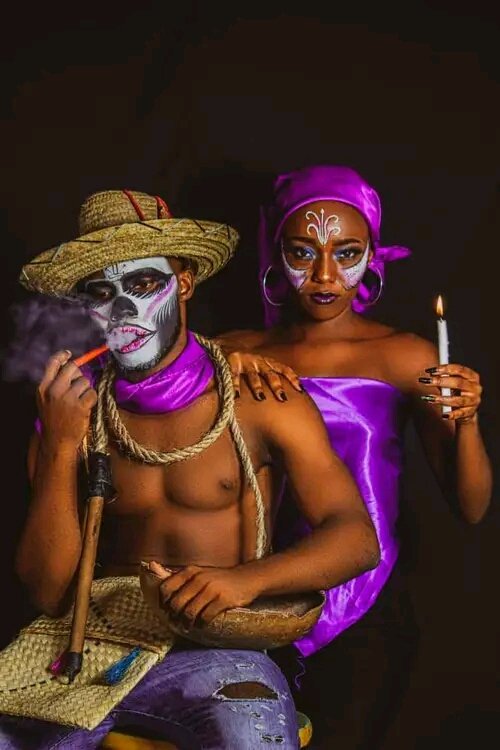
Le Makaya est bien plus qu’une simple fête ; il est un pilier spirituel du vaudou haïtien, une tradition vivante qui lie les croyances ancestrales aux rituels de purification, de guérison et de renouveau. Célébré principalement à la fin du mois de décembre, le Makaya tire ses racines de l’Afrique, en particulier des civilisations bantoues, et se déroule dans un contexte profondément spirituel où les liens avec les ancêtres et les forces naturelles sont essentiels. Le terme "Makaya", qui signifie "feuilles" en Kikongo, est intrinsèquement lié à la nature et aux plantes, éléments essentiels du vaudou. Ce lien direct avec la nature fait du Makaya un moment de purification, où les croyants se connectent à la terre et aux esprits par l’intermédiaire des végétaux. La tradition du Makaya vient des peuples Bantous, principalement du Congo, et de leurs pratiques spirituelles qui ont été transposées, adaptées et enrichies par la diaspora haïtienne pendant la période de l’esclavage. La période du Makaya commence le 21 décembre, lors du solstice d’hiver, une date symbolique marquant la victoire de la lumière sur les ténèbres, le commencement du renouveau solaire. Dans le vaudou, cette époque est perçue comme un moment d’introspection où la nuit la plus longue de l’année se transforme lentement en jour, apportant avec elle des forces purificatrices et régénératrices.

Haïti
Haïti
Haïti

The Spirit of Solidarity: Christmas, A Time of Sharing and Generosity

Christmas in Haïti is also a time when the spirit of solidarity and sharing is at its height. Beyond family festivities, many charitable actions are organized during this period. Families and communities share their meals with the most deprived, offering hot meals and gifts to poor children.

Churches and charities play an important role in this dynamic of solidarity. Events are organized so that everyone can participate in the collective effort, whether it is giving a meal, raising funds or providing clothing to those in need. This social dimension of Christmas strengthens community ties and reminds us of the importance of generosity and mutual support.

Haitian Christmas in the Diaspora: A Tradition That Brings People Together Across Borders

Christmas is also widely celebrated in the Haitian diaspora around the world. Whether in Miami, New York, or Montreal, Haitians living abroad carry on Christmas traditions with the same fervor as they do in their home countries. These communities organize parties, religious services, and community meals to mark this time of year.

The Haitian diaspora uses Christmas as a way to maintain ties to their culture, introducing younger generations to the customs and traditional foods of their home countries. Christmas meals are often shared with friends from other backgrounds, thus introducing Haitian culture to a wider audience and strengthening intercultural ties.

Cultural exploration: Discovering the Haitian soul

Cultural exploration: Discovering the Haitian soul

Cultural exploration offers a fascinating window into the richness and diversity of world heritage. Among destinations that captivate with their history, art and unique identity, Haïti stands out as a cultural gem worth discovering. b~Historical heritage:~b The history of Haïti is marked by the resilience of the Haitian people in the face of slavery, colonization and political challenges. It is the first independent state in Latin America and the only one founded by a successful slave revolt. Haiti’s historical heritage is reflected in its art, music, dance and beliefs. b~Art and Crafts:~b Haitian artistic expression is vibrant and powerful. Naive painting, famous for its bright colors and narrative themes, has its roots in Vodou traditions and local folklore. Haitian artists have gained international fame by capturing the mystical spirit and daily life of the country. b~Music, rhythm of the Haitian soul:~b Music is the pulsating soul of Haiti. From direct compass to voodoo to jazz to rasin, each musical genre has a deeply rooted history in Haitian culture. The iconic band, Boukman Eksperyans, fuses traditional rhythms with modern influences, creating a unique sonic experience that transcends boundaries. b~Dance and movements:~b Dance in Haïti is a celebration of life and spirituality. Voodoo dances, such as Yanvalou and Banda, embody sacred rituals while preserving African heritage. The graceful movements and colorful costumes tell stories from Haitian history, creating a deep connection between past and present. b~Spirituality and Voodoo:~b Vodou, often misunderstood, is an essential component of Haitian culture. It is a syncretic religion that combines African, Native American and Catholic elements. Vodou ceremonies, with their intoxicating dances and mystical rituals, are powerful expressions of Haitian spirituality and are rooted in the quest for connection with ancestors and deities. Exploring the Haitian soul means delving into a world where history, art, music and spirituality intertwine to form a unique cultural web. Haiti, with its diversity and resilience, offers an experience rich in emotions and discoveries. Whether through the bustling streets of Port-au-Prince, the vibrant art galleries or the captivating rhythms, every corner of this Caribbean country reveals a captivating facet of its deep and living soul.

Haïti
Haïti
Haïti

Christmas in Haiti, A Moment of Joy, Brotherhood, and Tradition

Christmas in Haïti is a vibrant holiday, where religious traditions, family celebrations, delicious cuisine, and a spirit of solidarity blend together. It is a time when unity, generosity and the joy of living are fully expressed through rituals and festivities. From midnight mass to shared meals, to music and wild dancing, Christmas in Haïti is a true immersion in Haitian culture and values. Whether at home or abroad, Christmas remains a special time to honor traditions and celebrate national unity.

Share
About the Author
Appolon Guy Alain
Appolon Guy Alain
Appolon Guy Alain

Full Stack Developer, Créatif, expérimenté, passionné des nouvelles technologies et de l’art.

See other articles from Appolon Guy Alain
Leave a comment

Recently Posted

The Port-au-Prince Book Fair announces the opening of author registration for its second edition

The Port-au-Prince Book Fair is a literary initiative of the cultural organization Port-au-Prince Book Fair (OCSLP), based on the desire to promote Haitian culture in general, with a particular focus on literature. The organizers of the event have just announced the registration of authors, who will number 20, and those of publishing houses, who will number 5 for the second edition, which will take place on Friday, December 13, 2024, in the premises of the French Institute in Haiti. The registration deadline is Thursday, October 10 of this year. Please note that the first to arrive who have met the required criteria will be eligible to take part in this second edition of the event, according to the organizers’ admission. This rigorous and restricted selection of only 20 authors aims to guarantee an enriching experience for authors and the public, thus promoting authentic exchanges around the works presented. Independent authors and publishing houses interested in registering their authors to participate in this second edition of the fair are invited to submit their application via this link: https://form.jotform.com/louirardjohn8/salon-du-livre-de-port-au-prince. For publishing and distribution houses planning to exhibit on the day of the event, you can register by clicking on this link: https://form.jotform.com/242596699603068. You are requested to contact them at the following address: salondulivre2023@gmail.com in case of difficulties. The Port-au-Prince Book Fair remains faithful to its philosophy, which is to offer a platform to young authors and to promote the richness of Haitian literary production, by supporting new authors who contribute to its growth. This event is a continuation of the first edition, aimed at allowing the emergence of an environment conducive to exchanges, where young authors can meet, share their experiences and engage in dialogue with readers and book professionals. According to the organizers of the event, your participation as a young author will be essential to enrich the fair and offer a diverse experience to visitors. The invitation to join this noble initiative is extended to young authors who have not yet published 5 books. You who are concerned, the ball is now in your court. Do not hesitate to go and make this day, December 13, 2024, an unforgettable day for all book lovers.

Newsletter

Subscribe to our newsletter to stay informed of all our activities and news on Haiti.

Vertières, Fort Mazi: Beyond historical truth;

If you look up the word vertière in a French dictionary, you will not find it for fear that the world does not know this place represents the Achilles heels of the most powerful European army. What’s more, this one had just successfully won the eastern campaign. French historians of the time erased this geographical location from the radar of history because they did not want to tell the story as it is in the sense of explaining the first great humiliation of the expeditionary army French by bands of slaves who were totally ignorant in the art of waging war, much less in the handling of weapons. However, these illiterate wars routed the Napoleonic army, the most powerful at that time, using the means at hand. This expeditionary army, after having brought Europe to its knees, would experience its first rout by slaves in this geographical location, located in the Northern department of Haiti. Funny story, this city is not on the list of French words even though given its historical importance, it should be at the heart of universal history, far from putting an end to the invincibility of the undefeated army army. So as not to offend the white masters, no political leader has ever asked why vertière does not appear in any French dictionary? However, they celebrate this battle with great fanfare every November 18. What historic hypocrisy among our leaders! After Vertière many other historical places are strangled by historians in order to hide the extremes of atrocities of the French colonists on the slaves. It is in this context of historical strangulation that “Fort Mazi” is not mentioned in school history textbooks. This is located in Petit-Goave, 2nd municipal section, Arnoux locality. We came across this mega fort, during a mobile clinic entirely financed by the Ernest Junior foundation, a charitable foundation which works in the social sector, particularly in the field of art and music. According to residents , the oldest in this locality, this fort was built on at least 20 squares of earth by the settlers. It was a huge military complex divided into compartments, outposts, turtle rooms, rooms for treating colonists, a large Catholic church, and a cemetery. However, we never talk about this fort so much so that it is ignored by history teachers in the town of Petit-Goave. Certainly, the desired disappearance of this fort under the radar of history buries the atrocities, the barbarities, the most inhumane punishments of the colonists on the slaves. Looking closely at reality, everything seems true that it is the largest fort ever built during the period of colonization. Moreover, it probably seems the most fortified in relation to its importance. Remember that Vertière only exists in Haitian school history textbooks while Fort Mazi does not appear, much less in French dictionaries or history books. This explains why this fort was a secret place in which the settlers practiced crimes and atrocities that went beyond human understanding. Is it not a clear desire of historians to hide what this immense fort built on at least 20 tiles of earth really was? Discover the history of Haiti: A fascinating story to explore! : https://haitiwonderland.com/haiti/histoire/decouvrez-l-histoire-d-haiti--un-recit-fascinant-a-explorer/81

Recently Posted

History

History

First black nation to free itself from slavery and gain independence from France in 1804 and influenced other liberation movements around the world, inspiring struggles for freedom and equality.

Natural beauty

Natural beauty

Haïti is blessed with spectacular natural landscapes, including white sand beaches, mountains and rich biodiversity.

Heritage

Heritage

Haïti has a rich historical heritage, including sites like the Citadelle Laferrière and the Sans-Souci Palace, listed as UNESCO World Heritage Sites.

Culture

Culture

Haïti has a rich and diverse culture, influenced by African, European and indigenous elements. Haitian music, dance, art and cuisine are celebrated around the world.

  • +
    • Post