contact@haitiwonderland.com+509 36184317

Discover

Shopping Cart

Difference Between Haitian Tonmtonm and African Foutou (Fufu)

Difference Between Haitian Tonmtonm and African Foutou (Fufu)

Haitian and African cuisine are gastronomic treasures that highlight local ingredients and preparation techniques passed down through generations. Among the most popular dishes of both cuisines, Haitian Tonmtonm and African Foutou (or Fufu) are distinguished by their rich flavors and unique textures. These two dishes, although they share a similar foundation - the use of local products such as cassava or plantain - have interesting differences, especially in their preparation, taste and accompaniment.

Tonmtonm Haïti
Tonmtonm Haïti
Tonmtonm Haïti

Haitian Tonmtonm: A Pounded Breadfruit Delight

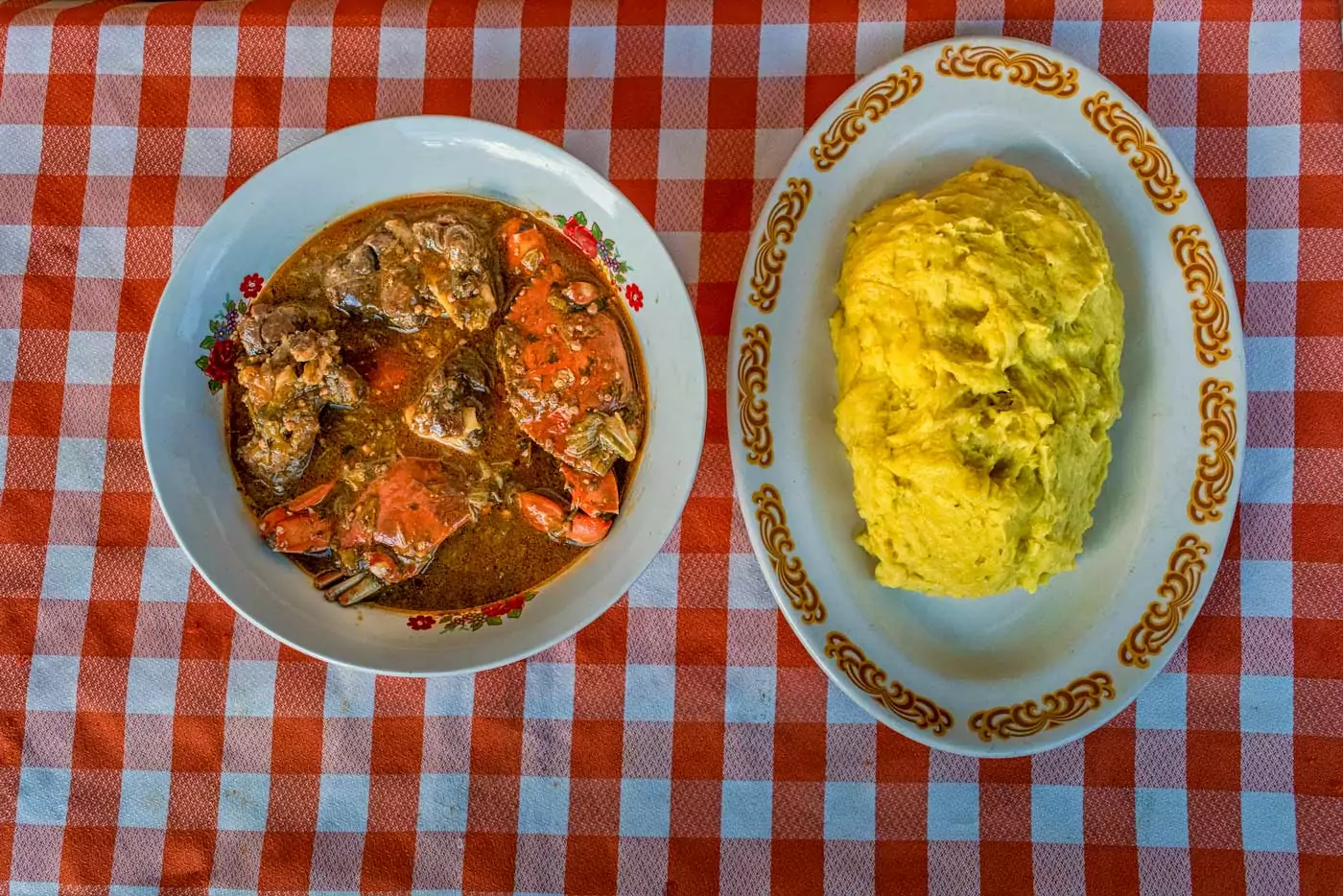
Tonmtonm is a simple but delicious Haitian dish. Breadfruit, a staple food in Haiti, is first boiled to release its flavor, then pounded by hand in a mortar and pestle, a step that requires strength and patience. This preparation process, often performed by several family members, represents a moment of sharing and passing on culinary traditions. Sometimes seasoned with pepper, garlic, or other light spices, Tonmtonm takes on a mild, subtle, and slightly spicy flavor.


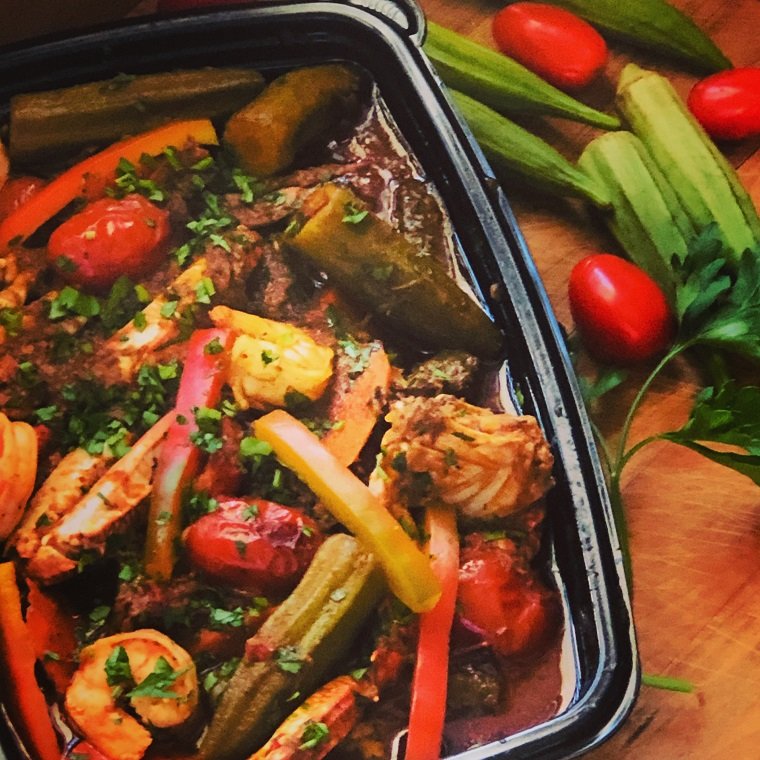
Its texture is firm but soft, creating a dense purée that pairs perfectly with a variety of dishes. Tonmtonm is often served with okra sauce (or Sòs kalalou), a slightly acidic and spicy sauce, which brings a richness of flavors and pairs harmoniously with the pounded breadfruit.

It is often accompanied by savory meats, such as beef or pork. Crabs can also be a traditional accompaniment, bringing a maritime touch and a delicious contrast to the dense texture of Tonmtonm.

Foutou Africain
Foutou Africain
Foutou Africain

African Foutou: A Pounded Plantain Tradition

Foutou, or Fufu, is an iconic dish in African cuisine, particularly popular in Côte d’IVoire. It is prepared from plantain, which can be used ripe or unripe, and cassava boiled together and then pounded to a smooth, elastic consistency. The pounding process gives Foutou a chewy texture that pairs perfectly with the rich sauces of African cuisine.

Foutou is often served with spicy sauces such as sauce graine (a palm nut-based sauce), or other meat and vegetable sauces, and is commonly eaten in the central and eastern regions of Côte d’IVoire. This dish is an essential accompaniment to many meals, providing a neutral but nourishing base for the sauces and meats that accompany it.

Tonmtonm Haïti
Tonmtonm Haïti
Tonmtonm Haïti

Differences Between Haitian Tonmtonm and African Foutou

Although Haitian Tonmtonm and African Foutou have similarities, such as using local products and adding a creamy or elastic texture, they have some marked differences:

1. Main Ingredients:

- Haitian Tonmtonm: It is mainly made from boiled breadfruit, a staple food in Haiti, which gives it a firmer texture and a mild, slightly sweet flavor.
- African Foutou: It is mainly made from plantain and cassava, which gives it a chewier texture and a slightly sweet but also denser flavor, especially when made with ripe plantains.

2. Preparation method:

- Tonmtonm is boiled and pounded in a mortar and pestle, which gives it a more consistent and slightly grainy texture.
- Foutou, on the other hand, requires mixing boiled plantain and cassava, before pounding them until a smooth and elastic paste is obtained.

3. Accompaniments:

- Tonmtonm is often served with okra sauce (sòs kalalou), a spicy sauce that gives it depth and a slightly acidic taste.
- Foutou is usually accompanied by palm nut-based sauces such as seed sauce, or other sauces rich in meat or vegetables, thus bringing a different depth of flavor.

4. Regions of consumption:

- Haitian Tonmtonm is a dish rooted in Haitian culture, enjoyed throughout the island, especially during celebrations and family gatherings.
- Foutou is widely consumed in West Africa, particularly in Côte d’IVoire, and is also a dish of choice in other African countries, where it is often associated with festive meals.

Foutou Africain
Foutou Africain
Foutou Africain

Haitian and African Cuisine: A Fusion of Flavors

Haitian and African cuisine have deep roots that connect them through the history of the African diaspora. Dishes like Tonmtonm and Foutou are a testament to the ingenuity of African and Haitian peoples in using local produce and creating dishes that are both nourishing and flavorful.

Both cuisines share a rich palette of spices and flavors, with African, European, and indigenous influences. Spicy sauces, grilled meats, and breadfruit or plantains are recurring elements that give these cuisines an authenticity and richness that is unmatched.

Haitian Tonmtonm and African Foutou are two delicious dishes that exemplify the diversity of Haitian and African cuisines. While they differ in ingredients, preparation, and accompaniments, these dishes offer an exceptional culinary experience that celebrates the history, culture, and generosity of the people who created them. Whether you are a fan of Haitian or African cuisine, these dishes deserve to be savored for their richness and unique character.

Share
About the Author
Appolon Guy Alain
Appolon Guy Alain
Appolon Guy Alain

Full Stack Developer, Créatif, expérimenté, passionné des nouvelles technologies et de l’art.

See other articles from Appolon Guy Alain
Leave a comment

Recently Posted

Emeline Michel, in exceptional concert in Miami

St. Clement Parish celebrates its seventy years of service to God and the Haitian community, this November 23, 2024, at 2975 N. Andrews Ave., Wilton Manors, FL. On the occasion of this celebration, Emeline Michel will be in exceptional concert to mark this cultural event. On the menu of this program, the committee plans to organize evangelization sessions, continuing education, fields of ethics, morality and spirituality. This event will also emphasize faith, reason and culture to rebuild in unity the kingdom of God here below where "Charity unites us to God". With the aim of raising culture to its peak, the Archbishop of Miami is pleased to join us for a great Eucharistic celebration on Saturday, November 23, 2024, starting at 10 a.m. Together, they will mark this mythical date engraved in the memory of his faithful and friends. This evening will be hosted by the icon of Haitian music, Emeline Michel, who has made a name for herself in the Haitian cultural landscape: "We welcome the famous singer Emeline Michel. She will do us the honor of reliving important and unforgettable moments of our charming land of Haiti. With her melodious, very captivating voice and her poetic songs, all the beautiful memories will be there, like our beaches, the light breeze of our mornings and the flight of capricious birds," wrote the press release. The 58-year-old diva continues to establish herself as one of the unique, contagious voices of Haitian music. While remaining in her style, she has been able to create her musical universe during her career, which has allowed her to be honored in the community by her fans. Emeline Michel, with her sincere lyrics and unique style, has managed to reach a wide audience without giving up her authenticity. With her songs and her melodious voice, she has rocked several generations. Throughout her musical career, she has an enriching repertoire, about thirteen albums to her credit, we can cite a few: Douvanjou ka leve (1987); Flanm (1989); Pa gen manti nan sa (1990); Rhum et Flamme (1993); Tout mon temps (1991); Emeline Michel, the very best (1994); Ban m pase (1996); Coedes and Soul (2001); Rasin Kreyòl (2004); Queen of Hearts (2007); Quintessence and lastly Gratitude (2015). She also has many collaborations with other artists. Chanjman and Jan mwen (2020, and 2021) Emeline Michel, 40 years of experience on stage, she carries all Haïti in her voice, her soul and her body. During her flourishing years of success, she has marked several continents where she has already performed (Antilles, America, Europe, Asia). This allowed her to discover several places, such as: Carnegie Hall, at the United Nations; the Teatro Manzoni in Milan; the Kravis Center in Florida; the International Jazz Festival (Haiti). Then, the Luminato Festival in Ontario; the International Jazz of Montreal; the New Orleans Jazz Fest; the Ten Days On The Island. The priest of the parish of St. Clement, Rev. Patrick Charles, took the opportunity to extend a warm invitation to the community to come celebrate this great day marking its seventieth anniversary and to entertain in order to once again highlight Haitian culture.

Newsletter

Subscribe to our newsletter to stay informed of all our activities and news on Haiti.

Recently Posted

History

History

First black nation to free itself from slavery and gain independence from France in 1804 and influenced other liberation movements around the world, inspiring struggles for freedom and equality.

Natural beauty

Natural beauty

Haïti is blessed with spectacular natural landscapes, including white sand beaches, mountains and rich biodiversity.

Heritage

Heritage

Haïti has a rich historical heritage, including sites like the Citadelle Laferrière and the Sans-Souci Palace, listed as UNESCO World Heritage Sites.

Culture

Culture

Haïti has a rich and diverse culture, influenced by African, European and indigenous elements. Haitian music, dance, art and cuisine are celebrated around the world.

  • +
    • Post