


Haïti will make a splash at Milano Cortina 2026 with Olympic outfits unlike any other in the world
Discover Haiti's unique Olympic outfits for Milano Cortina 2026, a blend of tradition and modernity that will make a splash! #Haiti #MilanoCortina

Bonbon Syrup is a traditional Haitian dessert that’s perfect for any occasion. It’s rich, moist, and full of flavor. Haïti Wonderland offers a simple and easy-to-follow recipe for this delicious dessert.
Are you Haitian? You are not Haitian but you have met them closely or from afar? Have you ever visited Haïti or do you have Haitian friends? No doubt! You have already eaten broth! Haitian broth is an emblematic dish of Haitian cuisine. This delicious broth is often prepared with a variety of meats, such as beef, pork or chicken, and is enhanced with fresh vegetables such as carrots, potatoes and celery. This mixture creates a harmony of flavors that reflects the richness of Haitian culture. The preparation of broth (bouyon) is a true culinary art. The ingredients are carefully selected and cooked slowly to allow the flavors to fully develop. Spices, such as thyme, garlic and chili pepper, add a touch of heat and depth to the dish. Traditionally, broth (bouyon) is served with rice or plantains, making it a complete and comforting meal. Broth is not just a dish, it is also a symbol of conviviality and sharing. It is often prepared during special occasions or family gatherings, strengthening the bonds between members of the community. If you feel like preparing broth one of these days, do not hesitate to ask for the recipe in the comments.
It’s Carnival time! Instead of lamenting the traditions that are disappearing, let’s recreate some memories in your kitchen during this festive season by making beignets! "Benyen kanaval"!
There’s no accounting for taste! For some, the go-to dish remains a good rice accompanied by pea sauce and vegetables, while for others, corn is king, in all its forms. In this article from Haïti Wonderland, we’ll explore five ways to enjoy ground corn. To start the week off right, many gourmands enjoy a dish of white corn, often garnished with vegetables such as spinach or tomatoes. This colorful and tasty mix allows you to start Monday morning on a delicious note. Others find happiness in a dish of corn accompanied by pea sauce and vegetables, ideal after a long day of school or work. It’s a real comfort that brings satisfaction and energy. And what about corn served with red beans and a good stew? It’s the perfect dish for a Saturday, a real pick-me-up after a difficult week. And here, we move on to the most copious for some: corn with djondjon and fish sauce! This accompaniment adds an umami touch for fans of good food! And to top it all off, although rare or reserved for big celebrations, corn à la bonne femme never fails to make us salivate! It is simply a complete dish! Whether as a main course or otherwise, corn invites itself onto our plates with happiness and creativity.
Hey Generation Z, I know what you’re thinking: another weird dish? But trust me, even if it doesn’t look like much, millet is amazing! At first, you might cringe, but once you taste it, you’ll be asking for more. So, are you ready to embark on this culinary adventure?
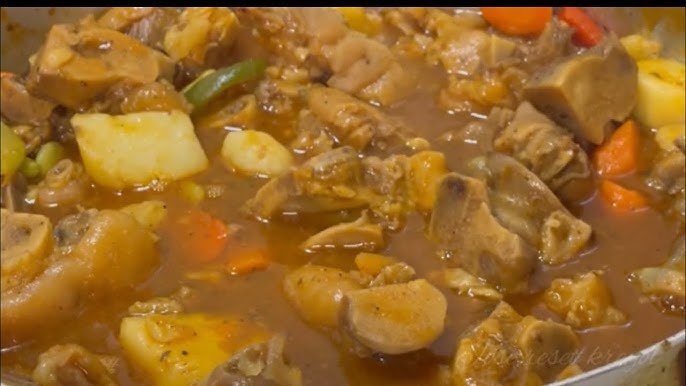
"Pig’s trotter" stew is an iconic dish of Haitian gastronomy, appreciated for its rich flavors and melting texture. This stew is prepared from carefully cleaned pig’s trotters, marinated with local spices such as garlic, chili pepper, thyme and cloves, then slowly braised until tender and a creamy sauce is obtained. Vegetables such as carrots and potatoes are often added, as well as a spicy tomato sauce that enhances the dish. Accompanied by white rice, sticky rice or even weighed bananas, pig’s trotter stew is a real explosion of flavors that brings families together around a generous and friendly meal.
Black History Month is the perfect opportunity to celebrate the culture and heritage of Afro-descendant communities through cuisine. Haitian gastronomy, rich in history and flavors, is a reflection of the resilience and identity of the Haitian people. Here are two iconic dishes to discover to honor this celebration.
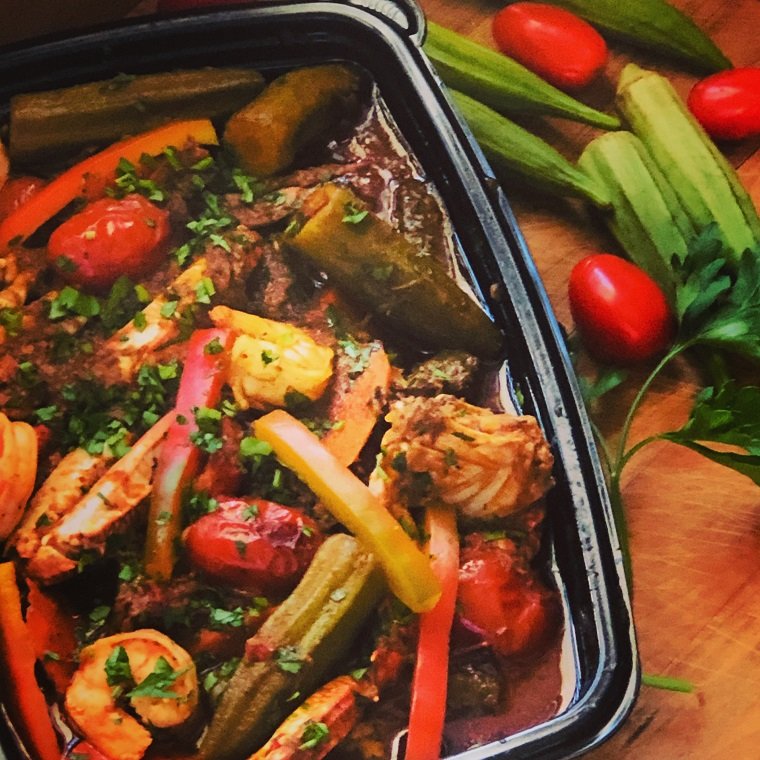
In a video that recently went viral, content creator Pigtoriasecret from Taiwan attempted to make Haitian vegetables. She showed off her culinary skills in a video captioned “Haitian Vegetable.” Her lighthearted approach to mixing culture, cuisine, and humor was creative and offered a unique twist that engaged food lovers and those curious about different cultures. However, comments from Haitians were pouring in from all sides, with criticism of the quality, sarcasm about the method, and irony about the creator’s courage in choosing to cook this dish. It didn’t stop! Haïti Wonderland, far from setting itself up as a chef with Michelin stars, brings you the recipe for Haitian vegetables, “legim” or “toufe.”
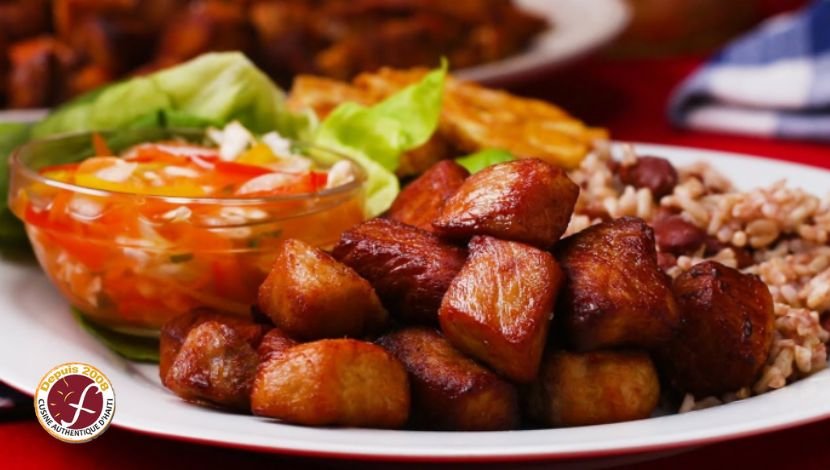
The "love language" is a concept developed by Gary Chapman, which describes the different ways in which people express and receive love. There are five main love languages, including Gifts and Acts of Service. If you recognize yourself in these languages, here are the Top 5 Haitian dishes perfect for Valentine’s Day. Get ready to treat your partner on a special night!
The Haitian Creole, born in the 17th century during the French colonization on the island of Hispaniola, is not only a communication tool; it is an essential part of the Haitian identity. Despite being recognized as an official language in 1987, French is still considered an elite language, creating a social divide. In the educational system, where French is the language of instruction, Creole is often neglected, which affects the ability of students to understand what they are learning, especially for children from rural areas. It has a unique grammatical structure that facilitates learning, and serves as a means of cultural expression in literature, music, and other arts. The advancement of technology will allow Creole to gain more visibility in social media, but the stigmatization of the language still exists. Therefore, it is important for Creole to be valued in education and other sectors, to allow the new generation to grow up with pride for their heritage. The Haitian Creole language, which is the first language for the majority of people in Haiti, is not only a means of communication, but it is also a reflection of the cultural wealth and history of the people. In a country full of diversity, Creole and its origin, its evolution and its place in society, is a testimony of resistance and adaptation.
Haiti, a land rich in history and cultural diversity, offers a unique musical treasure through its captivating rhythms. Haitian music, deeply rooted in the fusion of different African, European and Caribbean influences, constitutes a vibrant expression of national identity. One of the distinctive elements of Haitian music is its rhythmic diversity, reflecting the many facets of daily life, from religious celebrations to moments of joy and sorrow. Haitian rhythms, carrying contagious energy, are a reflection of the soul of the Haitian people. One of Haiti’s most iconic musical genres is direct compas, which emerged in the 1950s. This catchy rhythm, coupled with captivating melodies, has captured hearts globally. The direct compass embodies the fusion of different musical styles, including jazz, merengue, and elements of traditional Haitian music. Haitian musical traditions are not limited to contemporary sounds. Vodou, an ancestral spiritual practice, also has a major influence on Haitian music. Vodou rhythms, often associated with religious ceremonies, create a deep connection between spirituality and artistic expression. Furthermore, dance is inseparable from Haitian music. The graceful and energetic movements of traditional dances like rasin, combined with captivating rhythms, transport dancers and spectators to a world where bodily expression becomes a living art form. Exploring the musical and dance traditions of Haïti is like diving into a universe where history, culture and spirituality are harmoniously woven together. These rhythms, passed down from generation to generation, are much more than simple notes; they embody the soul of a people and the richness of its diversity. Celebrating these traditions pays homage to Haiti’s exceptional cultural heritage and its invaluable contribution to the global music scene.
Haiti, a small Caribbean country, is a destination that is still too often unknown to the general public. However, this country is full of natural, historical and cultural treasures that deserve to be discovered. From its heavenly beaches to its impressive historical heritage, including its exquisite cuisine, Haïti offers a unique experience that will not fail to surprise and enrich those who choose to visit it.
The Haitian Creole language, or Kreyòl Ayisyen, is one of the most remarkable features of Haitian culture. Speaking Creole is not only about communicating, but also about asserting an identity, a heritage, and a history of resilience in the face of adversity. But where does this unique language come from? What is its origin and how did it become a symbol of Haitian culture? Let’s dive into the fascinating history of the Haitian Creole language.

First black nation to free itself from slavery and gain independence from France in 1804 and influenced other liberation movements around the world, inspiring struggles for freedom and equality.

Haïti is blessed with spectacular natural landscapes, including white sand beaches, mountains and rich biodiversity.

Haïti has a rich historical heritage, including sites like the Citadelle Laferrière and the Sans-Souci Palace, listed as UNESCO World Heritage Sites.

Haïti has a rich and diverse culture, influenced by African, European and indigenous elements. Haitian music, dance, art and cuisine are celebrated around the world.











