
Haitian Cuisine - Delicious Corn à la "Bonne Femme": To your pots!
Readers and little chefs of Haïti Wonderland, I present to you on a golden platter the recipe for corn à la bonne femme. Take your time and share your creation in the comments!

Since its launch in 2018, Appo-Graphic has established itself as the indisputable leader in the field of creating websites and mobile applications in Haiti. Specializing in a wide range of services, the agency stands out for its unrivaled expertise and commitment to providing tailor-made solutions for its clients. Whether you are a company looking to develop an e-commerce site, a government institution wishing to modernize its intranet system, or even an individual wishing to create a personal blog, Appo-Graphic is here to make your vision a reality. With extensive experience and in-depth mastery of cutting-edge technologies, the Appo-Graphic team guides its clients through every step of the process, from initial design to final implementation. What sets Appo-Graphic apart from its competitors is its commitment to user experience. The agency’s developers are experts in UI/UX design, creating sites and apps that captivate visitors and inspire them to take action. With over a hundred successful projects under their belt, including intranet sites for hotels, schools and restaurants, the Appo-Graphic team has valuable experience to meet the most demanding needs of its diverse clientele. . In addition to its design expertise, Appo-Graphic also excels in the field of natural referencing (SEO). Using advanced SEO techniques, the agency ensures that its clients receive maximum visibility on search engines, helping to generate traffic and boost sales. But Appo-Graphic’s commitment does not stop there. As a full-fledged communications agency, it also offers brand identity creation, social media management and digital strategy development services. Whether you need an impactful new logo or a complete digital marketing campaign, the Appo-Graphic team is ready to turn your ideas into tangible results. If you are looking to bring your web project to life, do not hesitate to contact Appo-Graphic today. With their personalized approach and commitment to excellence, they are ready to make your vision a reality. Call now on 36184317 to discuss your needs and get a free quote. And don’t forget to visit their website www.appographic.com to check out some of their impressive work. Need to be positioned first in search results for your field of activity? Read this article: https://haitiwonderland.com/haiti/entreprise/agence-seo-haiti--experts-en-seo-referencement-naturel/85
Time management in Haïti follows a practice shared by several countries: daylight saving time. Adopted for several decades, daylight saving time consists of moving the clocks forward by one hour for part of the year in order to maximize the use of daylight. This article explores how and why this measure is applied in Haiti, as well as its impact on the daily lives of Haitians.
Haiti, rich in history and culture, celebrates several national holidays throughout the year. These celebrations reflect the identity and resilience of the Haitian people, marking key moments in their history and honoring their traditions. Discover the most important national holidays in Haiti, their meanings and how they are celebrated.
Crémas is one of the most iconic drinks in Haitian culture, especially enjoyed during the Christmas holiday season. This sweet and creamy cocktail has become a staple during family and community celebrations. This article invites you to discover this delicious beverage, its history, its preparation, and the importance it holds for Haitians during Christmas.
Haiti, with its unique history and vibrant culture, is a country where language plays a central role in national identity. Haiti’s primary language is Haitian Creole, a rich and expressive language that reflects the country’s cultural mix. Although French is also an official language, Creole is spoken by almost the entire population and is a fundamental part of daily life. In this article, we will explore the origins, uses, and importance of Creole in Haiti.
The Paris 2024 Olympic Games mark a time of pride and hope for Haiti, a nation rich in culture and resilience. This year, Haïti is represented by an exceptional team of athletes, each bringing their talent, determination, and dreams of victory on the world stage. Here’s a look at the stars lighting up our Olympic horizon.
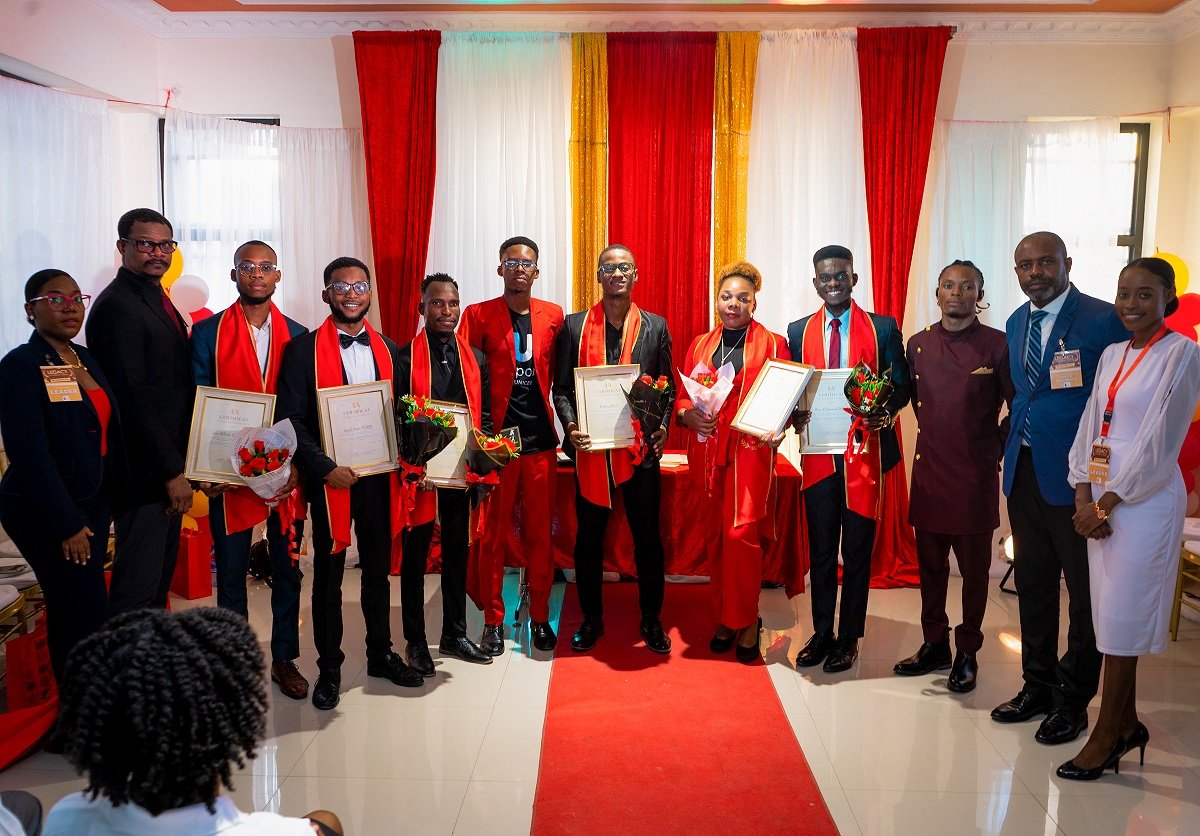
Since 2014, the “PRIM POU CHANJMAN” (PPC) initiative, orchestrated by Gwoup Konbit through Leaders of Tomorrow, honors extraordinary young Haitians who carry out remarkable actions to improve their community. Initially called the “CITE SOLEIL PEACE PRIZE” and limited to young people from Cité Soleil, this program expanded in 2023 to include all young people in the country with a positive social impact. For its 11th edition, three young leaders were rewarded for their dedication and social influence in their respective communities.
"Liberty-Equality-Fraternity" vs. "Unity is Strength": finally understand the difference between Haiti's two mottos and their historical complementarity.
Christmas in Haïti is a celebration rich in traditions, festivities and moments of sharing. Unlike other countries, where decorations and lights illuminate the streets during the month of December, Christmas in Haïti is a time of great human warmth, family reunions and cultural events. This article explores the different customs and flavors that make Christmas in Haïti a unique and unforgettable experience.
Haiti, this Caribbean island with a rich historical past and generous nature, reveals one of its most precious treasures: Labadee. Nestled less than 10 km northwest of Cap-Haitien, Labadee stands like a seaside pearl, offering its visitors an exquisite experience combining relaxation, adventure and cultural discovery.
Haïti is making headlines all over the world. And it’s not good news. The exploits of Haitians rarely generate so much interest, but we always tend to point out the excesses, spill ink to stir up thorns in the side, broadcast on loop to relay the chaos that is raging. There is hardly any media to make amends for the resilience of this cornered people. No one to highlight the fierce resistance that serves as fuel for this people hanging in the gorges of death. And what if it was to a certain extent the only way to talk about this country to finally attract attention? It is July 26, 2024. The Olympic Games have just started in France. The 33rd Olympiad of modern times. Without realizing it, according to Forbes Magazine, Haïti ranks among the ten nations with the best costume, proudly pointing to third place. At the same time, miles away from France, on “The Island of Skillfully Orchestrated Chaos,” Haitians do not even realize how much this recognition borders on irony. A paradox whose unpopular evocation is likely to greatly displease. An aerial image shows the city of Paris in all its splendor, illuminated like the gates of paradise, reflecting all the grandeur of France, all the magnificence it has acquired over the centuries, without forgetting the contribution of the blood shed by the horrible machine of colonization. I close my eyes, I go back in time, I see again this boy left to his own devices, lost without even knowing it, doomed to failure without even understanding it. And then there are the others. Boys in the same situation, or worse. Banished from society, they do not know what life has in store for them. They form the elegant class of the marginalized, in their quality of scoundrels, good-for-nothings, and thugs who spoil the splendor of society. This contrast challenges me, and I wonder for a moment if those who live the chaos from the outside grasp the stakes and the reality of the situation. Moreover, it seems to me that even the majority of Haitians living in the territory have no notion of the fundamental and essential aspects of the situation.
Haïti is often viewed online through the prism of poverty, political instability and natural disasters. Although these aspects are part of the Haitian reality, they do not entirely define it. Cultural richness, a glorious past, abundant natural resources, exquisite gastronomy and other attractions are equally important, but unfortunately less publicized, facets.
In the annals of the history of Haiti, an island located in the Caribbean at the entrance to the Gulf of Mexico and shared with the Dominican Republic, Jean-Jacques Dessalines emerges like a phoenix from the ashes of oppression. Born a slave on September 20, 1758 in the home of Henri Duclos, in Cormier (Grande-Rivière-du-Nord), in the French colony of Saint-Domingue, Dessalines was a Creole of African (Afro-Caribbean) origin. Freed during the 1794 abolition achieved through slave revolts, actually served as an officer in the French army during the French Revolution. At that time, the ideas of freedom and equality were at the heart of the concerns of the inhabitants of the colonies. Dessalines actively participated in the fighting against the Spanish and British forces, alongside the French, in Santo Domingo. Having risen to the rank of Lieutenant General, Jean-Jacques Dessalines turned against the French during the Leclerc expedition, sent to Saint-Domingue by Bonaparte to reestablish colonial authority and slavery during the Haitian Revolution. After the capture and deportation of Toussaint Louverture to France on June 7, 1802, Dessalines assumed a leading role in continuing the struggle for independence. He led numerous battles, including the battle of Crête-à-Pierrot in March 1802, where he galvanized his soldiers with his famous declaration: “Let those who want to remain slaves of the French leave the fort, let those, on the contrary, who want to die as free men, line up around me.” On January 1, 1804, Jean-Jacques Dessalines achieved the long-awaited goal of independence by proclaiming Haïti as a sovereign nation, becoming the second country in the Americas to gain independence from a colonial power. He became the first leader of the newly formed nation and was named Emperor under the name James I. However, his imperial reign was marked by authoritarian and brutal policies, including the massacre of many white settlers and the redistribution of land to peasants that was in the hands of the generals of the independence army. In addition, he organized the hunt for delinquents in the city while implementing rigorous agrarian policies, considering that they represented a threat to the stability of the nation, these controversial actions caused divisions within Haitian society. Dessalines was assassinated on October 17, 1806 following a plot organized by some of his generals in the Haitian army. His death marked the end of his brief but influential period in power. Despite the controversies surrounding his methods, he is recognized as the main architect of Haiti’s independence and his name was honored in 1903 by being attributed to the Haitian national anthem, La Dessalinienne, composed by Justin Lhérisson.Finally, the great visionary man Jean Jacques Dessalines remains an emblematic figure in the history of Haiti, recognized for his role in the fight for independence and the end of slavery in the region.

First black nation to free itself from slavery and gain independence from France in 1804 and influenced other liberation movements around the world, inspiring struggles for freedom and equality.

Haïti is blessed with spectacular natural landscapes, including white sand beaches, mountains and rich biodiversity.

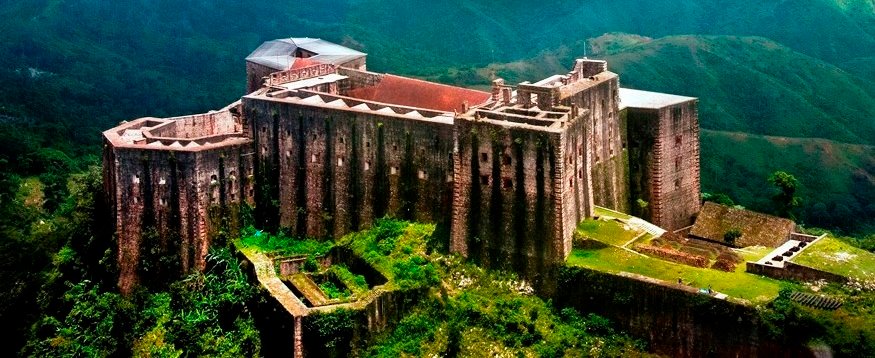
Haïti has a rich historical heritage, including sites like the Citadelle Laferrière and the Sans-Souci Palace, listed as UNESCO World Heritage Sites.

Haïti has a rich and diverse culture, influenced by African, European and indigenous elements. Haitian music, dance, art and cuisine are celebrated around the world.