contact@haitiwonderland.com+509 36184317

Discover

Shopping Cart

IMANA by DarlinJohancy

IMANA by DarlinJohancy

In Arabic, the family of words Amin, Iman or imam, imana designate faith, trust, security. This word is also present in the Swahili language (Kenya, Tanzania, East Congo Kinshasa) in the form imani: trust.

"The term Imana is not the equivalent of God-Goddess which is a Western vision of divinity. Indeed,: "the term "imana" does not designate above all a personal being that should be honored and implored, but a diffuse fluid that should be captured." In other words, Imana is a neutral vital force that manifests itself in the inner cosmos of each living being." ¹

Imana, by Michel Darlin Johancy is a musical, symphonic and spiritual journey through three geographies: an inner geography of meditation, a cultural identity journey and an artistic musical stroll. These three itineraries unfold in Haitian spaces.

This symphonic and spiritual journey takes place in 10 stages or 10 movements.

Read the article in :

French : IMANA de DarlinJohancy

Spanish : IMANA de DarlinJohancy

Creole : IMANA pa DarlinJohancy

Reference page : IMANA by DarlinJohancy

Other version : IMANA de DarlinJohancy

1- Ouvè pòt yo: the opening of the doors ::

The opening of the doors is commanded by the saxophone which plays the role of a common thread. The opening is slow as in some symphonies. This slowness allows us to gently enter an atmosphere of travel and reflection. Musically, the opening is based on the dialogue between the choir, the guitar/piano duo and jerky percussions, katap katap type.


See as well

2- Chache limyè, chache chimen mòn: the quest for light and the path of the mountain:

“Si mòn pa bay, lavil ap peri”: if the hill does not produce, the city will perish”. The quest for the mountain is doubled by other quests: the search for effort (monte mòn), the return to the countryside, which must be revalued, and also the search for elevation of the spirit. It is like a pilgrimage. We can also lighten our multiple burdens or problems by depositing them on the other side of the mountain.

3- Incantation and crowd noise.

The saxophone introduces this sequence. We hear like the noise of a crowd marching and an incantation, a repetition, like a mantra of the name of the divinity Oloroun, from the Afro-Brazilian Yoruba pantheon.

4- Èske Bondye pale kreyòl? Does God speak Creole?
While the saxophone and katap percussions draw the path like a musical vèvè (ritual drawing), the artist wonders. Can worship be creolized? Drums and tchatchas have their place wherever the soul rises. They also punctuate our cultural identity.

5-Kote m ye? Where am I?
-

6-Call the rain

"Creator of the World, you who trace all things, make the rain fall." It is a call for a nourishing and invigorating rain.

7-Pase m t ap pase: I was only passing by.

"Pase m t ap pase", this refrain, symbol of the journey, is punctuated by the percussions that play in cadence.

8-Second instrumental interlude

This interlude marks a well-paced pause of very diverse percussions, between katap and rabòday.

9-Ekri pou nou pa disparèt: writing so as not to disappear

“Writing so as not to disappear, because the wind carries away the words” (Van pote pawòl ale) says Darlin Johancy. He continues: “Writing what we say and what we produce”. It is a call to protect, safeguard our creative heritage. And then above all, he affirms “mete sèl anba lan nou! Let’s put salt under our tongues! Because salt protects us from the zombification that threatens us”.

10-The alchemy of creation

First the sound of water in dialogue with the saxophone playing in soft flame, "an alchemical marriage" Darlin Johancy tells us, between water and fire. The choir returns, voices, murmurs, whispers, with, in parallel, a "marriage" katap rabòday. "It is not a coldly programmed composition", Darlin Johancy tells us, all this music and this spiritual journey met inside me. I had to put all this in harmony. It also corresponded to a time when I myself needed harmony. I hope that it will have a calming effect and conducive to meditation in those who listen to Imana. "

https://on.soundcloud.com/vwhiN

Rafael Lucas, Lecturer, teacher-researcher, University of Bordeaux Montaigne

IMANA is produced thanks to the support of the Swiss Cooperation in Haiti. Music credits:

Natzart: Lead and choirs
Ery Guillaume: Saxophone
Herbysson Pierre: Bass
Schneider Saint fort: Drums
Drums: maestro Lélé
DarlinJohancy: Composition, arrangements, production, lyricist.

¹.https://www.kugaruka.org/post/imana-le-culte-de-kiranga-ryangombe-uburundi-urwanda

Share
About the Author
Haïti Wonderland
Haïti Wonderland
Leave a comment

Recently Posted

Newsletter

Subscribe to our newsletter to stay informed of all our activities and news on Haiti.

Holidays in Haiti

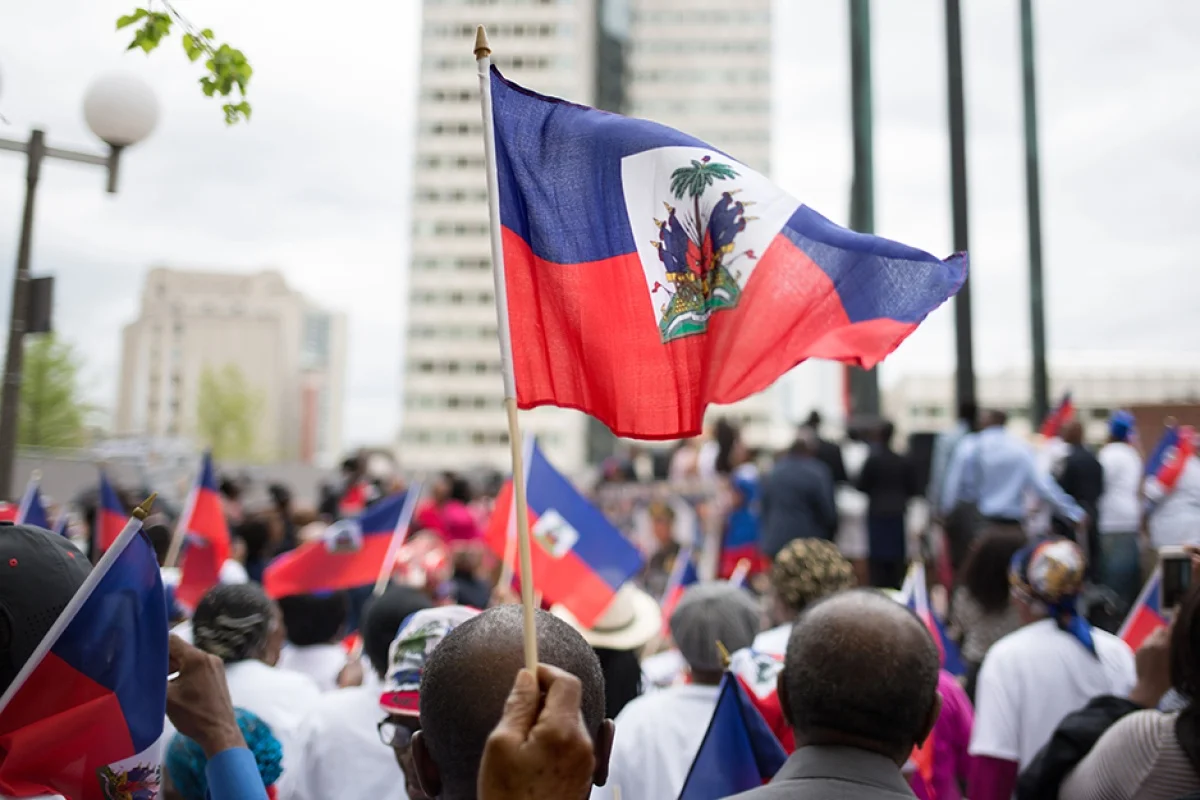
Haiti, the pearl of the Antilles, is a country rich in history and culture. Its public holidays are moments of celebration, commemoration and reflection on its glorious past. Each date has a special meaning, plunging Haitians into a festive and memorable atmosphere. b~January 1: National Independence Day and New Year~b January 1st is a doubly special day in Haiti. On the one hand, it is National Independence Day, commemorating the victory of Haitian slaves over French colonial forces in 1804. On the other hand, it is New Year’s Eve, marking the start of a new year full of promises and hopes. b~January 2: Feast of the Forefathers~b January 2 is dedicated to the memory of ancestors. It is an opportunity for Haitians to remember their roots, to celebrate the cultural heritage passed down from generation to generation. b~February: Carnival, Shrove Monday, Fat Tuesday, Ash Wednesday~b The month of February is marked by Carnival, one of the most colorful and dynamic festivities in Haiti. The streets fill with parades, lively music and wild dancing. Mardi Gras is the culmination of Carnival, followed by Ash Wednesday, marking the start of Lent. b~April: Easter, Maundy Thursday, Good Friday~b Easter celebrations in Haïti include the religious traditions of Maundy Thursday and Good Friday. It is a time of prayer and reflection for many Haitians. b~May 1: Agriculture and Labor Day~b May 1 is dedicated to celebrating the work and importance of agriculture in the life of the country. It is an opportunity to recognize the efforts of workers and to highlight the agricultural sector. b~May 18: Flag Festival~b Flag Day celebrates the Haitian flag, a symbol of independence and national pride. Haitians honor their colors and remember the courage of their ancestors in the fight for freedom. b~May 23: National Sovereignty Day~b This day commemorates the recognition of Haitian sovereignty by France in 1805. It is a moment of national pride and reaffirmation of independence. b~May - August: Ascension~b The Ascension is celebrated between May and August, a religious festival marking the ascension of Jesus Christ into heaven. b~June: Fête-Dieu~b Fête-Dieu, also known as the Feast of the Body and Blood of Christ, is an important religious celebration in June. b~August 15: Assumption of Mary~b The Assumption of Mary is a Christian holiday marking the ascension of the Virgin Mary into heaven. It is celebrated with fervor in Haiti. b~September 20: Birth Anniversary of Jean-Jacques Dessalines~b This date commemorates the birth of Jean-Jacques Dessalines, one of the founding fathers of Haïti and a key leader in the struggle for independence. b~October 17: Death of Dessalines~b October 17 is a day of commemoration of the death of Jean-Jacques Dessalines, recalling his impact on Haitian history. b~November 1: All Saints’ Day~b All Saints’ Day is a religious holiday honoring all saints, celebrated with prayers and visits to cemeteries. b~November 2: Day of the Dead~b All Souls’ Day is an opportunity to pay homage to the deceased by decorating graves and participating in religious ceremonies. b~November 18: Commemoration of the Battle of Vertières~b This day honors the decisive Haitian victory at the Battle of Vertières in 1803, marking the end of the French occupation. b~December 5: Discovery Day~b December 5 celebrates the discovery of the island by Christopher Columbus in 1492. b~December 25: Christmas~b Christmas celebrations in Haïti are marked by family reunions, festive meals and religious traditions. Public holidays in Haïti are much more than breaks from everyday life; these are moments that embody the soul and resilience of a people. Each celebration provides an opportunity to come together, remember the past and look to the future with hope and determination.

Recently Posted

History

History

First black nation to free itself from slavery and gain independence from France in 1804 and influenced other liberation movements around the world, inspiring struggles for freedom and equality.

Natural beauty

Natural beauty

Haïti is blessed with spectacular natural landscapes, including white sand beaches, mountains and rich biodiversity.

Heritage

Heritage

Haïti has a rich historical heritage, including sites like the Citadelle Laferrière and the Sans-Souci Palace, listed as UNESCO World Heritage Sites.

Culture

Culture

Haïti has a rich and diverse culture, influenced by African, European and indigenous elements. Haitian music, dance, art and cuisine are celebrated around the world.

  • +
    • Post