contact@haitiwonderland.com+509 36184317

Discover

Shopping Cart

The Future of Agriculture in Haiti

The Future of Agriculture in Haiti

Agriculture is at the heart of Haiti’s economy and daily life. Despite challenges related to infrastructure and climate conditions, this sector remains vital for the majority of the population. Let’s discover how Haitian agriculture shapes the country, its economy, and its traditions.

Haïti
Haïti
Haïti

An Economy Based on Agriculture

In Haiti, agriculture contributes approximately 20% of the gross domestic product (GDP) and employs nearly 38% of the workforce.

- Economic Role: The agricultural sector is essential for food security and household income, particularly in rural areas.
- Main Products: Haïti is known for its subsistence crops such as corn, rice, beans, and cassava, but also for its export products such as coffee, cocoa, and mangoes.

Despite these assets, agricultural production is often limited by insufficient access to modern technologies, fertilizers, and irrigation systems.

Haïti
Haïti
Haïti

A connection with nature and culture

Haitian agriculture is not limited to the economy: it is deeply rooted in the culture and traditions of the country.

- Local markets: Farmers sell their products in traditional markets, creating places of social and economic exchange.
- Agricultural festivals: Events such as the Fête de l’Agriculture et du Travail (May 1) celebrate the vital role of farmers and their contribution to society.
- Traditional practices: In rural areas, agriculture is often practiced according to methods passed down from generation to generation, combining local know-how and respect for the environment.

Haïti
Haïti
Haïti

The challenges of Haitian agriculture

Despite its importance, Haitian agriculture faces significant obstacles:

- Soil degradation: Approximately 60% of agricultural land is affected by erosion due to deforestation.
- Climate change: Frequent hurricanes and droughts seriously affect harvests.
- Limited access to resources: Farmers often have insufficient financial means to invest in modern equipment or agricultural inputs.

However, many local and international projects are working to improve agricultural infrastructure and promote sustainable practices.

Haïti
Haïti
Haïti

Untapped potential

Haïti has immense agricultural potential that is still underexploited.

- Arable land: Approximately 63% of Haiti’s territory is made up of arable land, although not all of it is used efficiently.
- High Value Products: Haitian coffee, renowned for its quality, could play a key role in the international market with appropriate support.
- Agricultural Tourism: Agritourism could become a new source of income by promoting local agricultural traditions and attracting foreign visitors.

With investment and strategic planning, Haitian agriculture could become an even stronger pillar of the national economy.

Haïti
Haïti
Haïti

The Future of Agriculture in Haiti

Despite the challenges, agriculture remains a source of hope and resilience for Haiti. Initiatives to reforest the country, modernize agricultural practices, and strengthen rural infrastructure offer opportunities for sustainable development.

By supporting its farmers, Haïti can not only feed its population, but also export more and revitalize its economy. Agriculture, as a pillar of national identity, will continue to be a symbol of the country’s wealth and potential.

What are your thoughts on the future of Haitian agriculture? Share your ideas in the comments!

Share
About the Author
Haïti Wonderland
Haïti Wonderland
Leave a comment

Recently Posted

The Port-au-Prince Book Fair announces the opening of author registration for its second edition

The Port-au-Prince Book Fair is a literary initiative of the cultural organization Port-au-Prince Book Fair (OCSLP), based on the desire to promote Haitian culture in general, with a particular focus on literature. The organizers of the event have just announced the registration of authors, who will number 20, and those of publishing houses, who will number 5 for the second edition, which will take place on Friday, December 13, 2024, in the premises of the French Institute in Haiti. The registration deadline is Thursday, October 10 of this year. Please note that the first to arrive who have met the required criteria will be eligible to take part in this second edition of the event, according to the organizers’ admission. This rigorous and restricted selection of only 20 authors aims to guarantee an enriching experience for authors and the public, thus promoting authentic exchanges around the works presented. Independent authors and publishing houses interested in registering their authors to participate in this second edition of the fair are invited to submit their application via this link: https://form.jotform.com/louirardjohn8/salon-du-livre-de-port-au-prince. For publishing and distribution houses planning to exhibit on the day of the event, you can register by clicking on this link: https://form.jotform.com/242596699603068. You are requested to contact them at the following address: salondulivre2023@gmail.com in case of difficulties. The Port-au-Prince Book Fair remains faithful to its philosophy, which is to offer a platform to young authors and to promote the richness of Haitian literary production, by supporting new authors who contribute to its growth. This event is a continuation of the first edition, aimed at allowing the emergence of an environment conducive to exchanges, where young authors can meet, share their experiences and engage in dialogue with readers and book professionals. According to the organizers of the event, your participation as a young author will be essential to enrich the fair and offer a diverse experience to visitors. The invitation to join this noble initiative is extended to young authors who have not yet published 5 books. You who are concerned, the ball is now in your court. Do not hesitate to go and make this day, December 13, 2024, an unforgettable day for all book lovers.

Newsletter

Subscribe to our newsletter to stay informed of all our activities and news on Haiti.

Haitian traditions

Haiti, the pearl of the Antilles, is a country rich in history and traditions. Its vibrant and diverse culture is reflected through its national holidays, cultural festivities, traditional foods, religious beliefs, folk tales, and traditional games. Let’s immerse ourselves in the social fabric of Haïti to discover the beauty of its traditions. b~National Holidays:~b National holidays in Haïti are moments of pride and national unity as January 1, Independence Day, commemorates the victory of Haitian slaves over French colonial forces in 1804, making Haïti the first independent country in Haiti. Latin America and the Caribbean or the commemoration of the Battle of Vertières on November 18. The Battle of Vertières was one of the last great battles of the revolution. It took place in Vertières, near the town of Cap-Haitien. b~Cultural Festivities:~b Haïti is also famous for its cultural festivities, particularly Carnival, which is an explosion of color, dance, and music. Artistic and craft events, such as the Rara festival, are an opportunity for artists to showcase their talent. The Rara, a musical parade, combines folklore and spirituality, creating a unique experience. b~Traditional Foods:~b Haitian cuisine is a delight for the taste buds. Dishes like griot (fried pork), diri djon djon (rice with black mushrooms), and the legendary joumou (joumou soup) are an integral part of Haitian culinary tradition. Bold flavors, spices and cooking methods inherited from African and French tradition make Haitian cuisine unforgettable. b~Vodou:~b Vodou, often misunderstood, is a synchretic religion that incorporates elements of Catholicism, African animism, and indigenous beliefs. It plays a significant role in the daily lives of Haitians, influencing music, dance, and religious rites. Vodou is a profound expression of Haitian spirituality. The Tales (Krik Krak, Tim Tim, Bwa Sèch): Haitian folk tales, passed down from generation to generation, are rich in morality and wisdom. b~Konbit :~b The concept of Konbit represents community solidarity. Haitians come together to perform community tasks, whether in agricultural fields or for construction projects. It is a living example of the collective spirit that permeates Haitian society. The most recent major project to date concerns the construction of the canal from the Massacre River to Ouanaminthe, which took place between September and December 2023. Thousands of inhabitants of the north of the country mobilized all their forces to erect a canal allowing to collect water intended for irrigation of their plantations, with the aim of obtaining better harvests. Despite their modest means, they were motivated by the slogan "KPK" (Kanal la pap kanpe), a direct response to Dominican President Luis Abinader who warned them and did everything in his power to stop the construction of the canal. This channel represents the deep solidarity of Haitians and reaffirms national pride. Despite economic challenges, the people of northern Haïti have demonstrated exceptional determination to work together for a common goal. The slogan “Kanal la pap kanpe” embodies their resilience in the face of external pressures and demonstrates their unwavering will to continue the construction of the canal. b~Traditional Games:~b Traditional games are an essential part of daily life in Haiti. Games like lido, sote kòd, Yoyo, Ralba, Marèl, TiTaTo, Kay, lago kache, Monte kap, teke mab, woule sèk, twa fwa se manbo, and domino bring people together, promoting camaraderie and fun. Haitian traditions are a harmonious blend of spirituality, community, and cultural diversity. Every aspect, from national holidays to traditional games, helps weave the rich cultural tapestry that makes Haïti proud. These traditions are the beating heart of the nation, a precious heritage that continues to be passed down from generation to generation.

Recently Posted

History

History

First black nation to free itself from slavery and gain independence from France in 1804 and influenced other liberation movements around the world, inspiring struggles for freedom and equality.

Natural beauty

Natural beauty

Haïti is blessed with spectacular natural landscapes, including white sand beaches, mountains and rich biodiversity.

Heritage

Heritage

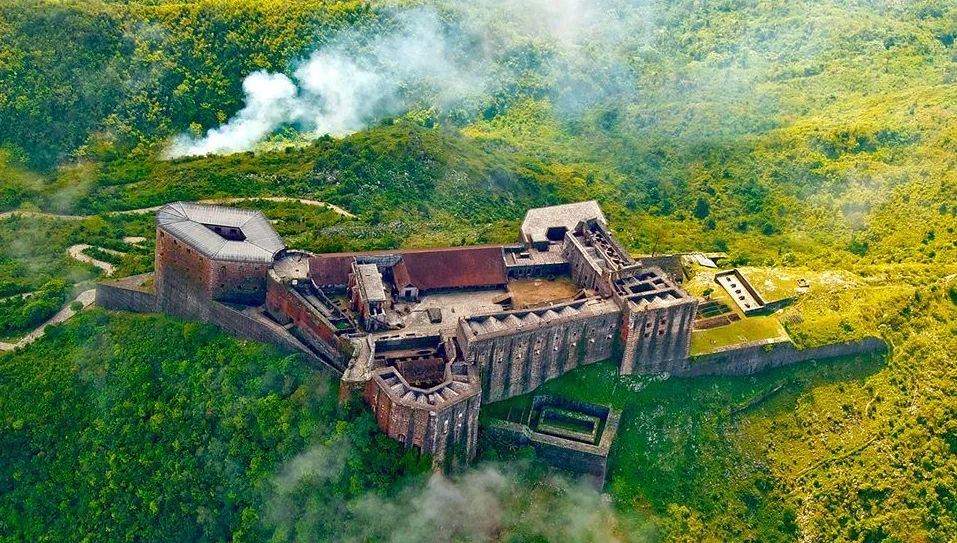
Haïti has a rich historical heritage, including sites like the Citadelle Laferrière and the Sans-Souci Palace, listed as UNESCO World Heritage Sites.

Culture

Culture

Haïti has a rich and diverse culture, influenced by African, European and indigenous elements. Haitian music, dance, art and cuisine are celebrated around the world.

  • +
    • Post