contact@haitiwonderland.com+509 36184317

Discover

Shopping Cart

What is the name of the largest valley in Haiti?

What is the name of the largest valley in Haiti?

The largest valley in Haïti is called the Artibonite Valley. Nestled in the heart of the country, this valley is a true natural and economic wealth for the nation. Thanks to its fertile lands, its importance in agricultural production and its role in Haitian history and culture, the Artibonite Valley is an emblematic place in many ways. In this article, we will explore the characteristics that make this valley a national treasure.

The Artibonite Valley: an impressive geographical space

The Artibonite Valley is located in the department that bears its name, Artibonite, in the northwest of Haiti. It stretches for several kilometers and is crossed by the Artibonite River, the longest river in the country.

The lands of this valley are among the most fertile in Haiti, favoring flourishing agriculture. This agricultural dynamism makes the Artibonite Valley one of the most important rural areas for the Haitian economy, particularly thanks to the intensive cultivation of rice, an essential commodity for the population.

A granary for Haiti

The Artibonite Valley is often referred to as the country’s "rice granary". It produces approximately 80% of the rice consumed by Haitians, making it a strategic region for food security. In addition to rice, other crops such as corn, vegetables and fruits are grown there, strengthening the country’s food autonomy.

This agricultural production relies largely on the irrigation system supplied by the Artibonite River and the Péligre Dam. Despite these advantages, the region faces challenges such as soil erosion and frequent flooding, which require interventions to ensure the sustainability of agricultural land.

A place full of history and culture

The Artibonite Valley is also an important witness to Haiti’s history. During the Haitian Revolution, this region played a strategic role in the fight for independence. Many battles took place in and around the valley, which today houses historical remains related to this crucial period.

The local culture also reflects the importance of this region. The inhabitants of the Artibonite Valley celebrate their traditions through festivals, music and dances that highlight their connection with the land and water. The region’s rich and tasty gastronomy is another testimony to its heritage.

Some key figures about the Artibonite Valley

- Area: The valley covers a vast area of ​​approximately 4,000 km², making it one of the largest agricultural regions in the country. - Rice production: Approximately 80% of Haiti’s rice comes from this region.
- Population: More than 1.5 million people live in this region, largely dependent on agriculture for their livelihoods.
- Climate: The valley enjoys a tropical climate, ideal for growing rice and other agricultural products.

An ecosystem to preserve

Like any major agricultural region, the Artibonite Valley faces environmental challenges. Deforestation in the surrounding mountains causes soil erosion, which threatens the fertility of the land. In addition, unsustainable agricultural practices and climate change pose risks to the future of agricultural production.

Local and international initiatives are working to address these issues, including through reforestation programs, promoting agroforestry, and strengthening irrigation infrastructure.

The Artibonite Valley, a National Jewel

The Artibonite Valley is not only a place of agricultural production; it is a symbol of Haiti’s natural and cultural wealth. It embodies the resilience and creativity of a people who make the most of their environment to feed the nation and preserve their heritage.

If you have visited the valley or know other fascinating facts about it, please share them in the comments!

Share
About the Author
Appolon Guy Alain
Appolon Guy Alain
Appolon Guy Alain

Full Stack Developer, Créatif, expérimenté, passionné des nouvelles technologies et de l’art.

See other articles from Appolon Guy Alain
Leave a comment

Recently Posted

Newsletter

Subscribe to our newsletter to stay informed of all our activities and news on Haiti.

The Republic of the Stateless?

Haïti is making headlines all over the world. And it’s not good news. The exploits of Haitians rarely generate so much interest, but we always tend to point out the excesses, spill ink to stir up thorns in the side, broadcast on loop to relay the chaos that is raging. There is hardly any media to make amends for the resilience of this cornered people. No one to highlight the fierce resistance that serves as fuel for this people hanging in the gorges of death. And what if it was to a certain extent the only way to talk about this country to finally attract attention? It is July 26, 2024. The Olympic Games have just started in France. The 33rd Olympiad of modern times. Without realizing it, according to Forbes Magazine, Haïti ranks among the ten nations with the best costume, proudly pointing to third place. At the same time, miles away from France, on “The Island of Skillfully Orchestrated Chaos,” Haitians do not even realize how much this recognition borders on irony. A paradox whose unpopular evocation is likely to greatly displease. An aerial image shows the city of Paris in all its splendor, illuminated like the gates of paradise, reflecting all the grandeur of France, all the magnificence it has acquired over the centuries, without forgetting the contribution of the blood shed by the horrible machine of colonization. I close my eyes, I go back in time, I see again this boy left to his own devices, lost without even knowing it, doomed to failure without even understanding it. And then there are the others. Boys in the same situation, or worse. Banished from society, they do not know what life has in store for them. They form the elegant class of the marginalized, in their quality of scoundrels, good-for-nothings, and thugs who spoil the splendor of society. This contrast challenges me, and I wonder for a moment if those who live the chaos from the outside grasp the stakes and the reality of the situation. Moreover, it seems to me that even the majority of Haitians living in the territory have no notion of the fundamental and essential aspects of the situation.

The literary and philosophical club of Galette-Chambon reveals its second edition: a journey to the heart of books

In an atmosphere of madness, at the Auditorium Saint Jean Marie Vianney de Galette-Chambon, where the laughs broke out, the music resounded, and the talents were dismented, started the second edition of the reading competition, around the theme "Ann Li pou n chanje peyi n ». This initiative, organized by the literary and philosophical club of Galette Chambon (CLPGACH) on Friday 06 October 2024, was marked by an overflowing passion within the public. The spectators came for several reasons: to support the applicants and live their presentations. The works, as "thus spoke of the uncle", "the vocation of the elite" of Jean Price Mars, "the ten black men" of Etzer vilary and "the courage to live in Haïti in the 21st century" of Hérold Toussaint, present innovative arguments linked to the societal context. They intertwine with folklore, Haitian culture, sociology and anthropology. These books are given to the applicants for a period of 15 days. Back, they come with their summaries and, after each presentation, in turn, reveal new perspectives on burning questions and delicate themes from works, while taking into account the concepts learned in public speaking. In this arena where the verve and the verb clash as well as logic, conviction, precision and clarity, it is a question of "saying all in a few words". The judgments are based on three criteria: the methodology concerning the substance and the form of the work; The eloquence which concerns verbal and non -verbal discourse (micro management, good pronunciation, etc.); And finally, an essential criterion: understanding. This is to assess whether the applicant has controlled the work. Questions can be asked without ignoring the context in which he lives. In addition, assistants have the opportunity to vote for the applicant who charmed them the most. This vote is precious at a higher level. Note that this vote can be made not only face -to -face but also online on our Facebook page CLPGACH. In addition, the public has always changed well through this trip to the universe of regional authors. The latter weave the frame and make vital the very repertoire of the competition vital, made up of impactful works such as "the price of irresponsibility" of Montuma Murat, "the return to citizen responsibility" written by Jean Jacquesson Thelucier and "Courage to live in Haïti in the 21st century "Professor Hérold Toussaint, to name a few. Although they died, some writers still live at the heart of our situation through their inheritance. Among them, it is necessary to quote: "the vocation of the elite" of Doctor Jean Price Mars, "the ten black men" of Etzer Villaire and "the Governor of the dew" by Jacques Roumain, as well as so many others . For this literary event to be moving and meets expectations for this second edition, many sacrifices are necessary on the part of the staff as well as the public which never leaves us alone. In this sense, we would like to thank them and call all those wishing to support this event. Indeed, if this competition is a solution found to advance together towards a common goal, its success depends on everyone’s commitment. About two years ago, the security climate in the area was not conducive to the completion of the competition. Although it is not yet ideal today, it is time to triumph over obscurantism and fight the dictatorship of ambient ignorance.

Recently Posted

History

History

First black nation to free itself from slavery and gain independence from France in 1804 and influenced other liberation movements around the world, inspiring struggles for freedom and equality.

Natural beauty

Natural beauty

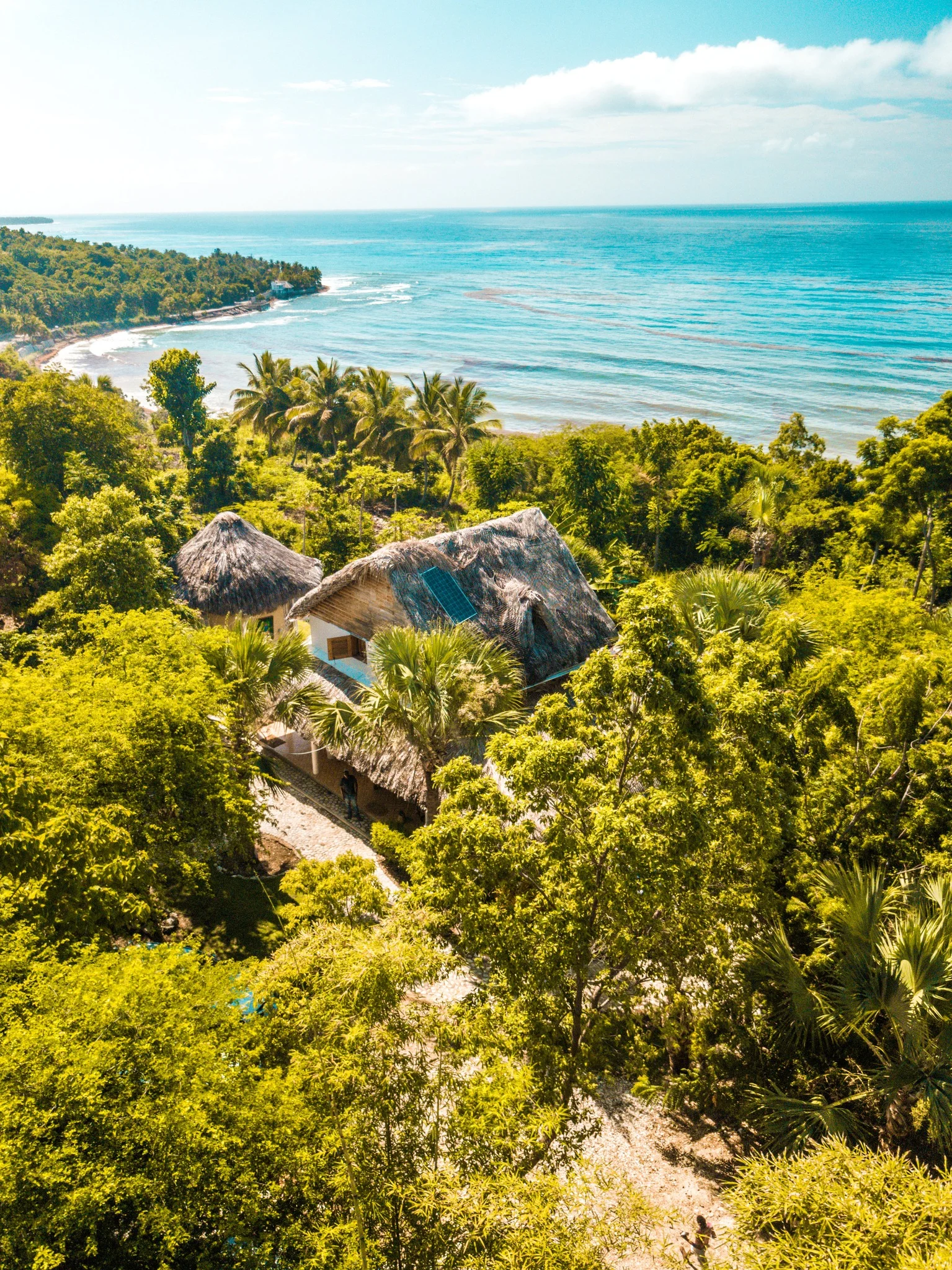
Haïti is blessed with spectacular natural landscapes, including white sand beaches, mountains and rich biodiversity.

Heritage

Heritage

Haïti has a rich historical heritage, including sites like the Citadelle Laferrière and the Sans-Souci Palace, listed as UNESCO World Heritage Sites.

Culture

Culture

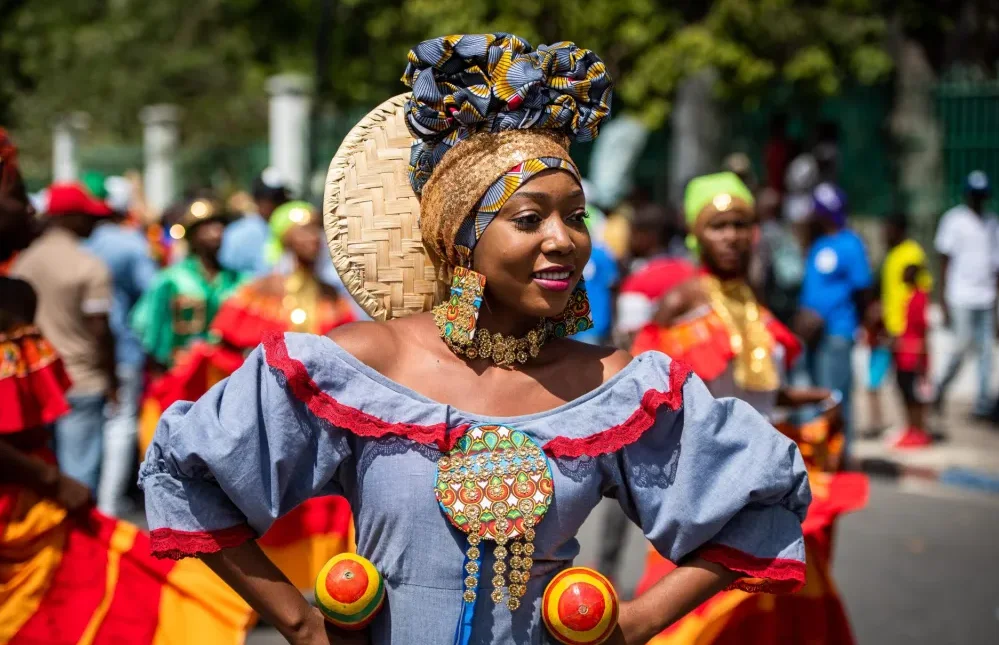
Haïti has a rich and diverse culture, influenced by African, European and indigenous elements. Haitian music, dance, art and cuisine are celebrated around the world.

  • +
    • Post