contact@haitiwonderland.com+509 36184317

Discover

Shopping Cart

Melchie Daëlle Dumornay, a Haitian Star Among the Elite of World Football
  • News
  • August 08, 2025

Melchie Daëlle Dumornay, a Haitian Star Among the Elite of World Football

Melchie Daëlle Dumornay is a professional Haitian footballer who plays in the first division of the French women’s league. She was born in Haiti, in a mid-sized town called Mirebalais, on August 17, 2003. At just 21 years old, she has become the only Haitian personality, regardless of gender or category, to be nominated among the 30 candidates for the prestigious individual award that is the France Football Ballon d’Or.

Indeed, the 21-year-old finds herself unsurprisingly on the shortlist for the 2025 Ballon d’Or, alongside some of the biggest names in world football, after an exceptional season both individually scoring 24 goals and providing 10 assists in just 31 matches and collectively. She reached the semi-finals of the UEFA Women’s Champions League (where she was named best player of the 2024-2025 season) and won the French league title with her Lyon teammates.

Haïti
Haïti
Haïti

A Confirmed Talent

Melchie Daëlle Dumornay is simply confirming the incredible potential she began showing as a teenager. Already at just 15, she had achieved feats that prompted a club like Stade de Reims to closely follow her and sign her as soon as she turned 18. Since then, she has continuously made an impact and opened the door to a future full of achievements at the highest levels of world football.

Being named by the prestigious Goal magazine as the NxGn Award winner in 2022 an award given each year to the most promising young player in world football confirmed her enormous potential. One season later, in 2023, she was named best player by the CONCACAF confederation.

See as well

Haïti
Haïti
Haïti

An Extraordinary Fighter

What must be especially understood is that Melchie Daëlle Dumornay is a survivor. Where she was born, becoming a footballer was far from obvious. Not to mention that even now, as she shines, thousands of young women like her are suffering under the insecurity imposed by numerous armed groups that control large parts of Haiti, including Mirebalais, the champion’s hometown.

However, it would be entirely unfair to attribute the success of the 21-year-old to mere luck, as she has truly given her all to perfecting her talent. In her hometown, she is even described as a born fighter. It is said that she started playing football by challenging older boys. It’s worth noting that she didn’t have a real role model in this regard her path was entirely revolutionary.

And now, just as people speak of "Mbappé projects" in France, she has made the idea of a “Melchie project” possible through her faith and passion for her country’s most beloved sport in Haiti, in the Haitian diaspora, and even across the globe. She is well on her way to becoming a global star, with the power to inspire people in every corner of the world.

Share
About the Author
Moise Francois
Moise Francois
Moise Francois

Journalist editor, poet and apprentice lawyer.

See other articles from Moise Francois
Leave a comment

Recently Posted

Newsletter

Subscribe to our newsletter to stay informed of all our activities and news on Haiti.

Jean-Jacques Dessalines, leader of the Haitian Revolution

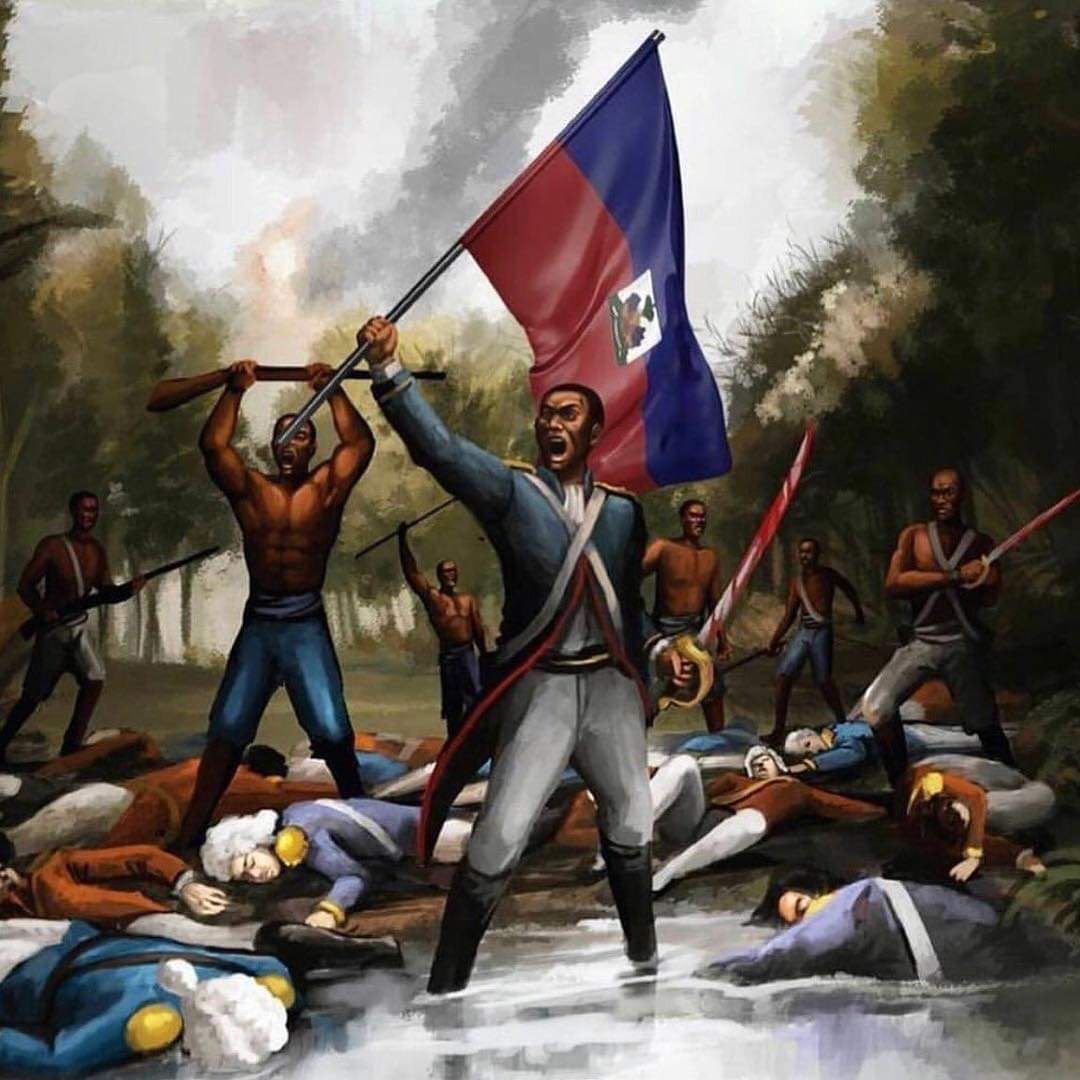
In the annals of the history of Haiti, an island located in the Caribbean at the entrance to the Gulf of Mexico and shared with the Dominican Republic, Jean-Jacques Dessalines emerges like a phoenix from the ashes of oppression. Born a slave on September 20, 1758 in the home of Henri Duclos, in Cormier (Grande-Rivière-du-Nord), in the French colony of Saint-Domingue, Dessalines was a Creole of African (Afro-Caribbean) origin. Freed during the 1794 abolition achieved through slave revolts, actually served as an officer in the French army during the French Revolution. At that time, the ideas of freedom and equality were at the heart of the concerns of the inhabitants of the colonies. Dessalines actively participated in the fighting against the Spanish and British forces, alongside the French, in Santo Domingo. Having risen to the rank of Lieutenant General, Jean-Jacques Dessalines turned against the French during the Leclerc expedition, sent to Saint-Domingue by Bonaparte to reestablish colonial authority and slavery during the Haitian Revolution. After the capture and deportation of Toussaint Louverture to France on June 7, 1802, Dessalines assumed a leading role in continuing the struggle for independence. He led numerous battles, including the battle of Crête-à-Pierrot in March 1802, where he galvanized his soldiers with his famous declaration: “Let those who want to remain slaves of the French leave the fort, let those, on the contrary, who want to die as free men, line up around me.” On January 1, 1804, Jean-Jacques Dessalines achieved the long-awaited goal of independence by proclaiming Haïti as a sovereign nation, becoming the second country in the Americas to gain independence from a colonial power. He became the first leader of the newly formed nation and was named Emperor under the name James I. However, his imperial reign was marked by authoritarian and brutal policies, including the massacre of many white settlers and the redistribution of land to peasants that was in the hands of the generals of the independence army. In addition, he organized the hunt for delinquents in the city while implementing rigorous agrarian policies, considering that they represented a threat to the stability of the nation, these controversial actions caused divisions within Haitian society. Dessalines was assassinated on October 17, 1806 following a plot organized by some of his generals in the Haitian army. His death marked the end of his brief but influential period in power. Despite the controversies surrounding his methods, he is recognized as the main architect of Haiti’s independence and his name was honored in 1903 by being attributed to the Haitian national anthem, La Dessalinienne, composed by Justin Lhérisson.Finally, the great visionary man Jean Jacques Dessalines remains an emblematic figure in the history of Haiti, recognized for his role in the fight for independence and the end of slavery in the region.

Recently Posted

History

History

First black nation to free itself from slavery and gain independence from France in 1804 and influenced other liberation movements around the world, inspiring struggles for freedom and equality.

Natural beauty

Natural beauty

Haïti is blessed with spectacular natural landscapes, including white sand beaches, mountains and rich biodiversity.

Heritage

Heritage

Haïti has a rich historical heritage, including sites like the Citadelle Laferrière and the Sans-Souci Palace, listed as UNESCO World Heritage Sites.

Culture

Culture

Haïti has a rich and diverse culture, influenced by African, European and indigenous elements. Haitian music, dance, art and cuisine are celebrated around the world.

  • +
    • Post