contact@haitiwonderland.com+509 36184317

Discover

Shopping Cart

Haiti: The Ministry of Economy and Finance (MEF) Launches the 2025-2030 Recovery and Development Plan from the Far North
  • News
  • September 07, 2025

Haiti: The Ministry of Economy and Finance (MEF) Launches the 2025-2030 Recovery and Development Plan from the Far North

Haiti launches its 2025-2030 Recovery Plan from the Far North: economy, social services and institutions, heading for a more prosperous future.

Cap-Haïtien, September 4-6, 2025 The Hostellerie Roi Henry Christophe was the scene of a major event for the country’s future: the official launch of the 2025-2030 Recovery and Development Plan by the Ministry of Economy and Finance (MEF), under the leadership of Minister Alfred Fils METELLUS.

This initiative, carried out in collaboration with several sectoral ministries and technical and financial partners, has the ambitious objective of revitalizing the Haitian economy, strengthening basic social services, and consolidating public institutions.

CP : MakoLove
CP : MakoLove
CP : MakoLove

Building Haiti’s Future: An Inclusive and Participatory Plan

The MEF has chosen the Far North as the starting point for this recovery process. The North, North-West, and North-East departments were the focus of the initial consultations, due to their industrial, agricultural, tourism, and cultural potential, as well as their challenges in infrastructure, social services, and governance.

This regional tour is part of a series of inclusive consultations aimed at integrating territorial priorities and local realities into the national plan.

See as well

Three Days of Debates and Consultation

Day 1 September 4, 2025

Discussions began with local authorities, civil society, and the private sector. Together, they identified the main challenges and proposed medium-term solutions to revive the economy and improve public services.

Day 2 September 5, 2025

The day was dedicated to local authorities and young leaders. Youth organizations expressed their frustrations but also made constructive proposals that will play a key role in achieving the plan’s objectives.
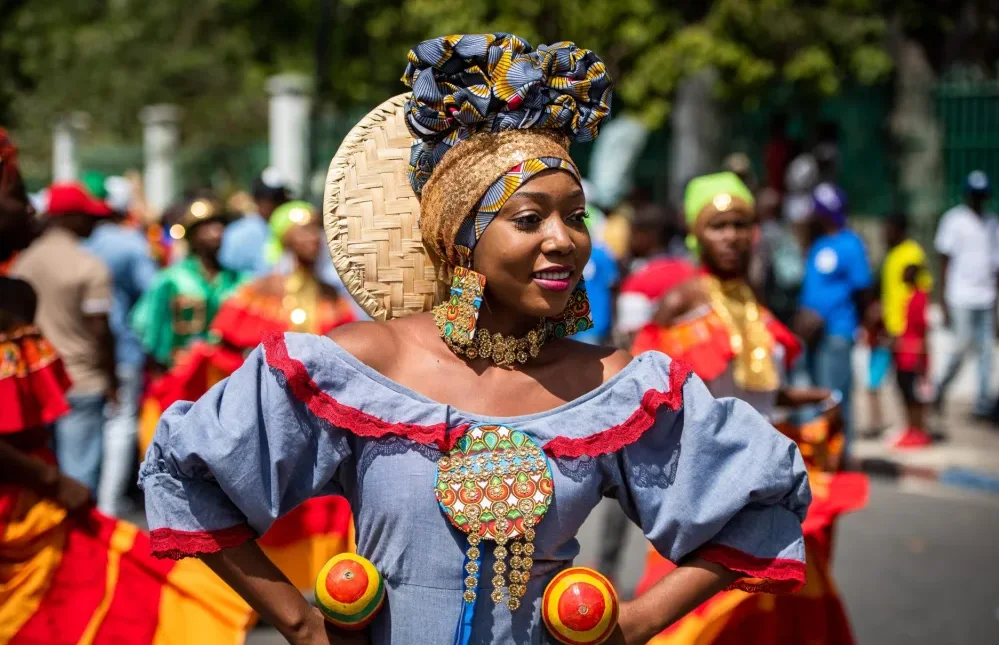
Day 3 September 6, 2025

The tour concluded with a meeting with journalists and media stakeholders at the Ekologik Resort. This opportunity for sharing ensured that the population’s key messages were heard and that they would be reflected in future decisions.

Key Objectives of the Consultations

The MEF defined three main objectives for this round of consultations:

Inform and raise awareness about the three pillars of the plan and the rationale guiding future interventions.

Collect and prioritize the needs expressed by elected officials, the private sector, civil society, and youth.

Strengthen consultation between the State, local authorities, socioeconomic stakeholders, and technical and financial partners to better coordinate efforts.

Toward Concrete and Measurable Results

These consultations aim to generate:

Recommendations adapted to the unique context of the Far North.

A clear prioritization of priority projects to ensure efficient resource allocation.

Strengthened engagement of local stakeholders to ensure the plan reflects their aspirations.

Sustainable dialogue between the state and local authorities to improve governance and coordination of future initiatives.

A Strong Signal for the Future

This 2025-2030 Recovery and Development Plan constitutes a prioritized investment framework and a strategic budgetary orientation. It does not start from scratch: it incorporates lessons from previous experiences to ensure a realistic, inclusive, and action-oriented approach.

With this launch in the Far North, the MEF is sending a strong signal: Haïti is ready to turn the page on economic stagnation and build a more prosperous, equitable, and resilient future.

Share
About the Author
Appolon Guy Alain
Appolon Guy Alain
Appolon Guy Alain

Full Stack Developer, Créatif, expérimenté, passionné des nouvelles technologies et de l’art.

See other articles from Appolon Guy Alain
Leave a comment

Recently Posted

Haiti: Is buying votes to be elected a form of corruption or political strategy?

The democratic political system requires the active participation of citizens in the management of the city. Everyone freely expresses their opinion for harmonious management of society. Generally the choices are made from the organization of free and honest elections. However, sometimes candidates use diverted means to achieve their ends. Can we consider this act as a form of corruption or a political strategy? In a democratic society, the organization of elections at regular intervals is an imperative. Managers are generally elected by the majority of voters, which ensures them a certain legitimacy within the framework of government management. Today, more and more, around the world, the elections are controlled by economic power. This sector gives a lot of silver to candidates who often buy the media services in order to have certain visibility through mass communication means (radio, VAT, Internet, etc.) and do without constraints Many very expensive trips, which require enormous capital. By the way, the possibility that a candidate with low financial means of being elected is increasingly reduced in Western societies. Despite everything, it is illegal to buy the votes of the voters. It is an act of corruption that should lead to criminal sanctions. No society can tolerate this practice which could hamper the degeneration of the democratic system and, consequently, of the electorate system. Civil society and human rights organizations must be vigilant in order to avoid these harmful drifts in the democratic system. In fact, the temptation to bribe the voters in order to access elective positions must be denounced as an act of corruption. In doing so, will lead to political dissenting between duty, and law, because citizens are called upon to freely choose the leaders of the city. Ultimately, the organization of the elections must be the fruit of consensus between the various groups of the social system. Managers must be chosen according to their ability to provide adequate answers to the problems of the company. They can still benefit from powerful financial means from other partners. But, giving voters directly money is a condemnable detective act which reduces the autonomy of action and thinking of voters. In this sense, the latter’s vote must reflect the desire to choose or build a fair, fair and favorable company.

Newsletter

Subscribe to our newsletter to stay informed of all our activities and news on Haiti.

Jean-Jacques Dessalines, leader of the Haitian Revolution

In the annals of the history of Haiti, an island located in the Caribbean at the entrance to the Gulf of Mexico and shared with the Dominican Republic, Jean-Jacques Dessalines emerges like a phoenix from the ashes of oppression. Born a slave on September 20, 1758 in the home of Henri Duclos, in Cormier (Grande-Rivière-du-Nord), in the French colony of Saint-Domingue, Dessalines was a Creole of African (Afro-Caribbean) origin. Freed during the 1794 abolition achieved through slave revolts, actually served as an officer in the French army during the French Revolution. At that time, the ideas of freedom and equality were at the heart of the concerns of the inhabitants of the colonies. Dessalines actively participated in the fighting against the Spanish and British forces, alongside the French, in Santo Domingo. Having risen to the rank of Lieutenant General, Jean-Jacques Dessalines turned against the French during the Leclerc expedition, sent to Saint-Domingue by Bonaparte to reestablish colonial authority and slavery during the Haitian Revolution. After the capture and deportation of Toussaint Louverture to France on June 7, 1802, Dessalines assumed a leading role in continuing the struggle for independence. He led numerous battles, including the battle of Crête-à-Pierrot in March 1802, where he galvanized his soldiers with his famous declaration: “Let those who want to remain slaves of the French leave the fort, let those, on the contrary, who want to die as free men, line up around me.” On January 1, 1804, Jean-Jacques Dessalines achieved the long-awaited goal of independence by proclaiming Haïti as a sovereign nation, becoming the second country in the Americas to gain independence from a colonial power. He became the first leader of the newly formed nation and was named Emperor under the name James I. However, his imperial reign was marked by authoritarian and brutal policies, including the massacre of many white settlers and the redistribution of land to peasants that was in the hands of the generals of the independence army. In addition, he organized the hunt for delinquents in the city while implementing rigorous agrarian policies, considering that they represented a threat to the stability of the nation, these controversial actions caused divisions within Haitian society. Dessalines was assassinated on October 17, 1806 following a plot organized by some of his generals in the Haitian army. His death marked the end of his brief but influential period in power. Despite the controversies surrounding his methods, he is recognized as the main architect of Haiti’s independence and his name was honored in 1903 by being attributed to the Haitian national anthem, La Dessalinienne, composed by Justin Lhérisson.Finally, the great visionary man Jean Jacques Dessalines remains an emblematic figure in the history of Haiti, recognized for his role in the fight for independence and the end of slavery in the region.

Recently Posted

History

History

First black nation to free itself from slavery and gain independence from France in 1804 and influenced other liberation movements around the world, inspiring struggles for freedom and equality.

Natural beauty

Natural beauty

Haïti is blessed with spectacular natural landscapes, including white sand beaches, mountains and rich biodiversity.

Heritage

Heritage

Haïti has a rich historical heritage, including sites like the Citadelle Laferrière and the Sans-Souci Palace, listed as UNESCO World Heritage Sites.

Culture

Culture

Haïti has a rich and diverse culture, influenced by African, European and indigenous elements. Haitian music, dance, art and cuisine are celebrated around the world.

  • +
    • Post