contact@haitiwonderland.com+509 36184317

Discover

Shopping Cart

The Architects of Chaos
  • News
  • January 17, 2025

The Architects of Chaos

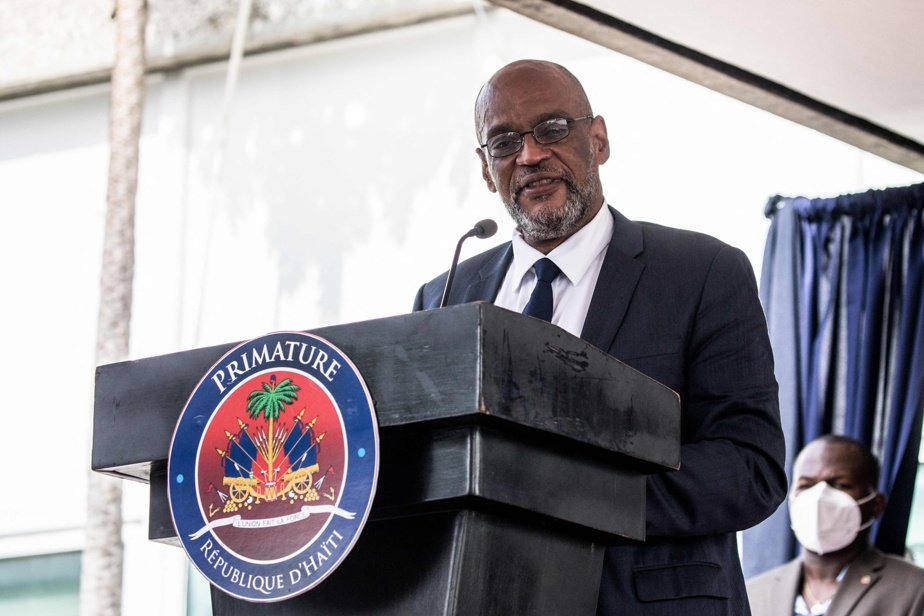
In Haiti, chaos is not a simple consequence of events, but a carefully crafted product of actors whose decisionsor lack thereofworsen the crisis every day. At the head of this orchestration of failures is the Presidential Transitional Council (CPT), led by architect Leslie Voltaire since October 2024. Presented as a temporary solution to get Haïti out of its impasse, the CPT quickly proved ineffective and incapable of responding to the country’s urgent challenges.

Read the article in :

French : Les architectes du chaos

Spanish : Los arquitectos del caos

Creole : Achitèk yo nan dezòd

Reference page : The Architects of Chaos

Other version : The Architects of Chaos

Chaotic Leadership

Created in April 2024, the CPT raised many hopes under the leadership of Edgar Leblanc Fils, Coordinator of the political party Organization of the People in Struggle (OPL). But these hopes were quickly extinguished. Internal divisions, poor governance, and corruption scandals have transformed this body into a caricature of administrative inefficiency. In less than a year, the CPT has become a symbol of impotence, unable to propose concrete solutions to the political crisis that has paralyzed Haïti since the fall of the Duvalier regime and which worsened after the assassination of President Jovenel Moïse in 2021. The fall of the Duvalier regime raised a lot of hope, but as Meudec states, “The liberating surge of 1986 was followed by a form of stagnation in the political transition process marked by the return of corruption and violence” (Meudec 2007, 47). Indeed, after approximately 39 years of “democratic governance,” the country is nothing but chaos and desolation.

The country has remained without elections since 2016, reinforcing the illegitimacy of the institutions. The economic and political elite contribute to this blockage by refusing the reforms necessary to establish a climate of trust and stability. Far from being victims, these elites take advantage of the ambient disorder to maintain their privileges.
See as well

A chaotic economy

The Haitian chaos is as much economic as political. According to the report of the Haitian Institute of Statistics and Informatics (IHSI), the Gross Domestic Product (GDP) contracted by 4.2% when comparing the last two fiscal years, going from 592.7 billion gourdes for the 2022-2023 fiscal year to 568.0 billion gourdes for the 2023-2024 fiscal year. According to the IHSI, this fall “constitutes the largest decline in the economy ever recorded since the 5.7% fall in GDP in 2009-2010, following the devastating earthquake of January 12 of the same year” (IHSI 2024, 4). The country ends 2024 with an inflation rate of 25.8% (IHSI 2024, 4). Daily survival has become a struggle for the majority of Haitians. Informal trade dominates the economy, accounting for nearly 80% of activities, while foreign investment is almost non-existent.

The Presidential Transitional Council, under the leadership of architect Leslie Voltaire, has shown no strategic vision to revive the economy. Economic plans are non-existent, and international funds often disappear into opaque circuits, further fueling systemic corruption. This corruption is not only the work of politicians. Indeed, economic and political elites, by controlling key sectors such as food and energy imports as well as internal security, participate in the perpetuation of poverty and dependency.

A chaotic security situation

Gang violence has become the main factor of instability in the country. These gangs dictate their laws, extort citizens, prevent access to essential services, and force thousands of people to flee their homes. According to the Haïti Expert Group, the number of displaced people in Haïti is estimated at more than 500,000 people by June 2024, an increase of nearly 60% compared to March 2024 (Haïti Expert Group 2024, 29).

We are also witnessing a process of transmission of violence to children. Recruited by force or lured by illusory promises of power and wealth, these children become both victims and instruments of violence. The Haïti Expert Group states that “the recruitment of children as young as 10 years old by gangs has increased considerably and children may now represent up to 50% of all gang members” (Haïti Expert Group 2024, 31). Lack of education, poverty and lack of prospects are the main drivers of this mass enrollment and contribute to the process of maintaining chaos.

Beven brings Haïti among the elite of world slam

Beven brings Haïti among the elite of world slam

This Thursday, November 14, 2024, the young slam artist Youven Beaubrun, Beven by his stage name, qualified Haiti, for the very first time in its history, for the final of the Slam World Cup. This competition, which brings together the best slam artists on the planet, took place on African soil, more precisely in Togo. In a country held by the throat, a country that is dying from start to finish, under the dangerous feat of a certain armed part of its youth, Beven’s extraordinary performance in this competition resonates with the echo of a whole piece of the country, in the thirst for beauty. Beven is the symbol of a youth that refuses to give in to the chaos that surrounds the face of its motherland. Art, slam being his field of specialization, is used in the best possible way to make hope resonate. And to continue to believe that a country that made 1804 cannot afford the luxury of sinking so hard in the face of human history. "It is with pride that I advanced in this competition. Especially with the crisis that is going through the country at the moment. My qualification for the final is an eternal sign of hope, which confirms the fact that not everything in this country will end in death," the young slammer told us before going to compete in the final. The final took place on Saturday, November 16, 2024, where Beven had his chance to represent his wounded land well on the doorstep of a world victory, a victory that if it had taken place, would have been initialed in the name of an entire people, in the absolute race against a great chaos that dreams only of suffocating it. Although he failed to win this cup (finishing in sixth place overall), the Haitian slam champion had time to inspire an entire country during his great journey in this competition. This is only a postponement, next time victory will be achieved for sure.

A hypothetical future

Haitian youth, who represent more than 60% of the population, are both the main victims of this chaos and their greatest chance for recovery. However, political and economic actors ignore this potential, preferring to exploit this vital force for destructive purposes, as evidenced by the massive enrollment of young people in gangs.

However, with targeted investments in education, vocational training and entrepreneurship, these young people could become an essential lever for reconstruction. Local initiatives, supported by civil society and international partners, must aim to offer viable opportunities to these young people, in order to divert their energy from gangs and use it to build a more just and united society.

Build or destroy?

The chaos that Haïti is experiencing today is not the result of inevitability. It is the result of a chronic lack of leadership, systemic corruption and the complicity of elites who profit from the ambient disorder. The architects of chaos are not anonymous figures: they occupy positions of power and their decisions shape the country’s collapse every day.

To escape this spiral, a complete overhaul of institutions and a renewal of political and economic elites are essential. Haïti will only be able to recover with truly committed leaders, breaking with the dominant habitus, and a mobilized, committed and combative youth. The architects of chaos must give way to the builders of hope, because only a collective commitment, built on the ideal of freedom for all of the Fathers of the nation, will allow Haïti to regain its dignity and stability.

Citizen Ken

January 7, 2025

Conference / Festival Quatre Chemins / 21st edition

Conference / Festival Quatre Chemins / 21st edition

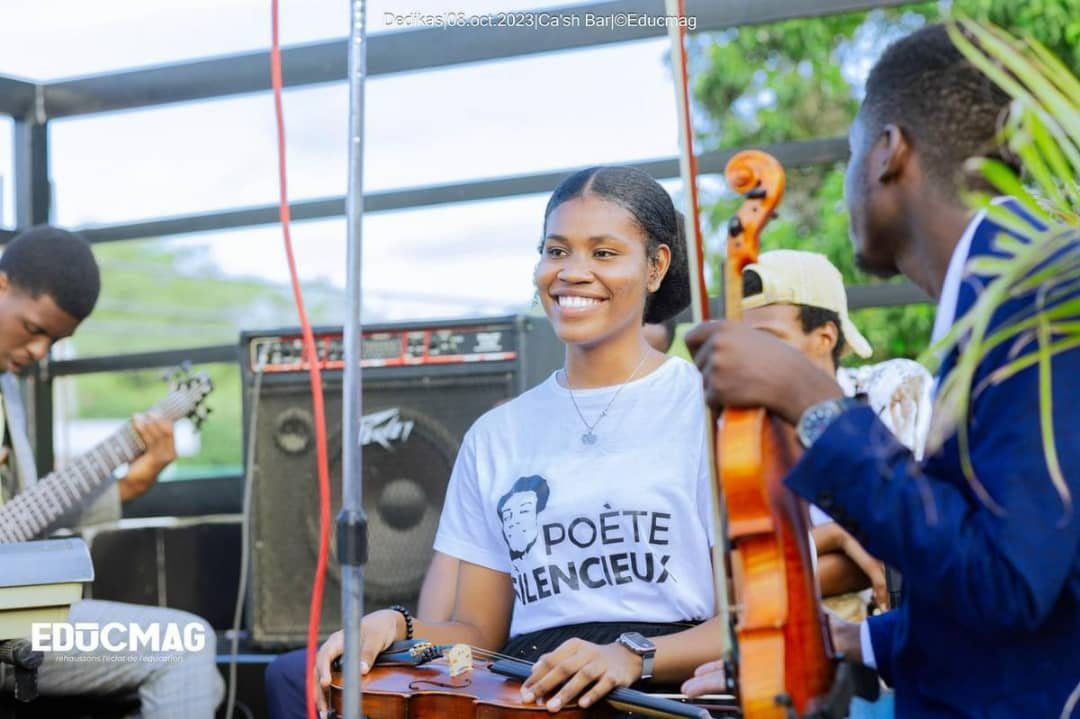
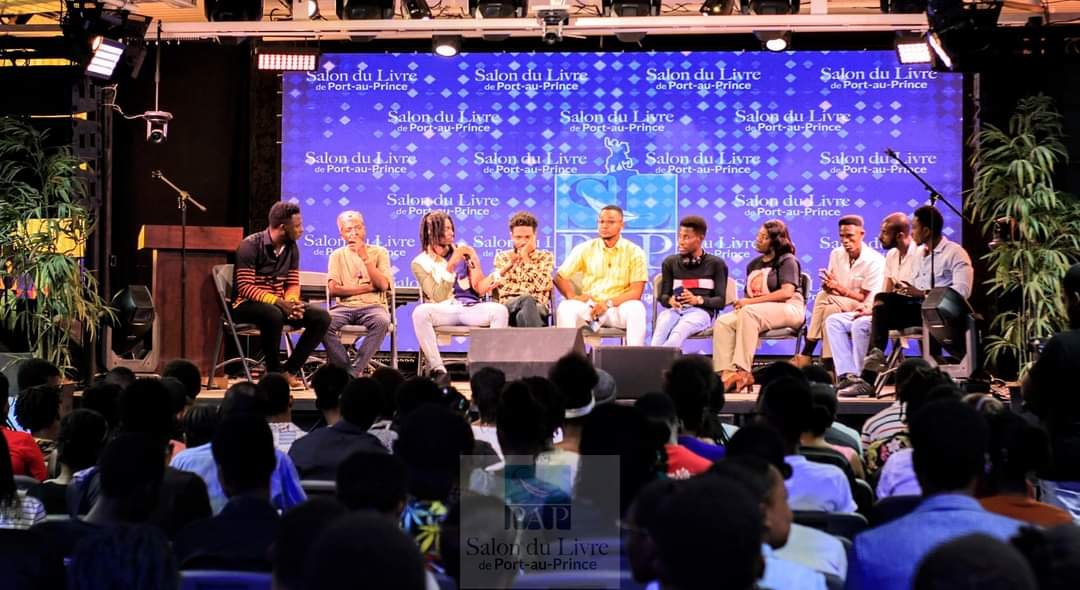
The impact of collective and individual trauma on the personal development of young people in Port-au-Prince While writers, actors, dancers, poets, among others, have gratified us with their performances, the master’s degree student in psychology at the Faculty of Human Sciences (FASCH), Lourdya Blaise, spoke with the audience about trauma. Structured around the theme "Youth and Trauma, analysis of the impact of collective and individual trauma on the personal development of young people living in Port-au-Prince between 2010-2024", this conference gave rise to enriching discussions. During this meeting, moderated by Michaël Formilus, Ms. Blaise showed how the events that have taken place in the country have caused cases of trauma among Haitians. According to the student, citing the American Psychological Association, we speak of trauma as a consequence of trauma. The latter is explained by the fact that we feel threatened, whether it is the person in question or their loved ones. However, she specifies that a collective trauma remains depending on the impact that the event has on the individual. To illustrate her remarks, she mentioned the earthquake of January 12, 2010, considered a collective trauma, insofar as it still occupies our minds. This tragedy reminds us of the disappearance of our loved ones and enormous losses. This is the case of a trauma that becomes a collective trauma. For the student, it should be emphasized that when an event occurs, some people are traumatized and others are not. According to him, the violence of armed gangs is not perceived in the same way, says Ms. Blaise. There are people who have fled their homes but are not traumatized. In fact, some people see traumatic situations as a passing event, she says. The speaker also spoke about collective trauma, which, according to him, preoccupies the mind, even if we no longer experience it. It manifests itself in several forms: lack of sleep, fear psychosis, intrusive thoughts, intense heartbeat, etc. Generally, symptoms related to trauma are hard to die. When it persists, it becomes acute stress. To deal with it, we must talk to other people. If the situation persists, acute stress turns into a phase of post-traumatic stress; in this case, we must confide in a trusted person or go see a mental health specialist, she advises. In her presentation, Lourdya Bazile also drew attention to the psychological state of children in these times. According to the presenter, children are also facing this crisis situation, even if they do not talk about it to their parents. As much as adults, children also plan their future. Faced with flouted school years, they become pensive and worried, she stressed. They withdraw. The child who used to be brilliant can become violent and perform less well at school. Parents are called upon to listen to them and understand them. A good moment of exchange, rich in practical advice. The audience participated fully. In turn, the presenter invites them to breathe better and meditate. "We live in a country where worries mix, we must take time for ourselves, do sports, eat well, make sure that the sleeping space is clean and take time for ourselves. There is more than one way to find calm," recalls the psychologist. Gertrude Jean-Louis

References

Meudec, Marie. 2007. Corps, violence et politique en Haïti. Sociological aspects.. Sociological aspects, 14, 1. ⟨hal-01636285⟩: 1-27. https://hal.science/hal-01636285v1 United Nations. 2024. Final report of the Group of Experts on Haiti

Ministry of Economy and Finance, Haitian Institute of Statistics and Informatics. 2024. Economic accounts in 2024

Share
About the Author
Haïti Wonderland
Haïti Wonderland
Leave a comment

Recently Posted

Newsletter

Subscribe to our newsletter to stay informed of all our activities and news on Haiti.

Haïti Wonderland: Technology at the Service of the Haïtian Narrative

On this 220th anniversary of the legendary independence of Haïti, a new initiative is born on the web: Haïti Wonderland. Launched on January 28, 2024, this innovative site’s mission is to revolutionize the way Haïti is perceived online, by highlighting its natural, cultural, historical and human assets. b~An Ambitious Vision~b Haïti Wonderland aspires to a significant change in the perception of Haïti on the Internet. The goal is clear: when you search for “Haïti” on search engines, you should be greeted by beautiful images and inspiring stories. The team behind Haïti Wonderland wants to transform the web to allow only the beauty and wealth of this country to emerge, thus reflecting Haïtian reality. b~Authentic and Immersive Content~b To achieve these goals, Haïti Wonderland regularly publishes news articles and special blogs highlighting Haïti’s beauty, historic destinations, exquisite cuisine and anything else that can spark Haïtian pride. The emphasis is on promoting a positive and authentic image of the country. The experience offered to visitors to the site is also out of the ordinary. Thanks to virtual reality, you can explore the treasures of Haïti from anywhere in the world, providing total immersion in the splendor of this jewel of the Antilles. b~Smart Support and Rewards~b Haïti Wonderland goes beyond by integrating artificial intelligence on its site. This AI is there to provide visitors with all the information they need about Haïti, thus guiding their journey through the site in an interactive way. And that’s not all ! Haïti Wonderland offers an incentive compensation program for contributors. You can earn money by publishing blog posts on the site, rewarded based on the number of views generated. b~Commitment to Narrative Change~b The founder of Haïti Wonderland, Appolon Guy Alain, sees his initiative as a way to actively participate in changing the Haïtian narrative on the Internet. It is open to any collaboration and support aimed at achieving this common objective of improving the image of Haïti online. Through Haïti Wonderland, Appolon also wishes to raise awareness among online media to stop broadcasting demeaning images of Haïti that contribute to tarnishing its reputation. He calls for collective commitment to present the best version of Haïti. To discover the beauty of Haïti from a new perspective, visit the website: https://haitiwonderland.com or download the application from Play Store: https://play.google.com/store/apps/details?id =com.appographic.haitiwonderland. For all correspondence, contact them by email at contact@haitiwonderland.com. Haïti Wonderland: Rediscover, Share, Marvel.

Recently Posted

History

History

First black nation to free itself from slavery and gain independence from France in 1804 and influenced other liberation movements around the world, inspiring struggles for freedom and equality.

Natural beauty

Natural beauty

Haïti is blessed with spectacular natural landscapes, including white sand beaches, mountains and rich biodiversity.

Heritage

Heritage

Haïti has a rich historical heritage, including sites like the Citadelle Laferrière and the Sans-Souci Palace, listed as UNESCO World Heritage Sites.

Culture

Culture

Haïti has a rich and diverse culture, influenced by African, European and indigenous elements. Haitian music, dance, art and cuisine are celebrated around the world.

  • +
    • Post