

Holidays and Celebrations in Haiti
A complete calendar of national and religious holidays in Haiti. From Independence Day to Christmas, explore the vibrant culture of the Pearl of the Antilles.
May 1st is a day dedicated to the celebration of work and agriculture. It’s an opportunity to showcase the produce of the land and savor the authentic flavors of our land. Haïti Wonderland offers a traditional recipe that highlights an emblematic fruit of Haitian cuisine: breadfruit. Discover how to prepare the delicious "Tonm-Tonm," a perfect accompaniment to celebrate Kouzen Zaka.
The ideal place for vacations, honeymoons, excursions, sightseeing tours and much more. This paradise island, located in the south of Haiti, near Île-à-Vache, offers a picturesque setting which makes it a destination of choice. A stone’s throw from Île à Vache, a 128 km² island bathed by the crystal clear waters of the Caribbean Sea, Île des Amoureux is a true gem to explore in Haiti. Just 5.50 nautical miles from the coastal town of Les Cayes, this island is easily accessible. Travelers can reach the town of Les Cayes by car or opt for charter flights arriving at the regional airport. From the port of Les Cayes, a short 20-minute boat trip will take you to this enchanting destination. The fascinating history of Île à Vache adds an extra dimension to your experience. Once a refuge for pirates and buccaneers, this island was nicknamed "Treasure Island". Today, it continues to charm visitors with its authentic ambiance, pristine beaches and crystal clear waters. Whether you’re looking for beach relaxation, underwater adventures, a romantic getaway, an exotic adventure or cultural discoveries, Lovers’ Island has it all. Dive into the clear waters to explore colorful coral reefs, hike through lush vegetation, or soak up the bustling atmosphere of local markets. For couples looking for romance, there’s nothing like a sunset stroll on the beach, followed by a candlelit dinner under the stars. Lovers’ Island is much more than just a vacation destination, it is a true haven of peace where adventure and relaxation meet. Whether you are a lover of relaxation or an adventurer at heart, this island will seduce you with its authentic charm and breathtaking landscapes. Embark on an unforgettable getaway and discover all that Haïti has to offer on this island paradise.
Crémas is one of the most iconic drinks in Haitian culture, especially enjoyed during the Christmas holiday season. This sweet and creamy cocktail has become a staple during family and community celebrations. This article invites you to discover this delicious beverage, its history, its preparation, and the importance it holds for Haitians during Christmas.
On January 1, 1804, Haïti became free after a fierce struggle against colonization and slavery. Located in the Caribbean region, it occupies the western third of the island of Hispaniola, which it shares with the Dominican Republic. With an area of 27,750 km², it is bordered to the north by the Atlantic Ocean, to the south and west by the Caribbean Sea and to the east by a land border of 376 kilometers with its eastern neighbor. This geographical location, rich in contrasts, shapes not only its identity, but also the economic and environmental challenges that the country must face.
The beaches of Petit-Goâve are true coastal escapes in Haiti. Nestled along the southwest coast of the island, in the West department of the Republic of Haiti, the town of Petit-Goâve is home to natural treasures that are often overlooked: its magnificent beaches. These coastal gems offer locals and visitors spaces for relaxation and leisure where fine sand meets the crystal clear waters of the sea.
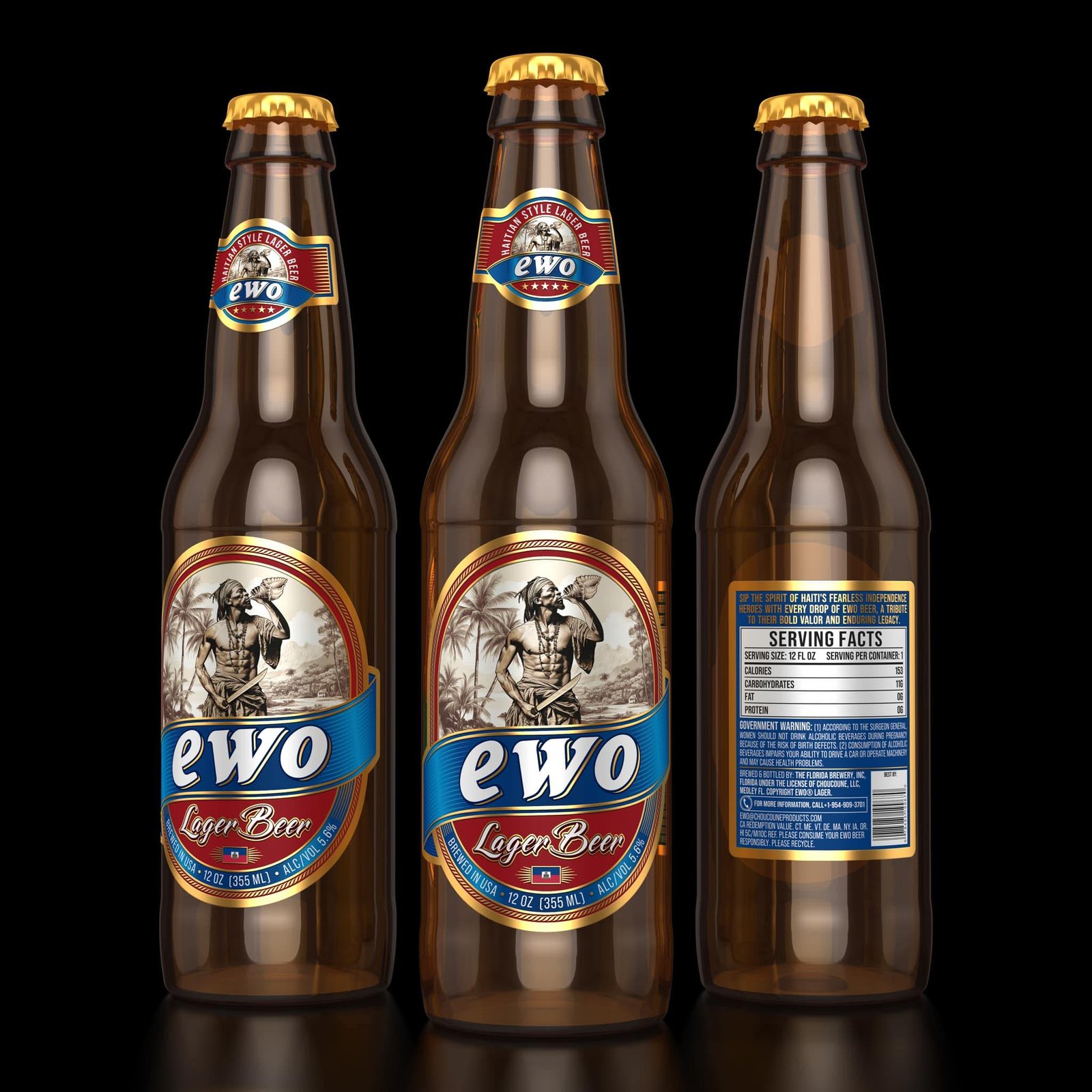
December 1 marked an exceptional moment for the Haitian community and beer lovers around the world, with the official launch of “Ewo” beer by Haitian entrepreneur Jhonson Napoléon. After the success of “Kola Choucoune”, already present in several countries, including the United States and Canada, it is the turn of “Ewo” beer to take the American market by storm. Available in several cities in the United States, this beer embodies the perfect marriage between tradition and innovation, offering consumers a unique taste experience. “Ewo” beer is much more than just an alcoholic beverage. It is a delight that skillfully blends the authentic flavors of Haitian culture with a touch of innovation. In a country where Prestige beer and Barbancourt rum have already conquered palates around the world, “Ewo” beer is proudly added to the list of Haitian taste treasures. Jhonson Napoléon, the man behind this new creation, continues to fly the colors of Haïti across the globe. His commitment to promoting quality Haitian products continues to strengthen the reputation of his country of origin. “Ewo” beer is not just a drink, it is a symbol of Haitian creativity and perseverance that transcends borders. This new step demonstrates the country’s ability to be part of the global trend for quality craft beers. “Ewo” beer is not only a leading local product, but it also stands out on the international scene as the representative of a rich and dynamic culture. The pride that Haitians feel for the success of Jhonson Napoléon and the growing fame of “Ewo” beer is palpable. It is a success story that transcends geographic boundaries and embodies the strength of the Haitian entrepreneurial spirit.
A wounded country. Bent under the weight of a multidimensional crisis. Widespread violence. Hope slammed shut. A sacrificed generation. Children are increasingly threatened. They are increasingly confronted with all forms of vulnerability that hinder their overall development. ACTIF is launching the second edition of the "Timoun se Moun" poetry competition. A citizen initiative in which the organization uses writing as a springboard to build what life deprives Haitian children of. Pain can be turned into gold. For ACTIF (Community Action for Transformation and Formal Integration), poetry is a philosopher’s stone. Not only for this organization, but also for all those who believe that writing can help rekindle the stars. Faced with this urgent need for action, this is "an initiative to raise awareness, denounce, and affirm loud and clear that every child matters, every child deserves protection, hope, and a future," reads the competition’s descriptive document. So what do you intend to do with your human light? Through this competition, participants have the opportunity to engage in an act of resistance, like a cry of conscience to raise the voice of broken childhoods. Open from May 18 to June 18, "Timoun se Moun" is open to all Haitians living in the country and aged 18 and over. Texts must be submitted in Creole. Behind this initiative, ACTIF intends, on the one hand, to affirm our cultural and linguistic identity, and on the other, to enrich our Creole literature, promote it, and encourage creativity in our vernacular. The text must not exceed 500 words. The format chosen is PDF, Times New Roman font, size 12, and 1.5 line spacing. This competition aims to offer a touch of affection to these children who are the first victims of the country’s descent into hell. To evaluate the literary quality and essence of the submitted texts, a jury is composed of Ruthza Paul, Douglas Zamor, and Darly Renois. The former is a physician and winner of the first edition of this competition. The other two work in the fields of sociology, psychology, and literature. In addition to the "Jury Prize: 15,000 HTG + books + certificate" and "Audience Prize: 5,000 HTG + certificate + books" prizes, the best texts will be included in an anthology to be published by Éditions Répérages. It should be noted that there will be one winner for each prize. This initiative reflects ACTIF’s commitment to honoring authors who embrace the cause of underprivileged children while enriching Haiti’s literary heritage. This competition extends a helping hand to all those who believe that through poetry, one can transform one’s life into a masterpiece. At the same time, it offers the opportunity to contribute to ACTIF’s child protection program. Each participant may submit a single text. It must be sent by email to the following address: actifkonkoupwezi@gmail.com. The partial results will be published on June 30, 2025, and the final results on July 18, 2025. For more information, visit ACTIF at the following address: 18 Rue Desdunes, Imp. Thoby, Mahotière 79, Carrefour, Haiti, or contact the organization at the following number: (+509) 38 44 57 57. More than just a contest, ACTIF invites you to say No. No to forgetting. No to passivity. No to violence against children and the violation of their rights.
Beyond the chaos, in the heart of the desolation, there are voices that resonate. They shatter the silence, depicting the macabre reality of everyday life in a thousand shards, thus defying evil to give meaning to life and make each day a place where hope flows like a stream of honey. Edison Juste’s voice is one of them: it sings of hope, of love, while praising God. It was in Carrefour, 27 years ago, that the young singer’s sun rose within a family of four children. Edison Juste is the youngest. Between the diplomat, the lawyer, and the entrepreneur that he is, singing remains his greatest passion for this young married man. Like many Haitian singers, Edison Juste took his first steps at a very early age in a choir—Yahvé Shama—alongside children his own age. He would later become the lead singer. This was in 2010. Asked about his first real encounter with music, he replied: q~It was in 2013 that I really started singing. It was during a competition organized by Styl Doz at the Évangélique de la Grâce church,~q, says the active member of the group YES (Yon Enstriman Sen), who also expresses his gratitude to singer Joseph Rhousteau, who inspired and coached him for several years. Edison Juste stands out not only for his style, but also for his versatility. His ability to make the notes vibrate with a moving candor seems limitless. Yet, he has his preferences: q~There isn’t a single style that characterizes me. I see myself as a liquid: I take the shape of the container. Even if I remain haunted by Worship, Compass, and Jazz, he confides. Today, the Carrefour native boasts a rich and varied musical repertoire. From 2010 to 2025, he has grown both in maturity and in renown: five competition wins, his first song recorded in 2018, joining the band YES, his participation in the second album, Se pou m beni, a collaboration with Amos César in a musical, and his contribution to the album Anprent by maestro Berwin Sydney. For him, this journey is already a great source of inspiration. Edison Juste never does without the presence of God, whether in the creative process or during his stage performances: "What influences and motivates me the most is always the presence of Elohim, and the audience’s desire to savor and appreciate my work," he says.
The international music scene buzzed with excitement on Saturday, October 20, 2023 when talented Haitian singer Rutshelle Guillaume was crowned “Best Caribbean Artist” at the prestigious Trace Awards & Festival 2023, held in Kigali, Rwanda. This award recognizes a remarkable career and a significant contribution to the evolution of Caribbean music. Rutshelle Guillaume is an artist who has captured the hearts of music lovers thanks to her undeniable talent and her numerous quality productions. The Trace Awards & Festival is an event renowned for its promotion of Afrocentric music and culture. It is a platform that celebrates the musical diversity of the Caribbean while highlighting the creativity of the region. Caribbean artists are honored for their exceptional contribution to the enrichment of world music. Rutshelle Guillaume’s victory at this prestigious event is not only a tribute to her talent, but also a recognition of the richness of Caribbean music and its ability to transcend geographical boundaries. The Haitian singer knew how to embody this musical diversity and touched the hearts of many listeners around the world. Her career, marked by memorable titles and collaborations with other talented artists, has made her an ambassador for Caribbean music on an international scale. His commitment to promoting Haitian and Caribbean culture has helped strengthen ties between artists in the region and the rest of the world. Rutshelle Guillaume continues to inspire many emerging artists and show that passion, talent and dedication can lead to extraordinary achievements. His victory at the Trace Awards & Festival 2023 is a well-deserved tribute to his influence and undeniable contribution to Caribbean music. Ultimately, Rutshelle Guillaume’s recognition as "Best Caribbean Artist" at the Trace Awards & Festival 2023 is a reminder of the power of music to unite cultures and celebrate artistic diversity. It is a historic moment for the Haitian artist and a source of pride for the Caribbean as a whole. Rutshelle Guillaume continues to be an inspiration to many artists and music lovers around the world, and her music will live on as a testament to her incredible talent and dedication to her art.
Born in Port-au-Prince on October 10, 2001, Jean Wood Jude is a young 23-year-old Haitian poet/slammer. His talent and determination in the pursuit of his poetic passion have allowed him to serve the cause of poetry and to be one of the best-known figures in the Haitian poetic world thanks to short videos broadcast on social networks. Apart from his artistic and literary activity, Jean Wood Jean is a student in social communication at the Faculty of Human Sciences (FASCH) within the State University of Haiti. Better known under the nickname Silent Poet, he has more than 200,000 followers on his social networks, and regularly publishes poems in French and Creole. The release of his collection entitled “waltz of a silent heart or Pantalèt Kè m” will only confirm the talent of this young artist.
Haïti is this small Caribbean country whose almost entire history is made up of great atrocities and a more than fabulous feat that a group of men had to accomplish for their own survival. The country was born at the heart of a story of resistance, of great importance and unparalleled in certain aspects, which can be proudly told to the rest of the world.
Summer in Haiti, a vibrant and sunny time, is much more than just a season. It is a celebration of life, culture and nature in this Caribbean country. Let me take you on a journey through the different facets of the Haitian summer, where the sun shines brightly, music resonates and nature flourishes.
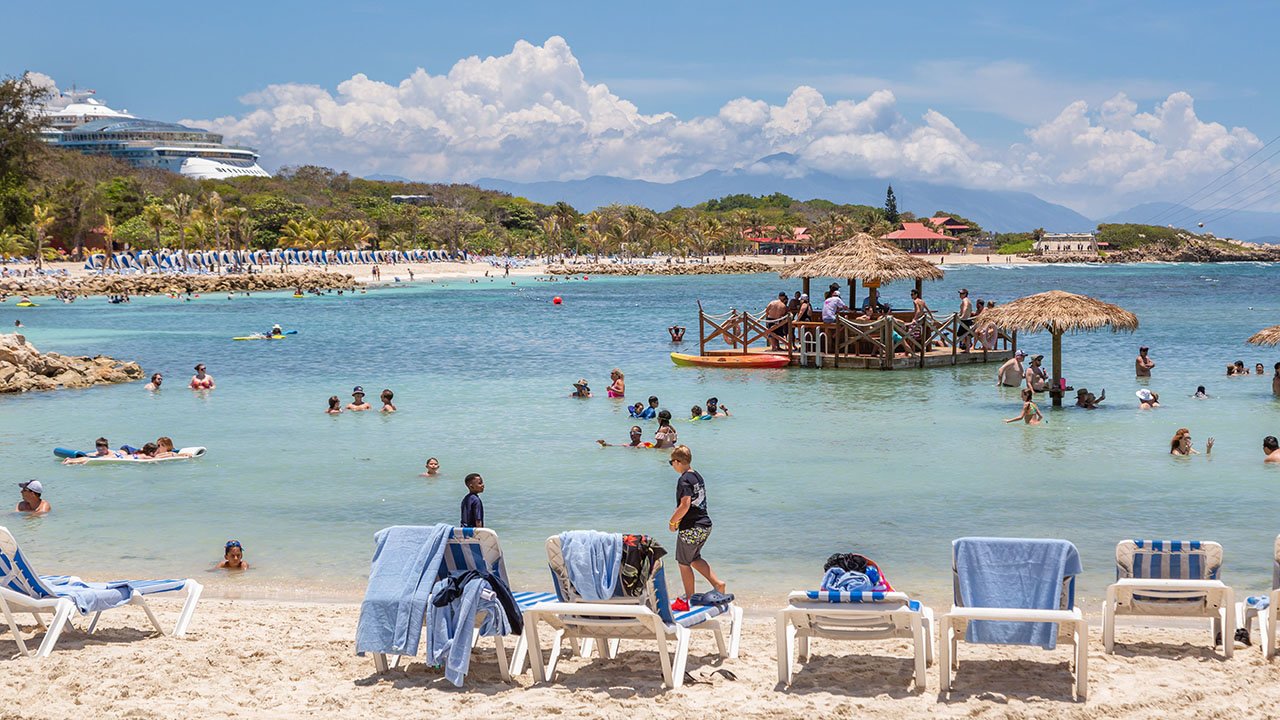
Summer is the perfect season to explore beach destinations, and Haiti, with its heavenly beaches, is the perfect place for a tropical escape. This Caribbean gem offers a variety of beautiful beaches that will delight lovers of sun, turquoise water and fine sand. Discover the hidden treasures and must-sees of the Haitian coast for an unforgettable summer.
Melchie Daëlle Dumornay is a professional Haitian footballer who plays in the first division of the French women’s league. She was born in Haiti, in a mid-sized town called Mirebalais, on August 17, 2003. At just 21 years old, she has become the only Haitian personality, regardless of gender or category, to be nominated among the 30 candidates for the prestigious individual award that is the France Football Ballon d’Or. Indeed, the 21-year-old finds herself — unsurprisingly — on the shortlist for the 2025 Ballon d’Or, alongside some of the biggest names in world football, after an exceptional season both individually — scoring 24 goals and providing 10 assists in just 31 matches — and collectively. She reached the semi-finals of the UEFA Women’s Champions League (where she was named best player of the 2024-2025 season) and won the French league title with her Lyon teammates.

First black nation to free itself from slavery and gain independence from France in 1804 and influenced other liberation movements around the world, inspiring struggles for freedom and equality.

Haïti is blessed with spectacular natural landscapes, including white sand beaches, mountains and rich biodiversity.

Haïti has a rich historical heritage, including sites like the Citadelle Laferrière and the Sans-Souci Palace, listed as UNESCO World Heritage Sites.

Haïti has a rich and diverse culture, influenced by African, European and indigenous elements. Haitian music, dance, art and cuisine are celebrated around the world.