contact@haitiwonderland.com+509 36184317

Discover

Shopping Cart

Diplomatic Fortnight: CEPOD’s plea for effective Haitian diplomacy
  • News
  • October 31, 2024

Diplomatic Fortnight: CEPOD’s plea for effective Haitian diplomacy

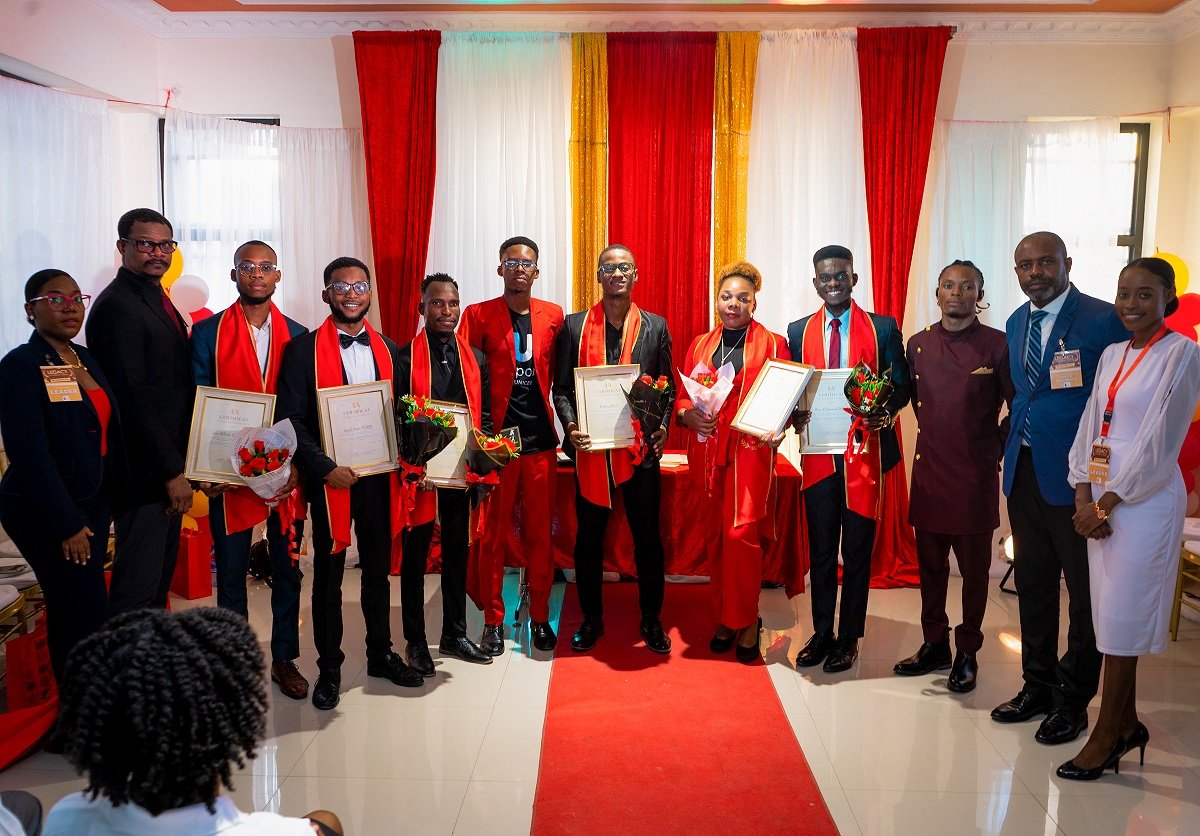
On Thursday, October 24, 2024, the Center for Political and Diplomatic Studies, CEPOD, launched its Diplomatic Fortnight via a summit that took place at the Montana Hotel in Pétionville. The event took place under the theme of Haiti’s place in globalization, and in the presence of an audience of distinguished guests. consisting of public authorities such as the current Haitian Prime Minister, Dr. Garry Conille (Honorary President of the summit); his Minister Delegate for Humanitarian Affairs, Mr. Herwil Gaspard; Foreign diplomats, among whom we can cite the Canadian Ambassador, Mr. André François Giroux (Guest of Honor of the summit); Dr. Christian Mouala, Country Director of UNAIDS Haiti, and a group of other public figures (such as sociologist Daniel Supplice), members of the press, such as senior journalist, Rotchild François Junior and students of all kinds.

Haïti
Haïti
Haïti

Interventions

The summit began with the intervention of the President of CEPOD, Mr. Jean Jul Desauguste, who had to mention the context surrounding the initiative, and took the opportunity to touch on the schedule of the fortnight, which according to him will be very busy in terms of diplomatic achievements. The members of CEPOD will even have to make trips abroad in favor of Haitian diplomacy during this intense diplomatic period, he had declared.

In addition, the interventions within the summit were subdivided into three main lines, each having a well-specified term that served as a framework for the interventions of each of the speakers.

Diplomacy and economic governance; Diplomacy and political education; Diplomacy, humanitarian and migratory crisis were addressed respectively by all the speakers.

Haitian Prime Minister Dr. Garry Conille, in his speech, insisted that the country should not stop living because of the security crisis affecting its capital and part of the Artibonite department. The fight against the sick parts of the country will also involve the development of areas of the country spared by the bad pathology, according to him. In this regard, he took the example of Jamaica in the 70s, whose capital found itself in a similar position to ours, and which had used a similar strategy that bore fruit. He declared that he had engaged his government in such an approach, in parallel with the fight for the recovery of the part of the country occupied by armed groups. In this sense, he is pleased with the resumption of cruise ship traffic in the north of the country. He also mentioned the need for a country like Haiti, largely exposed to climate change, to have a diplomacy with an enlightened, learned vision of what the country needs for its development, accompanied by a well-defined and ambitious program to present to its international partners. And also the need for Haïti to have alliances with countries that have similar difficulties to its own. He cited Rwanda under the leadership of Paul Kagame as an example, where he had to work for a while for the UN, in the early 2000s, and which less than 25 years later, had managed to transform itself into an emerging country and a key player in its region by using a similar approach. "The Haitian case is a case that must be opened to other partners who are looking for other areas to invest in," he concluded. It is in this sense that he registered his last trip to one of the countries of the Arabian Gulf. The Canadian ambassador, Mr. André François Giroux, for his part, was keen to emphasize the importance of Haiti, which is located close to the largest stock markets in the world, and whose revolution leading to its independence inspired the standards of universal freedom in force within the international community, in the eyes of his country. Furthermore, he recalled that Haïti is his country’s leading partner in terms of per capita investment. The annual support of one hundred million Canadian dollars to the Haitian police, the financing in large part of the security support mission led by Kenya, which is being deployed against armed groups in Haiti, of which his country is the leading financial contributor, Canada’s investment in the fight against corruption (the only reason, according to him, capable of explaining Haiti’s underdevelopment) characterized by the establishment of a sanction mechanism against a part of the Haitian elite, involved in proven corrupt practices, among other things constituted the bulk of the diplomat’s speech.

The former ambassador of Haïti to the Dominican Republic, historian and sociologist Daniel Supplice, focused his speech on the current migration situation that pits the Dominican authorities against Haitian migrants. He especially recalled that Haïti has not always been a country of immigration. He stressed that the current Haitian diplomatic authorities must use the diplomatic instruments at their disposal to demand respect for the fundamental rights of Haitian migrants in the Dominican Republic. He also mentioned the importance for the internal Haitian authorities to set up a system to identify people expelled by the Dominican Republic, who unfortunately are sometimes citizens of other nations, but sent to Haïti just because they have black skin. The bestial attitude of some Dominican immigration agents towards children must be rigorously denounced. He took the time to conclude his speech by emphasizing the need for the Haitian authorities, and Haitian society as a whole, to work to make the country more livable. Because if people leave, it is because they are fleeing a deep malaise.

See as well

The Summit’s Stakes

The summit took place at a crucial time for the country, a time when the very existence of the Haitian nation is under very strong threats in its deepest confines.

The threats are both internal and external. The internal ones are characterized by the permanent pressure exerted by armed groups on the Haitian people and its state institutions. And externally, the threats are symbolized firstly by the aggressive behavior (symbol of a continual hostility) of the Dominican Republic towards Haiti, which in recent times, is particularly materialized by the massive expulsion, sometimes illegal, but above all in a totally inhumane manner of tens of thousands of Haitian refugees (outside the basic standards of fundamental human rights) who are fleeing the violence of Haitian armed groups, all via a racist policy, targeting all people with black complexions.

External threats also characterized by the invisibility of the Haitian crisis on a global scale, due to a context of constant unrest, within the international community. The Haitian crisis, appearing in the eyes of some, to be of lesser importance, is shamefully neglected in the background despite its considerable number of victims, to the detriment of other crises described as more major, such as the semi-open conflict of influence, between the emerging powers united under the acronym of BRICS and Allies, with the great industrialized powers of the world. The Haitian crisis is also made invisible by the Israeli-Palestinian-Lebanese war, that in Sudan, that in the east of the Democratic Republic of Congo (DRC), the conflicts listed within the Sahelian states, and most certainly that which opposes Russia to the Ukrainian army.

The importance of diplomacy

In such a context, the Haitian diplomatic channel cannot be useful by remaining confined to fruitless silence. In these difficult times when the future of the land of Toussaint Louverture, Jean-Jacques Dessalines and his sons is compromised, Haitian diplomacy has a duty to move, rearm and get in tune with the aim of ensuring a real revitalization of its branches, in order to be able to constitute a strong, effective representation of the Haitian voice in the midst of this great alarming hubbub, which represents the undermined globalization of recent times. Haitian diplomacy must absolutely live up to its extremely important mission and the challenges of the hour

This element among others make up the stakes surrounding this summit. An event that has its place in the Haitian diplomatic landscape, particularly at a time when Haitian diplomacy has no right to sleep, and its place has clearly increased, to the point of becoming a major player in the survival of the Haitian people. This people has been constantly struggling since gaining its independence on January 1, 1804.

Carrefour: Kay Jèn Yo s’ouvre aux enfants

Carrefour: Kay Jèn Yo s’ouvre aux enfants

Dans le cadre du programme de promotion des droits et de l’épanouissement de l’enfant "Timoun se moun" piloté par l’organisation Action Communautaire de Transformation et d’Intégration Formelle (ACTIF), Kay Jèn Yo organise, du 18 au 24 août 2025 (9h am - 1h pm), "Espas Lajwa", un camp d’été qui cible trente (30) enfants de 7 à 15 ans. Une grande panoplie d’activités éducatives, créatives et ludiques sont programmées pour le plus grand bien des enfants. Ils auront droit à des ateliers de : peinture, crochet, macramé, langue des signes, théãtre, lecture, échec, etc. Dans un contexte aussi traumatogène où la violence est monnaie courante, de telles initiaves sont d’une importance capitale. " Les enfants ne sont pas imperméables au stress et autres pathologies que peut provoquer la situation morbide qui sévit dans le pays actuellement", souligne Blondy Wolf Leblanc (Gabynho) DG a.i de ACTIF. "Espace Lajwa se veut donc, un refuge, un lieu où les enfants peuvent s’exprimer en toute sécurité, un espace sécurisant où ils peuvent exprimer leurs émotions à travers plusieurs médiums", précise-t-il. Plus loin, l’animateur socioculturel encourage d’autres structures à travers le pays à prendre des initiatives de ce genre au bénéfice de la santé mentale des enfants. Espas Lajwa est quasiment gratuit. Un frais de participation de 150 gourdes est requis pour la semaine. Quid Kay Jèn Yo Issu du projet "Pran Swen Tèt ou", Kay Jèn Yo est un projet de l’organisation ACTIF supporté par La Perfection École de Haute Couture visant à combattre la violence par l’engagement communautaire à travers des programmes de formation professionnelle et artistique. Situé au numéro 18, imp. Thoby, rue Desdunes, Mahotière 79, Kay Jèn Yo est ouvert du lundi au dimanche (9h am - 6h pm). Sebastien Jean Michel

Share
About the Author
Moise Francois
Moise Francois
Moise Francois

Journalist editor, poet and apprentice lawyer.

See other articles from Moise Francois
Leave a comment

Recently Posted

Newsletter

Subscribe to our newsletter to stay informed of all our activities and news on Haiti.

Haïti : Boukanye

In the picturesque landscape of Cap Haïtien, stands a place that embodies the very essence of Haitian art and cuisine: Boukanye. This pirate house, founded in July 2016, has quickly become a must-see gem among area restaurants, attracting visitors from around the world for its rustic atmosphere and innovative menu. Located on the boulevard, Boukanye is much more than just a restaurant; it’s an experience in its own right. As soon as you walk through its doors, you are greeted by decor that celebrates local craftsmanship and the history of the pirates who once sailed these waters. Walls adorned with vibrant paintings and sculptures demonstrate the venue’s commitment to Haitian art, creating a warm and authentic ambiance. But Boukanye is not content to seduce with its aesthetic; its cuisine is just as captivating. Inspired by local flavors, the restaurant offers an inventive fusion of traditional Haitian dishes and contemporary culinary techniques. Whether for breakfast, lunch or dinner, Boukanye’s menu offers a tantalizing variety of seasonal dishes, accompanied by exquisite cocktails that celebrate local ingredients. What also sets Boukanye apart is his commitment to innovation. By launching a virtual tour accessible via smartphone or virtual reality headset, the restaurant has pushed the boundaries of the culinary experience. Thanks to this immersive technology, visitors from around the world can now explore the charms of Boukanye from home, immersing themselves in its captivating atmosphere and discovering its unique culinary delights. https://haitiwonderland.com/haiti-virtual-reality-ht/bar--restaurant/haiti--boukanye--visite-virtuelle/7 Whether you are a resident of Cap Haïtien or a traveler eager for authentic experiences, Boukanye offers an unforgettable getaway into the very heart of Haitian culture. By combining art, cuisine and innovation, this restaurant perfectly embodies the vibrant and dynamic spirit of Haiti, inviting everyone to embark on an unparalleled sensory journey.

Recently Posted

History

History

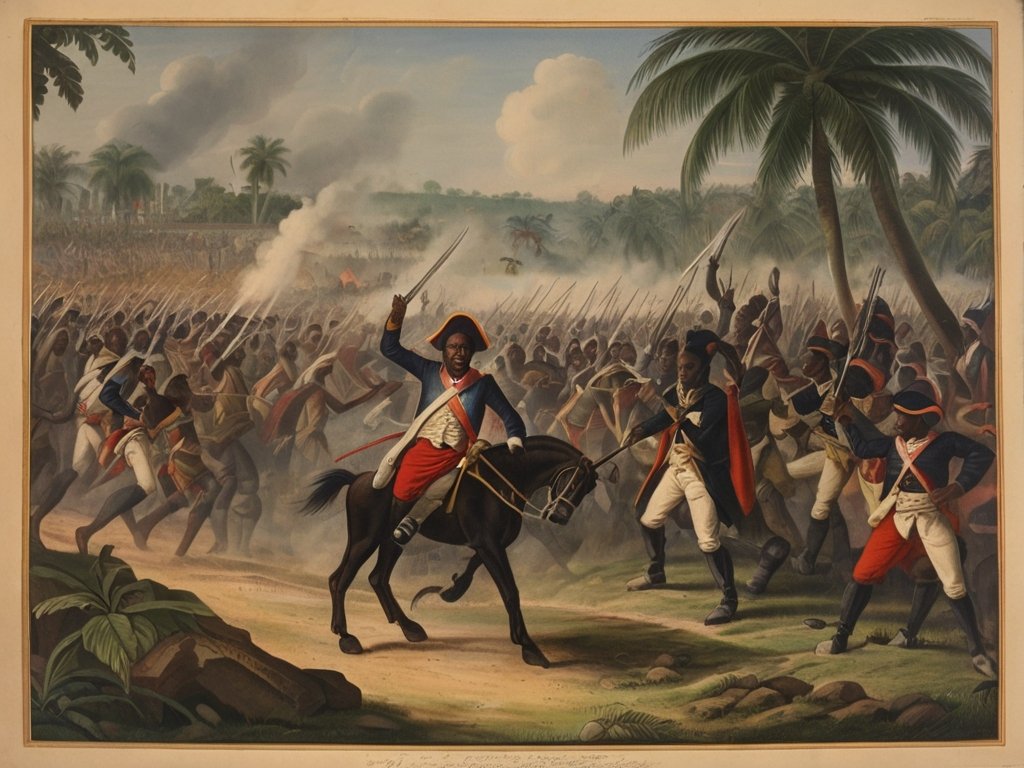
First black nation to free itself from slavery and gain independence from France in 1804 and influenced other liberation movements around the world, inspiring struggles for freedom and equality.

Natural beauty

Natural beauty

Haïti is blessed with spectacular natural landscapes, including white sand beaches, mountains and rich biodiversity.

Heritage

Heritage

Haïti has a rich historical heritage, including sites like the Citadelle Laferrière and the Sans-Souci Palace, listed as UNESCO World Heritage Sites.

Culture

Culture

Haïti has a rich and diverse culture, influenced by African, European and indigenous elements. Haitian music, dance, art and cuisine are celebrated around the world.

  • +
    • Post