contact@haitiwonderland.com+509 36184317

Discover

Shopping Cart

PAQÉMO, music in the Service of Education and Hope in Haiti

PAQÉMO, music in the Service of Education and Hope in Haiti

PAQÉMO, short for "Projet Artistique de Quartiers et Éducatif Musical en Orchestre" (Neighborhood Artistic and Educational Orchestral Music Project), is an ambitious initiative launched in 2022 by the Association Musicale et Éducative à Vocation Sociale (AMEVS), co-founded by Jéricho Pierre-Noël and Cecilia Madolena Clénard, Haitian students at Sorbonne University. Today, the project includes other names such as Sargine Any Melissa Bernard, Mohamed Etamine, Ege Tarik Eken, Youssef Naccache, and Sohann List Massaregli, all Sorbonne students dedicated to promoting access to musical education in Haitiparticularly classical musicas a tool for holistic development. The goal of PAQÉMO’s founders is to use music as a means of education, inclusion, and social transformation, integrated alongside the traditional Haitian school curriculum.

Haïti
Haïti
Haïti

A Free Educational and Artistic Project

One of the most remarkable aspects of PAQÉMO is that it’s freeespecially meaningful in the economically struggling rural areas of Haiti. This project offers free musical education to children and teenagers aged 6 to 18 in remote areas such as Belladère. They learn to play musical instruments (violin, cello, flute), read music, and perform in orchestras. PAQÉMO also plans concerts to promote their talents. The most talented students may have opportunities to collaborate with orchestras in France, such as COSU and Orchestre à l’École. This proves that the project goes far beyond simple music trainingit’s a chance to build self-confidence, discipline, and global exposure for Haitian youth.

Haïti
Haïti
Haïti

Tangible Social Impact

Partner schools, including the Laïcat Music School, Maranatha Mixed School, and Lycée Charlemagne Péralte, open their doors to PAQÉMO for music learning sessions. Children, often exposed to unstable environments, find in music a space for safety, creativity, and dreams. By fostering personal and collective development, PAQÉMO actively contributes to the social rebuilding of Haitian communities.

Haïti
Haïti
Haïti

National and International Recognition

PAQÉMO is supported by both international and Haitian institutions. Organizations such as Sorbonne University, Université Quisqueya, Paris 8 University, Chanson d’Haïti, and Woodbrass Music Instruments, along with French music schools like CAICAT, JIDO, and CADENCE, endorse the project. In 2024, PAQÉMO was awarded the Grand Prize for Access to Culture by the Charles Defforey Foundation (Institut de France), along with €100,000 in funding. This recognition reinforces the project’s legitimacy and supports its expansion: by June 2025, PAQÉMO aims to reach over 2,000 children across 20 sites nationwide.

Haïti is known as a land rich in talent and cultural diversity. PAQÉMO represents a source of hope for the development of thousands of children and is a powerful example of how the Haitian diaspora can positively contribute to Haiti’s growth.

Share
About the Author
Moise Francois
Moise Francois
Moise Francois

Journalist editor, poet and apprentice lawyer.

See other articles from Moise Francois
Leave a comment

Recently Posted

Jean-Jacques Dessalines, leader of the Haitian Revolution

In the annals of the history of Haiti, an island located in the Caribbean at the entrance to the Gulf of Mexico and shared with the Dominican Republic, Jean-Jacques Dessalines emerges like a phoenix from the ashes of oppression. Born a slave on September 20, 1758 in the home of Henri Duclos, in Cormier (Grande-Rivière-du-Nord), in the French colony of Saint-Domingue, Dessalines was a Creole of African (Afro-Caribbean) origin. Freed during the 1794 abolition achieved through slave revolts, actually served as an officer in the French army during the French Revolution. At that time, the ideas of freedom and equality were at the heart of the concerns of the inhabitants of the colonies. Dessalines actively participated in the fighting against the Spanish and British forces, alongside the French, in Santo Domingo. Having risen to the rank of Lieutenant General, Jean-Jacques Dessalines turned against the French during the Leclerc expedition, sent to Saint-Domingue by Bonaparte to reestablish colonial authority and slavery during the Haitian Revolution. After the capture and deportation of Toussaint Louverture to France on June 7, 1802, Dessalines assumed a leading role in continuing the struggle for independence. He led numerous battles, including the battle of Crête-à-Pierrot in March 1802, where he galvanized his soldiers with his famous declaration: “Let those who want to remain slaves of the French leave the fort, let those, on the contrary, who want to die as free men, line up around me.” On January 1, 1804, Jean-Jacques Dessalines achieved the long-awaited goal of independence by proclaiming Haïti as a sovereign nation, becoming the second country in the Americas to gain independence from a colonial power. He became the first leader of the newly formed nation and was named Emperor under the name James I. However, his imperial reign was marked by authoritarian and brutal policies, including the massacre of many white settlers and the redistribution of land to peasants that was in the hands of the generals of the independence army. In addition, he organized the hunt for delinquents in the city while implementing rigorous agrarian policies, considering that they represented a threat to the stability of the nation, these controversial actions caused divisions within Haitian society. Dessalines was assassinated on October 17, 1806 following a plot organized by some of his generals in the Haitian army. His death marked the end of his brief but influential period in power. Despite the controversies surrounding his methods, he is recognized as the main architect of Haiti’s independence and his name was honored in 1903 by being attributed to the Haitian national anthem, La Dessalinienne, composed by Justin Lhérisson.Finally, the great visionary man Jean Jacques Dessalines remains an emblematic figure in the history of Haiti, recognized for his role in the fight for independence and the end of slavery in the region.

Newsletter

Subscribe to our newsletter to stay informed of all our activities and news on Haiti.

Recently Posted

History

History

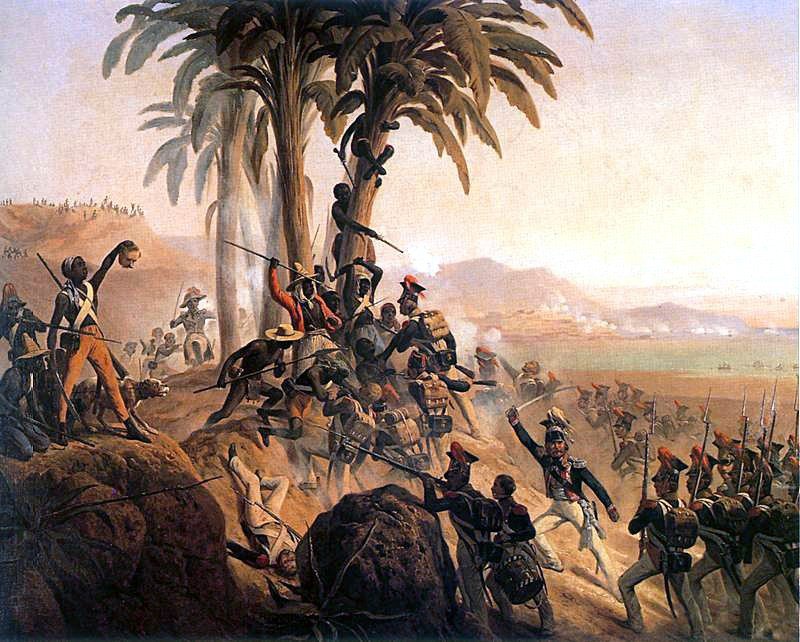
First black nation to free itself from slavery and gain independence from France in 1804 and influenced other liberation movements around the world, inspiring struggles for freedom and equality.

Natural beauty

Natural beauty

Haïti is blessed with spectacular natural landscapes, including white sand beaches, mountains and rich biodiversity.

Heritage

Heritage

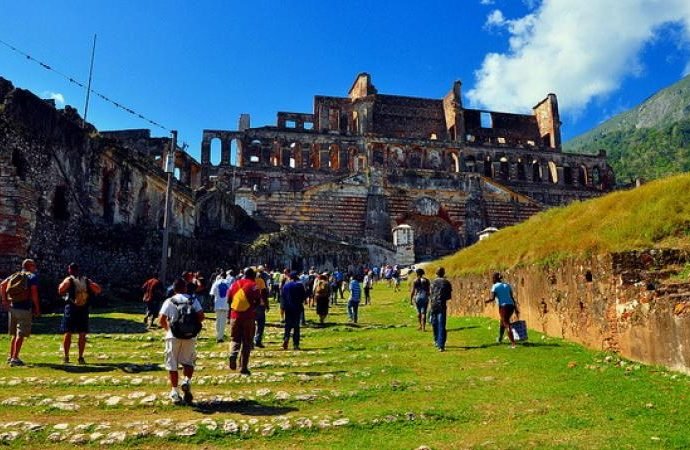
Haïti has a rich historical heritage, including sites like the Citadelle Laferrière and the Sans-Souci Palace, listed as UNESCO World Heritage Sites.

Culture

Culture

Haïti has a rich and diverse culture, influenced by African, European and indigenous elements. Haitian music, dance, art and cuisine are celebrated around the world.

  • +
    • Post