contact@haitiwonderland.com+509 36184317

Discover

Shopping Cart

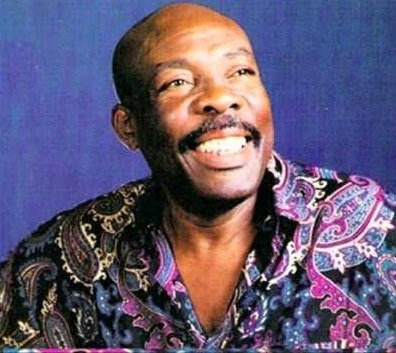
Coupé Cloué, the king of Haitian music.

Coupé Cloué, the king of Haitian music.

Coupé Cloué, whose real name is Jean Gesner Henry, is a genius of Haitian music, both singer and musician, his mark in the musical pantheon of Haïti is alongside the most prestigious names, such as Nemours Jean-Baptiste, Robert Sico et al.

The first steps of the legend

The King Coupe was born in Léogâne (in the city of Anacaona), on May 4, 1925, he died on January 29, 1998 in Port-au-Prince. Twenty-five years after his death, his music remains among the most consumed by Haitians living in Haïti and those of the Haitian diaspora.

In some African countries, it is quite common to listen to his music in nightclubs even today. He is considered by Haitian music lovers, and many compas fans around the world, as one of the emblematic figures of Haitian music, for his great contribution to the direct compas musical genre.

The beginnings of King Coupé in music.

Coupé Cloué began his musical career in the 1950s and quickly became one of the most popular artists in Haiti. His music skillfully blended elements of compass, voodoo and Haitian folklore, infiltrating the Haitian being in its most intimate aspects, creating a unique style highly appreciated by the Haitian public and elsewhere.

The King Coupe discography.

Over the years, Coupé Cloué has recorded numerous successful albums and has been praised for his lyrics and his commitment to Haitian culture. Songs like "myanm myanm", "Yeye", "Djo ak ti Djo".. have marked the memory of Haïti and the French West Indies. Making the legendary voice of King Coupé an important part of Caribbean music.

Furthermore, his fabulous side allowed him to be one of the few to be able to address themes such as politics, sexuality and Haitian traditions in his songs, in the midst of a dictatorship. He lived through the entire Duvaliers dictatorship, without having been censored by the regime.

Coupé Cloué the timeless

The Haitian who has not yet listened to a song by this legend of Haitian music has not yet seen the light of day. His powerful voice is one of the rare symbols that runs through Haitian society in its entirety, and on which almost everyone has consensus. His music is traced with a timeless accent, and resonates with the same effectiveness in the ear of the child, the young, and in the heart of the old Haitian. His music has the ability to take the shape of the listener. His polysemous words are accessible to all and are welcomed according to the maturity of his listener.
Coupé Cloué is also known for his ability to ignite crowds with his powerful and expressive voice. He is an entertainer at heart, his performances on stage were always very appreciated by the public, who admired his talent and charisma.

Despite his death in 1998, Coupé Cloué remains an essential figure in Haitian music and his musical legacy continues to influence many contemporary Haitian artists. His timeless songs and his commitment to Haitian culture have made him a music icon for his country in the same way that Bob Marley was for Jamaica. Even today, his voice is recognized as a powerful symbol of national pride for the Haitian people in all their diversity.
The legendary name of Coupé Cloué will remain engraved in gold letters, among the most worthy Haitians of all time.

Share
About the Author
Moise Francois
Moise Francois
Moise Francois

Journalist editor, poet and apprentice lawyer.

See other articles from Moise Francois
Leave a comment

Recently Posted

Haïti, a rich and impoverished country

Located in the western part of the island of Hispaniola, Haïti is a land imbued with natural, cultural and historical wealth. Unfortunately, behind the beauty of its landscapes, the richness of its culture and the delicacy of its cuisine lies a complex reality marked by the debt of its independence and the persistent interference of third countries, casting a shadow over its stability. b~The Natural Beauty of Haïti~b Haïti, nicknamed the "Pearl of the Antilles", dazzles with the diversity of its landscapes. From majestic mountains and lush valleys to meandering rivers and sandy beaches, the country offers natural beauty worth celebrating. The famous Citadelle Laferrière mountains and the refreshing waterfalls of Bassin-Bleu are just a few examples of the splendor that characterizes this nation. b~A Rich and Diverse Culture~b Haïti stands out for its vibrant and diverse culture. A heritage of African, French and indigenous influence, Haïtian music, dance and art reflect a unique fusion. Colorful festivals, like Carnival, are celebrations of this cultural richness, attracting visitors from all over the world. b~Delicious Cuisine~b Haïtian cuisine, tasty and spicy, is another aspect worth celebrating. Dishes like griot, sticky rice, and the legendary joumou soup, traditionally prepared to commemorate independence, are all culinary delights that demonstrate the country’s gastronomic ingenuity. b~Heritage Treasures and Paradise Beaches~b Haïti’s heritage treasures, such as the remains of the Sans-Souci Palace and the Citadelle Laferrière, listed as UNESCO World Heritage Sites, are testimonies to the architectural grandeur of Haïti’s past. At the same time, beaches like Labadee and Jacmel offer havens of peace with crystal clear waters, attracting travelers in search of a tropical paradise. b~A Fascinating Story~b The history of Haïti is both fascinating and tragic. It was the first country in the Americas to gain its independence, in 1804, after a courageous slave revolt. However, this independence came with a heavy financial price. France demanded exorbitant compensation, thus laying the foundations for Haïti’s foreign debt. b~The Debt of Independence and Foreign Interference~b Despite these treasures, Haïti struggles with the reality of its independence debt. After gaining its freedom, the country was forced to pay France a considerable sum in compensation for losses associated with the abolition of slavery. This debt has been a major economic burden for Haïti, hindering its development. Additionally, foreign interference continues to create significant challenges. External political and economic interventions have often contributed to the country’s instability, hindering its ability to build a sustainable future for its citizens. b~In conclusion~b Haïti remains a country of multiple riches, but its challenges persist. Despite its natural beauty, rich culture and fascinating history, the nation needs enlightened international support and lasting solutions to overcome the obstacles that stand in its way. Haïti’s wealth lies not only in its enchanting landscapes, but also in the potential of its people to be resilient and prosper despite persistent challenges.


Newsletter

Subscribe to our newsletter to stay informed of all our activities and news on Haiti.

There are several reasons why a foreign national might be interested in visiting Haiti

There are several reasons why a foreign national might be interested in visiting Haiti: Rich and diverse culture: Haïti has a unique culture resulting from a mixture of African, European (particularly French) and Caribbean influences. This is reflected in its music, cuisine, art and traditions. Fascinating history: Haïti was the first country in Latin America and the Caribbean to gain independence in 1804 after a successful slave revolt. Its history is rich in significant events and important historical figures. Magnificent natural landscapes: The island of Haïti offers a variety of breathtaking landscapes, from white sandy beaches to lush green mountains, picturesque waterfalls and isolated islands. Hospitality of the locals: Haitians are known for their warmth and hospitality towards foreign visitors, making the travel experience very pleasant and enriching on a human level. Opportunities for Sustainable Tourism: Haïti offers opportunities for sustainable tourism, including encouraging visits that directly benefit local communities and environmental conservation. Exploring historic sites: Historic sites such as the UNESCO-listed Citadelle Laferrière offer visitors a chance to discover colonial architecture and remains from pre-Columbian times. Vibrant cultural celebrations: Haïti is famous for its colorful festivals and cultural celebrations throughout the year, such as Carnival, where music, dance and traditional costumes are in the spotlight. In summary, visiting Haïti can offer a deep and authentic cultural experience, as well as an exploration of the unique natural and historical beauties of this Caribbean nation.

Recently Posted

History

History

First black nation to free itself from slavery and gain independence from France in 1804 and influenced other liberation movements around the world, inspiring struggles for freedom and equality.

Natural beauty

Natural beauty

Haïti is blessed with spectacular natural landscapes, including white sand beaches, mountains and rich biodiversity.

Heritage

Heritage

Haïti has a rich historical heritage, including sites like the Citadelle Laferrière and the Sans-Souci Palace, listed as UNESCO World Heritage Sites.

Culture

Culture

Haïti has a rich and diverse culture, influenced by African, European and indigenous elements. Haitian music, dance, art and cuisine are celebrated around the world.

  • +
    • Post