contact@haitiwonderland.com+509 36184317

Discover

Shopping Cart

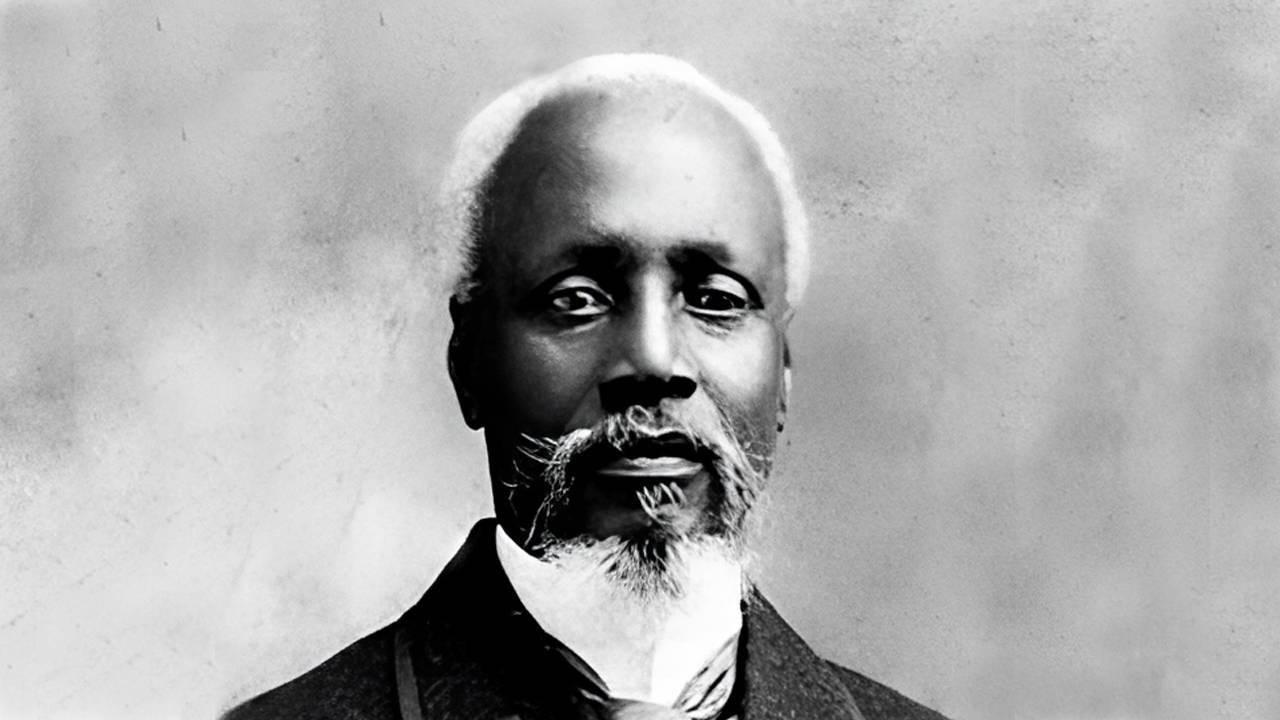
Anténor Firmin, the genius of the 19th century Haitian

Anténor Firmin, the genius of the 19th century Haitian

Joseph-Auguste Anténor Firmin was born on October 28, 1850 in Cap-Haïtien, in a Haïti recently emancipated from the colonial yoke, he died on September 19, 1911 at the age of 60 in exile. He is undoubtedly one of the most emblematic intellectual figures of his time. His life, marked by an exceptional career in the political, literary and diplomatic fields, illustrates the genius of a Haitian intellectual whose contributions have left an indelible mark on history.

A Youth in Cap-Haïtien

Firmin grew up in Cap-Haïtien, in the city of the very famous King Henry Christophe, from a modest family, he studied at the Phillippe Guerrier high school and became a teacher at only 17 years old. His curious and critical mind animated his youth, and led him to get involved in the life of his hometown. His ability to juggle different tasks and get involved in various aspects of public life, marks him as a "jack of all trades".

See as well

Firmin the jack of all trades

Firmin is recognized for his exceptional contribution in several areas of Haitian national life. In politics, he fought for the stabilization and modernization of Haïti during the turbulence of the 19th century. He also stands out as a fervent defender of human rights and racial equality. His most notable contribution to this subject is probably his work "De l’égalité des races humaines" (1885), a fundamental text that challenges the racist theories of the time. This book is a bold statement affirming the fundamental equality of all races and represents a courageous act against the persistent racial prejudices of his time and those before.

The confrontation with Gobineau

Anténor Firmin does not hesitate to confront influential racist figures such as Joseph Arthur de Gobineau, whose theories on racial hierarchy were widely accepted. In his work, Firmin demonstrates that racial prejudices have no scientific basis but are unjust social constructs. This intellectual confrontation is not only a fight for scientific truth but also an act of resistance for the dignity and equality of Black people.

Timoun se Moun: A poetry competition to promote children’s rights in Haiti

Timoun se Moun: A poetry competition to promote children’s rights in Haiti

A wounded country. Bent under the weight of a multidimensional crisis. Widespread violence. Hope slammed shut. A sacrificed generation. Children are increasingly threatened. They are increasingly confronted with all forms of vulnerability that hinder their overall development. ACTIF is launching the second edition of the "Timoun se Moun" poetry competition. A citizen initiative in which the organization uses writing as a springboard to build what life deprives Haitian children of. Pain can be turned into gold. For ACTIF (Community Action for Transformation and Formal Integration), poetry is a philosopher’s stone. Not only for this organization, but also for all those who believe that writing can help rekindle the stars. Faced with this urgent need for action, this is "an initiative to raise awareness, denounce, and affirm loud and clear that every child matters, every child deserves protection, hope, and a future," reads the competition’s descriptive document. So what do you intend to do with your human light? Through this competition, participants have the opportunity to engage in an act of resistance, like a cry of conscience to raise the voice of broken childhoods. Open from May 18 to June 18, "Timoun se Moun" is open to all Haitians living in the country and aged 18 and over. Texts must be submitted in Creole. Behind this initiative, ACTIF intends, on the one hand, to affirm our cultural and linguistic identity, and on the other, to enrich our Creole literature, promote it, and encourage creativity in our vernacular. The text must not exceed 500 words. The format chosen is PDF, Times New Roman font, size 12, and 1.5 line spacing. This competition aims to offer a touch of affection to these children who are the first victims of the country’s descent into hell. To evaluate the literary quality and essence of the submitted texts, a jury is composed of Ruthza Paul, Douglas Zamor, and Darly Renois. The former is a physician and winner of the first edition of this competition. The other two work in the fields of sociology, psychology, and literature. In addition to the "Jury Prize: 15,000 HTG + books + certificate" and "Audience Prize: 5,000 HTG + certificate + books" prizes, the best texts will be included in an anthology to be published by Éditions Répérages. It should be noted that there will be one winner for each prize. This initiative reflects ACTIF’s commitment to honoring authors who embrace the cause of underprivileged children while enriching Haiti’s literary heritage. This competition extends a helping hand to all those who believe that through poetry, one can transform one’s life into a masterpiece. At the same time, it offers the opportunity to contribute to ACTIF’s child protection program. Each participant may submit a single text. It must be sent by email to the following address: actifkonkoupwezi@gmail.com. The partial results will be published on June 30, 2025, and the final results on July 18, 2025. For more information, visit ACTIF at the following address: 18 Rue Desdunes, Imp. Thoby, Mahotière 79, Carrefour, Haiti, or contact the organization at the following number: (+509) 38 44 57 57. More than just a contest, ACTIF invites you to say No. No to forgetting. No to passivity. No to violence against children and the violation of their rights.

A political failure, the Challenges of Governance

Firmin meets all the necessary conditions to conduct effective governance, to get Haïti out of the chaos in which it had been plunged since the assassination of Jean Jacques Dessalines in 1806. Unfortunately for him, and for the Haitian nation, the life of any illustrious man is characterized by exploits, accompanied by their share of failure. Despite his significant achievements, Firmin had to face significant challenges in his political career.

Several electoral failures, including one against Nord Alexis, the famous "Tonton nò" (ignorant old man), reflect the extent to which the brilliant mind of this man was able to face the challenges that the Haitian political world represents. And as a minister and politician, he encountered major obstacles in his attempts at reform and modernization. His efforts to establish a stable government, combat corruption (the great enemy of national development), and promote progress are often thwarted by internal conflicts, supported internationally, and significant political resistance.

In the Dessalines tradition

Anténor Firmin, in many ways, is a continuation of Jean-Jacques Dessalines, the father of the Haitian nation. Where Dessalines played a crucial role in Haiti’s independence, Firmin contributed to the intellectual and political affirmation of the country throughout the world. Both men embody a spirit of resistance and an aspiration for a more just society. Their legacies continue to inspire future generations, in Haïti and beyond.

A Diplomatic and Political Career

Anténor Firmin already foresaw the turbulent 20th century that would face both the Haitian elite and its popular masses. Indeed, he predicted an American intervention in Haïti decades before 1915, which in fact took place. In his book L’effort dans le mal, he declared the following: "Man, I can disappear, without seeing the dawn of a better day dawn on the national horizon. However, even after my death, one of two things will be necessary: ​​either Haïti falls under foreign domination, or it resolutely adopts the principles in the name of which I have always fought and struggled. Because, in the twentieth century, and in the Western hemisphere, no people can live indefinitely under tyranny, in injustice, ignorance and misery."


The exile

Exile is a subject present in almost all of the great Haitian minds. Firmin, despite the greatness of his mind, was no exception to this rule, but took advantage of it to educate himself and build a solid intellectual reputation for the benefit of Haiti. In 1883, he was sent as Haiti’s representative to the centennial celebrations of Simón Bolívar. He refused a ministerial position under the presidency of Lysius Félicité Salomon, and went into exile in Saint-Thomas and then in Paris. In France, he met Louis-Joseph Janvier and became a member of the Société d’anthropologie de Paris in 1884 at his side. His diplomatic career took a turn in 1889 when he was appointed Minister of Finance and Foreign Relations under President Florvil Hyppolite, although he left this position in 1891 to return to France. In 1900, he was appointed Haitian ambassador to France, thus consolidating his role as Haiti’s international representative.

The Antillan League and Antillanism.

In 1910, Firmin published "Letters from Saint-Thomas", in which he explored the idea of ​​an "Antillan League". This concept was part of Antillanism, a political movement aimed at creating a federation of the Caribbean islands to defend themselves against Spanish colonialism and American imperialism. A great friend of José Martí, Firmin, through his writings and actions, sought to promote regional solidarity in the face of external challenges.

In short, Anténor Firmin is a central figure in the Haitian intellectual world, whose contribution transcends the boundaries of politics, literature and diplomacy. His commitment to racial equality, his courage in the face of opposition, and his immense intellectual legacy are testament to his unique place in Haitian history and that of all other black people around the world. Firmin’s genius lies in his ability to combine deep convictions and diverse skills to fight injustice and promote a more equitable vision of the world. Firmin remained, through his ideas, a spirit that stood firm against all forms of racial injustice.

Share
About the Author
Moise Francois
Moise Francois
Moise Francois

Journalist editor, poet and apprentice lawyer.

See other articles from Moise Francois
Jonino

Très bel article sur une figure encore trop méconnue hors d’Haïti. Anténor Firmin avait une avance intellectuelle impressionnante pour son époque, et son travail contre les théories raciales reste d’une modernité frappante aujourd’hui. On oublie souvent qu’Haïti a produit certains des plus grands penseurs du monde noir. Pour ceux qui veulent approfondir son parcours et son héritage : https://yekri.com/auteurs/antenor-firmin

May 07, 2026 - 05:53:25 PM
Leave a comment

Recently Posted

Newsletter

Subscribe to our newsletter to stay informed of all our activities and news on Haiti.

Exploring Cayes-Jacmel, Haiti: Discovering a tourist and cultural treasure.

Nestled in the splendid mountains of the southeastern region of Haiti, the picturesque commune of Cayes-Jacmel emerges as a rare pearl, offering an incomparable tourist and cultural experience. With its lush green landscapes, rich cultural heritage and exciting activities, this destination promises an unforgettable journey for travelers seeking authenticity and natural beauty. As soon as you arrive in Cayes-Jacmel, you will be captivated by the splendor of its landscapes. The plains and hills that dominate the terrain offer a breathtaking spectacle, ideal for picturesque hikes and leisurely walks. The town is also full of crystal clear waterways, perfect for a refreshing break or a relaxing fishing session. Explore the hidden trails and let yourself be enchanted by the thriving biodiversity of the region, where nature reigns supreme. Without forgetting the magnificent beaches of Kabic like "Ti Mouillage", where the fine sand and turquoise waters invite relaxation and water sports. Cayes-Jacmel is steeped in rich history and vibrant culture, reflected in its majestic temples and churches. With more than thirty-two temples of all faiths, including Baptist churches, Churches of God and Catholic churches, the town is a symbol of religious diversity and tolerance. Immerse yourself in the region’s fascinating past by visiting the magistrate’s court and police station, witnesses to its political and legal legacy. Experience the excitement of local life by participating in the lively festivals and cultural events of Cayes-Jacmel. Immerse yourself in the haunting rhythms of Haitian music during community celebrations, and discover traditional crafts at local markets. Don’t miss the town’s annual festival, where dance, gastronomy and the arts combine to create a festive and warm atmosphere. Whether you’re a sports lover, adventure enthusiast, or simply looking for relaxation, Cayes-Jacmel has something to offer every traveler. Play football or basketball on the local pitches, or dance the night away at one of the town’s lively nightclubs. For an authentic experience, join a fishing excursion with the locals, or explore the region’s hidden gems on an exciting jeep tour. With its breathtaking natural beauty, rich cultural heritage and captivating activities, Cayes-Jacmel emerges as an incomparable tourist and cultural destination in Haiti. Whether you are looking for adventure, relaxation or cultural discoveries, this picturesque town promises you an unforgettable experience, imbued with the very essence of Haitian life. Embark on a journey to the heart of the magic of Cayes-Jacmel and let yourself be enchanted by its charm.

Recently Posted

History

History

First black nation to free itself from slavery and gain independence from France in 1804 and influenced other liberation movements around the world, inspiring struggles for freedom and equality.

Natural beauty

Natural beauty

Haïti is blessed with spectacular natural landscapes, including white sand beaches, mountains and rich biodiversity.

Heritage

Heritage

Haïti has a rich historical heritage, including sites like the Citadelle Laferrière and the Sans-Souci Palace, listed as UNESCO World Heritage Sites.

Culture

Culture

Haïti has a rich and diverse culture, influenced by African, European and indigenous elements. Haitian music, dance, art and cuisine are celebrated around the world.

  • +
    • Post