contact@haitiwonderland.com+509 36184317

Discover

Shopping Cart

Francophone Youth Parliament: A Key Institution for Bringing Together Francophone Youth

Francophone Youth Parliament: A Key Institution for Bringing Together Francophone Youth

The Francophone Youth Parliament (PFJ) is an entity of the Parliamentary Assembly of the Francophonie (APF), which itself is part of the International Organization of La Francophonie (OIF). Established in 1999 during the Moncton Summit in Canada, this parliament for Francophone youth provides a genuine opportunity to forge connections among young people from the Francophone world. This real platform for debate and advocacy allows young people to have their voices heard and actively participate in shaping the future of La Francophonie. The body meets sequentially, with young people from almost all Francophone backgrounds gathering at each edition to discuss contemporary issues affecting global youth, such as precariousness, a lack of faith in democracy, characterized by a high number of young people abstaining from elections, a lack of civic engagement, the fight against inequalities, climate change, and even the impact of social media on youth. It is important to note that although the decisions made during these meetings are not legally binding, they remain powerful tools to describe the real will and needs of youth in the Francophone space, with the aim of facilitating actions by leaders.

Summary

Haïti
Haïti
Haïti

The Francophone Unity

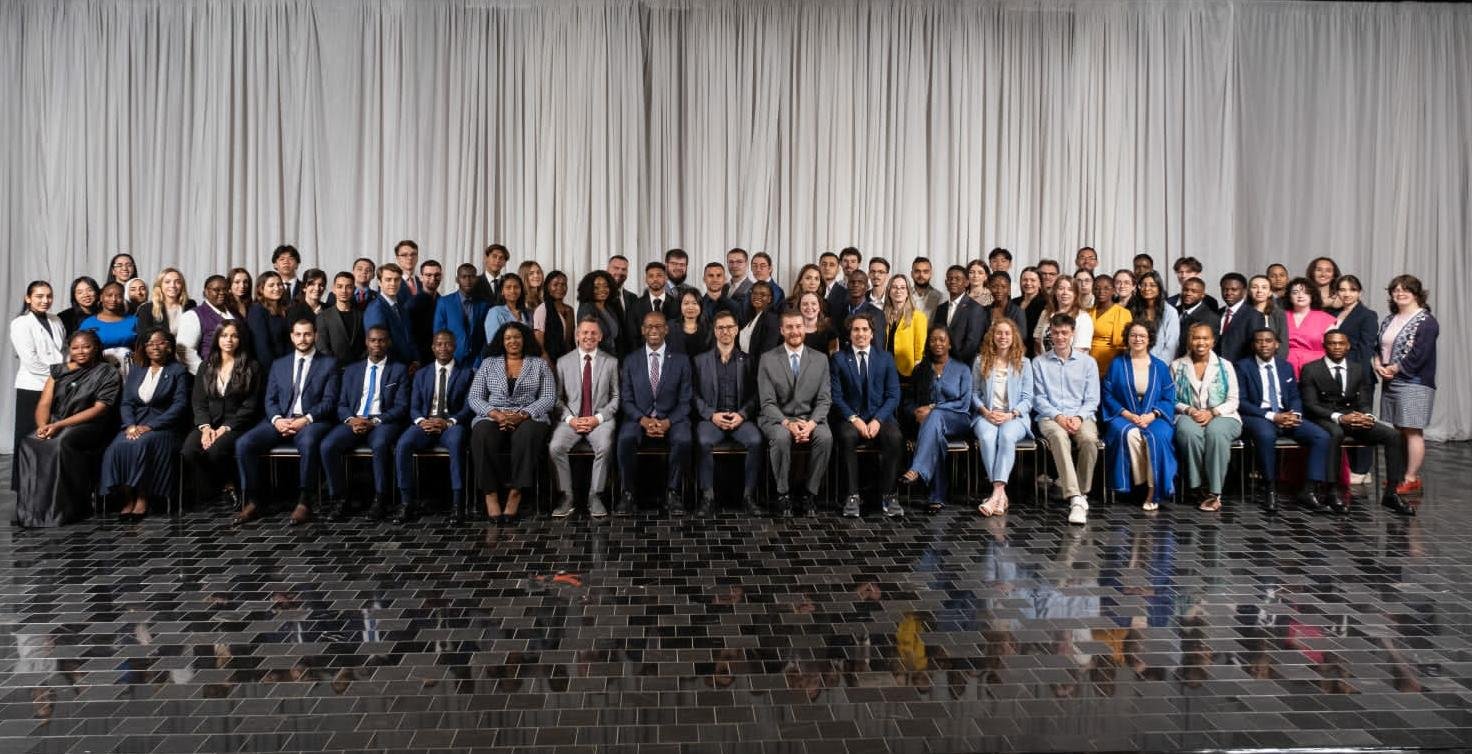
According to one of the two spokespersons for the PFJ, Mr. Corentin Melchior, who represents Belgium within the institution, the Francophone Youth Parliament meets every two years for a general assembly with young people from all over the Francophone world. For example, during the 10th edition of the parliament in 2024, no fewer than 80 young people from over 40 countries or sections participated in debates and created concrete resolutions on crucial issues. While this does not represent half of the OIF members, it still constitutes the largest gathering of Francophone youth for that year. Among the resolutions adopted, according to data collected by Mr. Melchior, there is one on the fight against youth precariousness, the regulation of social media influencers, encouraging civic engagement, and promoting the French language through education and culture.

The OIF, A Global Entity

The OIF, which now includes 88 member states and governments worldwide, is one of the largest international organizations, ranking second in terms of the number of member countries after the UN and well ahead of the Commonwealth. Promoting the French language and the values associated with it to increase its global influence remains its primary mission. While its main goal is to promote the French language and Francophone culture worldwide, the OIF is equally committed to sustainable development, democracy, and access to education for all. For this global vision to truly be inclusive, a closer relationship between the OIF and Francophone youth, particularly from countries facing great difficulties such as Lebanon and Haiti, is crucial, as Mr. Melchior pointed out.

Haïti
Haïti
Haïti

Haitian Youth and the Francophonie

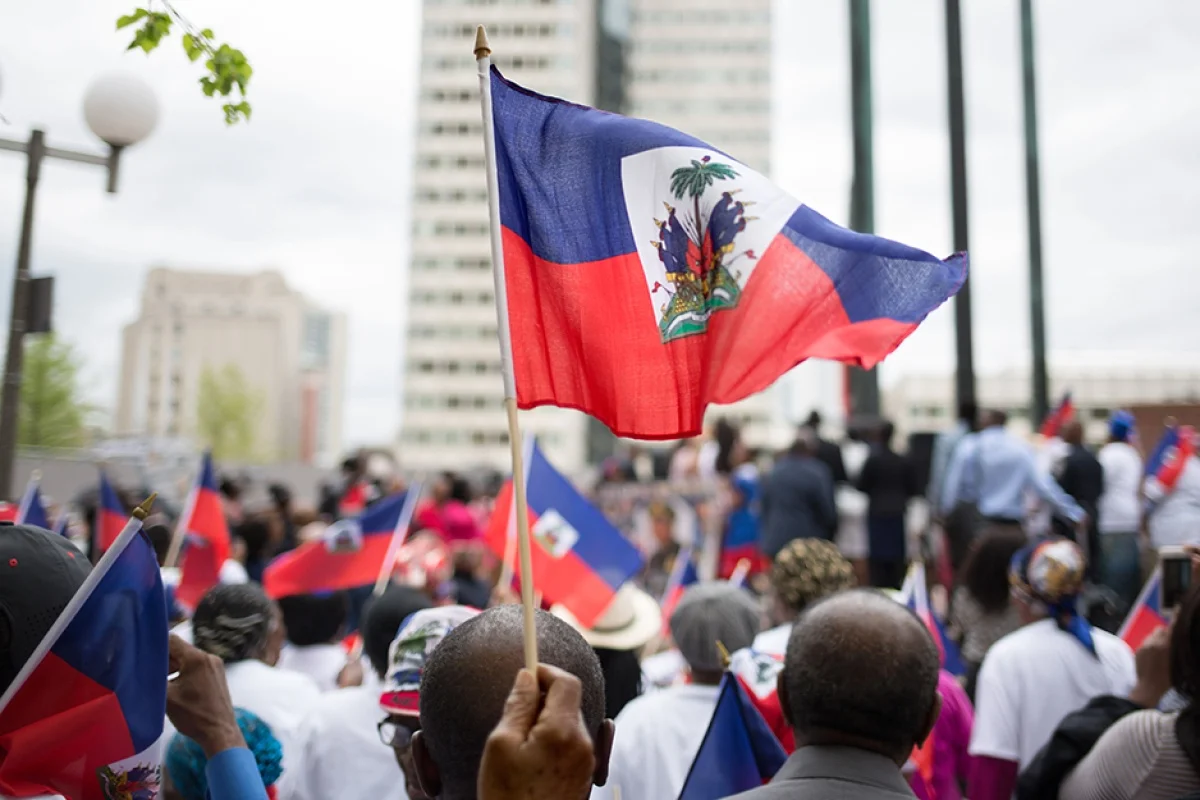
Within the vast global network of the Francophonie, Haiti, despite being a major Francophone pillar in the Americas, is often marginalized in international discussions about the future of the French language and culture. Yet, isn’t Haïti one of the two largest Francophone strongholds in its hemisphere, alongside Quebec? And if we add the fact that Haïti is the only Francophone country in CARICOM (the Caribbean Community Common Market), it is clear that Haiti’s importance in the Francophone world is undeniable. Therefore, it is crucial for Haitian youth to be better integrated into global discussions on the Francophonie, and one of the most effective ways to achieve this is by strengthening the ties between the International Organization of La Francophonie (OIF) and Haitian youth.

Indeed, while the OIF has an interest in reaching all of its branches, taking into account that Haïti is a vital branch of the Francophonie, Haitian youth has even more to gain by valuing their Francophone identity. And when the Francophonie fails to properly value Haiti, it certainly misses out on a precious advantage that a country with such a young population could bring to its noble mission of promoting the French language and democracy. In short, any major agreement between the PFJ and Haitian youth would benefit the entire Francophonie.

Indeed, Haitian youth, like those from other countries in the South and members of the OIF, have an interest in learning about the functioning of the Francophonie, and the PFJ could play a key role in this regard. For Haitian youth, knowing about initiatives like the PFJ is a golden opportunity to make their voices heard within the global community through this channel. More importantly, it is a space where Haitian youth can exchange ideas with their peers from other Francophone countries and build solutions together to face global challenges that transcend all borders.

The need to strengthen the ties between Haïti and the OIF, and by extension between Haitian youth and the PFJ, is now more urgent than ever. Access to information, technological support, training, and mobility are all areas that urgently require attention to fully involve Haitian youth in these international dialogues.

At a time when global challenges are multiplying, it is essential for youth to come together to face them collectively. Francophone youth, despite their diversity, share common issues: social inequalities, job insecurity, climate change, etc. In this context, Haitian youth must join their peers from other countries to have a significant influence in the discussions that will shape the future of Haiti. Thus, the Francophone Youth Parliament proves to be a unique opportunity for Haitian youth, as well as youth from other OIF member countries, to have their voices heard and actively contribute to expanding La Francophonie.

By strengthening ties between Haiti, Africa, and the OIF through its youth, the OIF invests in its future, in the real increase of its influence in the future, and this would allow the voice of Haitian youth to resonate more strongly on the international stage.

In conclusion, the smooth functioning of the PFJ, and the opportunities it offers, should be a priority for the OIF’s governing bodies as it offers prospects for encounters that can facilitate the union of Francophone youth forces, ensuring a more united and equitable future for the youth of the entire Francophonie.

Share
About the Author
Moise Francois
Moise Francois
Moise Francois

Journalist editor, poet and apprentice lawyer.

See other articles from Moise Francois
Corentin Melchior

Superbe article ! Très heureux d'avoir pu apporter ma pierre à l'édifice en tant que co porte-parole du Parlement Francophone des Jeunes. Plus que jamais, nous devons travailler de concert avec Haïti afin d'avoir une jeunesse francophone active et représentative !

February 07, 2025 - 02:23:10 PM
Leave a comment

Recently Posted

Haïti / Fort Picolet: Historical Guardian of Liberty

Cap-Haïtien, Haiti’s historic jewel, is home to a fascinating architectural relic: Fort Picolet. Built at the end of the 18th century by the French, this imposing bastion majestically dominates the bay of Cap-Haïtien, bearing witness to the tumults of Haitian history and the fierce struggle for independence. The history of Fort Picolet is closely linked to that of Haiti, particularly at the time of the Haitian Revolution. During this tumultuous period, when slaves and freedmen rose up against colonial oppression, the fort was the scene of epic battles and fierce sieges. Sometimes used by French forces, sometimes by Haitian revolutionaries, Fort Picolet was a silent witness to the events that shaped the destiny of the nation. Designed with a strategic vision, the fort embodies the military architecture of its era. Its thick stone walls, strategically positioned cannons and viewpoints overlooking the bay make it an impregnable bastion. Its name, Fort Picolet, pays homage to General Louis Marie, Marquis de Picolet, French governor of Cap-Français at the end of the 18th century. Today, Fort Picolet remains much more than a simple historical monument. It is a living symbol of the resilience and determination of the Haitian people. Visitors who wander through its ruins can feel the imprint of history and contemplate the remains of a tumultuous past. From up there, a panoramic view of the bay of Cap-Haitien is available to them, offering a unique perspective on the strategic importance of this place in the maritime history of Haiti. As a pillar of Haitian tourism, Fort Picolet attracts visitors from around the world. Its historical aura, combined with the natural beauty of its environment, makes it a must-see destination for history and culture lovers. More than just a tourist attraction, Fort Picolet is a poignant testimony to the endless struggle for freedom and the cultural richness of Haiti. Throughout the centuries, Fort Picolet has survived the test of time, reminding everyone that freedom is an inalienable right, hard won and carefully preserved. By exploring its ramparts, contemplating its silent cannons, visitors find themselves immersed in the tormented history of Haiti, a story of courage, resistance and hope. Live an extraordinary experience by virtually visiting the ruins of Fort Picolet: https://haitiwonderland.com/haiti-virtual-reality-ht/monuments-histoire/haiti--fort-picolet--visite-virtuelle/14

Living in Prose and Poetry: an unmissable summer event in Port-au-Prince.

Living in Prose and Poetry is an artistic and cultural event organized by the cultural organization Salon de Livre de Port-au-Prince (OCSLPAP) with the aim of bringing together young artists from the Haitian capital to exhibit them to a large audience . This edition will take place on Saturday July 27, 2024, at the pyépoudré cultural center, located at number 332 on the Route de Bourne. This year the organizers announce their mission is to bring together talents from various categories of arts, always with the aim of helping them to become familiar with each other, and to help create a solid link between them and the Haitian public. . The categories targeted by the organizers for this second edition are young poets, slammers, comedians, rappers, dancers, singers, painters, and writers who have already published at least one work. Living in prose and poetry will also be an opportunity to encourage Haitian youth to think. The first part of the event will be devoted to a discussion around a text by the famous Haitian writer Louis Philippe Dalembert, entitled The Other Face of the Sea. It is a novel which carefully addresses the subject of immigration and detachment that goes with it in the immigrant’s skin. It is a book that speaks openly to the reality of the Haitian people today. It has already been announced that this first part will be moderated by the journalist and literary critic Carl Pierrecq who works for the short story writer, and moderation will be provided by Pierre Marie, a young sociology student at the Faculty of Human Sciences (FASCH). After a largely successful first edition which took place in May 2023 in the premises of the municipal library of Delmas, the organizers of living in prose and poetry say they are determined and have made the promise for this year to deliver to the public port-au -princien, a cultural event of exceptional scale for the second outing. Once again, this will be the perfect opportunity to celebrate the great richness of Haitian culture through the organs of our young talents. Given the difficult context, manifested by the almost daily situation of insecurity which has prevailed for some time, in a good part of Port-au-Prince, the announcement of this event comes as a fresh breath of oxygen, scattered throughout the within the lungs of the city. It is yet another opportunity to remind through this artistic festivity that even in times of deep unrest, art will remain an indispensable light, because even in times of crisis, the latter and the artist (its channel of diffusion) will become refuges, sources of comfort and appeasement for all human souls.

Newsletter

Subscribe to our newsletter to stay informed of all our activities and news on Haiti.

Haïti web agency: Appo-Graphic N°1 in website and mobile site creation

Since its launch in 2018, Appo-Graphic has established itself as the indisputable leader in the field of creating websites and mobile applications in Haiti. Specializing in a wide range of services, the agency stands out for its unrivaled expertise and commitment to providing tailor-made solutions for its clients. Whether you are a company looking to develop an e-commerce site, a government institution wishing to modernize its intranet system, or even an individual wishing to create a personal blog, Appo-Graphic is here to make your vision a reality. With extensive experience and in-depth mastery of cutting-edge technologies, the Appo-Graphic team guides its clients through every step of the process, from initial design to final implementation. What sets Appo-Graphic apart from its competitors is its commitment to user experience. The agency’s developers are experts in UI/UX design, creating sites and apps that captivate visitors and inspire them to take action. With over a hundred successful projects under their belt, including intranet sites for hotels, schools and restaurants, the Appo-Graphic team has valuable experience to meet the most demanding needs of its diverse clientele. . In addition to its design expertise, Appo-Graphic also excels in the field of natural referencing (SEO). Using advanced SEO techniques, the agency ensures that its clients receive maximum visibility on search engines, helping to generate traffic and boost sales. But Appo-Graphic’s commitment does not stop there. As a full-fledged communications agency, it also offers brand identity creation, social media management and digital strategy development services. Whether you need an impactful new logo or a complete digital marketing campaign, the Appo-Graphic team is ready to turn your ideas into tangible results. If you are looking to bring your web project to life, do not hesitate to contact Appo-Graphic today. With their personalized approach and commitment to excellence, they are ready to make your vision a reality. Call now on 36184317 to discuss your needs and get a free quote. And don’t forget to visit their website www.appographic.com to check out some of their impressive work. Need to be positioned first in search results for your field of activity? Read this article: https://haitiwonderland.com/haiti/entreprise/agence-seo-haiti--experts-en-seo-referencement-naturel/85

The Monferrier Dorval Chair of Constitutional Law, a gesture from the State University of Haiti, for the preservation of the memory of Professor Dorval

The Monferrier Dorval Chair of Constitutional Law is a high-intellectual-intensity initiative, taken by the State University of Haïti (UEH), through the leadership of its rectorate, in agreement with the leaders of the Faculty of Law and Economics (FDSE). The initiative’s primary goal is to honor and perpetuate the memory of the valiant and brilliant Professor Monferrier Dorval, assassinated in unclear circumstances, about three years ago. And in order to make a scientific contribution to the great debate that has been going on in Haitian society for about ten years about the need to change or not, the constitution of March 29, 1987, amended on May 11, 2011. Shouldn’t we try to apply it preferably? If it needs to be changed, should this change be radical, otherwise what should it have in terms of change within a new mother law for a better institutional organization of Haiti. The chair is scientifically chaired by Professor Henri Marge. Dorléans, (current head of AFPEC), and is vice-chaired by the dean of the faculty of law and economics, Me Eugène Pierre Louis. The Chair is materialized by a set of conferences and debates (15 in total), which take place in the premises of the Office of the Protection of the Citizen OPC, under the name of Wednesday of the Monferrier Dorval Chair. It is in this sense that for the fifth edition of the Wednesday of the chair (which took place this Wednesday, October 9, 2024 at the OPC, in the presence of the protector of the citizen, Me Renan Hédouville), attention was placed on education within the debate surrounding the possible development of a new constitution for Haiti. This 5th meeting took place under the theme of: "Education, Teaching, Research, Science and Technologies". The conference was hosted by three greats of the Haitian intellectual community, including two eminent professors of the UEH, namely, Professor Odonel Pierre Louis, academic director of the École normale supérieure (ENS); the vice rector of the UEH, Professor Jacques Blaise. Their interventions were followed by that of the director of the national institute of vocational training (INFP) Mr. Dikel Delvariste.

Recently Posted

History

History

First black nation to free itself from slavery and gain independence from France in 1804 and influenced other liberation movements around the world, inspiring struggles for freedom and equality.

Natural beauty

Natural beauty

Haïti is blessed with spectacular natural landscapes, including white sand beaches, mountains and rich biodiversity.

Heritage

Heritage

Haïti has a rich historical heritage, including sites like the Citadelle Laferrière and the Sans-Souci Palace, listed as UNESCO World Heritage Sites.

Culture

Culture

Haïti has a rich and diverse culture, influenced by African, European and indigenous elements. Haitian music, dance, art and cuisine are celebrated around the world.

  • +
    • Post